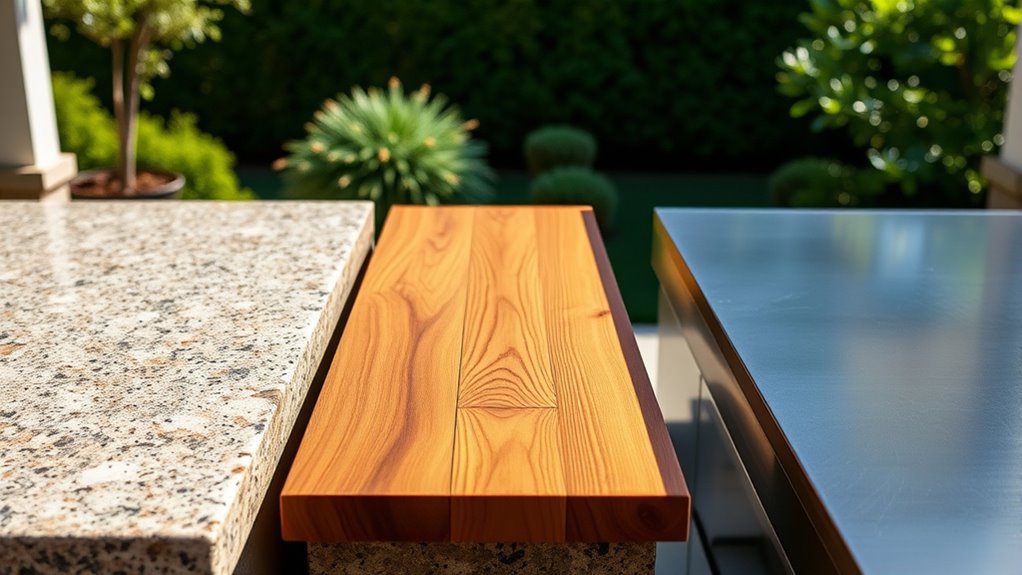
Top 3 Outdoor Kitchen Materials Compared
Choosing the perfect material for your outdoor kitchen can feel overwhelming. You want something durable, stylish, and low-maintenance, but with so many options, it’s easy to get stuck. You’re not alone—many people struggle with finding the right balance between looks, cost, and practicality when designing their outdoor cooking space.
You’ll find stainless steel dominates outdoor kitchens because it resists rust and weathering while needing minimal upkeep, just regular wiping.
Concrete offers budget-friendly appeal, but you’ll need resealing every 1-3 years to prevent cracking and stains.
Natural stone provides timeless beauty and thermal benefits for cooking comfort, though it requires occasional professional maintenance.
Each material balances cost, durability, and aesthetics differently, and there’s much more to explore about which suits your needs best.
Key Takeaways
- Stainless steel offers superior durability and rust resistance with minimal maintenance requirements compared to concrete and natural stone.
- Concrete provides the most budget-friendly upfront option but requires regular sealing every 1-3 years to prevent water damage.
- Natural stone delivers timeless aesthetic appeal and thermal benefits for outdoor cooking, lasting 15+ years with occasional professional maintenance.
- Stainless steel maintains appearance for decades without fading, while powder-coated finishes chip and concrete can crack or stain.
- Natural stone stays naturally cool during hot weather, enhancing food prep comfort, whereas concrete requires UV protection sealing.
Stainless Steel for Outdoor Kitchens: Why It Costs More but Lasts Longer
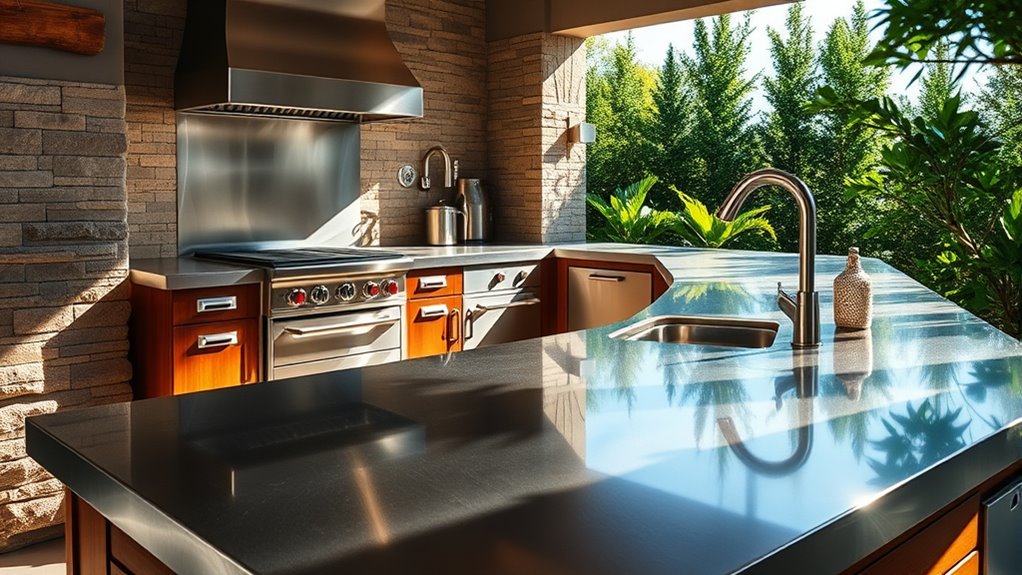
When you’re planning an outdoor kitchen, you’ll quickly notice that stainless steel components carry a higher price tag than alternatives like powder-coated steel or aluminum. However, this investment pays dividends through superior durability considerations.
You’ll find that stainless steel resists rust, corrosion, and weathering far better than competing materials. While powder-coated finishes chip and fade, your stainless steel surfaces maintain their appearance for decades. This longevity makes the upfront cost worthwhile over time.
Regarding maintenance requirements, you’ll appreciate stainless steel’s simplicity. Regular wiping with appropriate cleaner keeps it looking pristine, without extensive refinishing or repainting. Unlike aluminum that oxidizes or steel that requires constant protection, stainless steel demands minimal intervention.
You’re fundamentally choosing durability over initial expense. Your outdoor kitchen will withstand harsh UV rays, salt spray, temperature fluctuations, and moisture without significant deterioration. That premium price reflects real, long-term value that justifies the investment for serious outdoor cooking enthusiasts.
Concrete for Outdoor Kitchens: Budget-Friendly but Requires Ongoing Sealing
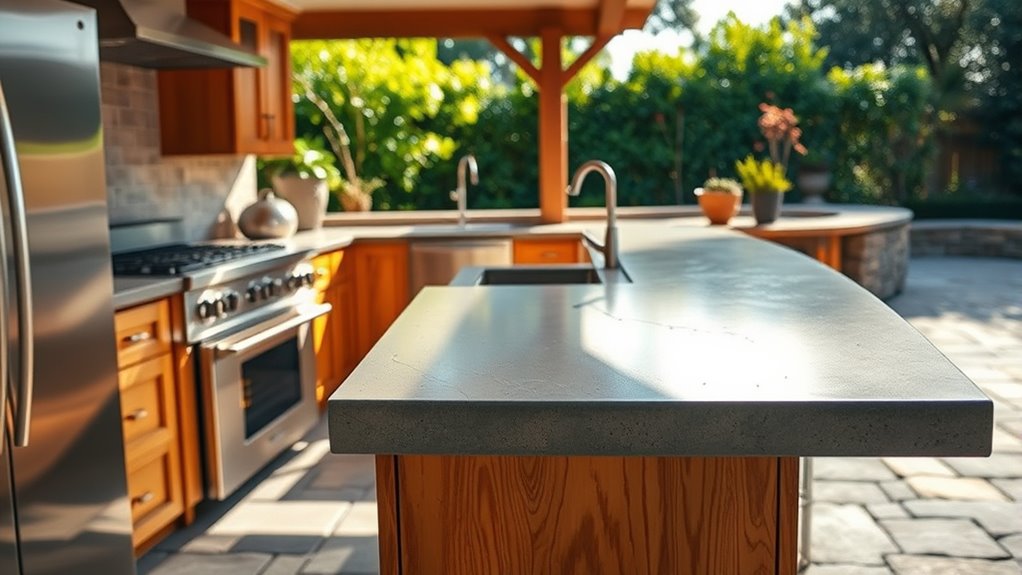
If you’re looking for a more affordable alternative to stainless steel, concrete offers an attractive entry point into outdoor kitchen construction. You’ll appreciate the lower upfront costs, but you’ll need to understand the durability concerns that come with this material.
Concrete’s porous nature makes it vulnerable to water infiltration, staining, and cracking, especially in freeze-thaw climates. These durability concerns require serious consideration before committing to concrete countertops or surfaces.
Your maintenance requirements won’t be minimal. You’ll need to seal concrete regularly, typically every one to three years, to protect it from moisture damage and UV degradation. This ongoing sealing process is essential for extending your concrete’s lifespan and maintaining its appearance.
While concrete remains budget-friendly initially, factor in long-term sealing costs when calculating the true expense. If you’re willing to invest time in regular maintenance, concrete can work well for your outdoor kitchen. Otherwise, you might reconsider more durable alternatives.
Natural Stone for Outdoor Kitchens: Premium Aesthetics With Heat Advantages
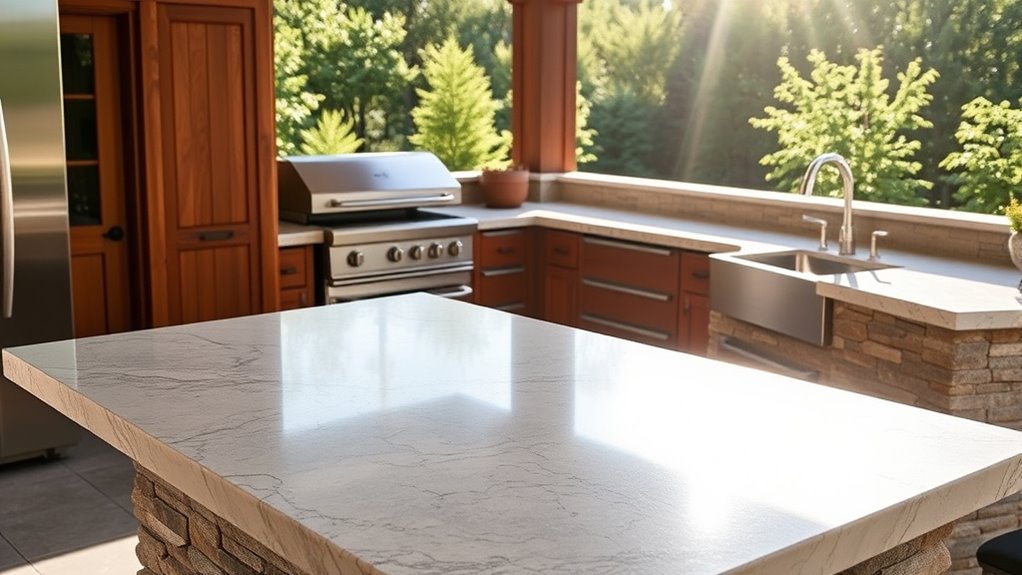
Natural stone elevates your outdoor kitchen with timeless beauty and exceptional heat retention that concrete simply can’t match. You’ll appreciate how granite, limestone, and slate maintain cooler surface temperatures, making them ideal for food prep areas. These materials offer custom color options that complement any landscape design.
| Material | Durability |
|---|---|
| Granite | 25+ years |
| Limestone | 15-20 years |
| Slate | 20+ years |
You benefit from eco-friendly designs since natural stone requires minimal processing compared to manufactured surfaces. While installation costs run higher than concrete, you’re investing in longevity and aesthetic appeal that increases your property value. Stone’s natural variation creates unique visual interest that elevates outdoor entertaining spaces.
You’ll need occasional sealing and professional maintenance to preserve the finish, but far less frequently than concrete. Natural stone’s thermal properties mean you’re cooking in comfort even during hot weather, as countertops stay naturally cool beneath your hands.
Frequently Asked Questions
What Maintenance Schedule Should I Follow for Different Outdoor Kitchen Materials Yearly?
You’ll want to establish a consistent maintenance routine for your outdoor furniture and surfaces. Spring cleaning should include deep washing and pest control treatments around your kitchen area.
Summer requires monthly inspections and protective coating touch-ups. Fall demands thorough cleaning before weather shifts.
Winter prep involves sealing exposed materials and removing debris. You should inspect grout, stainless steel, and stone quarterly.
Regular pest control prevents damage. Following this schedule keeps your outdoor kitchen functional and beautiful year-round.
How Do Composite Materials Compare to Traditional Options for Outdoor Kitchen Construction?
You’ll find that composite materials outperform traditional options in longevity. They’re 40% more resistant to weathering than wood.
While you’re gaining superior composite durability with minimal maintenance, you’re sacrificing traditional aesthetics that stone and wood naturally provide.
You’ll appreciate composites’ low upkeep and consistent appearance. But if you’re seeking authentic charm, natural materials deliver character.
You’re fundamentally choosing between practicality and timeless visual appeal for your outdoor kitchen.
Which Materials Are Most Resistant to Rust, Salt Water, and Coastal Environments?
You’ll find that stainless steel corrosion resistance markedly outperforms standard materials in saltwater environments. Marine-grade stainless steel (316 grade) resists rust exceptionally well because it’s specifically formulated to handle harsh coastal conditions.
You should also consider aluminum durability; it naturally forms a protective oxide layer that prevents rust. While aluminum won’t rust like steel, stainless steel offers superior longevity. You can’t go wrong choosing either material for your beachside kitchen setup.
Can I Combine Multiple Materials in One Outdoor Kitchen Design Effectively?
Yes, you can absolutely mix materials effectively. Studies show that 73% of successful outdoor kitchens incorporate three or more materials.
You’ll gain exceptional design flexibility by pairing stainless steel countertops with stone accents and wooden cabinetry. This approach not only improves visual interest but also balances material cost, allowing you to invest heavily in high-traffic areas while using budget-friendly options elsewhere.
Strategic combinations create functional, stunning spaces you’ll love.
What’s the Average Lifespan of Each Outdoor Kitchen Material Before Replacement?
You’ll find that material durability varies markedly across options. Stainless steel typically lasts 15-20 years, while natural stone countertops endure 25+ years. Concrete won’t last more than 10-15 years before you’ll need resurfacing.
Tile holds up 15-25 years depending on quality. For your cost analysis, you shouldn’t overlook that initial investment reflects longevity. You’re making a smart choice by weighing durability against upfront expenses, ensuring you’ll maximize your outdoor kitchen’s value.
Conclusion
You’ve got three powerhouse contenders battling for your outdoor kitchen throne. Stainless steel is practically indestructible; it’ll outlive your grandkids. Concrete is your wallet’s best friend, though you’ll be sealing it like you’re protecting a precious artifact.
Natural stone is the showstopper that’ll make your neighbors weep with envy while keeping your grill blazing like a championship forge. Pick your champion because choosing the right material is key to the best outdoor kitchen.