
How to Find an Electrician for Oven Repairs
A faulty oven can quickly disrupt your routine, especially when you’re unsure whether the issue is electrical or something more serious. You’re not alone—many homeowners struggle to find a reliable professional who can diagnose and fix the problem safely.
To find an electrician for oven repairs, first confirm whether the problem is electrical, gas-related, or both.
Choose a licensed, insured professional with experience repairing your oven’s brand and model.
Ask for customer reviews, availability, diagnostic fees, labor rates, parts costs, and warranty details.
Request a detailed written estimate before approving work.
Stop using the oven if you notice smoke, sparks, burning smells, shocks, or repeated breaker trips.
The steps below will help you choose confidently.
Key Takeaways
- Identify whether the problem is electrical, gas-related, or both, then hire a properly qualified professional.
- Ask friends, appliance retailers, local directories, and review platforms for reputable electrician recommendations.
- Verify licenses, insurance, certifications, and experience repairing your oven’s brand, model, and control systems.
- Request written estimates detailing diagnostic fees, labor, parts, taxes, warranties, travel costs, and approval for additional charges.
- Stop using ovens that spark, smell burnt, trip breakers, overheat, or cause shocks, and arrange urgent professional assistance.
Decide Which Oven Repair Professional You Need
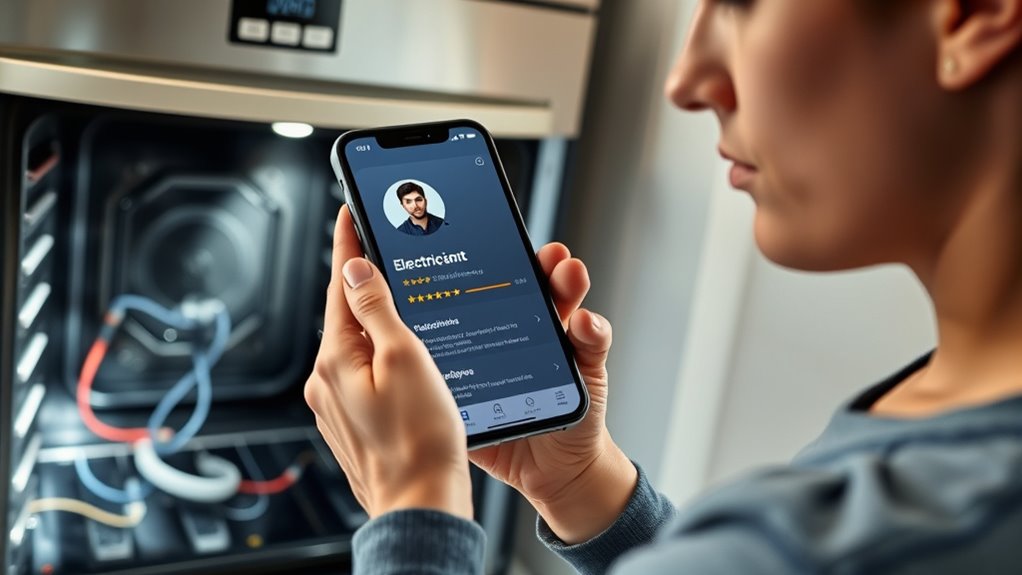
Before searching, identify the type of professional your oven requires. Start by checking whether the problem involves electricity, gas, or both.
An electrician can address faulty wiring, damaged outlets, circuit breakers, and power-related failures. However, gas leaks, burners, valves, and ignition components may require a licensed gas appliance technician.
Match the professional to the problem: electricians handle electrical faults, while licensed gas technicians address gas-related oven repairs.
If your oven combines electrical controls with gas heating, you might need a professional qualified for both systems.
Review your owner’s manual before choosing anyone. It may identify approved service providers, required certifications, and safety procedures.
Check whether the oven remains under a manufacturer’s warranty, since unauthorized work could cancel coverage. Ask prospective professionals which brands and models they service, whether they carry appropriate licenses, and how they approach oven safety.
Request written information about diagnostic fees, replacement parts, labor, and repair warranties.
A clear warranty should explain what it covers, how long protection lasts, and whether exclusions apply. Choose expertise that matches your oven’s specific technology and the actual fault.
Find Local Electricians for Oven Repairs
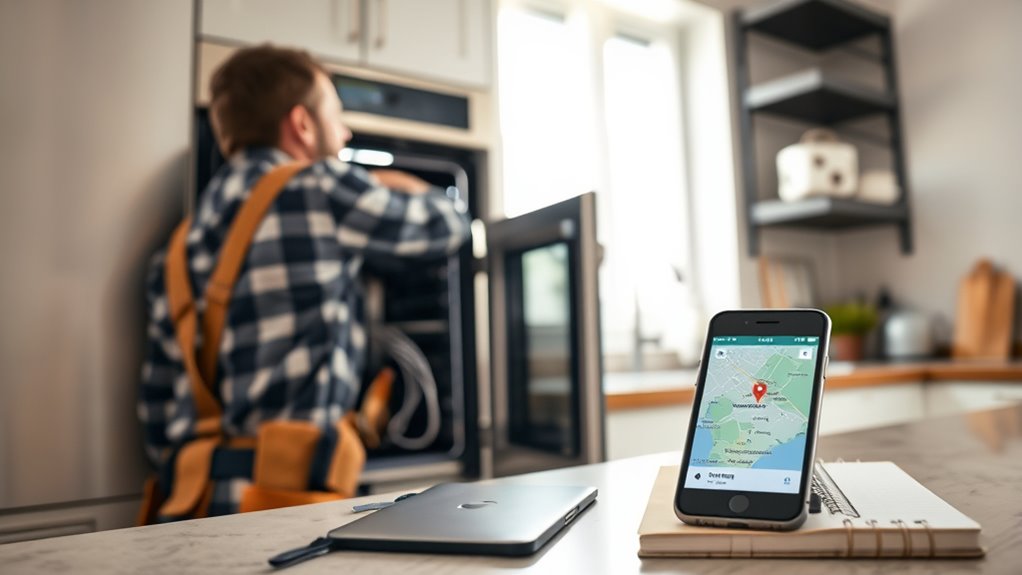
Start your search by asking friends, neighbors, and local appliance stores for electrician recommendations. You can also search online directories, community groups, and review platforms for nearby professionals who handle oven problems.
Focus on electricians with consistent feedback about punctuality, clear communication, and effective repairs.
| Search source | What to check | Useful action |
|---|---|---|
| Friends | Recent experiences | Request names |
| Appliance stores | Frequent referrals | Call for leads |
| Online directories | Service areas | Compare options |
| Community groups | Local feedback | Read discussions |
Create a shortlist, then contact each electrician with your oven’s brand, model, symptoms, and location. Ask about availability, typical response times, diagnostic visits, and whether they repair your oven type.
Look for someone who explains the likely process and gives practical scheduling information. Mention any Appliance maintenance history, such as recent cleaning or replaced parts, to help them prepare.
Prioritize clear answers about Electrical safety and emergency procedures. Do not attempt risky checks yourself.
Save your preferred options and compare convenience, communication, and local availability before arranging a visit.
Check Licenses and Insurance Before Booking
A licensed, insured electrician is better prepared to repair your oven safely and meet local code requirements. Before you book, ask for the electrician’s license number and verify it through your state, county, or city licensing agency.
Licensing requirements vary by location, so confirm that the credential covers residential electrical work and remains current. Don’t rely solely on a website badge or verbal assurance.
Next, request proof of insurance coverage. General liability insurance can help protect you if the electrician damages your property, while workers’ compensation may cover injuries to employees working in your home.
Ask whether the policy is active and request the insurer’s contact information if you need confirmation. You should also check whether your local rules require permits for oven-related electrical work and ask who will obtain them.
If an electrician refuses to provide license or insurance details, choose another professional. Verifying these documents before scheduling reduces financial and safety risks.
Review Their Oven Repair Experience
Look for an electrician who regularly repairs ovens and understands both appliance wiring and household circuits. Ask how long they’ve worked on electric and gas models, including your oven’s brand and control system.
Their experience should cover common faults, such as heating failures, damaged wiring, faulty thermostats, and tripped breakers.
Request a clear explanation of how they diagnose problems. A qualified professional should test components systematically rather than replace parts by guesswork.
Ask whether they follow manufacturer procedures and current electrical codes. Proper methods protect oven safety and reduce the risk of recurring faults.
You should also ask about parts and repair warranties. Find out whether the warranty covers labor, replacement components, or both, and confirm its duration in writing.
An experienced electrician will explain likely repair options, expected costs, and when replacement makes more sense.
Choose someone who communicates clearly and can show relevant training or certifications for appliance and electrical work. Their practical experience should match your oven’s specific requirements.
Read Reviews From Oven Repair Customers
Customer reviews can show whether an electrician delivers the experience and communication they promise. Read several recent reviews about oven repairs, not just the overall star rating.
Look for comments describing diagnostic accuracy, punctuality, clear updates, safe work, and respectful cleanup. Consistent praise suggests strong Customer satisfaction, while repeated complaints may reveal weak Service reliability.
| Review detail | What it may indicate | What you should do |
|---|---|---|
| Arrived on time | Reliable scheduling | Check several recent posts |
| Explained the fault | Clear communication | Seek detailed reviews |
| Returned after repair | Accountable service | Note repeated patterns |
Pay attention to how the electrician responds to negative feedback. A professional response that acknowledges the issue and explains a solution can demonstrate responsibility.
Be cautious when reviews seem identical, unusually vague, or clustered within a short period. You can also check independent platforms and local community pages for broader evidence.
Use reviews to confirm how the electrician treats customers throughout the repair, from the first appointment through follow-up support.
Compare Quotes for Oven Repairs
Compare quotes from several electricians before scheduling oven repairs, but don’t choose solely by the lowest price. Request written estimates that clearly separate diagnostic fees, labor, replacement parts, taxes, and potential additional charges.
Compare written estimates from several electricians, including diagnostic fees, labor, parts, taxes, and potential additional charges.
This breakdown helps you compare equivalent services and spot unusually low bids that might exclude essential costs.
Ask whether the electrician offers fixed rates, hourly billing, or other pricing options. An hourly quote may seem affordable, but a fixed price can make budgeting easier when the repair’s scope is predictable.
Confirm which payment methods the electrician accepts and whether you’ll pay a deposit.
Review each company’s warranty policies for both labor and installed parts. A longer, clearly stated warranty may provide greater value than a slightly cheaper estimate.
Check whether the warranty has exclusions or requires specific maintenance. Also, ask how long the quote remains valid, since parts prices and service rates can change.
Choose the electrician whose transparent estimate, fair terms, and proven reliability give you confidence.
Ask What the Repair Visit Includes
Before you schedule the repair, ask exactly what the electrician’s visit includes. Confirm whether the service covers diagnosis, labor, replacement parts, testing, and cleanup.
You’ll want to know if the electrician provides a written assessment before doing additional work or charges a separate diagnostic fee. Ask whether travel costs, after-hours rates, disposal fees, and taxes appear in the final bill, too.
Request clear Pricing estimates for likely repairs, but understand that hidden damage or unavailable parts may change the total. Ask how the electrician handles approval when the cost exceeds the estimate.
You should also clarify whether the technician supplies common parts or expects you to purchase them. Finally, discuss warranty coverage for both labor and installed components.
Find out how long coverage lasts, what it excludes, and whom you should contact if the repair fails. Getting these details in writing helps you compare electricians fairly and prevents surprises during the visit or afterward.
Identify Oven Faults That Need Urgent Help
Once you understand the repair visit’s cost and coverage, recognize which oven problems require immediate professional attention. Switch off the appliance and seek an electrician if you smell burning, see smoke, hear crackling, or notice sparks near the controls, wiring, or plug. Don’t use an oven that repeatedly trips the circuit breaker, blows a fuse, or gives you an electric shock.
Treat a door that won’t close, severe overheating, or uncontrolled temperature increases as urgent faults, particularly if children can access the appliance. Stop using the oven if its fan, heating element, or control panel behaves erratically, as continued operation can worsen damage or create a fire risk.
Record any Oven error codes and describe when the fault appears. This information supports accurate Fault detection and helps the electrician identify likely electrical or component failures. Avoid removing panels or attempting internal tests yourself; exposed wiring and stored electrical energy can cause serious injury. Disconnect power only if you can do so safely.
Check When the Electrician Can Attend
Ask when the electrician can attend and whether they offer emergency call-outs for urgent oven faults. Explain the symptoms clearly, including sparks, burning smells, tripped breakers, or complete power loss, so they can judge the urgency accurately.
Confirm their scheduling availability and request the earliest realistic appointment rather than relying on a vague promise. If you can’t use the oven safely, ask whether they provide same-day assistance or an emergency response outside normal working hours.
Check how long the visit might take to arrange and whether delays could affect your household, especially if you rely on the oven for regular meals. Tell them about access restrictions, such as work commitments or building entry rules, so they can offer a suitable time.
Ask them to contact you if an earlier slot becomes available. Keep the agreed date, arrival window, and contact details in writing, then prepare the area before they arrive.
Compare Candidates Before You Book
Before you book, compare each electrician’s qualifications and experience with oven repairs. Ask for a detailed estimate from each one so you can compare costs fairly. Then make sure their availability fits your schedule.
Check Qualifications
Compare each electrician’s qualifications before you book an oven repair. Ask whether the technician holds current licenses required in your area and has experience servicing your oven’s brand and model.
A qualified professional should understand electrical systems, appliance controls, heating elements, and manufacturer guidelines. Check certification standards through recognized trade organizations or local authorities, and request proof rather than relying on vague claims.
You’ll also want to confirm insurance coverage, which protects you if accidental damage or injuries occur during the visit. Ask how the electrician follows safety protocols, including power isolation, testing procedures, and safe handling of gas or high-voltage components.
Read recent reviews and verify references when possible. Choose someone who communicates clearly, answers technical questions, and demonstrates relevant credentials before you schedule service.
Compare Repair Estimates
Once you’ve narrowed your options, request written estimates from each electrician for the same oven repair. Ask every candidate to itemize diagnostic fees, labor, parts, taxes, and potential extra charges.
Comparing totals alone can mislead you, so review what each estimate includes and whether the electrician recommends manufacturer-approved components. Consider pricing strategies, such as flat rates versus hourly billing, and ask what could increase the final cost.
A remarkably low quote might omit essential work, while an unusually high one may include unnecessary replacements. Check warranty policies for both labor and installed parts, including coverage length and exclusions.
Read the estimate’s terms carefully, then compare communication quality, professionalism, and clarity alongside price. Choose the electrician who offers transparent value, not simply the cheapest bid, and keep all estimates for reference.
Verify Availability
Check each electrician’s availability before you book, especially if you need the oven repaired quickly. Ask when they can inspect the appliance, how long repairs typically take, and whether they offer arrival windows that fit your schedule.
Compare candidates based on their earliest appointment, not just their quoted price. During Scheduling appointments, confirm the date, time, expected visit length, and any cancellation requirements.
You should also ask whether the electrician handles urgent oven problems outside normal business hours. Reliable Emergency contacts can help if your oven stops working before a holiday meal or creates an electrical concern.
Verify that the electrician can respond promptly and has the parts or diagnostic tools needed for your model. Once you’ve compared availability, choose the professional who offers clear timing and dependable communication.
Frequently Asked Questions
Can Electricians Repair Both Gas and Electric Ovens?
Yes, electricians can repair electric ovens, including wiring, heating elements, thermostats, controls, and other electrical faults. For gas ovens, they may diagnose electrical components, but gas-line work usually requires a licensed gas technician or plumber, depending on local regulations.
Always prioritize gas oven safety by shutting off the gas and avoiding DIY repairs. For electric oven troubleshooting, check power connections only if it’s safe, then call a qualified professional for accurate diagnosis and repairs.
Should I Switch off the Oven’s Power Before the Electrician Arrives?
Yes, you should switch off the oven’s power before the electrician arrives, if you can do so safely. Turn off the appliance at its controls, then shut off its dedicated circuit breaker or unplug it, if accessible.
Don’t touch exposed wires, gas connections, or damaged components. These safety precautions protect you and the technician.
Share troubleshooting tips, including error codes, unusual sounds, or recent changes, so the electrician can diagnose the problem efficiently.
Are Oven Repair Parts Typically Covered by a Warranty?
Warranty coverage for repair parts varies by the manufacturer, appliance age, and service provider. You’ll often receive a parts warranty lasting 30 days to one year, while original manufacturer components may carry longer protection.
Check your oven’s warranty documents and ask the electrician whether labor, replacement parts, or both qualify. Keep receipts and service records, because you’ll typically need them to file a claim.
Don’t assume coverage applies to every repair.
How Long Do Common Oven Repairs Usually Take?
Common oven repairs usually take one to three hours, because waiting for dinner can feel longer than cooking it. A simple thermostat, heating element, or igniter replacement may finish within an hour.
Wiring problems, control-board failures, or hard-to-find parts can extend service to several hours or require a return visit. Ask for an estimate covering repair costs, and don’t sacrifice oven safety by using a malfunctioning appliance while you wait for service.
Can I Prevent Future Oven Problems Through Regular Maintenance?
Yes, you can prevent many oven problems through regular maintenance. Use preventive maintenance by cleaning spills promptly, checking door seals, inspecting power cords, and keeping vents unobstructed.
Follow your manufacturer’s cleaning and inspection recommendations, and don’t overload the oven. Apply troubleshooting tips, such as resetting the breaker or checking settings, before calling a professional.
If you notice sparks, burning smells, uneven heating, or damaged wiring, stop using the oven and schedule service.
Conclusion
Finding the right electrician for oven repairs doesn’t have to feel overwhelming. You’ll choose confidently when you check credentials, compare experience, read customer reviews, and ask clear questions.
Look for someone licensed, insured, available, and familiar with your oven’s fault. By comparing reliable professionals before you book, you’ll protect your home, your budget, and your peace of mind.
Choose carefully, act promptly, and get your oven cooking safely again with a trusted electrician for oven repairs.