What Temperature Should My Freezer Be?
Worried that your frozen food is losing quality or spoiling because your freezer temperature isn’t right? You’re not alone—many people struggle to find the ideal setting and keep it consistent. This guide explains what temperature your freezer should be and how to check it accurately.
Set your freezer to 0°F (-18°C) to keep food safely frozen and preserve its flavor, texture, and nutrients. Place an independent thermometer in the center, away from walls, vents, and packages, then wait 12–24 hours before checking it.
Adjust the control gradually and allow another day between changes. If it’s warmer than 0°F, check the door seal, airflow, and frost buildup.
Keep the freezer about 70–85% full without blocking vents. You’ll find more guidance below for checking and troubleshooting temperatures.
Key Takeaways
- Set your freezer to 0°F (-18°C) to keep food safely and continuously frozen.
- Use an independent thermometer in the center, away from walls, vents, packages, and the door.
- Wait 12–24 hours after adjustments, restocking, or thermometer placement before checking the temperature.
- If temperatures exceed 0°F, check the door seal, blocked vents, frost buildup, and condenser coils.
- Discard fully thawed food held above 40°F for more than two hours.
What Temperature Should Your Freezer Be?
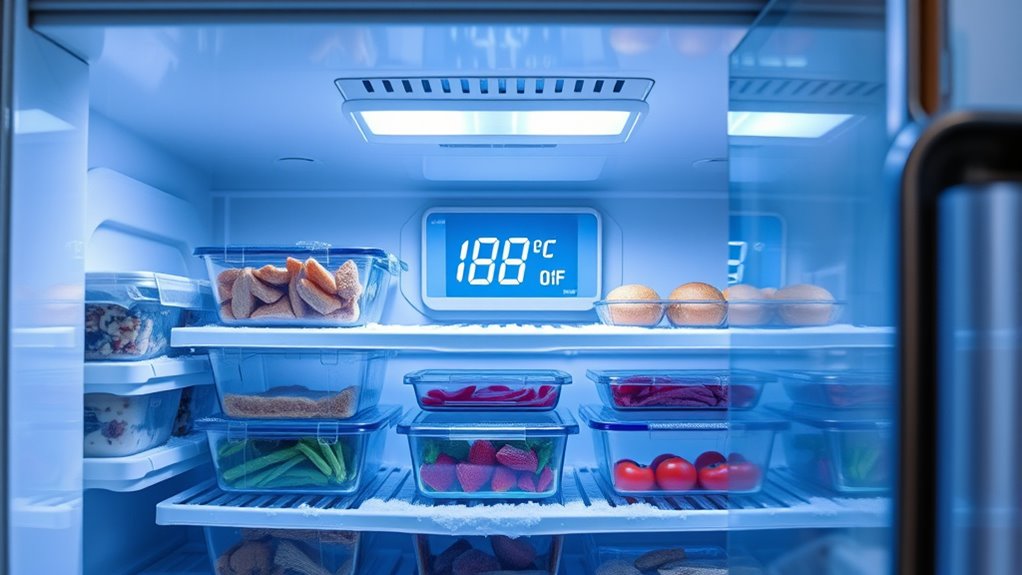
Check the thermometer after several hours, preferably after you’ve opened the door only briefly. If the reading rises above 0°F, inspect the door seal, confirm that the door closes completely, and avoid placing hot food inside.
Leave space around packages so cold air can circulate, but don’t pack the freezer so loosely that energy gets wasted.
Good freezer organization helps you find items quickly, limiting door-open time and supporting Energy efficiency. Group similar foods, label packages with dates, and store older items near the front.
Monitor the temperature occasionally, especially after a power outage or when you notice unusual frost, condensation, or softened food.
Why 0°F Is the Ideal Freezer Temperature
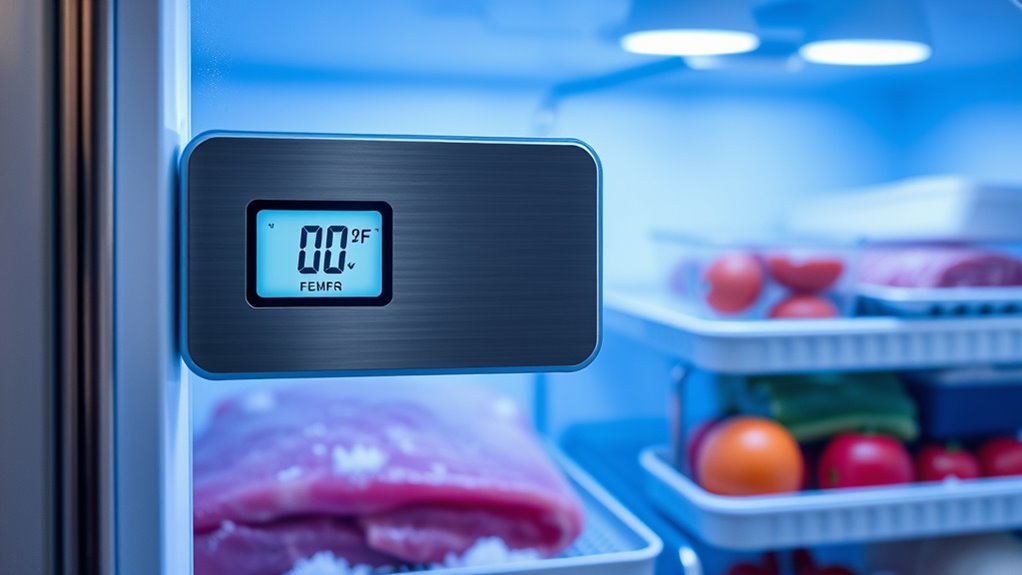
Keeping your freezer at 0°F helps protect food safety by slowing bacterial growth and keeping frozen items reliable over time. It also helps preserve their flavor, texture, and nutritional quality.
Food Safety Benefits
A freezer set to 0°F keeps food continuously frozen, slowing microorganisms and preserving quality without relying on guesswork. This temperature helps prevent partial thawing, which can let bacteria multiply when food warms above safe freezing conditions.
You’ll protect frozen meals, meat, and leftovers by checking the appliance with an independent thermometer, since the dial may not show the actual interior temperature. Keep the door closed as much as possible, and investigate any reading above 0°F.
If food still contains ice crystals after a brief temperature rise, you can usually refreeze it safely, though its texture may change. Discard items that have fully thawed and stayed above 40°F for two hours.
Stable temperatures also support flavor preservation and energy efficiency by reducing temperature swings and unnecessary compressor cycling.
Optimal Food Quality
At 0°F, you’ll preserve frozen food’s flavor, texture, color, and nutrients more effectively than at warmer settings. This steady temperature slows ice-crystal growth, reducing cell damage that can make produce mushy and meats dry after thawing.
You’ll also limit oxidation, helping prevent freezer burn, faded colors, and stale flavors. For the best results, use practical freezing techniques: cool foods before freezing, remove excess air from packages, seal containers tightly, and label items with dates.
Keep your freezer consistently full, but leave enough space for air to circulate. Don’t let temperature myths mislead you. Colder settings won’t necessarily improve quality if they cause fluctuating temperatures or damage packaging.
Check your appliance with a reliable thermometer, and return the setting to 0°F after adding groceries. Consistency protects quality.
How Do You Check Your Freezer Temperature?
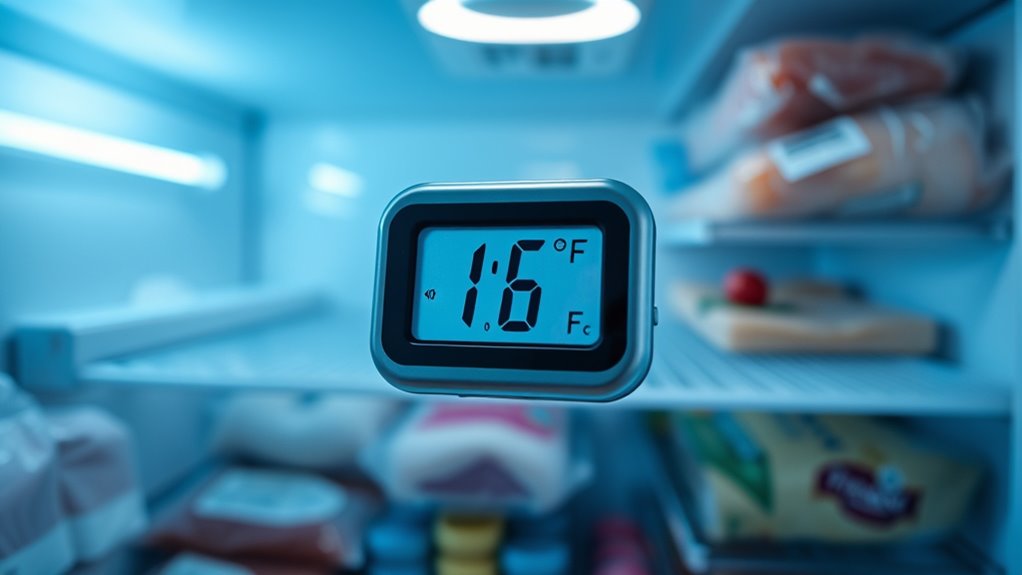
You can check your freezer’s actual temperature with a freezer thermometer. Place the thermometer inside and compare its reading with the temperature setting. If the two numbers differ, adjust the setting as needed.
Use a Freezer Thermometer
How can you tell whether your freezer is holding a safe temperature? Use an appliance thermometer designed for low temperatures.
Place it near the center, away from walls, vents, and the door. Leave it undisturbed for several hours.
Read it without opening the freezer repeatedly, since warm air can affect the result. Record readings at different times to spot changes that could affect food safety, energy efficiency, or frost buildup.
| Check | Placement | Purpose |
|---|---|---|
| Thermometer | Center shelf | Measures surrounding air |
| Door test | After several hours | Confirms stability |
| Repeat reading | Morning and evening | Reveals fluctuations |
| Record result | Notes or phone | Tracks patterns |
Choose a model with a clear dial or digital display, and replace it if it becomes difficult to read.
A thermometer gives you objective information instead of relying on guesswork or food hardness.
Check Temperature Settings
Check your freezer’s temperature setting by locating the control dial or digital panel, usually inside the compartment or near the front edge. Set it to 0°F (-18°C), the recommended target for safe, efficient storage.
If your model uses numbered settings, consult the manual because higher numbers may mean colder temperatures.
- Adjust the control gradually, then wait 12–24 hours before checking again.
- Keep the door closed during this period to prevent warm air from affecting results.
- Compare the display with a freezer thermometer placed between food packages.
- Recheck after loading groceries, defrosting, or changing the setting.
A stable reading helps protect food quality and supports energy efficiency. Don’t assume a low dial setting guarantees proper cooling. Freezer insulation, room temperature, and door seals also affect performance.
Replace damaged seals and avoid placing the appliance near heat sources.
Where Should You Place a Freezer Thermometer?
Place the freezer thermometer in the center of the freezer, away from the walls, door, vents, and cooling elements. This location gives you the most representative reading of the space where you store food.
Place the thermometer centrally to capture the freezer’s most accurate, representative temperature.
Don’t place the thermometer on a shelf near the front, where warm air enters whenever you open the door. Avoid setting it directly beside frozen packages, since nearby items can affect the reading.
Keep it upright and secure so it won’t shift or become buried under food. If you have a chest freezer, position the thermometer near the top of the food, but still away from the lid and sides.
For a built-in display, use a separate appliance thermometer in this central area to verify accuracy. Proper placement supports energy efficiency by helping you adjust settings based on the freezer’s actual conditions.
It can also reveal uneven cooling, frost buildup, or blocked airflow that needs attention before food quality suffers.
How Long Should You Wait for a Reading?
Wait at least 12–24 hours after placing a freezer thermometer before relying on its reading. This allows the sensor to reflect the freezer’s stable internal temperature rather than a temporary change caused by opening the door, adding groceries, or loading warm items.
Keep the door closed during this waiting period so cold air doesn’t escape and the compressor doesn’t work unnecessarily.
For the most dependable result:
- Check the thermometer after 12 hours if the freezer is lightly used.
- Wait 24 hours after restocking, defrosting, or placing several unfrozen items inside.
- Read the display quickly, preferably before opening the door fully.
- Record the temperature at the same time on a later day for comparison.
Consistent readings can reveal problems with freezer organization, such as blocked vents or crowded shelves. They can also help you evaluate energy efficiency by showing whether the appliance maintains a steady temperature without excessive cycling.
Don’t judge performance from a single reading. Monitor patterns instead.
How Do You Adjust the Freezer Temperature?
To adjust your freezer temperature, find the temperature control inside the freezer or on the control panel. Set it to the recommended level—usually 0°F (-18°C)—and check the temperature with a freezer thermometer. If you need to make adjustments, change the setting gradually and wait several hours between changes.
Locate Temperature Controls
Find the temperature control inside the freezer compartment, along the upper wall, side panel, or rear panel, depending on the model. Check near the front edge, behind a small cover, or beside the interior light.
Some models place the control inside the refrigerator section, especially near the top or in the fresh-food control panel. Use your owner’s manual if you can’t find it.
- Look for a dial labeled “Freezer,” “Temperature,” or “Colder.”
- Identify electronic buttons or a touch display marked with freezer settings.
- Check for a lock symbol that may require holding a button before access.
- Keep shelves and packages clear so you can reach the control safely.
Good Storage organization makes the control easier to locate and supports Energy efficiency by improving airflow around stored food.
Set And Monitor Temperature
Set the freezer control to 0°F (-18°C), the recommended temperature for keeping food safely frozen. Adjust the dial gradually, then wait 24 hours before checking the result.
A digital model may let you press up or down buttons. Follow its manual for exact steps.
Use a standalone thermometer because built-in displays can be inaccurate.
| Check | Action |
|---|---|
| Too warm | Lower the setting |
| Too cold | Raise the setting |
| Frost buildup | Defrost and inspect seals |
Place the thermometer between frozen packages, away from the door, and read it after several hours.
Recheck after adding groceries or during hot weather. Keep the door closed to support Energy efficiency and stable temperatures.
If the freezer stays above 0°F, check the gasket, vents, and condenser coils. Call a technician if adjustments don’t help.
What Should You Do If It’s Too Warm?
If your freezer is too warm, check that the door seals tightly and the temperature control is set to 0°F (-18°C). A loose seal, frequent opening, or blocked vents can prevent proper cooling.
Move food away from interior air passages, and avoid adding large amounts of unfrozen food at once.
- Inspect the seal: Close the door on a sheet of paper. If you can pull it out easily, clean or replace the gasket.
- Check airflow: Leave space around packages and keep vents clear. This supports cooling and improves Energy efficiency.
- Clean the coils: Unplug the appliance, then vacuum dusty coils carefully. Cleaner coils support Noise reduction and steadier operation.
- Monitor recovery: Wait 24 hours after adjustments, then verify the temperature with an appliance thermometer.
If the freezer remains warm, listen for unusual clicking, confirm the door closes level, and contact a qualified technician.
Move perishable food to a working freezer if it rises above safe temperatures. Don’t repeatedly adjust controls without checking the actual temperature.
What Should You Do If It’s Too Cold?
When your freezer is too cold, check the temperature with an appliance thermometer and confirm the control is set to 0°F (-18°C). If it reads lower, raise the setting slightly, wait 24 hours, and test again.
Avoid changing the control repeatedly, because the freezer needs time to stabilize.
Inspect the door seal for gaps, tears, or dirt that might let cold air escape and make the unit run continuously. Clean the gasket with warm, soapy water, then dry it thoroughly.
Check that vents aren’t blocked by packages, and make sure the appliance has adequate clearance for air circulation.
Heavy frost can restrict airflow and cause uneven temperatures. Follow your manufacturer’s instructions for Freezer defrosting, and never chip ice with a sharp tool.
Regular maintenance also supports Energy efficiency and reduces unnecessary cooling.
If temperatures remain below zero after these steps, contact a qualified technician. A faulty thermostat, sensor, or control board may require professional service.
How Full Should a Freezer Be?
A freezer works best when it’s about 70–85% full, leaving enough space for cold air to circulate around the food. This balance supports steady temperatures without blocking vents or making items difficult to retrieve. An overpacked freezer restricts airflow, while an underfilled one loses cold air quickly whenever you open the door.
Use these Storage organization practices:
- Keep packages a few inches from interior vents and walls so air can move freely.
- Group similar foods together, and label containers with contents and dates.
- Place frequently used items near the front, limiting door-open time and supporting Energy efficiency.
- Fill empty spaces with reusable ice packs or sealed bags of ice, but don’t compress food tightly.
Check the freezer periodically and rearrange supplies as needed. Leave a clear path around the fan and avoid covering temperature sensors.
A well-organized freezer maintains more even cooling, protects food quality, and helps you use available space without disrupting circulation. Keep newer packages behind older ones so you’ll use food before it loses quality.
When Do Temperature Problems Require Repair?
Even with proper organization, persistent temperature problems can signal a failing component that needs repair. If your freezer stays above 0°F, freezes food unevenly, or cycles constantly, check the door seal, vents, and thermostat first.
Unusual clicking, buzzing, frost buildup, or water pooling also deserves attention. Unplug the unit before inspecting accessible parts, and don’t remove sealed-system components yourself.
| Symptom | Possible cause | Recommended action |
|---|---|---|
| Warm interior | Failed thermostat | Schedule service |
| Heavy frost | Defrost-system fault | Request repair |
| Constant running | Dirty condenser coils | Clean, then monitor |
| Repeated clicking | Start-relay problem | Call a technician |
Use these Maintenance tips: clean condenser coils, keep vents clear, and verify the door closes tightly. These steps support Energy efficiency, but they won’t fix a defective compressor, fan, sensor, or control board.
Arrange professional service when basic checks don’t restore a stable temperature, food repeatedly thaws, or the appliance trips a breaker. Prompt repair protects your food and prevents higher energy costs.
Frequently Asked Questions
How Long Can Frozen Food Safely Remain in the Freezer?
You can keep frozen food safe indefinitely if your freezer stays at 0°F (-18°C) or below, although quality declines over time. For best taste, use ground meat within three to four months, cooked leftovers within two to six months, and poultry within six months.
Don’t refreeze food that’s warmed above 40°F for over two hours. Practice regular Freezer maintenance and Temperature calibration to keep storage conditions reliable and consistent.
Can Freezing Food Destroy Bacteria or Other Harmful Microorganisms?
Freezing food usually doesn’t destroy bacteria, viruses, or parasites; it mainly stops their growth through microbial dormancy. When you thaw food, surviving microorganisms can become active again and multiply quickly, especially if you leave it at room temperature.
Freezing efficacy varies by organism, food, packaging, and storage time. You’ll protect yourself by cooking thawed food thoroughly, preventing cross-contamination, and keeping your freezer at 0°F (-18°C) or colder.
What Foods Should Never Be Stored in the Freezer?
You should avoid freezing foods that lose their texture or separate, including leafy greens, raw potatoes, cucumbers, lettuce, and mayonnaise-based sauces. Soft cheeses, custards, cream, and fried foods may also become watery, grainy, or soggy after thawing.
Temperature fluctuations can worsen these quality changes, so practice smart freezer organization: label items, seal them tightly, and keep sensitive foods away from the door. Freezing won’t reliably destroy harmful microorganisms, either; it mainly pauses their growth.
How Should Food Be Packaged Before Freezing?
Wrap food tightly before freezing to prevent freezer burn and preserve quality. Use airtight freezer bags, plastic wrap, foil, or rigid containers, and press out excess air.
Leave headspace in containers for expansion, especially with liquids. Divide large portions into smaller servings so they freeze and thaw evenly.
Label each package with its contents and date. These packaging techniques support effective freezing methods and make safe, organized storage easier.
Why Does Freezer Burn Occur, and Is Freezer-Burned Food Safe?
When push comes to shove, freezer burn occurs when air reaches frozen food, causing moisture loss, dry patches, and grayish discoloration. You can usually eat freezer-burned food safely, provided it stayed continuously frozen and shows no spoilage; however, its texture and flavor may suffer. Trim affected areas before cooking.
Improve freezer maintenance by checking seals, practicing freezer organization to limit air exposure, using airtight packaging, and rotating older items first.
Conclusion
Keeping your freezer at 0°F (-18°C) helps preserve food quality and keeps it safely frozen. You’ll get the most reliable reading by placing a freezer thermometer near the center and waiting 24 hours.
If temperatures rise or fall, adjust settings, check the door seal, and avoid overloading the appliance. Don’t ignore persistent problems: spoiled food can cost you, and the USDA notes that a full freezer stays cold for about 48 hours during a power outage.
For the best results, keep your freezer at 0°F (-18°C) and monitor it regularly.