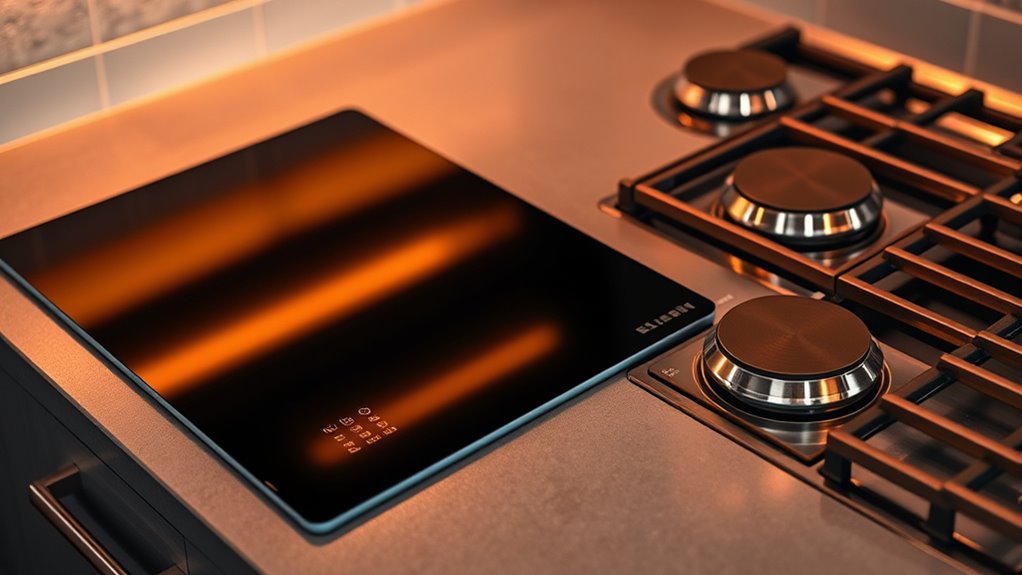
Induction Stove Versus Electric: 7 Key Differences
Choosing between an induction stove and an electric stove can feel confusing, especially when you want faster cooking, easier cleanup, and better energy efficiency. You’re not alone—many home cooks struggle to know which option fits their kitchen and cookware.
When you compare induction and electric stoves, induction heats compatible cookware directly, so it usually boils and responds faster while using less energy. Its cooler glass surface improves safety and makes cleanup easier, but you’ll need magnetic, flat-bottomed pans and typically pay more.
Electric stoves cost less, work with most cookware, and run quietly, though they heat and cool more slowly and can bake spills onto the surface. Keep comparing these seven differences to choose confidently.
Key Takeaways
- Heating method: Induction excites magnetic cookware directly, while electric stoves heat coils or radiant elements that transfer heat to pans.
- Speed and control: Induction generally heats faster and responds more precisely. Electric cooking surfaces heat and cool more slowly.
- Energy efficiency: Induction wastes less heat and may reduce energy costs. Electric stoves typically lose more heat to surrounding surfaces.
- Cookware compatibility: Induction requires flat-bottomed, magnetic cookware. Electric stoves work with most flat-bottomed pans.
- Safety and cleaning: Induction surfaces stay relatively cooler and wipe clean easily. Electric surfaces retain heat and may develop baked-on spills.
How Do Induction and Electric Stoves Work?
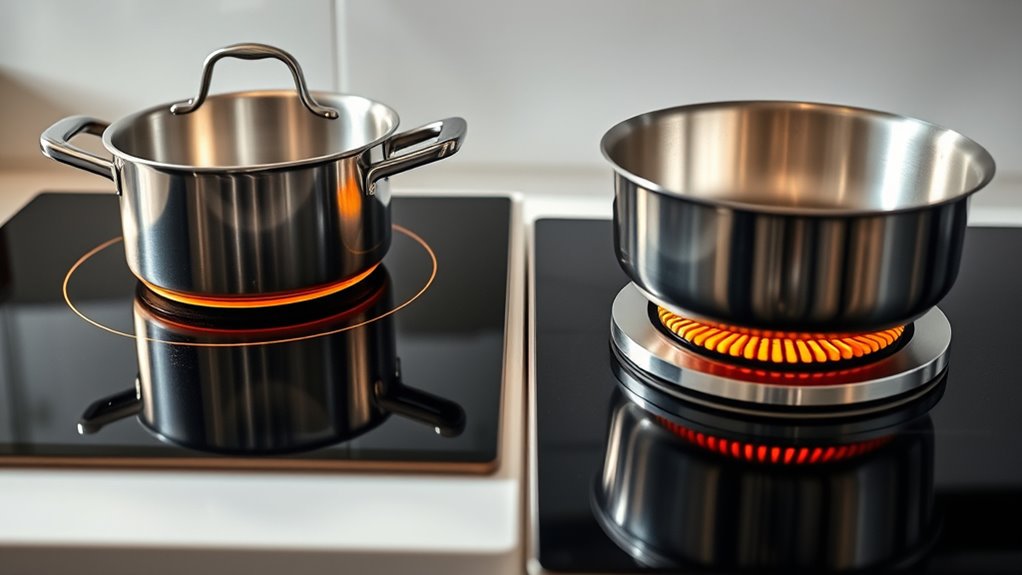
Induction stoves use electromagnetic energy to heat compatible cookware directly, while electric stoves send electricity through heating elements that transfer heat to your pots and pans. This cooking technology relies on a magnetic field beneath the glass surface.
Induction stoves use electromagnetic energy to heat compatible cookware directly, while electric stoves rely on heated elements to transfer warmth.
When you place a magnetic pan, such as cast iron or some stainless steel, on the zone, currents form inside the pan and create heat. The cooktop itself stays relatively cooler, although residual heat can remain after cooking.
Electric stoves use metal coils or radiant elements. Electricity heats these components, and they transfer energy to cookware through direct contact and radiant heat. You can use nearly any flat-bottomed pan, but the element and surrounding surface may become very hot.
Safety considerations matter with both designs. You’ll need to keep flammable items away, use appropriate cookware, and handle hot surfaces carefully.
Induction models also require you to remove metal objects and follow the manufacturer’s electrical guidance.
Which Stove Cooks Faster?
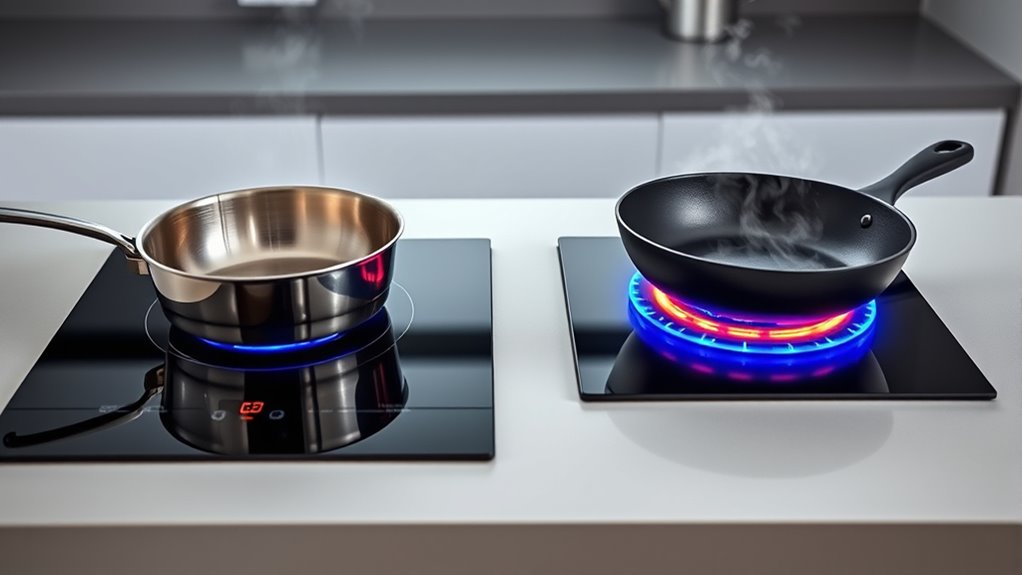
When speed matters, induction usually cooks faster than a traditional electric stove because it transfers energy directly into compatible cookware. You’ll notice the difference when boiling water, searing meat, or bringing soup to a simmer.
Induction creates heat in the pan itself, so your cookware responds almost immediately when you raise or lower the setting. A traditional electric stove must first heat its coil or radiant surface, then transfer that heat through the pan.
That extra step can make cooking feel slower and temperature changes less responsive. Your results will depend on pan size, cookware material, burner wattage, and the amount of food you’re heating.
Use a flat, induction-compatible pan to get the best performance from an induction model. Although both stove types can deliver strong cooking speed, induction typically reaches boiling temperatures sooner and maintains control more precisely.
Energy consumption affects operating costs, but cooking time primarily depends on how efficiently each stove transfers heat.
Which Stove Uses Less Energy?
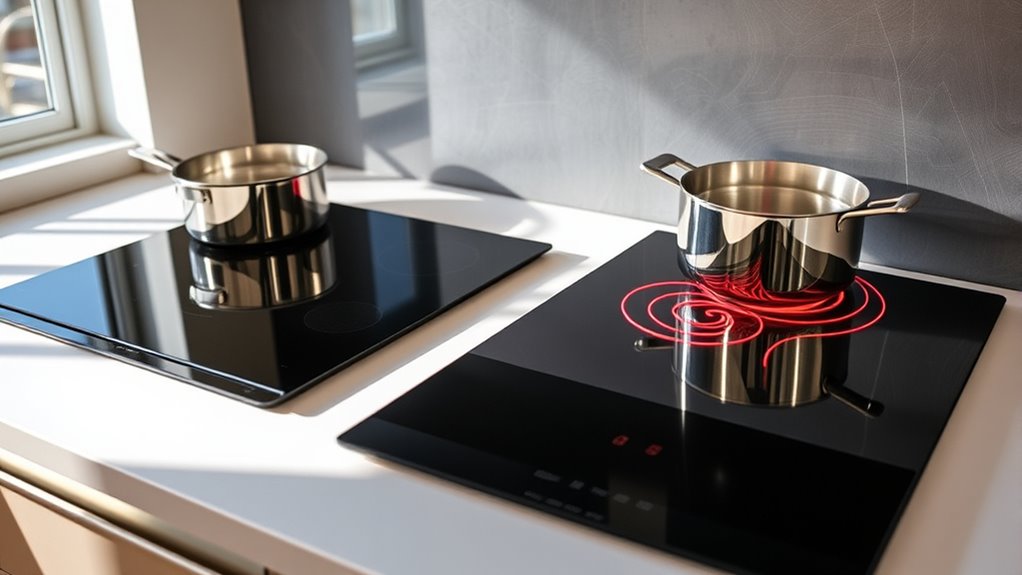
You’ll use less energy with an induction stove because it transfers heat directly to your cookware. By contrast, an electric stove loses more heat through its heating element and the surrounding surface. As a result, induction cooking can lower your energy use and cooking costs over time.
Energy Transfer Efficiency
Although both cooktops use electricity, induction transfers energy to cookware more efficiently than a traditional electric stove. An induction cooktop creates a magnetic field that excites the metal in your pan, producing heat directly inside the cookware.
Because the surface itself doesn’t generate most of the heat, you lose less energy to surrounding air and unused glass. A traditional electric stove sends electricity through a heating element, which warms gradually and then transfers heat to your pan.
That extra step increases energy loss and slows your response when you adjust the temperature. Your power consumption may consequently be lower with induction for similar cooking tasks.
However, efficiency depends on pan compatibility, cooking habits, and appliance settings. Use flat, magnetic cookware and matching burner sizes to maximize heat transfer and minimize wasted electricity during everyday cooking.
Cooking Cost Comparison
Higher transfer efficiency can reduce the energy an induction stove uses for the same cooking task, which may lower your electricity bill. You’ll typically see greater cost savings when you cook often, because induction heats cookware directly and wastes less heat than a conventional electric element. However, your rate, cookware, and cooking habits determine actual results.
| Factor | Effect on cost |
|---|---|
| Efficiency | Induction usually uses less electricity |
| Cooking time | Faster heating can reduce usage |
| Electricity rate | Higher rates increase savings |
| Cookware | Compatible pans improve performance |
| Purchase price | Induction may cost more initially |
For occasional cooking, the lower upfront price of an electric stove may outweigh modest energy savings. For daily use, induction can recover its higher purchase price through reduced consumption.
Compare your local rates and expected usage to estimate long-term expenses. You’ll also need compatible magnetic cookware, which can add to initial costs.
Is Induction or Electric Safer?
When safety is the priority, induction and electric cooktops both offer advantages, but induction is generally safer. It heats your cookware directly, so the cooking surface stays relatively cooler. You’ll face fewer burn risks from accidental contact, although the surface can remain warm after cooking.
Induction also responds quickly when you lower or switch off the heat, helping you control temperatures and reduce fire hazards.
Electric cooktops use radiant heating elements that become extremely hot and stay hot longer. You’ll need to watch children, loose clothing, and anything flammable near the burners.
Spills can smoke or ignite, and touching an active or recently used element can cause serious burns. However, electric models don’t produce open flames or combustion gases, which makes them safer than gas in some respects.
For your home, induction offers stronger protection against common safety concerns, especially burns and overheating. Whichever you choose, stay nearby while cooking, keep flammable items away, and use built-in timers or automatic shutoff features when available.
Will Your Cookware Work on Both Stoves?
Your cookware will work on both stoves if it’s compatible with induction and safe for electric cooktops. Check each pan’s base before cooking. Induction requires magnetic cookware, while electric burners accept most flat-bottomed pots and pans.
For reliable cookware compatibility, look for stainless steel labeled induction-ready, cast iron, or enameled cast iron. Test an unmarked pan with a magnet: if it sticks firmly to the bottom, induction should heat it. Aluminum, copper, glass, and nonmagnetic stainless steel won’t work unless they include a magnetic layer.
- Choose flat, smooth bases for steady contact with electric heating elements.
- Avoid warped pans, which can heat unevenly and wobble.
- Confirm manufacturer instructions before using specialty cookware.
Your pan’s size matters, too. Match its base to the burner so you don’t waste heat or extend cooking time. Although cookware doesn’t determine every energy consumption comparison, efficient pan-to-burner matching can reduce wasted energy on either stove.
Using induction-ready pans lets you switch between appliances without replacing your entire cookware collection.
Which Stove Is Easier to Clean?
Both stove types are fairly easy to clean, but their surface designs make a difference. An induction cooktop has a flat glass surface, so wiping up spills is usually quick and simple. Electric stoves, on the other hand, have coils and drip pans that may take a little more effort to clean. For stubborn residue, use a cleaner and technique suited to the specific surface.
Flat Surface Design
Both induction and electric stoves have flat cooking surfaces, but induction models are generally easier to clean. Their smooth glass tops have fewer raised elements, so you can wipe across the entire cooking area without working around coils or burner pans.
You’ll also appreciate the consistent surface stability, which helps cookware sit evenly during use. Electric models may feature a glass-ceramic top, but exposed or recessed heating elements can create more edges and components to maintain.
Both designs offer modern aesthetic appeal, letting you coordinate your cooktop with your kitchen’s style.
- Induction tops provide one uninterrupted, streamlined surface.
- Electric glass tops look sleek while retaining traditional heating zones.
- You can clean either design with a soft cloth and manufacturer-approved product.
Choose induction if you value the simplest surface layout and a contemporary appearance. Consider electric if you prefer familiar controls and broader model availability.
Spill Cleanup
Spills are usually easier to clean on an induction stove because its surface stays relatively cooler around the cookware, so food is less likely to bake onto the glass. When you notice a spill, turn off the controls and let the surface cool enough to handle safely.
Then wipe it with a soft, damp cloth and a small amount of cooktop cleaner if needed. You’ll typically find this process faster than cleaning a traditional electric stove, where residual heat can quickly dry splashes and create extra work.
Good spill prevention helps, too: avoid overfilling pans, use properly sized cookware, and reduce heat before liquids boil over. For daily cleanup, lift cookware carefully, wipe the surrounding glass after cooking, and keep cloths handy so minor spills don’t spread.
Never use abrasive pads or harsh powders.
Stubborn Residue Removal
When cooked-on residue remains, an induction stove is usually easier to clean because its surrounding glass doesn’t retain as much heat. You can often loosen splatters after cooking with a damp cloth, mild dish soap, and a nonabrasive scraper.
Lower surface temperatures reduce residue buildup and help prevent burnt-on films.
Electric stoves may hold heat around coils or beneath a smooth top, so spills can bake onto the surface. Let the burner cool completely, then choose cleaning methods that match the design:
- Wipe induction glass with a soft microfiber cloth and approved cleaner.
- Use a ceramic cooktop scraper gently on stubborn electric-stove spots.
- Avoid steel wool, harsh powders, and sudden cold water on hot surfaces.
You’ll spend less time scrubbing an induction top, but either stove stays cleaner when you wipe spills promptly and never drag gritty cookware across the glass.
Induction vs. Electric: Which Should You Buy?
Choosing between an induction and electric stove comes down to your cooking habits, budget, and kitchen setup. Choose induction if you want rapid heating, precise temperature control, and improved energy efficiency.
Its surface stays relatively cool, so spills usually wipe away easily, and built-in safety features can reduce burn risks. However, you’ll need compatible magnetic cookware, and the higher purchase price may stretch your budget.
Choose an electric stove if you want a lower upfront cost and broad cookware compatibility. Traditional radiant models provide steady heat, although they respond more slowly when you adjust the controls and may waste more energy.
They also retain heat after you switch them off, so you’ll need extra caution.
Consider your kitchen’s cooking aesthetics, too. Induction offers a sleek, minimalist appearance, while electric models often provide familiar, practical designs.
Compare sound levels: induction may hum or click during operation, whereas radiant electric stoves usually operate more quietly. Your priorities should guide the final choice.
Frequently Asked Questions
Can Induction Stoves Be Used During Power Outages?
No, you can’t use an induction stove during a power outage because it requires electricity to create heat. A battery power backup with a suitable inverter may run it, but check the stove’s wattage and the backup system’s capacity first.
Otherwise, choose alternative heating, such as a gas burner, camping stove, or outdoor grill. Never operate fuel-burning appliances indoors without proper ventilation, since carbon monoxide can accumulate quickly and become deadly.
How Noisy Are Induction Cooktops Compared With Electric Stoves?
Induction cooktops usually stay quieter than electric stoves, though you may hear a soft hum, buzz, or clicking from the electronics and cooling fan. Your cookware can amplify these sounds, especially at high power or with lightweight pans.
Electric stoves typically make little noise while heating, but you might hear occasional clicks as the thermostat cycles. For a practical noise comparison, induction sound levels remain modest and rarely disturb normal conversation in your kitchen.
Do Induction Stoves Require Special Electrical Installation?
Do induction stoves require special electrical installation? Often, yes, but you’ll usually need the same setup as a high-powered electric range. Check your home’s installation requirements: many models require a dedicated 240-volt circuit, appropriate amperage, and hardwiring or a compatible outlet.
Verify power compatibility before buying, especially when replacing a gas stove. An electrician can confirm your panel supports the load and install the circuit safely if necessary.
What Are the Typical Upfront Costs of Induction and Electric Stoves?
You’ll typically pay $800–$2,500 upfront for an induction stove, while a conventional electric stove usually costs $500–$1,500. Induction models often cost more because they use advanced heating technology and precise controls.
However, compare energy efficiency, installation, cookware compatibility, and long-term maintenance costs before deciding. You might save on energy bills with induction, but electric models generally offer a lower initial price and simpler replacement options for many households.
How Long Do Induction and Electric Stoves Typically Last?
You can typically expect an induction stove to last about 10–15 years, while an electric coil or smooth-top stove often lasts 10–13 years. Durability comparison favors induction slightly because it has fewer exposed, heat-damaged components, though its electronic controls can cost more to repair.
Maintenance requirements remain modest for both: clean spills promptly, avoid abrasive cleaners, and inspect burners regularly. With careful use, you can extend either appliance’s service life.
Conclusion
Choosing between an induction stove and an electric stove comes down to your kitchen, cooking style, and budget. Choose induction for faster heating, greater energy efficiency, precise control, and easier cleanup—provided you have compatible cookware.
Choose an electric stove for lower upfront costs, broader cookware compatibility, and straightforward operation. Compare speed, safety, maintenance, and long-term value to find the option that helps you cook confidently, efficiently, and comfortably every day.