What Temperature Should a Freezer Be?
Many people struggle to keep their freezer cold enough without wasting energy or damaging their food. You’re not alone—finding the right setting can help prevent freezer burn, preserve quality, and keep meals safely frozen.
What Temperature Should a Freezer Be?
Set your freezer to 0°F (-18°C) or colder to keep food safely frozen and preserve its quality. You’ll help protect texture, flavor, and nutrients while reducing freezer burn and waste.
Check the temperature with an appliance thermometer placed near the center or front, away from vents and the door. After positioning it, wait 12–24 hours before checking the reading.
Keep the freezer properly filled without blocking airflow, and find out how to troubleshoot temperature problems and store food safely.
Key Takeaways
- Set your freezer to 0°F (-18°C) or colder for safe, long-term food storage.
- Use an appliance thermometer to verify the actual temperature, placing it away from vents and the door.
- Allow 12–24 hours for a thermometer to stabilize before checking the freezer’s temperature.
- Keep the freezer 70–85% full, while leaving space around vents for proper air circulation.
- Check door seals, vents, and coils if the freezer cannot consistently maintain 0°F.
What Temperature Should a Freezer Be?
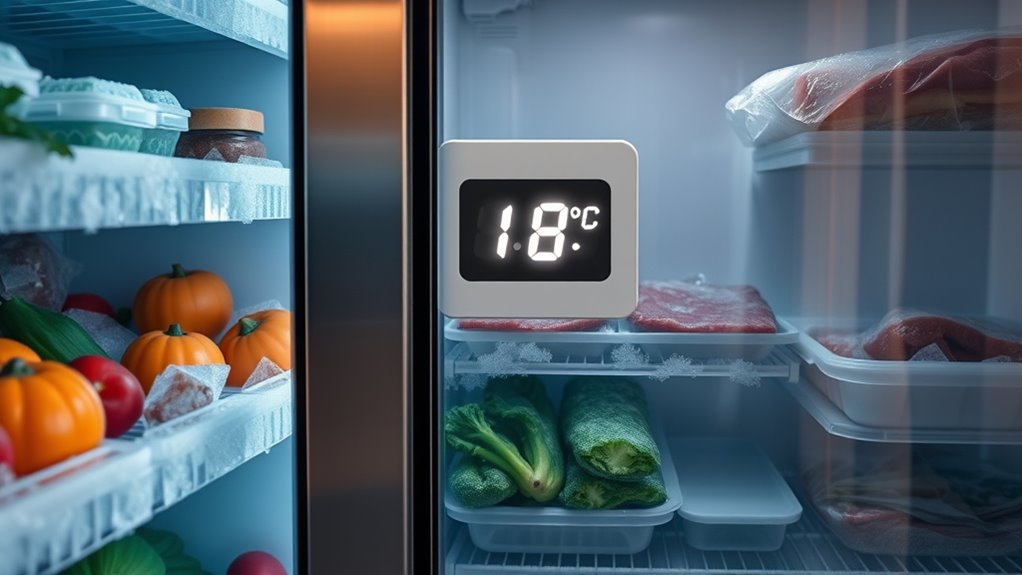
Set your freezer to 0°F (-18°C) or colder to keep food safely frozen and preserve its quality. This setting gives you a practical target for everyday freezer use.
Keep your freezer at 0°F (-18°C) or colder to preserve food quality and keep it safely frozen.
Check the appliance’s control panel, then adjust it if the displayed temperature rises above 0°F. Because built-in dials may not show the actual interior temperature, place an appliance thermometer inside and read it after the freezer has stabilized.
Keep the thermometer near the front or center, away from the door and vents, for a useful reading. Avoid packing shelves so tightly that cold air can’t circulate.
Leave space around containers and arrange items so you can close the door completely. If you store Frozen snacks, label packages and place frequently used foods where you can reach them quickly.
For Ice cream storage, maintain the recommended setting and keep the container sealed to limit temperature changes and ice crystals. Recheck the thermometer regularly, especially after loading groceries or adjusting controls.
Why Should a Freezer Stay at 0°F?
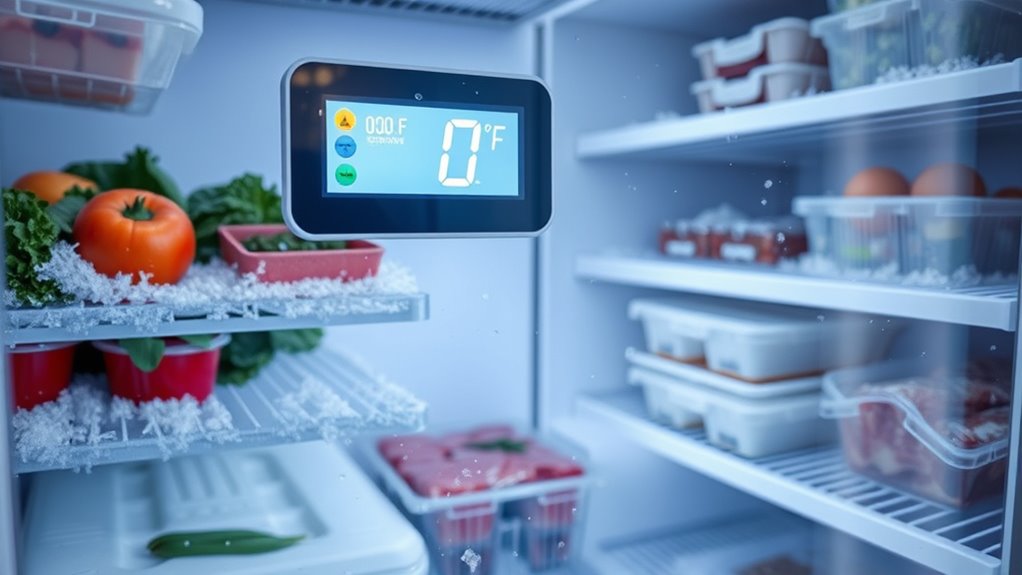
Why Should a Freezer Stay at 0°F?
Keeping your freezer at 0°F (-18°C) or colder keeps food fully frozen, slows quality loss, and limits the growth of microorganisms. You’ll preserve texture, flavor, and nutrients longer while reducing freezer burn and waste.
A stable cold environment also protects foods during brief door openings or power interruptions.
| Benefit | What it protects | Why it matters |
|---|---|---|
| Food safety | Frozen foods | Limits microbial growth |
| Quality | Texture and flavor | Reduces freezer burn |
| Savings | Your groceries | Prevents waste |
| Performance | Appliance operation | Supports energy efficiency |
Avoid setting the temperature substantially lower unless your manufacturer recommends it. Extra cold usually won’t improve safety, but it can increase energy use and compressor activity.
Keeping the door closed, maintaining clear vents, and avoiding overcrowding help your freezer hold 0°F efficiently. Those habits may also promote noise reduction by reducing prolonged cooling cycles.
You’ll get dependable storage without unnecessary operating costs or quality loss.
How to Check Your Freezer Temperature
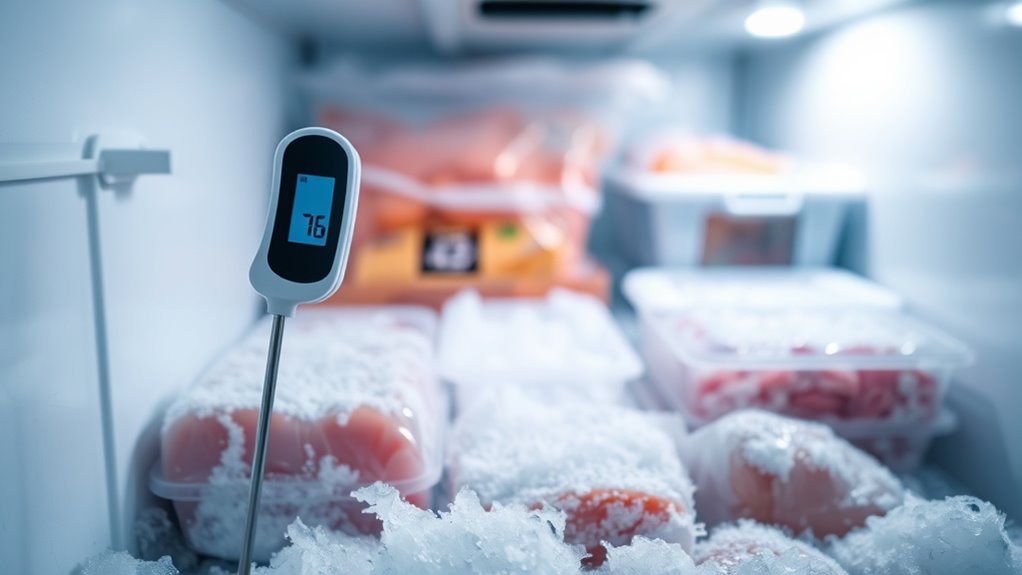
To check your freezer temperature accurately, place an appliance thermometer inside and leave it undisturbed for several hours. Afterward, read the display without opening the door longer than necessary.
Place an appliance thermometer inside your freezer for several hours, then check the reading while minimizing the time the door remains open.
Your freezer should register 0°F (-18°C) or colder. If the reading runs warmer, adjust the temperature control gradually, then check again after the freezer has had time to stabilize.
You can also watch for clues, but don’t rely on them alone. Soft Ice cream may indicate that the compartment is too warm, while excessive Frost buildup can restrict airflow and affect cooling.
However, texture and frost can change for several reasons, so use a thermometer to confirm the actual temperature.
Check the reading at different times if you suspect fluctuations, especially after adding groceries or during hot weather.
If the temperature remains high despite adjustments, inspect the door seal, confirm the door closes fully, and consider having the appliance serviced. Keep a simple record of readings to identify recurring problems.
Where to Place a Freezer Thermometer
Place your freezer thermometer in the center of the freezer for the most accurate reading. Keep it away from the door, where the temperature changes more often. Also, leave enough space around the thermometer for proper airflow, and make sure it doesn’t block any vents.
Central Interior Placement
Position the freezer thermometer in the central interior, away from the walls, floor, ceiling, door, and vents. This location gives you a more representative reading of the air surrounding your food.
Place the thermometer on a middle shelf or suspend it among stored items, ensuring you can read its display without disturbing the contents. Don’t press it against packages, because nearby food can influence the measurement and hide temperature changes.
Check that nothing blocks the thermometer’s sensor or traps it in a tightly packed space. Use the reading to confirm that your freezer maintains 0°F (-18°C), the recommended temperature for safe, long-term storage.
If the temperature fluctuates, reorganize crowded shelves and allow air to circulate. Verify the reading after several hours, not immediately after opening or loading the freezer.
Away From The Door
Keep the freezer thermometer away from the door, where warm air enters each time you open it. Place it on an interior shelf, preferably near the center, so it records the food’s actual storage conditions rather than brief bursts of room-temperature air.
Door insulation can reduce heat transfer, but it can’t prevent temperature fluctuations caused by frequent opening.
For a reliable reading, follow these steps:
- Set the thermometer upright on a shelf, not against the door or wall.
- Leave it in place for at least 24 hours before checking the display.
- Compare readings at similar times, especially after normal use.
Don’t hold the thermometer while reading it, since your hands can affect its sensor. If the door has a built-in thermometer, use a separate shelf thermometer to verify its accuracy.
Check Airflow Clearance
Leave space around the freezer thermometer so cold air can circulate freely and reach its sensor. Place it on a middle shelf, away from vents, walls, food packages, and the door.
An airflow obstruction can create misleading readings, while open space improves temperature consistency. Don’t press the thermometer against frozen items or tuck it beneath a basket.
Keep several inches clear around its sensor, and avoid placing it directly under a fan stream, where rapid airflow may distort the measurement.
| Placement | Risk | Better choice |
|---|---|---|
| Against a wall | Warm reading | Middle shelf |
| Near a vent | Fluctuations | Open space |
| Beneath food | Blocked sensor | Visible position |
After positioning it, close the freezer and wait at least 12 hours before checking. If readings vary, rearrange crowded packages and retest.
You’ll get a more reliable temperature and can adjust the setting confidently.
How Long Does a Freezer Take to Cool?
Your freezer typically takes several hours to reach its target temperature after you turn it on. How quickly it cools depends on factors such as its size, the room temperature, what’s inside, and how often you open the door.
Understanding these factors can help you know when it’s safe to store food.
Initial Cooling Time
A freezer typically takes 4–12 hours to reach its target temperature after you turn it on, although larger models may need up to 24 hours. You should wait until the interior reaches 0°F (-18°C) before storing perishable food.
Use an appliance thermometer to confirm the temperature instead of relying on the control setting.
- Keep the door closed during initial cooling to preserve cold air.
- Avoid adding warm food until the freezer reaches its target temperature.
- Allow extra time after a power interruption before restocking.
You may hear the compressor running frequently during this period; that’s normal. Changing settings repeatedly won’t cool the compartment faster.
Once the freezer stabilizes, monitor its temperature occasionally to support food safety, energy efficiency, and consistent performance. Elevated noise levels, however, may warrant checking the manual or contacting the manufacturer.
Factors Affecting Speed
Several factors affect how quickly a freezer reaches 0°F (-18°C), including its size, starting temperature, room temperature, condition, and how often you open the door. A large freezer generally needs more time than a compact model, while warm food or a power outage can extend cooling.
You’ll get faster results when you leave space around items for air circulation and keep the door closed. A hot kitchen also makes the compressor work harder.
Check the door seal, clean dusty coils, and avoid overloading the compartment to improve performance. Energy efficiency can influence cooling speed, although efficient models may use longer, gentler cycles.
Noise levels may rise during initial cooling as the compressor runs continuously. Once the freezer reaches 0°F, let it stabilize before adding more food.
Why Does Your Freezer Temperature Change?
Freezer temperature changes when warm air enters, the door opens frequently, or the appliance adjusts its cooling cycle. Each event affects the cold air inside, so your thermometer may show small, temporary shifts rather than a constant reading.
- Door activity: Every opening lets humid, warmer air in. Frequent browsing makes your freezer work longer to restore its set temperature.
- Automatic defrosting: During the defrosting process, the freezer briefly warms to melt frost from its coils. You may notice a short-lived rise before normal cooling resumes.
- Room conditions and load: A hot kitchen, poor ventilation, or newly added food increases the heat the appliance must remove. An overloaded compartment can also restrict airflow, creating uneven temperatures.
Your freezer’s compressor cycles on and off to maintain the selected setting, balancing cooling performance and energy efficiency. These fluctuations are usually normal when they remain modest and temporary.
A steady, significant change may indicate a sensor, seal, or mechanical problem that needs attention, rather than ordinary operation.
How to Fix a Freezer That Is Too Warm
If your freezer stays above 0°F (-18°C), check the door seal, airflow, and temperature setting first. Set the control to 0°F and wait 24 hours before judging the result.
Inspect the gasket for cracks, gaps, or food debris; clean it with warm, soapy water and replace it if it doesn’t seal tightly.
Make sure vents inside the compartment aren’t blocked, and leave space around the exterior coils for heat to escape. Vacuum dusty coils, if your model exposes them.
Confirm the freezer sits away from ovens, direct sunlight, and other heat sources. Listen for the compressor and fan.
Unusual sound levels, repeated clicking, or complete silence can indicate a failed relay, fan, or compressor.
Check whether frost covers the rear wall. Heavy frost may signal a defrost-system problem, so unplug the appliance and arrange professional service.
Improving energy efficiency through proper sealing and coil cleaning can also stabilize cooling. If temperatures remain high, call a qualified technician.
How Full Should a Freezer Be?
Keep your freezer about 70–85% full to help it cool efficiently and maintain steady temperatures. A well-stocked freezer helps frozen food stay cold and can reduce energy use.
Just avoid overloading it. Leave enough space for air to circulate and for you to find and remove items easily.
Ideal Freezer Fill Level
Aim to keep your freezer about 70% to 85% full, leaving enough space for air to circulate around the food. This balance supports steady cooling without crowding shelves, vents, or drawers.
Don’t pack items tightly against interior walls, because blocked vents can restrict airflow and create uneven temperatures. Leave a small gap around packages and keep the manufacturer’s recommended clearance.
Use this quick check:
- Fill empty spaces with bagged ice or reusable freezer packs, but don’t obstruct vents.
- Arrange food in labeled sections so you can remove items without leaving the door open.
- Keep bulky containers away from the evaporator area to limit Frost buildup.
A well-organized freezer also helps Energy efficiency by reducing searching time and keeping cold air inside.
If your freezer stays below 70% full, add safe, stable items rather than cramming it.
Benefits of Proper Filling
A properly filled freezer maintains steadier temperatures, helps food freeze evenly, and reduces the energy needed to recover after you open the door. Keep it about 75–90% full, leaving enough space for air to circulate around packages and vents.
If your freezer is nearly empty, add ice packs or sealed containers of water to improve temperature stability, but don’t overcrowd it.
Effective Filling techniques include grouping similar foods, using stackable containers, and keeping frequently used items near the front. Good Storage organization lets you find food quickly, so you won’t leave the door open while searching.
Leave clear space around the temperature sensor and cooling outlets. A well-filled freezer also limits warm air pockets, helping food retain quality and reducing frost buildup.
Check packages regularly, discard spoiled items, and rearrange supplies as needed.
How to Store Frozen Food Safely at 0°F
Set your freezer to 0°F (-18°C) or colder to keep frozen food safe and preserve its quality. Maintain this temperature consistently, and use a freezer thermometer to verify the setting because the built-in dial may not show the actual temperature.
Keep your freezer at 0°F (-18°C) or colder, and verify the temperature regularly with a freezer thermometer.
Follow these three practices:
- Package food tightly: Use airtight freezer bags or containers, remove excess air, and seal every package securely. This step limits freezer burn and unwanted odors.
- Label and organize: Write the food name and freezing date on each package. Place older items where you’ll see them first, and keep foods arranged so cold air can circulate.
- Handle food wisely: Freeze perishable items promptly, divide large portions into shallow containers, and avoid leaving food out during meal preparation. For frozen snack storage, keep individual portions sealed and easy to reach.
Check packages for heavy ice crystal formation, which often signals moisture loss from poor wrapping or temperature changes. Never refreeze food that has completely thawed and warmed above 40°F.
When Should You Replace Your Freezer?
Replace your freezer when it can’t reliably maintain 0°F (-18°C), even after you check the seal, clean the coils, and verify its temperature with a thermometer. Frequent temperature swings can spoil food and signal failing components, such as a weak compressor, damaged thermostat, or refrigerant leak.
Consider replacement if repairs cost nearly as much as a new appliance, or if your freezer repeatedly breaks down. Excessive frost, unusual noises, overheating sides, and water pooling can also indicate serious problems.
A freezer older than 10 to 15 years may use considerably more electricity than current models. Compare its Energy efficiency rating and Power consumption with newer options.
Replacing an inefficient unit can lower your utility bills, especially if you choose an appropriately sized, well-insulated model. Recycle the old freezer through a retailer or local program rather than abandoning it.
Before buying, measure your available space, confirm the door clearance, and select a model that maintains a steady 0°F (-18°C) temperature.
Frequently Asked Questions
Can Food Be Refrozen After It Has Thawed?
Yes, you can refreeze food after it has thawed if you handled it safely. Refreeze it while it still contains ice crystals or stayed at 40°F (4°C) or below.
If it sat above that temperature for over two hours, discard it to protect Food safety. You may notice texture changes, especially in meat and produce.
For better Freezer organization, label packages with dates and keep thawed items together for quick use.
How Much Electricity Does a Freezer Typically Use?
How much electricity does a freezer typically use? You’ll usually see about 200–500 kilowatt-hours annually, costing roughly $25–$75 per year, depending on size, age, model, and local rates.
Energy consumption rises when you open the door frequently or place the freezer near heat. For efficiency tips, keep it full but not crowded, maintain proper seals, clean the coils, and choose an ENERGY STAR model. A little prevention goes a long way.
Should Different Foods Be Stored in Specific Freezer Compartments?
You don’t need specific freezer compartments for most foods, but organizing items improves safety and quality. Keep meat, poultry, and seafood together, sealed on lower shelves to prevent leaks.
Store frequently used foods near the front, and place ice cream where the temperature stays most consistent. Use door shelves for sturdy items, not temperature-sensitive foods.
These frozen storage habits help you manage temperature zones, reduce exposure to warm air, and find everything faster.
Can You Safely Freeze Food in Glass Containers?
Yes—you can safely freeze food in glass containers when you choose the right vessel and leave room for expansion. Think of glass as a sturdy but temperamental bridge: sudden temperature changes can make it crack.
For reliable glass safety, use freezer-safe, tempered glass, avoid hot-to-cold transfers, and cool food first. Check container durability, leave about an inch of headspace, and thaw contents in the refrigerator rather than on the counter.
What Causes Freezer Burn, and How Can You Prevent It?
Freezer burn happens when moisture escapes food and forms ice crystals, usually because air reaches poorly sealed surfaces. You can prevent it with smart Packaging techniques: use airtight containers, press excess air from freezer bags, and wrap food tightly in moisture-resistant material.
Practice Temperature management by keeping your freezer at 0°F (-18°C), avoiding frequent temperature swings, and storing food promptly. Label packages, and use older items first to maintain quality.
Conclusion
Keeping your freezer at 0°F isn’t just a suggestion; it’s the cold, hard rule for protecting food quality and safety. Check the temperature regularly, store items strategically, and fix warming problems before they lead to spoiled groceries and wasted money.
If your freezer can’t hold a steady 0°F, even after troubleshooting, replacement may be your smartest move. With a little attention, you’ll keep every frozen meal, ingredient, and leftover safely preserved for the long haul. Knowing what temperature should a freezer be set to can help protect your food and your budget.