
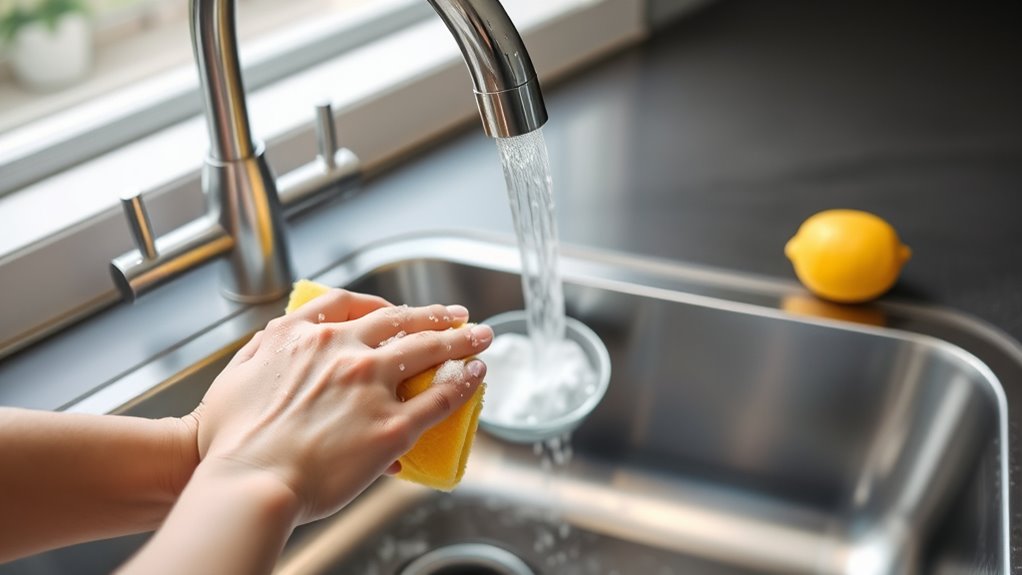
How to Clean Kitchen Sink in 3 Easy Steps
How to Clean Kitchen Sink? Keeping your kitchen sink spotless can feel like a never-ending battle. If you’ve ever struggled with stubborn stains, lingering odors, or just the general grime that seems to build up despite your efforts, you’re not alone. Many people find maintaining a shiny, clean sink challenging, but with the right approach, it can become a simple part of your routine.
To clean your kitchen sink in three easy steps, start by gathering mild cleaner, a soft sponge, and gloves to prep your workspace. Next, apply the cleaner and scrub grime, focusing on corners and the drain, using baking soda paste for tough stains.
Finally, rinse thoroughly with warm water, sprinkle baking soda, spray vinegar to deodorize, then dry to prevent spots. Keep this routine up for a sparkling sink, and you’ll uncover even more tips to maintain its shine.
How to Clean Kitchen Sink Key Takeaways
- Clear and prepare the sink area, gathering mild cleaner, sponge, and gloves for safe cleaning.
- Apply cleaner and scrub the sink using a soft sponge and toothbrush for corners and tough stains.
- Rinse thoroughly with warm water to remove all residue and prevent odors.
- Deodorize by sprinkling baking soda, spraying vinegar, letting it fizz, then rinsing again.
- Dry the sink with a microfiber towel to avoid water spots and maintain shine.
Gather Supplies and Prep Your Kitchen Sink
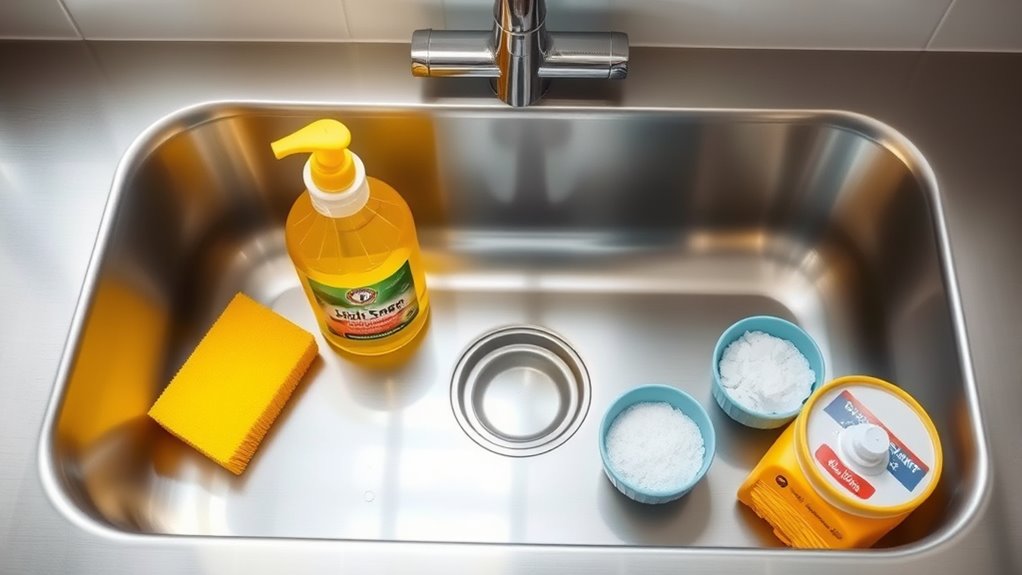
Before you plunge into cleaning, gather all the necessary supplies to make the process smooth and efficient. Start by clearing your countertop organization to create a clutter-free workspace. Remove any dishes, soap dispensers, or sponges, so you have full access to the sink and surrounding areas.
Begin by gathering supplies and clearing your countertop for a clutter-free, efficient cleaning workspace.
Grab a mild cleaner, a soft sponge or cloth, a toothbrush for crevices, and a microfiber towel for drying.
Next, focus on faucet maintenance. Since your faucet is a high-touch area, you’ll want to have a descaling solution or vinegar on hand to tackle mineral buildup. Make sure to turn off the water supply if you need to disassemble any parts for deeper cleaning.
Having gloves ready protects your hands from harsh chemicals.
Remove Stains and Scrub Away Grime Effectively
When you tackle stains and grime in your kitchen sink, start by applying your mild cleaner directly to the surface and letting it sit for a few minutes to loosen buildup. Next, grab your cleaning brushes. Choose one with stiff bristles for tough spots and a softer one for delicate areas.
Use circular motions to scrub away stains thoroughly, focusing on corners and around the drain where grime tends to accumulate. For stubborn stains, consider a paste of baking soda and water to boost stain removal without harsh chemicals. Apply the paste, let it sit briefly, then scrub with your brush.
Don’t forget to clean the faucet and handles, as grime often collects there too. By systematically scrubbing and targeting stains with the right tools, you’ll restore your sink’s shine efficiently. This method *guarantees* you remove buildup effectively without damaging the sink’s surface, keeping your kitchen clean and hygienic.
Rinse, Deodorize, and Keep Your Kitchen Sink Sparkling
Although scrubbing removes grime, you’ll need to rinse your kitchen sink thoroughly to wash away loosened dirt and cleaning residues. Use warm water, as the right water temperature helps dissolve soap and grime effectively. Pay special attention to sink accessories like strainers and faucets. Rinse these parts well to avoid buildup that can cause odors.
Next, deodorize by sprinkling baking soda around the sink, then spray with vinegar. Let it fizz for a few minutes before rinsing with warm water. This combo neutralizes odors and brightens the sink.
To keep your kitchen sink sparkling, wipe it dry after each use and clean sink accessories regularly. Here’s a quick guide:
| Step | What to Do | Tip |
|---|---|---|
| Rinse | Use warm water | Focus on sink accessories |
| Deodorize | Baking soda + vinegar | Let fizz before rinsing |
| Dry | Wipe with a clean cloth | Prevent water spots |
| Regular Clean | Weekly scrubbing | Include all sink accessories |
| Maintain | Daily wipe down | Use proper water temperature |
Frequently Asked Questions
Can I Use Bleach to Clean My Kitchen Sink?
Yes, you can use bleach to clean your kitchen sink, but you should check your sink material compatibility first. Bleach works well on porcelain and stainless steel, but it can damage granite, natural stone, or some coated surfaces.
If you’re worried about harsh chemicals, try bleach alternatives like vinegar, baking soda, or hydrogen peroxide. These options are gentler and still keep your sink sparkling clean without risking damage.
How Often Should I Deep Clean My Kitchen Sink?
Think of your kitchen sink as a loyal shield, protecting your home’s heart. You should deep clean it at least once a week to keep that shield shining.
Regular sink stain removal prevents grime from building up, and don’t forget faucet polishing to maintain its sparkle. This routine stops dirt from settling in, ensuring your sink stays fresh, hygienic, and ready for every culinary adventure you set out on.
Are Natural Cleaning Products Safe for All Sink Materials?
You can generally use eco friendly solutions as chemical alternatives for most sink materials, but you should double-check first. Natural cleaners like vinegar or baking soda are safe for stainless steel and porcelain, but might damage stone sinks like granite or marble.
Always test a small spot before applying widely. Using these eco friendly solutions helps protect your sink’s finish while avoiding harsh chemicals.
What Should I Do if My Sink Has a Foul Odor?
Oh, that charming aroma of forgotten leftovers, your sink’s way of saying hello! To tackle the foul odor, you’ll want to plunge into odor elimination by scrubbing the drain with baking soda and vinegar, then flushing with hot water.
For odor prevention, keep those traps clean and rinse regularly with lemon juice or mild bleach. Trust me, your nose will thank you, and guests won’t need gas masks when they visit.
Can Kitchen Sink Cleaning Prevent Clogged Drains?
Yes, regular kitchen sink cleaning can prevent clogged drains by removing food debris and grease buildup that cause blockages. You should tailor your drain maintenance to your sink materials; for example, avoid harsh chemicals on stainless steel or granite to protect the surface.
Conclusion
Now that you’ve tackled these three easy steps, your kitchen sink will shine like a penny. Remember, keeping it clean isn’t just about looks. It helps prevent buildup and odors that can cause bigger headaches down the road.
Make this quick routine part of your regular cleaning, and you’ll always have a sparkling kitchen sink ready for whatever the day throws your way. A little effort goes a long way!