
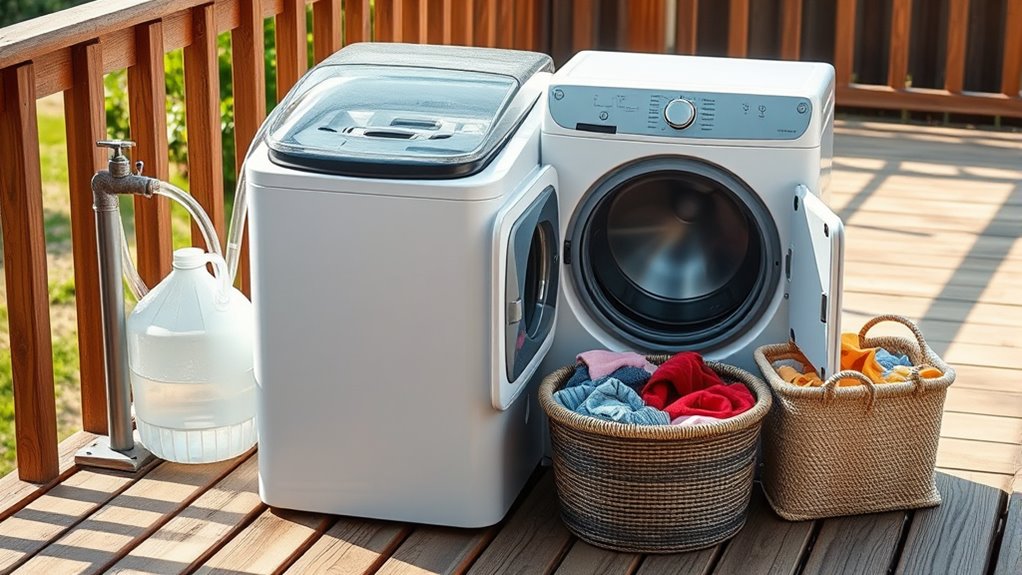
How to Use a Washer and Dryer Without Hookups
No laundry hookups? You’re not alone. Many people struggle to wash and dry clothes in apartments, RVs, dorms, or older homes without the right connections.
The good news is that you can use a portable washer and dryer without hookups with a few simple setup steps.
You can use a portable washer without hookups by placing it near a sink, tub, or suitable drain. Connect its fill hose to a faucet or add water manually, then secure the drain hose and supervise the first cycle.
For drying, use a rack, line, or ventless condenser or heat-pump dryer near a grounded outlet. Keep cords and connections dry, clean lint filters, and prevent kinks or leaks.
The steps below explain how to set everything up safely.
Key Takeaways
- Choose compact portable washers and ventless dryers that fit your space, doorways, electrical capacity, and storage requirements.
- Fill the washer from a faucet, sink, or container, then secure its drain hose inside a sink, tub, or approved drain.
- Place appliances on level, stable surfaces near water and grounded outlets. Keep cords, vents, and electrical components dry.
- Use drying racks, shower rods, or retractable lines instead of a dryer, or operate a ventless dryer with proper airflow.
- Supervise initial cycles, check for leaks and drainage problems, clean lint filters, and redistribute loads if the washer shakes.
Check Your Space Before Buying
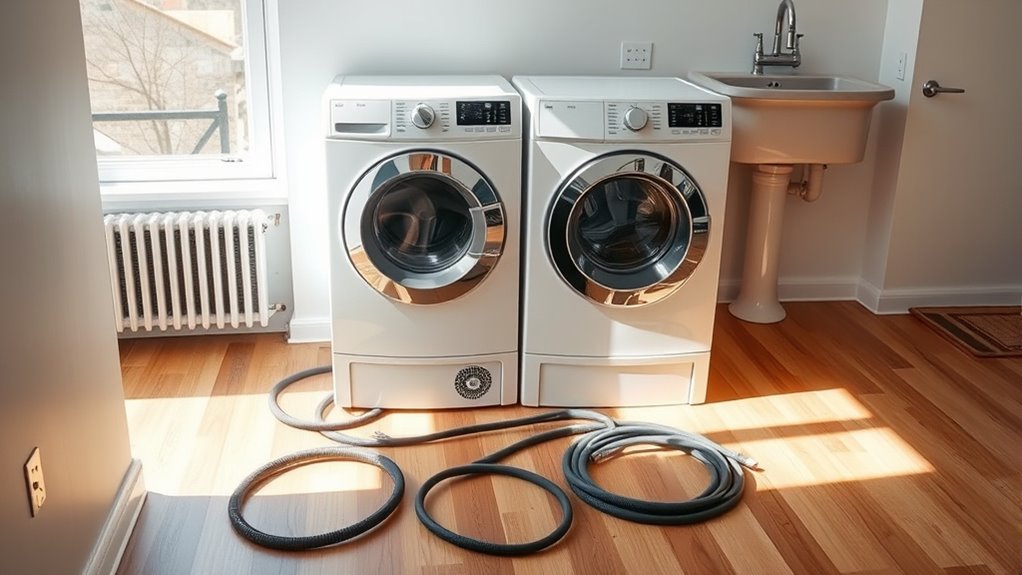
Before buying a washer or dryer, check where you’ll place it and how you’ll supply water, drainage, ventilation, and electricity. Measure the floor area, doorway, stairway, and ceiling height, then compare those dimensions with the appliance’s listed size. Leave enough clearance for doors, controls, hoses, cords, and comfortable loading.
Use practical space planning to identify a level location near a sink, bathtub, or floor drain. Check whether the floor can support the machine without excessive vibration, and confirm that nearby outlets can handle the electrical load. If you’ll operate a dryer indoors, determine how you’ll manage heat and moisture safely without permanent ductwork.
Think vertically, too. Shelving, rolling carts, and compact storage solutions can hold detergent, baskets, and cleaning supplies without blocking ventilation or access. Mark the proposed footprint with tape before purchasing, then test your walking path and door swing. This simple check helps you avoid cramped placement, unsafe connections, and inconvenient daily use.
Choose a Portable Washer
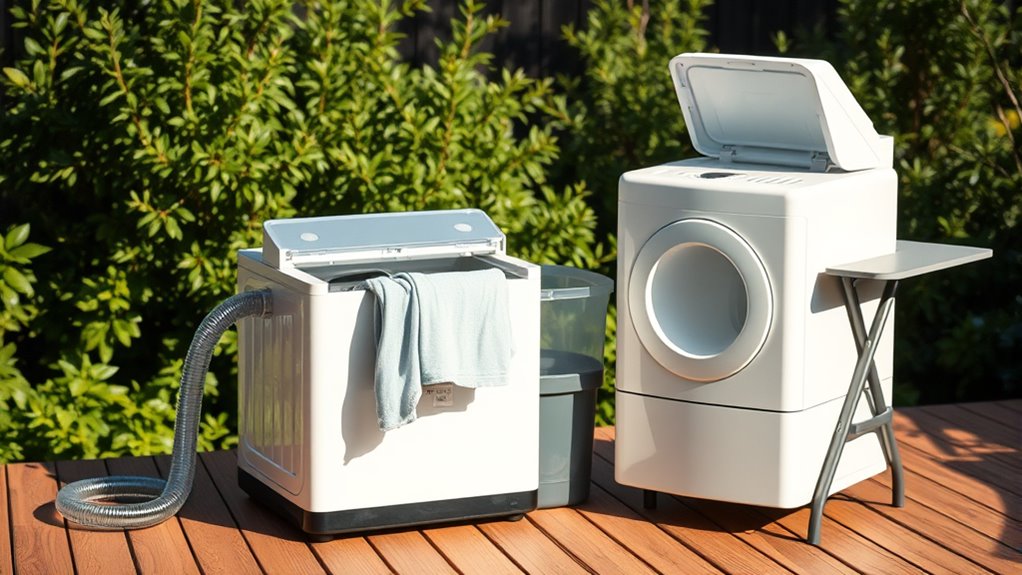
Choose a portable washer that matches your available space, laundry volume, and water access. Start by comparing compact, top-loading models with twin-tub designs.
Compare compact top-loading washers and twin-tub designs to find the right fit for your space, laundry needs, and water access.
A compact washer handles everyday loads in a small footprint, while a twin-tub unit lets you wash and spin clothes separately. Consider how often you’ll do laundry and whether the drum can hold your typical load without overfilling.
Review the washer’s dimensions, weight, and storage requirements before you buy. These details matter if you’ll move the machine between uses or store it in a closet.
Measure doorways, pathways, and the area beside your sink to ensure easy placement. Look for portable options with built-in casters, a lint filter, and simple controls.
Check how you’ll fill and drain the machine. Some models connect to a faucet with an adapter, while others require manual filling and emptying.
Confirm that your sink, bucket, or nearby drain can handle the water safely. Choose a washer with a warranty and accessible replacement parts.
Choose Air-Drying or a Ventless Dryer
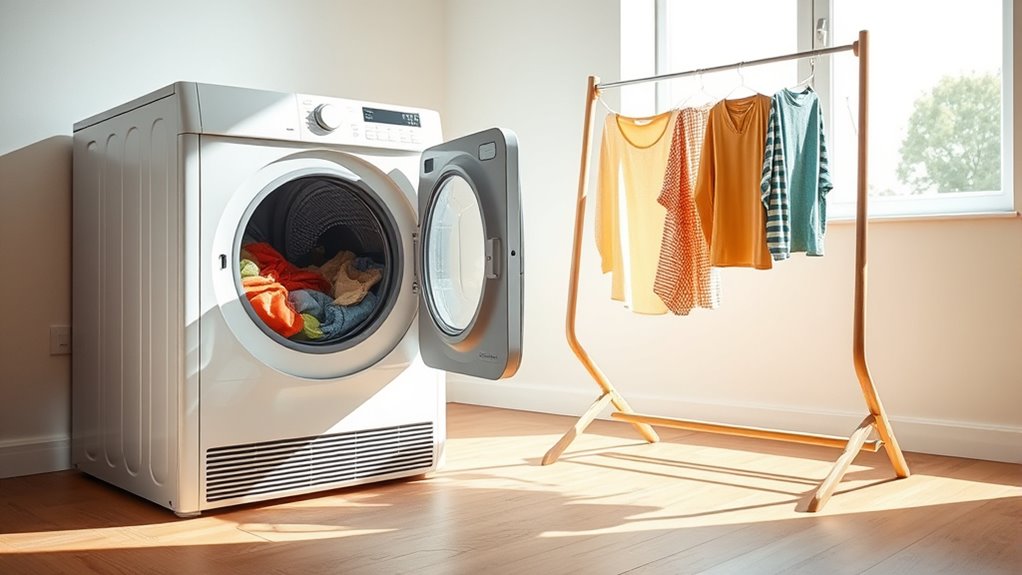
Once you’ve selected a portable washer, plan how you’ll dry each load without a standard dryer hookup. Air drying benefits include lower energy use, less fabric wear, and flexible placement.
Choose a sturdy drying rack for shirts, pants, and towels, and leave space between items so air can circulate. A shower rod, balcony rack, or retractable line can expand your drying area, but check that every surface can support wet clothing.
Improve results by running an extra spin cycle, shaking out garments, and hanging them promptly. Use a fan or dehumidifier to shorten drying time and reduce musty odors, especially in small rooms.
If you need faster results, compare Ventless dryer options. Condenser dryers collect moisture in a tank, while heat-pump models recycle warm air and typically use less electricity.
Look for compact units designed for apartments, and match their capacity to your washer. Follow garment-care labels, since high heat can damage delicate fabrics.
Rotate between methods to balance convenience, cost, and clothing longevity.
Gather Water, Drainage, and Power Supplies
Gather a clean water source, a suitable drain, and a safe power connection before running your portable washer. Choose potable water from a nearby faucet, utility sink, or filled container, depending on your machine’s design.
Keep enough water available for the wash and rinse cycles, and place containers where you can lift or refill them safely.
Plan drainage before adding detergent. Use a floor drain, bathtub, laundry basin, or large bucket that can hold the machine’s discharge.
Secure the drain hose so pressure won’t force it onto the floor, and keep the path free of kinks. For water collection, set a shallow pan beneath connections to catch small leaks.
Check power sources carefully. Use a grounded outlet that matches the washer’s voltage, and avoid extension cords unless the manufacturer permits them.
Don’t share an overloaded circuit with heaters or other high-wattage appliances. Keep plugs, outlets, and power strips away from standing water, and inspect cords for damage before use.
Connect a Portable Washer to a Sink
A sink connection typically uses a faucet adapter, a supply hose, and a secure drain hose. Remove the faucet’s aerator, then screw on the adapter and tighten it by hand. Attach the washer’s supply hose, checking that its gasket sits flat to prevent leaks. Position the drain hose securely inside the sink, following your model’s instructions.
| Check | What to do |
|---|---|
| Adapter | Match the faucet threads |
| Supply hose | Tighten connections gently |
| Drain hose | Clip it in place |
| Water temperature | Select hot, cold, or warm |
Turn on the faucet slowly and inspect every connection before starting a cycle. Choose Laundry detergents labeled for high-efficiency or portable machines; excess suds can cause problems.
Also, confirm the Washer capacity before adding clothes, since overloading can strain the motor and leave items poorly cleaned. Keep the washer level, leave room around it, and unplug it when you’ve finished washing.
Never run the machine unattended, and shut off the faucet after each load to reduce leak risk.
Drain the Washer Without a Standpipe
You can drain the washer into a utility sink by securing the hose over the basin.
If you don’t have a sink, route the hose outdoors to an area where the water can drain safely. In either case, secure the hose firmly to prevent spills.
Use a Utility Sink
If your washer doesn’t have a standpipe, route its drain hose into a utility sink to discharge wastewater safely. Secure the hose over the basin’s rim with a clamp or zip tie so pressure can’t knock it loose.
Keep the hose end above the drain opening to prevent backflow, and remove lint from the sink afterward. Check that the basin drains quickly enough for the washer’s discharge rate.
| Check | What to do |
|---|---|
| Hose position | Anchor it firmly |
| Sink capacity | Confirm it won’t overflow |
| Drain flow | Clear clogs first |
| Water temperature | Protect delicate plumbing |
Space considerations matter: leave room around the sink for loading laundry and accessing shutoff valves. Don’t run the washer unattended during its first cycle.
If water rises rapidly, stop the machine and improve the drain before continuing. A shallow or obstructed utility sink may require a different setup.
Direct Hose Outdoors
When no standpipe or sink is available, route the washer’s drain hose outdoors into a suitable drainage area, such as a gravel bed or ground-level drain. Keep the hose end above the ground so it won’t siphon dirty water back into the machine.
Secure it with stakes or a weighted clamp to prevent movement during draining. If the original hose can’t reach, add a compatible Hose extension, then tighten every connection and check for leaks.
Choose a location away from foundations, walkways, gardens, and neighboring property. Don’t discharge soapy water onto public areas or where it can erode soil.
Maintain clear Outdoor ventilation around the washer, and never run the appliance in an enclosed space without proper airflow. Before each load, inspect the route for kinks, blockages, or freezing conditions.
Load and Run the Washer Safely
Connect the washer to a temporary water supply, and secure every connection to prevent leaks. Before starting the cycle, place the drain hose safely in a tub, sink, or other suitable container. Check both hoses, load the washer evenly, and stay nearby while it runs.
Connect Temporary Water Supply
Start by placing the washer near a sink with a drain hose secured in the basin and a temporary fill hose rated for appliance use. Attach the fill hose firmly to the washer’s inlet, then connect its other end to a faucet adapter.
Tighten each connection by hand, and check the manufacturer’s instructions before opening the tap. Turn the water on slowly, watching for leaks around both fittings.
Keep the hose free from sharp bends, and don’t leave the washer unattended while it fills. Use cold water unless your machine specifies otherwise.
Load clothes loosely, select a suitable cycle, and balance the drum to support noise reduction. Practice water conservation by washing full, properly sorted loads and choosing an efficient setting.
Close the faucet immediately after each cycle to prevent accidental flooding.
Drain Water Safely
Before running the washer, secure the drain hose deep inside the sink or another approved drain and clamp it in place so it can’t jump out during the spin cycle. Complete a space assessment first: confirm the sink, tub, or standpipe can handle the discharge volume without overflowing.
Keep the hose free of kinks, and never place its end in a shallow container that could tip. Plan water disposal before you start, especially if you’re draining into a utility sink or outdoor area.
Check that the discharge water won’t reach electrical cords, flooring, or walkways. Choose a short, supervised cycle for your first load, and watch the drain throughout.
If water rises quickly, pause the washer immediately and redirect the hose. Clean spills promptly to prevent slips, stains, and damage.
Set Up a Ventless Dryer Safely
A ventless dryer lets you dry clothes without an exterior exhaust duct, but you’ll still need a stable, level surface and a nearby grounded outlet. Ventless dryers use condensation or heat-pump technology, so read the manufacturer’s instructions before installation.
Keep intake and airflow areas clear, and don’t push the appliance tightly against walls or furniture. Space considerations matter: leave the listed clearance around every side, provide room to open the door, and position controls where you can reach them comfortably.
Clean the lint filter after each load and empty the condenser or water container as directed.
| Check | Why it matters | Your action |
|---|---|---|
| Level surface | Prevents vibration | Adjust feet |
| Air clearance | Supports cooling | Follow manual |
| Lint filter | Improves drying | Clean routinely |
| Door space | Eases loading | Leave clearance |
A careful setup protects your clothing, preserves quiet operation, and helps you feel confident every time you press Start.
Never cover vents or place items on top that could restrict airflow.
Prevent Leaks and Electrical Risks
Prevent leaks by checking the hoses, clamps, and connections before each use. Keep cords and outlets dry, avoid using extension cords, and follow the appliance’s electrical requirements. If you notice a leak, a frayed cord, or a warm outlet, stop using the appliance and address the problem promptly.
Check Hoses And Connections
Once your portable washer or ventless dryer is in place, inspect every hose, adapter, and power connection before running it. Careful hose inspection helps you catch loose fittings, cracks, and worn seals before water reaches your floor.
Check each point closely:
- Push the drain hose firmly into the sink, standpipe, or drain container, and secure it against movement.
- Tighten water-supply connections by hand, then check that washers sit flat inside each connector.
- Look for kinks, bulges, or abrasions that could restrict flow or cause a hose to burst.
- Confirm the dryer’s outlet hose, if included, fits tightly and directs moisture where intended.
Run a short rinse cycle while watching every joint for drips. Stop immediately if you see water, smell burning, or notice unusual warmth.
For connection safety, keep cords and plugs dry, elevated, and free from crushed sections.
Use Safe Electrical Practices
Keep the washer and dryer on grounded outlets that match their manufacturer-rated voltage, and don’t use extension cords or overloaded power strips. Before each cycle, inspect plugs and cords for fraying, melting, or loose connections.
If you notice damage, unplug the appliance and arrange professional repair rather than using it. Keep outlets, plugs, and controls dry, especially when you fill or drain the washer manually.
Never touch electrical components with wet hands, and don’t operate either appliance near standing water. Follow the manufacturer’s instructions for appliance grounding, and use a properly installed ground-fault circuit interrupter (GFCI) where local codes require one.
Good Electrical safety also means leaving enough space around each machine for ventilation and keeping flammable items away. Unplug appliances before cleaning, moving, or troubleshooting them.
Fix Common No-Hookup Laundry Problems
Even with a temporary setup, you can solve most no-hookup laundry problems by checking airflow, drainage, power, and load size first. Use this quick troubleshooting guide:
- The washer won’t drain: Straighten the temporary drain hose, secure it in the sink, and clear its filter. Never let wastewater spill onto the floor.
- The dryer takes too long: Clean the lint screen after every load and keep the vent hose short, straight, and securely connected. Stop using the dryer if it overheats.
- The machine won’t start: Confirm the outlet supplies the required voltage, reset the breaker, and avoid extension cords unless the manufacturer specifically permits one.
- The washer shakes: Redistribute clothing, reduce the load, and level the machine on a firm surface.
Good laundry room organization keeps hoses, adapters, and cleaning supplies accessible without creating trip hazards. Regular Washer maintenance, including inspecting seals and connections, helps prevent leaks and protects your temporary setup.
Frequently Asked Questions
Can I Use a Washer and Dryer Without Hookups in an Apartment?
Yes, you can use a washer and dryer without traditional hookups, but you’ll need your landlord’s permission and the right equipment. Choose a compact, portable washer that connects temporarily to your sink, then drain it into the basin or bathtub.
For drying, use a ventless condenser dryer, spin dryer, or drying rack. These portable laundry options provide space-saving solutions, but check electrical capacity, water access, drainage, noise, and lease restrictions before buying.
How Much Do No-Hookup Washers and Dryers Typically Cost?
No-hookup washers and dryers typically cost $300–$1,500 per unit, depending on capacity, features, and brand. Compact portable washers often run $200–$600, while ventless or condenser dryers usually cost $700–$1,500.
You’ll also need to budget for hoses, adapters, rolling carts, or other alternative installation supplies, potentially adding $50–$300. Although upfront prices vary, energy efficiency can reduce water and electricity bills, making efficient models more affordable over time.
Are Portable Washers Suitable for Washing Bulky Items Like Comforters?
Yes, portable washers can handle some comforters, but you’ll need to check the machine’s capacity and the comforter’s care label first. For effective Portable laundry, choose a large-capacity model, wash one bulky item at a time, and avoid overloading the drum. Bulky item washing works best with lightweight or twin-size comforters.
For king-size, thick, or down-filled bedding, use a laundromat’s commercial machine to guarantee thorough cleaning and proper rinsing.
How Noisy Are Portable Washers and Ventless Dryers During Operation?
Portable washers typically produce moderate sound levels, around 50–70 decibels, while spinning; you’ll hear vibration more than constant noise. Ventless dryers usually run quieter, about 45–60 decibels, though their fans hum continuously and cycles take longer.
You can improve noise reduction by leveling each appliance, using anti-vibration pads, avoiding overloaded loads, and leaving clearance from walls. You’ll notice more noise on hard floors, so place mats underneath whenever possible.
Can I Move a Portable Washer and Dryer Between Rooms Easily?
Yes, you can move portable washers and dryers between rooms fairly easily. Roll, lift, and reconnect each appliance carefully, checking the water supply, drain path, and electrical requirements first. Choose a clear route, protect floors, and avoid straining hoses or cords.
A compact washer usually needs a nearby sink, while a dryer may require ventilation or a dedicated outlet. Empty water tanks, secure doors, and unplug everything before relocating either appliance.
Conclusion
You can do laundry without hookups by turning a small space into a practical wash station. Choose a portable washer, pair it with air-drying or a ventless dryer, and plan your water, drainage, and power routes before starting.
Secure every connection, avoid overloading, and watch for leaks or electrical hazards. With a little preparation, learning how to use a washer and dryer without hookups becomes manageable, helping clean clothes flow smoothly through your routine.