5 Tips to Organize Kitchen Tools Efficiently
Tips to Organize Kitchen Tools: If you’ve ever felt overwhelmed by cluttered drawers and hard-to-find gadgets in your kitchen, you’re not alone. Many people struggle with organizing their kitchen tools in a way that’s both functional and easy to maintain. The good news? With a few simple strategies, you can transform your kitchen into a streamlined space that makes cooking a joy rather than a hassle.
To organize your kitchen tools efficiently, start by sorting and decluttering broken or unused items to clear space. Group similar tools and use color-coded labels for quick identification. Invest in drawer organizers to keep utensils neatly separated.
Store your frequently used tools close to your prep area for easy reach, and maximize vertical space with racks, hooks, or magnetic strips to free up counters.
Keep going to uncover more practical ideas that make your kitchen workflow smoother.
Organize Kitchen Tools Key Takeaways
- Sort and declutter kitchen tools by removing broken items. Label storage containers for easy identification.
- Group similar tools together using color coding and clear labels. This helps you find what you need quickly.
- Use durable drawer organizers with adjustable compartments and slot dividers. They keep things safe and neat.
- Store frequently used tools near prep areas in organized containers. This keeps them accessible and tidy.
- Maximize vertical space with racks, hooks, and magnetic strips. It frees up counters and cabinets.
Sort and Declutter Your Kitchen Tools
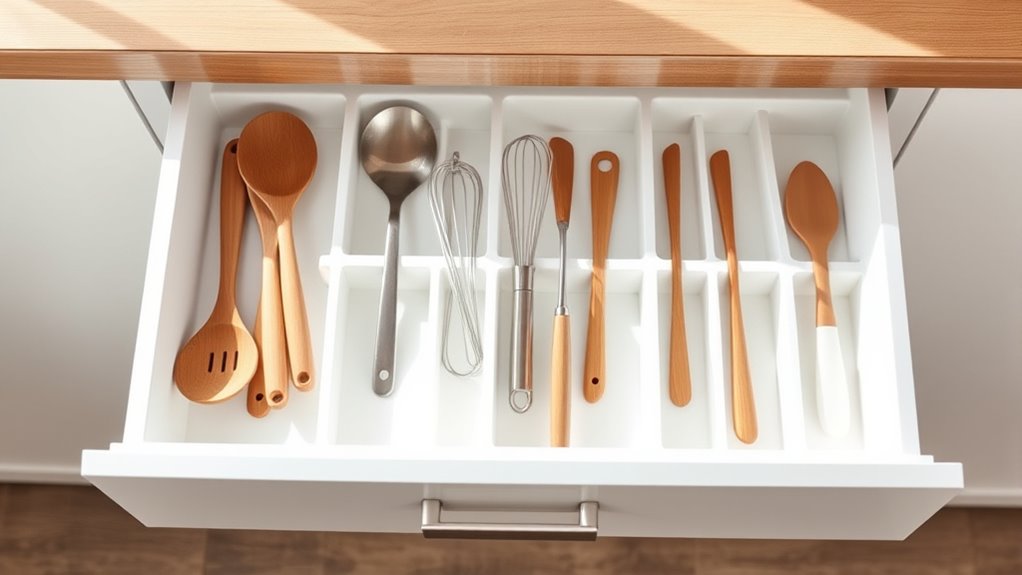
Before organizing your kitchen tools, start by sorting and decluttering them. Go through every drawer and cabinet, pulling out tools you rarely use or that are damaged. This step is essential for effective kitchen tool maintenance, as removing broken or worn-out items keeps your workspace safe and efficient.
Once you’ve pared down your collection, focus on labeling and categorization. Assign specific spots for different types of tools like knives, spatulas, or measuring cups and label containers or drawers accordingly. Clear labeling helps you quickly find what you need and simplifies putting things away, preventing clutter from building up again.
Sorting also gives you a chance to clean each tool thoroughly, which prolongs their lifespan. By regularly maintaining your kitchen tools and keeping them sorted with clear labels, you’ll create a streamlined cooking environment that saves time and reduces frustration.
Group Similar Kitchen Tools for Easy Access
Once you’ve decluttered and sorted your kitchen tools, grouping similar items together makes finding what you need faster and more intuitive. Start by gathering all your spatulas, whisks, peelers, and measuring spoons into distinct clusters. This way, you won’t waste time searching through mixed piles.
To improve accessibility, use color coding for each group. Assign a specific color to utensils used for baking, cooking, or prepping. You can apply colored labels or tape to containers or storage bins holding these tools. Color coding visually separates categories at a glance, speeding up your workflow.
Additionally, tool labeling adds another layer of organization. Label containers or hooks with clear names like “Measuring Spoons” or “Cutting Tools.” This prevents confusion, especially if multiple people use your kitchen. By combining color coding and tool labeling, you create a streamlined system that keeps your kitchen efficient and enjoyable to work in.
Use Drawer Organizers for Kitchen Tools
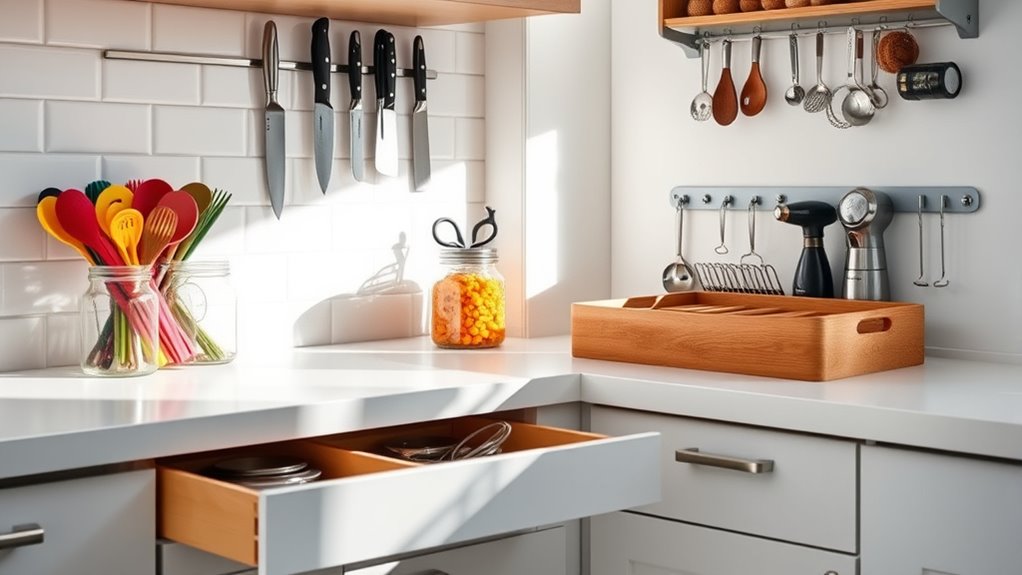
Grouping your kitchen tools is a great start, but keeping them neatly arranged in drawers makes accessing them even easier. Drawer organizers help you separate utensils, knives, and gadgets, improving kitchen efficiency.
Choose organizers made from materials with high durability to withstand daily use and prevent damage. For knife safety, pick organizers with slots or compartments that securely hold blades. This reduces the risk of accidental cuts when reaching into drawers.
Here’s a quick guide to selecting drawer organizers:
| Tool Type | Recommended Organizer | Key Feature |
|---|---|---|
| Knives | Slot-based divider | Knife safety |
| Utensils | Adjustable compartments | Flexible storage |
| Gadgets | Deep trays | Material durability |
| Measuring Tools | Narrow slots | Easy visibility |
Store Frequently Used Kitchen Tools Within Easy Reach
To save time and reduce frustration while cooking, keep your most-used kitchen tools within easy reach. Think about your cooking habits and identify the utensils, knives, and gadgets you grab most often. Store these items in a dedicated space near your main prep area or stove. This setup ensures you don’t waste time searching for essentials when you’re in the middle of a recipe.
Keeping tools accessible also encourages regular tool maintenance. When your frequently used items are easy to find, you’re more likely to clean and inspect them after each use. This habit extends the life of your kitchen tools and keeps them performing at their best. Avoid cluttering your countertop; instead, opt for a small, organized container or tray that fits your style and workflow. By thoughtfully arranging your tools, you streamline your cooking process and maintain a tidy, efficient kitchen.
Maximize Vertical Space With Racks and Hooks
Keeping your most-used kitchen tools within reach is just one way to optimize your space. To truly maximize your kitchen’s vertical space, install racks and hooks on empty walls or inside cabinet doors.
Overhead storage racks are perfect for hanging pots, pans, and strainers. This frees up cabinet and counter space. You’ll be surprised how much more room you gain when you lift items off your surfaces.
Magnetic strips are another smart solution. They keep knives, metal utensils, and even spice containers accessible and organized. Mount these strips on your backsplash or inside cabinets to save drawer space.
Hooks are incredibly versatile too. Use them to hang measuring spoons, ladles, or oven mitts. By thinking vertically and using racks, hooks, overhead storage, and magnetic strips, you’ll create a more efficient, clutter-free kitchen where everything is easy to find and grab.
Frequently Asked Questions
How Do I Clean and Maintain Wooden Kitchen Tools?
You should clean wooden kitchen tools with mild soap and warm water, avoiding soaking them to prevent cracking. After washing, dry them immediately with a towel.
For wood care, regularly apply food-safe mineral oil or beeswax to keep the wood moisturized and prevent it from drying out. Avoid harsh detergents and the dishwasher, as they can damage the wood.
Following these cleaning tips will maintain your wooden tools’ durability and appearance.
What Materials Are Best for Durable Kitchen Tools?
Steel stands as the steadfast oak in your kitchen forest, symbolizing strength and resilience. For material durability, stainless steel and silicone combine to offer you unmatched kitchen tool longevity.
Stainless steel resists rust and wear, while silicone endures heat and won’t scratch surfaces. You’ll want to avoid cheap plastics that crack easily.
Choosing these materials means your tools won’t just perform well; they’ll become trusted companions in your culinary journey.
Can I Organize Kitchen Tools in a Small Apartment Kitchen?
Yes, you can definitely organize kitchen tools in a small space. Use clever storage solutions like magnetic strips for knives, hooks for hanging utensils, and stackable containers to maximize vertical space.
Drawer dividers help keep tools sorted, while over-the-door racks free up cabinet space. By thinking creatively, you’ll keep your kitchen tools accessible and tidy without feeling cramped, making the most of every inch in your small apartment kitchen.
How Often Should I Replace Old or Worn-Out Kitchen Tools?
You should replace old or worn-out kitchen tools as often as a comet streaks across the sky, regularly! Kitchen tool longevity varies, but a good rule is to inspect them every 6 to 12 months.
If you notice cracks, rust, or dullness, it’s time for replacement. Keeping an eye on replacement frequency helps you avoid accidents and keeps your cooking efficient and safe. Don’t wait until tools fail you!
Are Magnetic Strips Safe for Storing Sharp Knives?
Yes, magnetic strips are safe for storing sharp knives as long as you consider knife safety and magnet strength. You’ll want a strong magnet to hold knives securely and prevent them from slipping, which reduces accidents.
Make sure the strip is mounted at a comfortable height, out of children’s reach. Also, avoid dragging knives along the magnet to protect the blade’s edge.
With proper use, magnetic strips keep your knives accessible and safe.
Conclusion
Remember, “a place for everything, and everything in its place.” By sorting and decluttering your kitchen tools, grouping similar items, and using drawer organizers, you’ll create a space that’s both functional and inviting.
Keep frequently used tools within easy reach and maximize vertical space with racks and hooks to save room. With these tips, you’ll enjoy a more efficient kitchen where cooking becomes a joy, not a chore.
Organizing kitchen tools efficiently makes all the difference in creating a workspace that’s enjoyable and stress-free.