How to Get Rid of Gnats in Your Kitchen Fast In 2027
How to Get Rid of Gnats in Your Kitchen Fast! Dealing with gnats in your kitchen can be incredibly frustrating. You’re not alone—many people struggle with these tiny pests invading their space and ruining their food. If you’ve been searching for a fast, effective way to get rid of gnats, you’ve come to the right place.
To get rid of gnats in your kitchen fast, start by removing overripe fruit and food scraps that attract them. Use homemade traps like apple cider vinegar mixed with dish soap to catch adults quickly.
Fix leaks, wipe up spills, and avoid standing water to disrupt their breeding. Spraying essential oils like peppermint can repel them too.
By combining these steps, you’ll see a quick drop in their numbers and can investigate more ways to keep them gone for good.
How to Get Rid of Gnats: Key Takeaways
- Clean countertops, sinks, and trash areas thoroughly to remove food residues and moisture that attract gnats. This helps cut off their food sources and breeding spots.
- Use apple cider vinegar traps with dish soap to quickly capture and kill adult gnats. It’s an easy and effective way to reduce their numbers fast.
- Store fruits and vegetables in the fridge or sealed containers to prevent gnat breeding on overripe produce.
- Fix leaks and reduce kitchen humidity by wiping spills and improving ventilation. This eliminates the damp environments gnats love.
- Apply essential oil sprays like peppermint or eucalyptus around problem areas to repel gnats effectively within days. It’s a natural way to keep them at bay.
Why Gnats Are Attracted to Your Kitchen
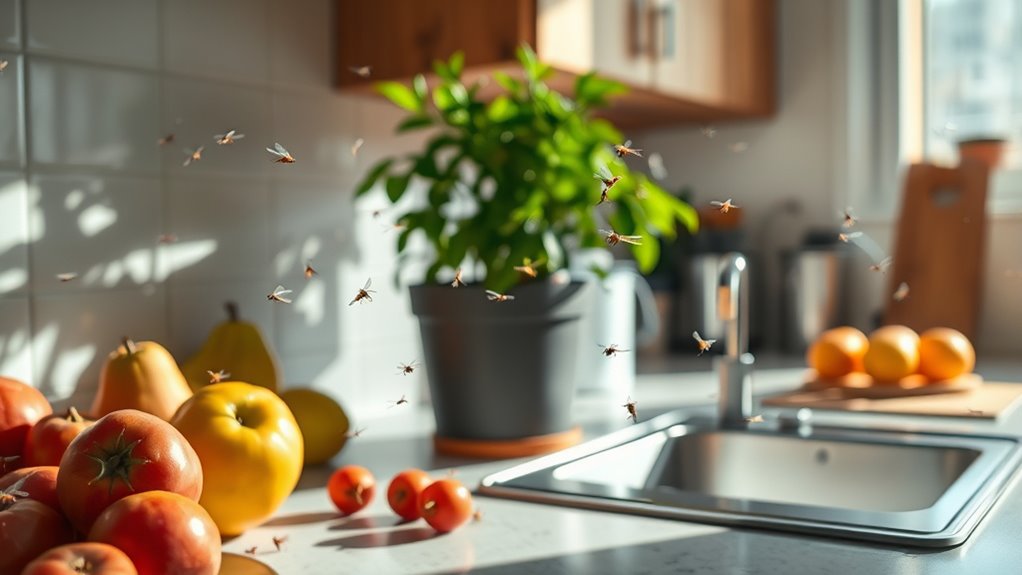
Why do these keep swarming your kitchen despite your efforts to clean? It’s because your kitchen offers ideal conditions for their gnat lifecycle to thrive. Gnats are attracted to moist, organic matter like overripe fruit, sink drains, and food scraps.
Even small amounts of leftover moisture or food residue provide perfect breeding grounds. The gnat lifecycle, from egg to larva to adult, can complete in just a week, so once they find a source, their numbers multiply quickly.
Understanding this helps you focus your pest prevention efforts. Eliminating moisture, removing potential breeding sites, and properly storing food disrupt their lifecycle and keep gnats from returning.
Simply cleaning visible surfaces isn’t enough; you need to target hidden spots like garbage disposals, drains, and damp sponges. By addressing these key factors, you can effectively reduce gnat infestations before they become overwhelming.
How to Identify Different Types of Kitchen Gnats
Knowing what type of you’re dealing with can make it easier to target their breeding grounds and choose the right removal method. To identify kitchen gnats, start by observing their size, color, and behavior.
Fruit flies are small, yellowish-brown, and hover near ripe or rotting fruit. Fungus are darker, with long legs, and fly close to moist soil or plants. Drain flies have fuzzy, moth-like wings and gather around sinks or drains.
Use simple identification techniques like catching a gnat on a sticky trap or examining them under bright light to note these features. Pay attention to where you see them most often because this clues you into their preferred breeding spots.
Natural Ways to Kill Kitchen Gnats Fast
You can quickly tackle kitchen using natural methods that are safe and effective. For example, try setting up a vinegar trap—it’s super easy and really works. Or, you could apply essential oils, which tend to avoid. Another great option is using a baking soda solution to reduce their numbers. These simple tricks will help you get rid of gnats fast without relying on harsh chemicals. Give them a shot, and you’ll notice a difference in no time!
Vinegar Trap Method
Although these seem persistent, you can quickly reduce their numbers using a simple vinegar trap. Gnats are attracted to fermenting liquids, making vinegar an ideal lure due to their natural behavior.
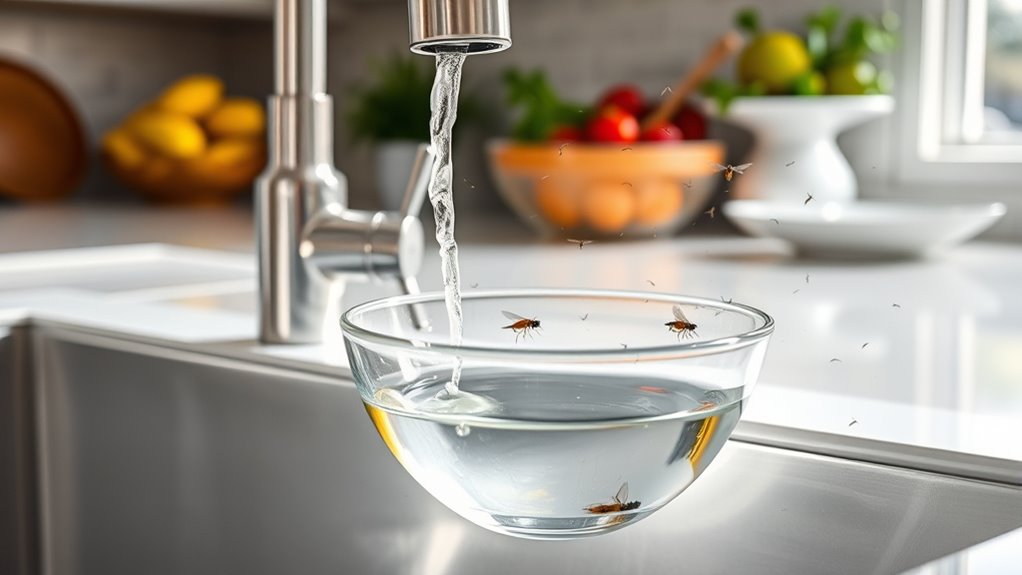
To make a trap, pour apple cider vinegar into a small bowl and add a few drops of dish soap. The vinegar draws gnats in, while the soap breaks surface tension, trapping them.
Place the trap near common breeding sites like fruit bowls, trash cans, or drains where gnats lay eggs. Check and refresh the trap every few days to maintain effectiveness.
Essential Oils Use
Since these are dislike strong scents, essential oils offer a natural and effective way to repel and kill them quickly. You can use essential oils like peppermint, eucalyptus, or tea tree oil to disrupt gnats’ senses and keep them away from your kitchen.
Simply mix 10-15 drops of your chosen essential oil with water in a spray bottle and spray around areas where gnats gather, such as countertops, drains, and garbage bins. This method not only deters gnats but also adds a fresh scent to your kitchen.
For ongoing pest control, reapply the spray every few days or after cleaning. Using essential oils is an easy, chemical-free way to manage gnats and maintain a pest-free kitchen environment.
Baking Soda Solution
Alongside using essential oils, a baking soda solution provides another natural and effective way to tackle gnats in your kitchen. Baking soda helps neutralize odors and disrupts the breeding grounds of gnats near your food prep areas and appliances.
To use this method effectively, mix equal parts baking soda and sugar to attract them. Then, sprinkle the mixture near fruit bowls, trash bins, and sink drains.
Wipe down surfaces regularly, focusing on spots prone to spills from cooking techniques. Also, maintain your appliances by cleaning crumb trays and drip pans to prevent gnat-friendly environments.
This approach complements good appliance maintenance and smart cooking techniques, reducing gnats without harsh chemicals. By combining these habits, you’ll keep your kitchen fresh and gnat-free naturally.
Make Simple DIY Gnat Traps
You can make effective traps using easy-to-find ingredients like vinegar and dish soap. It’s super simple to put together. Just follow a few easy steps, and you’ll have your trap ready in no time.
Once you’ve made the trap, place it in the right spots around your kitchen. This will help catch gnats fast and keep those pesky bugs away from your food and countertops. It’s a quick and easy way to keep your kitchen pest-free!
Easy Ingredients to Use
Although it can be stubborn, you can easily make effective traps with common household ingredients. These simple mixtures attract fruit flies and other gnats, making pest control straightforward and affordable. Here are four easy ingredients you can use:
- Apple cider vinegar: its strong scent lures fruit flies effectively.
- Dish soap: breaks the surface tension so gnats can’t escape the liquid.
- Sugar: adds extra attraction by mimicking fermenting fruit.
- Overripe fruit: a natural bait that draws gnats closer to the trap.
Using these ingredients, you can quickly set up DIY traps that reduce gnat populations in your kitchen without harsh chemicals. This approach keeps your home safe and pest-free with minimal effort.
Step-by-Step Trap Assembly
Once you gather your ingredients, assembling a DIY gnat trap takes just minutes. Understanding the gnat lifecycle helps you realize why traps are effective pest control tools.
Here’s a simple way to build your trap:
| Step Number | Action |
|---|---|
| 1 | Fill a small container with apple cider vinegar or wine. |
| 2 | Add a few drops of dish soap to break surface tension. |
| 3 | Cover container with plastic wrap and poke small holes. |
The vinegar attracts adult gnats, while the soap traps them by breaking surface tension. Trapping adults interrupts the gnat lifecycle and prevents more eggs from being laid.
This straightforward method offers a quick, eco-friendly pest control solution in your kitchen.
Placement Tips for Effectiveness
Setting your DIY traps in the right spots boosts their ability to catch those pesky flies quickly. You want to balance effectiveness with maintaining your kitchen décor’s look while ensuring pest control success.
Here are four placement tips to help:
- Position traps near fruit bowls or compost bins where gnats thrive.
- Place traps by sinks and drains, common breeding grounds for them.
- Avoid putting traps in direct sunlight to prevent drying out the bait.
- Keep traps at counter height to intercept flying without disrupting your kitchen décor.
Identify Foods and Fruits That Attract Gnats
If you want to stop gnats from invading your kitchen, you need to know which foods and fruits attract them the most. Fruit flies, a common type of gnat, are especially drawn to overripe or rotting fruits like bananas, apples, and tomatoes.
Sweet and fermenting liquids such as juice, soda, and wine also lure them in. Besides fruits, damp organic matter like vegetable scraps and even damp soil in potted plants can attract these pests.
Understanding this helps you target your pest control efforts more effectively. By identifying and removing or properly storing these attractants, you reduce their breeding grounds.
Keep an eye on any fruits you leave out and avoid letting them overripen. Use airtight containers or refrigerate produce to cut off access. This way, you’ll minimize fruit flies and other gnats, making your kitchen less inviting to these pests.
Clean Your Kitchen to Prevent Gnats
Although identifying attractants is important, keeping your kitchen clean plays a crucial role in preventing gnats. they are thrive in dirty environments where food scraps and residues linger. Interrupting their lifecycle becomes easier when you maintain a spotless space.
Keeping your kitchen spotless disrupts gnats’ lifecycle, preventing their thriving in dirty, food-scrap-filled environments.
Your kitchen decoration choices can also impact cleanliness. Opt for materials and designs that are easy to wipe down and don’t trap crumbs or moisture.
To keep them away, follow these steps:
- Wipe down countertops and tables daily to remove food particles.
- Clean under appliances and furniture regularly to eliminate hidden debris.
- Empty trash cans frequently and use sealed liners to avoid odors that attract them.
- Store fruits and vegetables properly, either in the fridge or covered containers.
Manage Moisture and Standing Water to Stop Gnats
You’ll want to track down and fix any moisture sources in your kitchen to keep those away. Make sure to get rid of standing water in sinks, drains, and containers where they love to breed. Also, try improving ventilation to help dry out damp spots—it makes your kitchen way less inviting for gnats.
Identify Moisture Sources
Since gnats thrive in damp environments, pinpointing moisture sources in your kitchen is essential to stopping them. Understanding gnat biology reveals they lay eggs in moist areas, so identifying where water collects helps target your pest control techniques effectively.
Focus on these common moisture hotspots:
- Check under the sink for leaks or dampness.
- Inspect around dishwashers and refrigerators for condensation.
- Look for damp sponges, dishcloths, or mop heads left out.
- Examine houseplants for overwatering or water pooling in trays.
Eliminate Standing Water
Where does standing water hide in your kitchen, and how can you eliminate it to stop gnats? Check under your sink, around faucets, and inside drain traps where water often pools unnoticed. Don’t forget pet bowls or plant saucers, which can attract plant pests like fungus gnats.
Even small amounts of moisture encourage fruit infestations by providing ideal breeding grounds. Wipe spills promptly, fix leaks, and empty containers that collect water regularly. Avoid overwatering indoor plants to prevent standing water in soil trays.
Improve Kitchen Ventilation
Although eliminating standing water is crucial, improving your kitchen’s ventilation plays an equally significant role in managing moisture and preventing them. Proper airflow reduces humidity, making your kitchen less inviting to these pests.
To boost ventilation effectively, consider these steps:
- Regularly clean and maintain exhaust fans to ensure efficient air circulation and prevent moisture buildup.
- Open windows or install vents to introduce fresh air, balancing humidity levels without compromising your kitchen decor.
- Use a dehumidifier if your kitchen tends to stay damp, especially in areas prone to condensation.
- Keep appliances well-maintained to avoid leaks or excess moisture that can attract gnats.
Repel Kitchen Gnats With Household Ingredients
If you want to keep gnats away without harsh chemicals, you can use common household ingredients that naturally repel them. Fruit flies and drain flies hate strong scents like vinegar, lemon, and essential oils.
For example, placing bowls of apple cider vinegar mixed with a few drops of dish soap near problem areas traps fruit flies effectively. The vinegar attracts them, while the soap breaks the surface tension, so they can’t escape.
You can also wipe down countertops and sinks with lemon juice or rub lemon peels around drains to discourage drain flies from settling. Another simple trick is to use essential oils such as peppermint or eucalyptus diluted in water as a spray.
These smells confuse and repel gnats, making your kitchen less inviting. By combining these natural ingredients, you’ll reduce gnat activity quickly without exposing your family to harmful chemicals.
When to Use Commercial Gnat Sprays Safely
While natural remedies work well for mild infestations, you may need to reach for commercial gnat sprays when the problem persists or worsens. Using these sprays requires careful attention to chemical safety and proper spray application to protect yourself and your kitchen environment.
Follow these guidelines to use commercial gnat sprays safely:
- Read the label thoroughly: Understand the active ingredients and safety precautions before application.
- Ventilate the area: Open windows and doors to avoid inhaling fumes during and after spray application.
- Remove food and utensils: Keep all kitchen items away from the spray zone to prevent contamination.
- Wear protective gear: Use gloves and a mask to minimize skin contact and respiratory exposure.
Keep Gnats Away With Long-Term Kitchen Habits
Using commercial sprays can help tackle severe gnat problems, but preventing future infestations depends on the habits you maintain in your kitchen. To keep gnats away long-term, focus on consistent kitchen organization. Clean up spills immediately, wipe down counters daily, and avoid leaving dirty dishes out.
Gnats thrive in cluttered, moist environments, so keeping your kitchen tidy reduces their breeding grounds. Invest in pest-proof storage containers to seal away fruits, vegetables, and other pantry items. This not only preserves food freshness but also blocks gnats from accessing potential food sources.
Regularly empty your trash and compost bins, and clean them to prevent odors that attract gnats.
Frequently Asked Questions
Can Gnats Transmit Diseases to Humans or Pets?
Gnats generally don’t pose a significant risk for disease transmission to you or your pets. While they can be annoying, they’re unlikely to carry harmful pathogens like mosquitoes or ticks do.
However, maintaining your kitchen clean helps prevent any potential issues and guarantees pet safety. You should still avoid letting gnats contaminate food or pet dishes, as this could lead to minor infections or discomfort.
Staying vigilant keeps everyone safe.
Are There Specific Plants That Naturally Repel Gnats Indoors?
Plants like basil, lavender, and mint act as natural repellents, turning your kitchen into a fortress against gnats. These indoor plant varieties release scents that gnats find unbearable, keeping them at bay.
You’ll not only enjoy fresh herbs but also reduce those pesky invaders without harsh chemicals. So, place these green warriors near your sink or fruit bowls, and watch them chase away gnats while adding charm to your space.
How Quickly Do Gnats Reproduce in Kitchen Environments?
Gnats reproduce quickly in your kitchen. Their egg incubation period lasts just a few days, often 2 to 3, depending on the temperature and moisture.
Once the eggs hatch, larvae development takes about 4 to 10 days before they become adults. This fast cycle means you can have a new generation of gnats in under two weeks.
Acting quickly helps stop their population from exploding in your kitchen.
Do Gnats Prefer Certain Types of Kitchen Lighting?
Gnats don’t have strong lighting preferences, but their attraction increases with bright, warm light. You’ll notice they’re often drawn to kitchen areas with natural sunlight or incandescent bulbs because these mimic outdoor conditions.
Fluorescent or cooler LED lights tend to attract fewer gnats. To reduce gnat attraction, you can adjust your kitchen lighting to cooler tones or dim the lights when you’re not using the space actively.
Can Professional Pest Control Guarantee Complete Gnat Removal?
While pest control isn’t exactly like sending a knight on a dragon hunt, no professional can guarantee 100% complete gnat removal. Gnat behavior is tricky. They breed quickly and hide in moist spots.
Pest control experts can drastically reduce their numbers and target breeding sites, but you’ll still need to keep your kitchen dry and clean. Combining their expertise with your efforts gives you the best shot at long-term gnat control.
Conclusion
Getting rid of gnats in your kitchen is like clearing fog from a window. Once you act, the space feels fresh and bright again. By knowing what attracts these tiny invaders and using simple traps or natural remedies, you reclaim control.
Keep moisture in check and habits consistent, and your kitchen will stay a gnat-free haven. Remember, every small step you take is like turning on a light that keeps those pesky shadows at bay. With these tips, you’ll get rid of gnats in your kitchen fast.