5 Essential Steps to Deep Clean Your Kitchen
If you’ve ever felt overwhelmed by a messy kitchen that just won’t get clean no matter how hard you try, you’re not alone. Many people struggle with keeping their kitchen spotless and organized, especially when life gets busy. But with the right approach, deep cleaning your kitchen can become a manageable and even satisfying task.
To deep clean your kitchen, start by clearing out all clutter and trash, giving you a clean slate. Then, scrub and sanitize countertops, sinks, and backsplashes to keep surfaces hygienic.
Next, deep clean appliances inside and out to remove grease and buildup. After that, sort and organize your cabinets, drawers, and pantry for better efficiency.
Finally, clean the floors and add a finishing shine. Follow these steps, and you’ll uncover tips to make your kitchen spotless and orderly.
Key Takeaways
- Clear out clutter, remove trash, and discard expired food to create a clean starting point. This makes the whole process easier and more efficient.
- Scrub and disinfect countertops, sinks, and backsplashes to maintain hygiene and keep surfaces lasting longer.
- Deep clean kitchen appliances inside and out, removing grease, crumbs, and buildup thoroughly. It really helps your appliances work better and look great.
- Organize cabinets, drawers, and pantry by grouping items and using storage tools for efficiency. This way, everything is easier to find when you need it.
- Sweep, mop, and polish floors, including baseboards and corners, for a spotless final shine. It’s the finishing touch that makes your kitchen feel fresh and clean.
Clear Out Clutter and Trash for Kitchen Cleaning
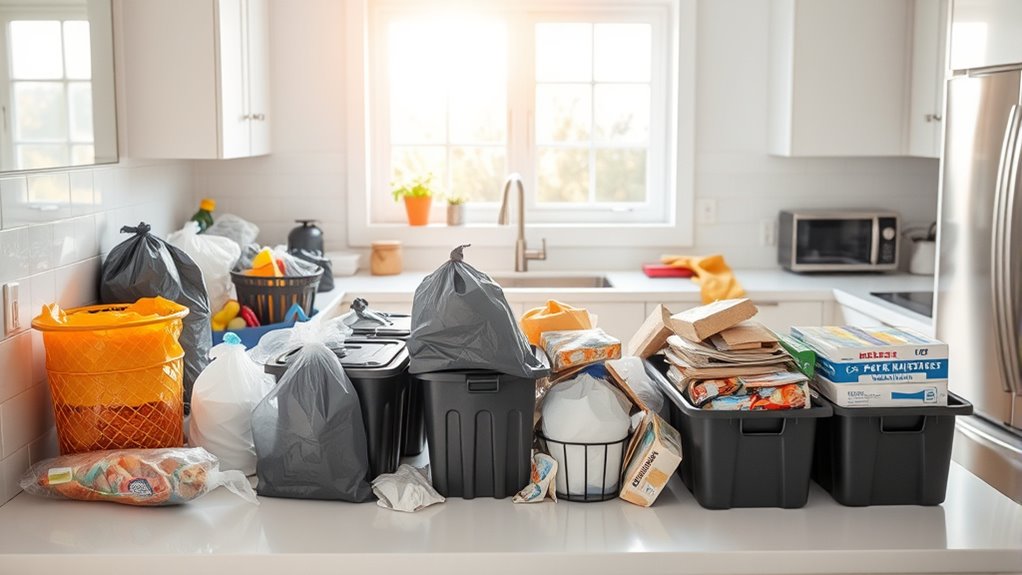
Before you plunge into scrubbing surfaces, clear out all clutter and trash from your kitchen. Kitchen decluttering is the essential first step to a thorough and efficient cleaning process. Start by gathering all items that don’t belong or are out of place, like dishes, utensils, and food containers, and put them back where they belong.
Clear clutter and put items back in place before scrubbing for a thorough, efficient kitchen clean.
Next, tackle trash disposal by emptying all bins and removing expired or spoiled food from the fridge and pantry. This step not only creates space but also prevents odors and pests.
As you clear countertops and tables, you’ll find it easier to reach every spot during deep cleaning. Don’t forget to check drawers and cupboards for hidden clutter that slows you down.
Once you’ve finished kitchen decluttering and trash disposal, you’ll have a clean slate ready for the next cleaning phase. This preparation sets the stage for a more effective and less overwhelming kitchen deep clean.
Scrub and Sanitize Kitchen Countertops, Sinks, and Backsplashes
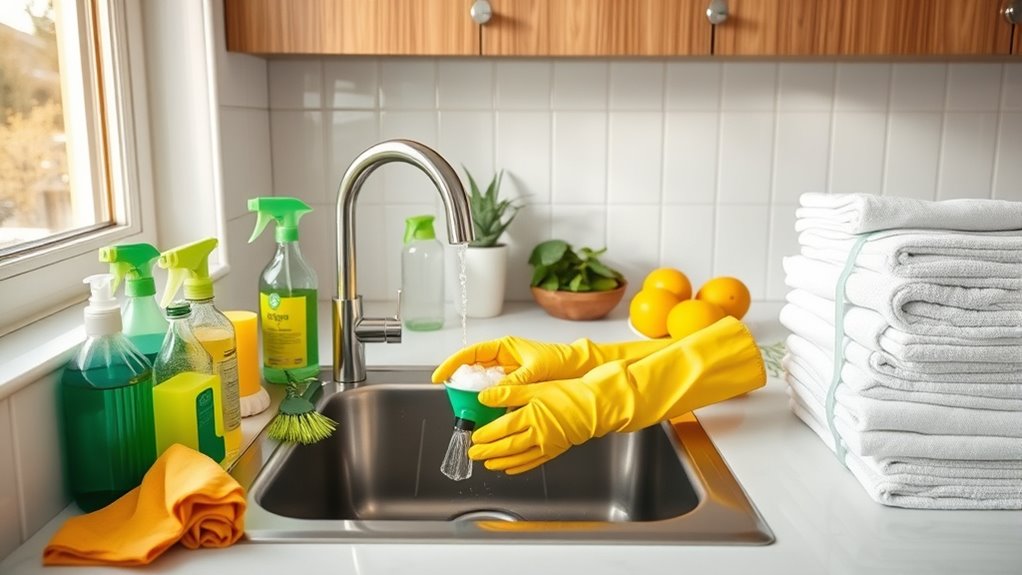
Once you’ve cleared the clutter, focus on scrubbing and sanitizing your countertops, sinks, and backsplashes to eliminate germs and stubborn stains. Start by choosing the right cleaners. Use a gentle, non-abrasive solution for countertop maintenance to avoid damaging surfaces.
For sinks, a disinfectant that tackles bacteria and grime works best. Don’t forget the backsplash; keeping it clean is key to preventing mold and grease buildup in tight spaces. Use a soft brush or sponge to scrub all areas thoroughly, paying close attention to corners and edges where dirt hides.
After scrubbing, rinse with water and wipe dry to prevent water spots or damage. Regularly maintaining these surfaces not only keeps your kitchen hygienic but also extends their lifespan. By sticking to this routine, you’ll guarantee your kitchen stays sparkling clean and safe for food preparation every day.
Deep Clean Kitchen Appliances Inside and Out
Although cleaning appliances can feel intimidating, tackling them inside and out guarantees your kitchen stays truly spotless and hygienic. Start by unplugging each appliance, then use appropriate deep cleaning tools like microfiber cloths, brushes, and gentle cleaners.
Wipe down exteriors thoroughly and clean interior compartments, removing crumbs, grease, and buildup. Regular appliance maintenance not only improves cleanliness but also extends their lifespan.
Here’s a quick guide to deep cleaning common kitchen appliances:
| Appliance | Inside Cleaning Tip | Outside Cleaning Tip |
|---|---|---|
| Refrigerator | Remove shelves and wash with soap | Wipe doors and handles daily |
| Oven | Use oven cleaner on racks | Clean control panel with cloth |
| Microwave | Steam clean with lemon water | Wipe buttons and exterior |
| Dishwasher | Clean filter and spray arms | Wipe door seals and control panel |
Sort and Organize Cabinets, Drawers, and Pantry
After thoroughly cleaning your appliances, turn your attention to the cabinets, drawers, and pantry where clutter and disorganization can easily accumulate. Start by emptying each space completely and wiping down the surfaces to remove crumbs and spills.
Clear out cabinets and drawers, then wipe surfaces clean to tackle accumulated clutter and crumbs.
As you sort through items, discard expired food and donate unused kitchenware. Use this opportunity to group similar items together, like baking supplies, canned goods, or spices, to streamline your kitchen workflow.
Next, invest in organizational tools such as drawer dividers, clear bins, and lazy Susans to maximize space and keep everything accessible. Storage solutions like stackable containers or adjustable shelving can transform cramped pantries into neat, functional areas.
Labeling containers or shelves helps maintain order over time. By sorting and organizing now, you’ll create a kitchen environment that’s easier to maintain and more enjoyable to work in every day.
Clean Kitchen Floors and Add Final Touches for Shine
How often do you give your kitchen floors the deep clean they deserve? Proper floor maintenance is crucial to keep your kitchen looking fresh and inviting. Start by gathering the right cleaning tools, like a broom, mop, bucket, and a gentle floor cleaner suited to your floor type.
Sweep thoroughly to remove crumbs and debris before mopping. For stubborn stains, use a soft brush or cloth to avoid scratching.
To add the final touches for shine:
- Use a microfiber mop for streak-free results
- Apply a floor polish or natural shine enhancer if suitable
- Wipe baseboards and corners for a complete clean
- Allow floors to dry completely before walking on them
Regularly maintaining your kitchen floors not only prolongs their life but also enhances the overall feel of your space. With these steps, your kitchen will gleam, making cooking and cleaning a more enjoyable experience.
Frequently Asked Questions
How Often Should I Deep Clean My Kitchen for Best Results?
You should deep clean your kitchen every one to two months for the best results. Sticking to regular cleaning schedules helps you maintain kitchen organization and prevents buildup of grime and bacteria.
Between deep cleans, focus on daily and weekly tasks like wiping counters and organizing cabinets. Setting reminders or creating a cleaning calendar can keep you on track, making your kitchen safer, more efficient, and pleasant to use.
What Natural Cleaning Products Are Safe for Kitchen Surfaces?
You’d think only a superhero’s touch could keep your kitchen spotless, but natural disinfectants like vinegar and lemon juice work wonders! These eco-friendly scrubbers tackle grime without harsh chemicals, making your surfaces shine safely.
Baking soda’s gentle abrasiveness is perfect for scrubbing stubborn stains, while tea tree oil adds extra germ-fighting power. Using these natural products, you’ll keep your kitchen clean and green, protecting your family and the planet effortlessly.
How Can I Prevent Mold Growth in My Kitchen?
You can prevent mold growth in your kitchen by focusing on moisture control first. Make sure to fix leaks promptly and use a dehumidifier or exhaust fan to keep humidity low.
Wipe down surfaces regularly to avoid dampness. Applying mold resistant paint on walls and ceilings adds an extra layer of protection.
Keep your kitchen well-ventilated, and don’t let water sit in the sink or on counters. These steps help keep mold at bay.
What Are the Best Tools for Cleaning Hard-To-Reach Kitchen Spots?
Think of cleaning difficult corners and high shelves like exploring a secret attic. You need the right gear. You’ll want a long-handled duster to reach those high shelves without a shaky step stool.
A flexible crevice brush helps you tackle tough spots where crumbs hide. Microfiber cloths grab dust like a magnet, and a flashlight reveals hidden grime. With these tools, you’ll conquer those tricky areas easily every time.
How Do I Safely Clean Kitchen Trash Cans to Avoid Odors?
To safely clean kitchen trash cans and avoid odors, start by emptying the can completely. Rinse it with warm, soapy water and scrub using a brush. Use odor eliminators like baking soda or vinegar to neutralize smells.
If you have a garbage disposal nearby, run it with lemon peels to freshen the area. Make sure to dry the trash can thoroughly before putting in a fresh liner to prevent mold and lingering odors.
Conclusion
By clearing clutter, scrubbing surfaces, and organizing every corner, you’re not just cleaning your kitchen; you’re renewing the heart of your home. Each polished countertop and sparkling floor is like a fresh canvas, ready for new memories and meals.
As you finish, imagine your kitchen glowing like a lighthouse, guiding you to comfort and creativity every day. Deep cleaning your kitchen isn’t just a chore; it’s a ritual that brightens your space and spirit.