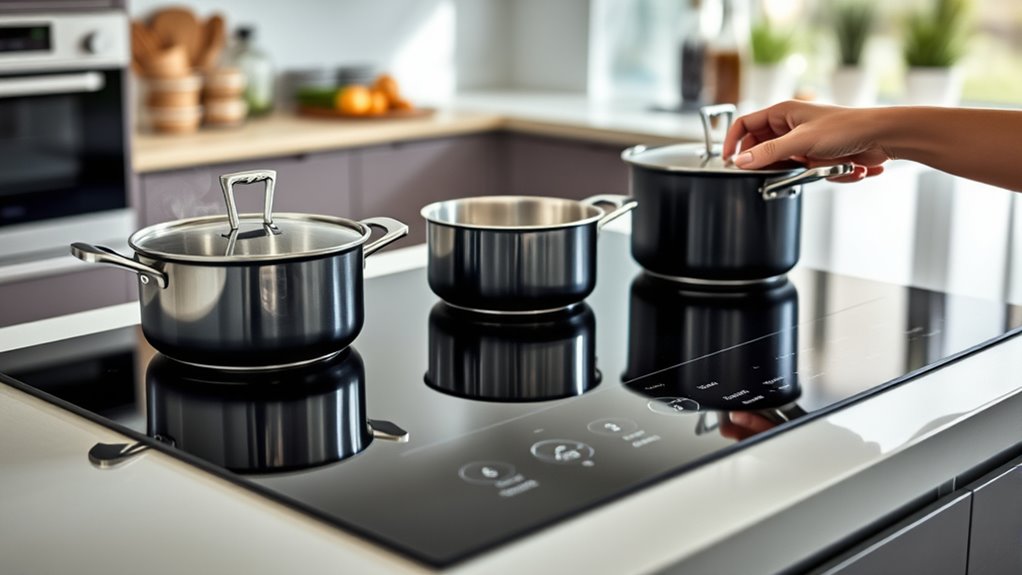
3 Key Advantages of Induction Hobs
Cooking should make life easier, but slow heating, uneven temperature control, and messy cleanup can make it frustrating. If you struggle with these everyday problems, you’re not alone. The best induction hobs offer a faster, safer, and simpler way to prepare meals.
Induction hobs help you cook faster, control heat more precisely, and clean spills with less effort. They transfer energy directly to compatible pans, so water boils quickly and meals respond immediately when you adjust the setting.
Safety features such as pan detection, automatic shutoff, and child locks reduce common risks, while the cooler surrounding surface adds protection. Because the smooth glass top has no burners or gaps, you can wipe it clean easily.
Keep going to find out how to use these benefits best.
Key Takeaways
- Faster cooking: Induction transfers heat directly to compatible cookware, boiling water and cooking meals more quickly.
- Greater energy efficiency: Direct heating minimizes wasted heat around the pan and improves overall energy use.
- Precise temperature control: Instant adjustments support consistent cooking, from gentle simmering to high-heat searing.
- Enhanced safety: Cooler surfaces, pan detection, automatic shutoff, and child locks help reduce household risks.
- Easy cleaning: The smooth, flat surface has no burners or gaps, making spills quick to wipe away.
Cook Faster With Precise Induction Heat
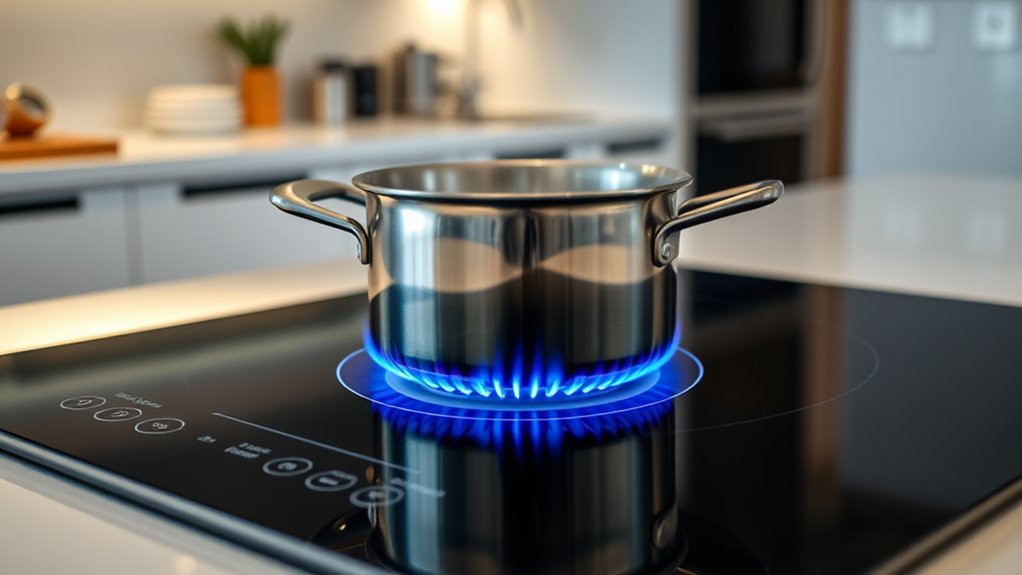
Induction hobs heat cookware directly through electromagnetic energy, so they boil water and cook meals faster than many traditional stovetops. You’ll notice the difference when you heat water, sear meat, or prepare a quick stir-fry.
Instead of warming a burner and transferring heat through another surface, the hob energizes the compatible pan itself. This direct process reduces heat loss and helps you reach cooking temperatures quickly.
You can also control heat with impressive precision. Lower the setting, and the pan responds promptly; increase it, and you’ll gain power without waiting through long temperature changes.
That responsiveness makes delicate tasks, such as melting chocolate or simmering sauces, easier to manage.
This combination of speed and control supports energy efficiency because less electricity becomes wasted heat around the pan.
As modern technology continues improving, induction cooking gives you a practical way to shorten preparation time while maintaining consistent results across everyday recipes and demanding techniques.
Reduce Risks With Induction Hob Safety
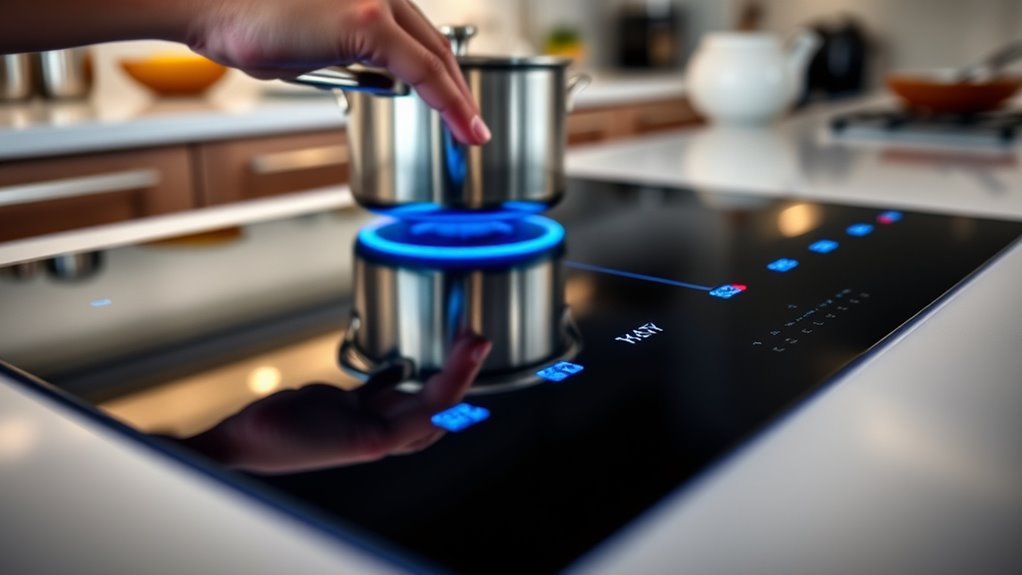
Because induction hobs heat the cookware rather than the surrounding surface, they can reduce burn risks in your kitchen. The cooking zone stays cooler, so you’re less likely to touch a glowing element accidentally. Still, use oven gloves, keep handles turned inward, and supervise children.
| Safety feature | How it protects you |
|---|---|
| Cool surrounding surface | Helps limit accidental burns |
| Pan detection | Stops heating when cookware leaves the zone |
| Automatic shutoff | Ends operation after inactivity or overheating |
| Child lock | Supports child safety by blocking controls |
Choose cookware that matches the hob’s requirements and sits securely on the cooking zone. Don’t place metal utensils, cans, or other loose objects on the surface, because they may heat unexpectedly if the hob detects them.
Activate the child lock whenever you leave the kitchen or have young children nearby. Check your model’s warning indicators, and wait for the residual-heat light to disappear before touching a zone.
These safeguards make everyday cooking more controlled without compromising speed or precision.
Clean Spills Easily on Smooth Induction Hobs
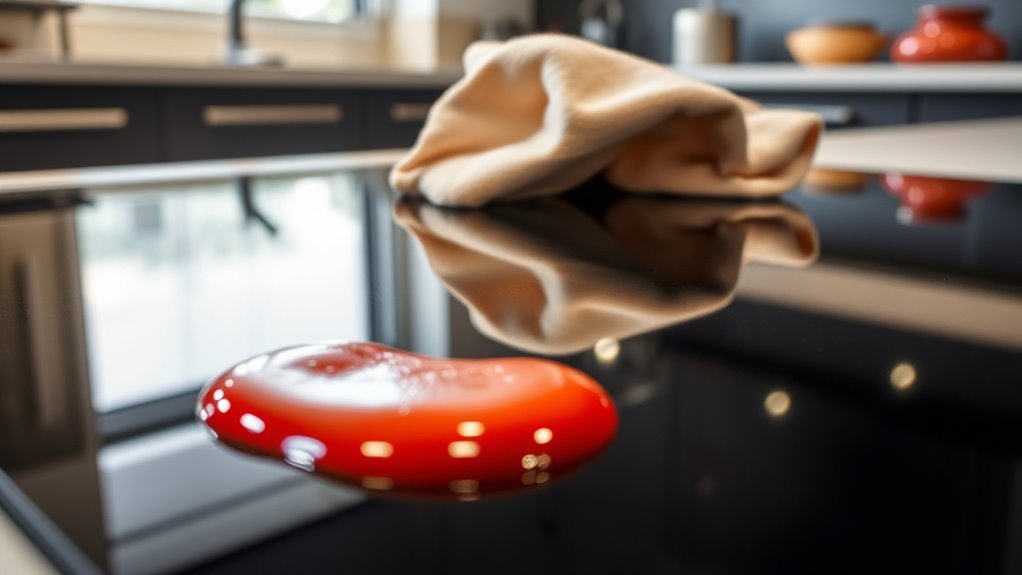
Once you’ve finished cooking safely, cleaning up is simple on a smooth induction hob. Its flat, glass surface has no raised burners, grates, or hidden gaps where food can collect.
A smooth, flat induction surface makes post-cooking cleanup quick, with fewer places for food and spills to hide.
You can usually wipe away splashes and crumbs with a soft, damp cloth once the surface has cooled. For dried-on residue, use a hob scraper designed for glass, holding it at the recommended angle to avoid scratches.
Don’t use abrasive pads or harsh cleaners, which can damage the finish.
Pan compatibility also supports cleaner cooking. Choose flat-bottomed pans that sit steadily on the cooking zone, reducing rocking and helping prevent sauces from sloshing over the rim.
Good spill prevention habits, such as lowering the heat before stirring and avoiding overfilled pans, limit messes further. Because the hob heats the pan directly, nearby areas stay cooler, so spills are less likely to bake onto the surface.
With prompt wiping and suitable cookware, you’ll keep your induction hob hygienic and polished.
Frequently Asked Questions
How Much Electricity Does an Induction Hob Typically Consume?
You’ll typically use 1.5–2.5 kilowatt-hours (kWh) of electricity per hour when running an induction hob at high power, depending on its size and setting. Lower heat uses less, while a boost function uses more.
Because induction transfers heat directly to your cookware, cooking usually finishes faster, improving Energy efficiency. Your actual power consumption depends on cooking time, pan size, and temperature.
A single meal commonly consumes roughly 0.5–1 kWh.
Are Induction Hobs Compatible With All Types of Cookware?
No—like a modern-day Excalibur, an induction hob works only with cookware containing magnetic metal. For reliable Cookware compatibility, test your pans with a magnet: if it sticks firmly to the base, the pan should work.
Cast iron and magnetic stainless steel usually perform well, while aluminum, copper, glass, and nonmagnetic stainless steel won’t heat unless they include a magnetic layer. Magnetic induction also requires a flat, hob-sized base for efficient cooking.
How Noisy Are Induction Hobs During Normal Operation?
You’ll usually find induction hobs fairly quiet during normal operation. Their noise levels typically include a soft hum, faint buzz, or occasional clicking as the electronics regulate power.
You may hear more operational sounds when you use high settings, smaller pans, or cookware with uneven bases. Built-in cooling fans can also run after cooking, producing a gentle whir.
These sounds are normal, but unusually loud buzzing may indicate unsuitable cookware or a technical issue.
Do Induction Hobs Require Special Electrical Installation?
You’ll often need special electrical installation for an induction hob, so measure twice, cut once. Check the appliance’s wattage and your home’s supply before buying.
Many full-size models require a dedicated, higher-amperage circuit and hardwiring by a qualified electrician, rather than a standard plug. Smaller portable units may use ordinary outlets.
Proper installation supports energy efficiency and essential safety considerations, while preventing overheating, nuisance tripping, or damage to your wiring and appliance.
What Features Should I Consider When Choosing an Induction Hob?
When choosing an induction hob, consider its size, number of cooking zones, and power levels to match your cookware and cooking habits. Look for flexible zones that accommodate different pan sizes, precise temperature controls, and a boost function for faster heating.
Prioritize energy efficiency and safety features such as automatic shutoff, residual-heat indicators, child locks, and pan detection. Also check touch-control responsiveness, easy-clean surfaces, timer functions, warranty coverage, and installation requirements before buying.
Conclusion
Ready to upgrade your kitchen? Induction hobs help you cook faster with precise heat, reduce risks with cooler surrounding surfaces, and simplify cleanup when spills happen.
You’ll enjoy better control, added peace of mind, and less time scrubbing after meals. With these practical advantages, choosing induction hobs can make everyday cooking more efficient and enjoyable.
Why settle for a slower, messier cooking experience when you can have speed, safety, and convenience in one sleek appliance?