How Much Does a Dishwasher Cost?
Choosing the right dishwasher can be frustrating, especially when prices vary so widely and every model seems to promise something different. You’re not alone—many shoppers struggle to balance capacity, features, and budget.
So, how much does a dishwasher cost? This guide breaks down the typical prices and what you’ll get at each level.
You’ll typically pay $400 to $1,500 for a dishwasher, while premium models can exceed $2,500 before installation. Built-in units offer the most capacity, whereas portable and countertop models suit rentals or smaller kitchens.
Installation usually adds $100 to $300, plus possible plumbing, electrical, cabinetry, delivery, or disposal fees. Features such as stainless-steel tubs, quiet operation, adjustable racks, and smart controls increase the price.
Keep exploring to compare types, features, repair costs, and ways to save.
Key Takeaways
- Dishwashers typically cost $400–$1,500, while premium models can exceed $2,500.
- Basic models offer essential cycles, while mid-range and premium units add quieter operation, flexible racks, smart features, and improved performance.
- Professional installation usually costs $100–$300, with additional charges possible for plumbing, electrical work, cabinetry, or disposal.
- Portable and countertop dishwashers generally cost less to install, while built-in and drawer models offer greater capacity or flexibility.
- Budget $100–$300 for common repairs, though major failures may exceed $500. Maintenance and warranties can reduce long-term costs.
What Is the Average Dishwasher Cost?
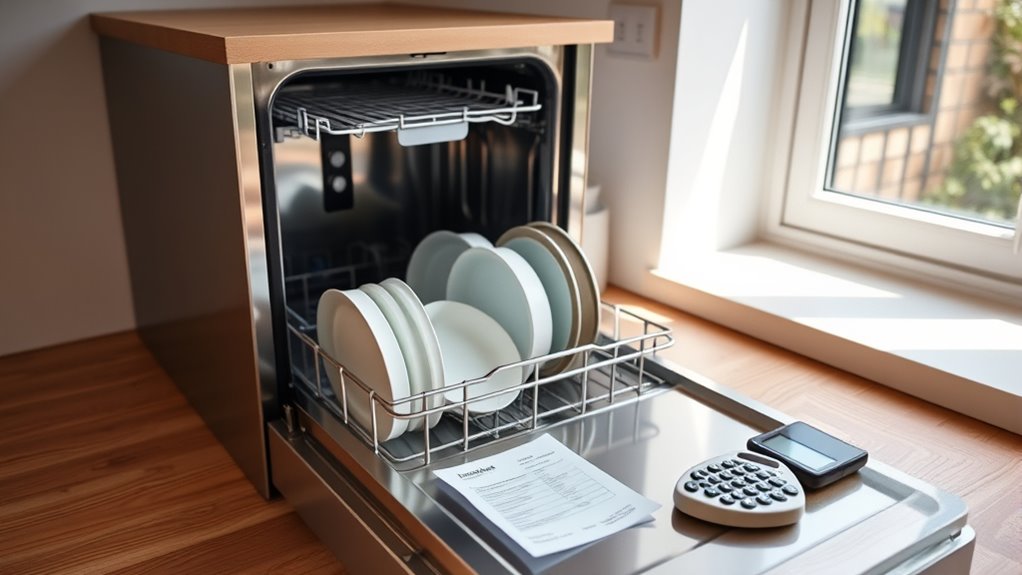
A dishwasher typically costs between $400 and $1,500, with high-end models reaching $2,500 or more. You’ll usually find basic units near the lower end, while quieter machines, flexible racks, stainless-steel interiors, and advanced controls raise the price.
Installation may add another $100 to $300, especially if you need new connections, cabinet adjustments, or electrical work. You should also account for delivery, haul-away, detergent, rinse aid, and periodic maintenance when estimating ownership costs.
Your household’s size and cleaning habits affect which price range makes sense. A compact dishwasher can suit a smaller kitchen, while a full-size model gives larger families more capacity.
Consider kitchen organization, because adjustable racks and dedicated utensil trays can improve usable space without increasing the appliance’s footprint. Water consumption matters, too: efficient models may cost more initially but can reduce utility expenses over time.
Compare capacity, cycle options, noise ratings, warranty coverage, and operating costs before setting your spending limit.
Which Dishwasher Type Fits Your Budget?
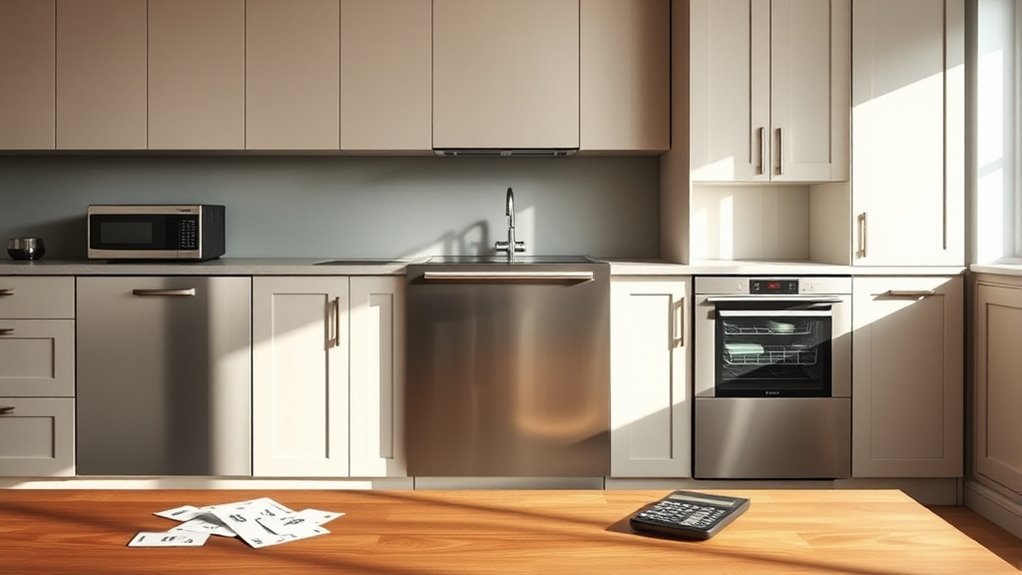
Choosing the right dishwasher type depends on your budget, kitchen layout, and cleaning needs. Built-in models suit you if you want a permanent, streamlined appliance and have room beneath your counter.
Your budget, kitchen layout, and cleaning needs determine which dishwasher type best fits your home.
They typically offer the best capacity and features, but installation can increase your overall spending.
Portable dishwashers work well if you rent or lack cabinet space. You can roll one near the sink when needed, then store it afterward.
However, you’ll sacrifice some floor space and may need to connect it manually.
Countertop dishwashers fit smaller kitchens and lighter workloads. They’re easier to install and usually use less water, making them practical for singles, couples, or occasional use.
Drawer dishwashers offer flexible loading and accessibility, though their specialized design may cost more.
As you compare types, consider energy and water efficiency, noise, warranty coverage, and dishwasher maintenance.
Look for eco-friendly options if lower utility bills and reduced environmental impact matter to you. Choose the format that balances upfront cost, convenience, and long-term value.
How Much Do Basic Dishwashers Cost?
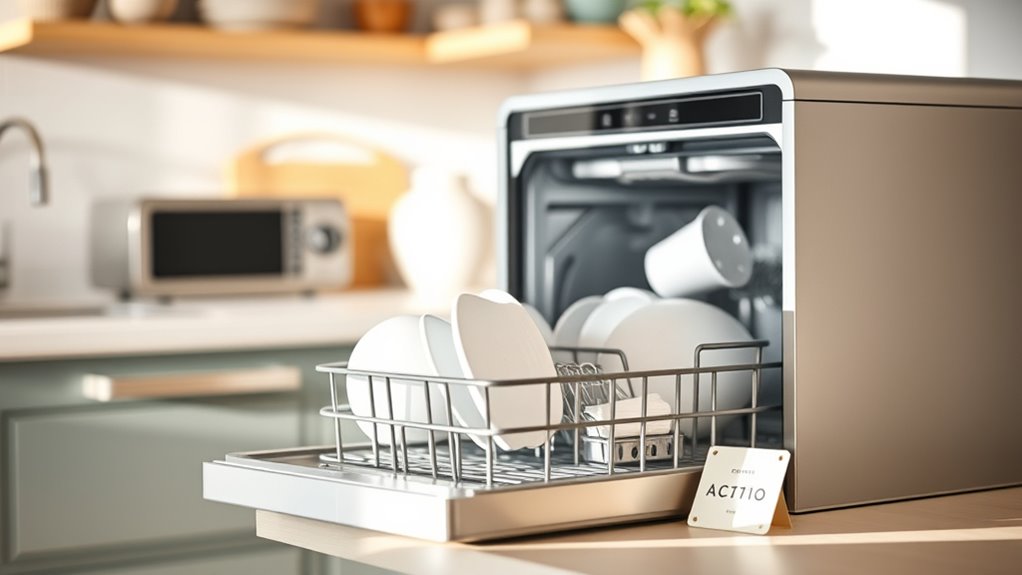
You’ll typically pay between $400 and $700 for a basic dishwasher. Models in this price range usually include essential wash cycles, adjustable racks, and easy-to-use controls. It’s worth comparing a few options so you can find the features you need without overspending.
Basic Dishwasher Price Range
Basic dishwashers typically cost between $300 and $700, depending on their size, finish, cycle options, and brand. You’ll generally find compact models at the lower end, while full-size stainless-steel units approach the upper range.
Prices may also vary by retailer, local sales tax, installation requirements, and delivery fees, so include those expenses in your budget. If you’re planning a kitchen renovation, compare the dishwasher’s dimensions with your existing cabinet opening before purchasing.
A basic model can meet your needs without markedly increasing the project’s total cost. You’ll often pay more for established brands, but that investment may support appliance longevity through stronger construction and better parts availability.
Check the warranty and return policy, then compare total ownership costs rather than focusing only on the sticker price.
Budget-Friendly Features
Budget-friendly dishwashers usually cost about $300 to $500 and include practical features such as adjustable racks, soil-sensing cycles, delayed starts, and efficient wash settings. You’ll also find multiple wash cycles, including quick options for lightly soiled dishes and heavier settings for pots and pans.
Look for stainless-steel tubs if durability matters, though plastic interiors can help you stay within budget. Eco-friendly cycles reduce water and energy use, potentially lowering your utility bills over time.
Noise ratings vary, so compare decibel levels before you buy, especially if your kitchen connects to living areas. Most basic models skip smart connectivity, Wi-Fi controls, and specialized drying systems.
However, you can still get reliable cleaning, flexible loading, and useful performance without paying for premium extras or unnecessary features.
What Do Mid-Range Dishwashers Offer?
When you choose a mid-range dishwasher, you can expect better cleaning performance, even for tougher loads. Flexible rack configurations make it easier to fit dishes of different sizes, while quiet, energy-efficient operation helps keep both household costs and noise levels down.
Enhanced Cleaning Performance
Mid-range dishwashers typically deliver stronger cleaning performance through targeted spray jets, improved filtration, and more flexible wash cycles. You’ll notice better results on baked-on food, greasy cookware, and delicate glassware because specialized jets direct water where it matters most.
Multi-stage filters capture particles efficiently, helping prevent redepositing and keeping each load cleaner. Many models also include sensor-driven programs that adjust temperature, pressure, and duration according to soil levels.
You can select intensive settings for stubborn messes or gentle options for everyday dishes without relying on excessive detergent. Eco friendly detergents work well with these systems, while Water saving cycles reduce consumption without sacrificing cleaning power.
Although features vary by brand, you’ll generally gain dependable sanitation, quieter operation, and fewer rewashes than basic dishwashers.
Flexible Rack Configurations
Adjustable racks and fold-down tines give you more room for oversized pots, tall glasses, and awkwardly shaped dishes. You can raise or lower the upper rack to create clearance for large cookware below, while removable sections let you customize each load.
Stemware holders help protect delicate glasses, and third-rack designs provide a dedicated spot for utensils, flat items, or cooking tools. Mid-range models often include smooth-gliding rails, so you won’t struggle when loading or unloading a full dishwasher.
Smart technology may remember your preferred rack arrangement or guide you through loading recommendations. These practical features can improve water efficiency because you’ll fit more dishes into each cycle and avoid running partially filled loads.
When comparing prices, check the rack materials, adjustment points, and usable space rather than focusing only on advertised capacity.
Quiet, Energy-Efficient Operation
A quieter, more efficient dishwasher can make a noticeable difference in your kitchen and utility bills. Mid-range models typically offer noise levels around 44 to 50 decibels, so you can run a cycle during dinner or overnight without much disruption.
Look for an Energy Star certification, soil sensors, and eco cycles that adjust water temperature and usage based on each load. These features help you achieve meaningful energy savings while reducing water consumption.
Insulated tubs and quieter motors may raise the purchase price, but they improve daily comfort and can lower operating costs over time. You’ll also find delay-start settings, letting you run the dishwasher during off-peak utility hours when available.
Compare annual energy-use estimates, warranty coverage, and cycle performance to determine whether the added efficiency justifies the mid-range price.
How Much Do Premium Dishwashers Cost?
Premium dishwashers typically cost between $1,200 and $2,500, though luxury models can exceed $3,000. You’ll pay more for refined design, stronger cleaning performance, quieter operation, and durable stainless-steel interiors.
Many premium models also include adjustable racks, third racks, soil sensors, specialized wash cycles, heated drying, leak detection, and app controls.
Luxury upgrades can improve convenience, but consider which features you’ll actually use. Wi-Fi connectivity, automatic detergent dispensing, interior lighting, and customizable cycles may increase the price without significantly improving everyday results.
You should also compare warranty coverage, repair support, and expected longevity before choosing a model.
Brand comparisons can help you identify the best value. Some manufacturers emphasize silent operation, while others focus on advanced filtration, flexible loading, or sleek panel-ready designs.
Read independent reviews and check energy ratings to estimate long-term ownership costs. Premium pricing doesn’t always guarantee better performance, so compare cleaning tests, capacity, controls, and reliability ratings before making your decision.
A well-chosen midrange model may satisfy you without the premium price.
How Much Does Dishwasher Installation Cost?
When budgeting for a dishwasher, remember to include the cost of installation labor. You may also need to pay extra for plumbing, electrical work, or cabinet modifications. Understanding these potential charges can help you estimate the total installation cost more accurately.
Installation Labor Costs
Professional dishwasher installation typically costs $100 to $300 in labor, depending on your location and the job’s complexity. You’ll usually pay more when your installer must remove an old unit, modify cabinetry, or connect the appliance in a difficult-to-reach location.
A straightforward replacement often takes one to two hours, while a first-time installation may require additional labor. Hire a licensed, experienced technician to guarantee proper leveling, secure connections, and leak testing.
You should also ask whether the installer offers workmanship guarantees and whether the dishwasher manufacturer requires professional installation for warranty coverage. Although you can install some models yourself, professional service reduces setup errors and helps your appliance run efficiently.
Afterward, follow the manufacturer’s dishwasher maintenance recommendations to protect performance and extend its service life.
Additional Installation Expenses
Beyond labor, your total dishwasher installation cost may include delivery, removal and disposal of the old appliance, new water or drain lines, electrical work, cabinetry modifications, and permits. Delivery fees often depend on distance, while hauling away your old unit can add a separate charge.
If your kitchen lacks a dedicated circuit, you may need an electrician, increasing the project total. Plumbers might replace corroded shutoff valves, hoses, or drain connections before installing the dishwasher.
Uneven openings or custom panels can also require cabinet adjustments. Ask for an itemized estimate so you can make an accurate cost comparison between installers.
Before scheduling, confirm who handles permits and cleanup. Helpful installation tips include measuring the opening, checking connection locations, and verifying warranty requirements.
Planning these expenses upfront helps prevent surprises.
Which Features Raise Dishwasher Prices?
Dishwasher prices rise with features such as stainless-steel tubs, quiet operation, adjustable racks, third racks, soil sensors, heated drying, and smart-home connectivity. You’ll usually pay more for durable interiors and sound ratings below 50 decibels, but those upgrades can improve daily convenience.
| Feature | Price impact |
|---|---|
| Third rack | Moderate |
| Soil sensor | Moderate |
| Smart technology | Moderate to high |
Adjustable racks help you fit oversized cookware, while soil sensors automatically adapt cycles and water use. Heated drying reduces hand-drying time, though it can increase energy consumption.
Eco friendly options, including efficient cycles and low-water designs, may cost more upfront but can lower utility bills. Smart technology lets you start cycles, receive alerts, and monitor performance through an app.
Compatibility with your home system may raise the price further. Stainless-steel tubs typically outlast plastic ones and resist odors, while quieter models suit open kitchens.
Compare which features you’ll actually use. Skipping unnecessary extras can keep your dishwasher cost manageable without sacrificing cleaning performance.
How Much Do Dishwasher Repairs Cost?
Even a well-equipped dishwasher may need repairs, and the cost depends on the failed part, labor rates, and your model’s age. You’ll typically pay $100 to $300 for common service calls, though major component failures can cost more than $500.
Dishwasher repairs typically cost $100–$300, while major component failures may exceed $500 depending on parts, labor, and model age.
Before scheduling service, consider these likely expenses:
- A diagnostic visit may cost $50 to $100, sometimes applied toward the final bill.
- Replacing a door seal, spray arm, or inlet valve often costs $100 to $250.
- A pump, control board, or heating element may run $200 to $500, including labor.
- Emergency, weekend, or specialty-brand service usually carries higher rates.
Your dishwasher’s age matters. Repairs can support appliance longevity when the machine has a durable tub and otherwise works well.
However, repeated failures may make replacement more practical than another repair. Use repair troubleshooting to identify symptoms, but don’t dismantle electrical components unless you’re qualified.
Ask for an itemized estimate, warranty details, and the technician’s labor rate before approving work. Repair prices vary by location, brand, and accessibility.
How Can You Lower Dishwasher Costs?
You can lower dishwasher costs by choosing an efficient model, comparing installation and delivery fees, and maintaining it to prevent avoidable repairs. Look for eco-friendly options that use less water and electricity, which can reduce utility bills over the appliance’s lifetime.
Before buying, request an itemized quote so you can compare retailer prices, delivery charges, old-appliance removal, and installation labor. Check whether connecting new water or electrical lines will add fees.
Use the dishwasher correctly and clean its filter regularly to support efficient operation. Inspect the door seal, spray arms, and hoses occasionally, and address leaks or unusual noises promptly. Small fixes often cost less than damage caused by neglect.
Consider an extended warranty only after reviewing its price, coverage, deductible, and exclusions. It may help with expensive component failures, but a manufacturer’s warranty might already provide sufficient protection.
Finally, avoid replacing a functioning dishwasher solely for cosmetic reasons. Delaying replacement preserves your budget and reduces disposal costs.
Which Dishwasher Features Deliver the Best Value?
The best-value dishwasher features are the ones that improve cleaning, efficiency, and convenience without adding unnecessary cost. As you compare models, focus on functions you’ll use regularly rather than impressive extras that inflate the purchase price.
- Adjustable racks: You can fit tall bottles, pans, and delicate items more easily, reducing hand-washing and maximizing each load.
- Soil sensors: These sensors adjust water and cycle time based on how dirty your dishes are, helping you avoid wasted resources.
- Eco friendly options: Efficient wash cycles, half-load settings, and low-water designs can reduce utility costs while meeting everyday cleaning needs.
- Smart technology: Wi-Fi alerts and remote controls can add convenience, but choose them only if you’ll genuinely use them. A stainless-steel tub, quiet operation, and a reliable filtration system may deliver greater long-term value than advanced connectivity.
Prioritize a strong warranty and accessible replacement parts, too. Paying slightly more for durable construction and practical performance can save you from repairs or early replacement later.
Frequently Asked Questions
How Long Does a Dishwasher Typically Last?
A dishwasher typically lasts 7 to 12 years, though you can extend its life with regular cleaning, prompt repairs, and proper loading. You’ll get better performance when you clean the filter, inspect the door seal, and avoid overloading racks.
During dishwasher installation, guarantee the unit sits level and connects securely. When replacement becomes necessary, choose a model with strong energy efficiency to reduce utility costs and improve long-term value for your household and budget.
What Dishwasher Size Is Right for My Kitchen?
Choose a 24-inch standard dishwasher if you have a typical kitchen and enough cabinet space; it fits most households and place settings. Select an 18-inch compact model for a small kitchen, apartment, or one- to two-person home.
Measure your opening’s width, height, and depth before buying, and leave room for hoses and ventilation. During dishwasher installation, consider energy saving features, adjustable racks, and a panel-ready design to match your cabinets.
How Much Water and Electricity Does a Dishwasher Use?
You’ll find your dishwasher is a modest household helper, typically using 3–5 gallons of water per cycle. Older models may use 10 gallons or more, while ENERGY STAR® units use about 3.2 gallons.
Electricity use usually ranges from 1.2–1.5 kilowatt-hours per cycle, depending on settings and drying methods. For better water consumption and energy efficiency, run full loads, choose eco mode, and skip heated drying when practical.
Are Countertop Dishwashers Suitable for Small Households?
Yes, countertop dishwashers suit small households, especially if you live alone or with one other person. Their compact design fits kitchens with limited space, while modest countertop capacity handles a few place settings efficiently.
You’ll typically run smaller loads more often, but you’ll save water compared with hand washing. Suitability for singles is excellent when you value convenience, lack room for a full-size model, and can connect the appliance to your faucet.
What Dishwasher Maintenance Tasks Should Homeowners Perform?
Clean filters, inspect seals, check spray arms, and wipe the door gasket regularly. You’ll prevent odors, improve performance, and extend your dishwasher’s life.
Run an empty hot cycle with dishwasher cleaner monthly, and remove mineral buildup when needed. For dishwasher troubleshooting, check hoses, drainage, and unusual noises promptly.
Your dishwasher cleaning routine should also include rinsing food scraps, using the right detergent, and leaving the door ajar after cycles to prevent mildew and maintain freshness.
Conclusion
A dishwasher can cost anywhere from about $300 to over $2,000, with installation, repairs, and premium features affecting your total.
The interesting part? Energy Star-certified models can save you hundreds of dollars in water and energy over their lifetimes.
Before you buy, compare capacity, noise ratings, wash cycles, and warranty coverage, not just the sticker price. Choose the features you’ll use most, set a realistic budget, and you’ll find a dishwasher that delivers lasting value without unnecessary expense.
With the right research, you can choose a dishwasher that fits your needs and budget.