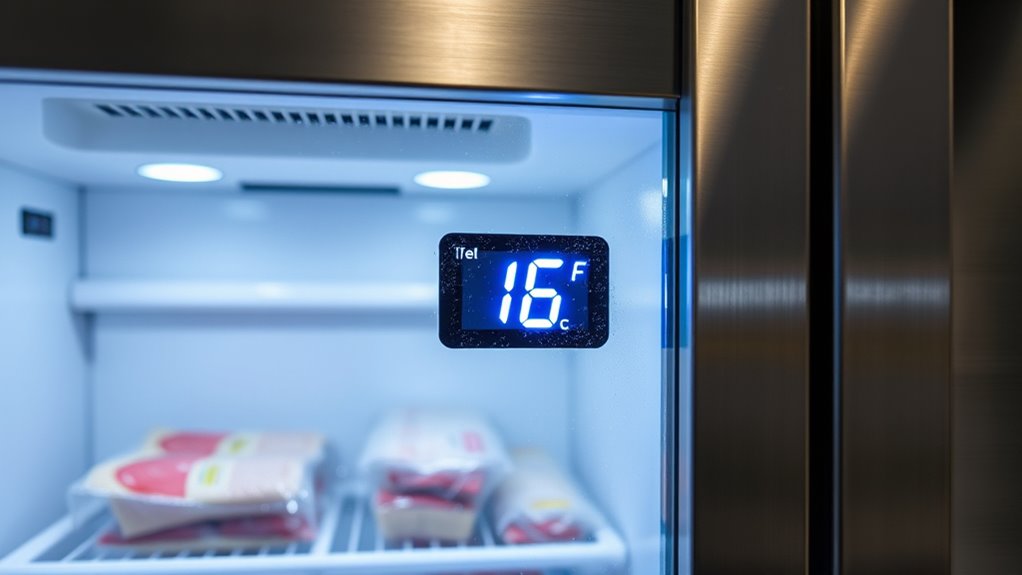
What Temp Should a Freezer Be?
Wondering what temp should a freezer be to keep food fresh and safe? You’re not alone—many people struggle with freezer burn, partially thawed food, and uncertain temperature settings. The right freezer can make all the difference, so this guide will help you know what to look for.
Set your freezer to 0°F (-18°C) or colder to keep food safely frozen and preserve its flavor, texture, color, and nutrients. Freezing slows microbial activity but doesn’t kill bacteria, so avoid partial thawing and refreezing.
Check the temperature with an appliance thermometer on the center shelf, wait at least 12 hours after placement, and record readings regularly. Keep the door closed, vents clear, and seals tight.
The sections below explain how to maintain the ideal temperature.
Key Takeaways
- Set your freezer to 0°F (-18°C) or colder for safe, long-term food storage.
- Use an appliance thermometer on the central shelf to verify the actual temperature.
- Wait at least 12 hours after placing the thermometer or restocking before checking the reading.
- Keep the door closed, avoid overcrowding, and maintain unobstructed vents for consistent airflow.
- Check door seals, clear frost buildup, and clean condenser coils to help maintain the correct temperature.
What Temperature Should a Freezer Be? 0°F Is Best
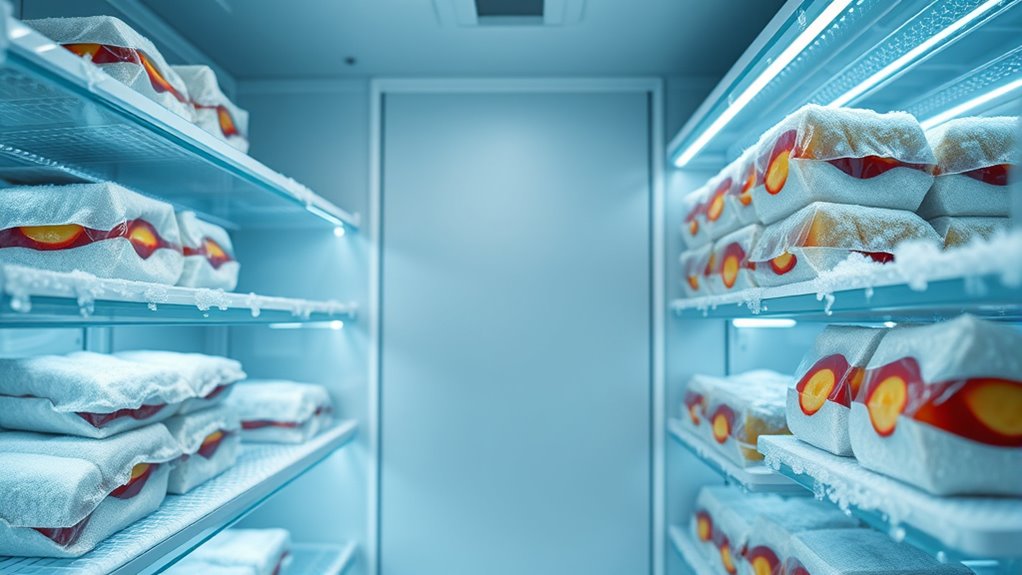
For safe, long-term food storage, set your freezer to 0°F (-18°C) or colder. This setting gives you a clear target when you adjust the control, check a display, or verify performance with an appliance thermometer.
Place the thermometer in a central location, away from the door, and wait several hours before reading it. Your freezer may cycle above and below the selected setting, so focus on its average temperature rather than every brief fluctuation.
You can support consistent operation by keeping the door closed, maintaining clear air vents, and avoiding overcrowding. Check the temperature after loading groceries, during power interruptions, and when seasons change.
If your freezer struggles to reach 0°F, inspect the door seal and remove frost buildup according to the manufacturer’s instructions.
Energy efficiency depends on proper placement, maintenance, and settings. Compare Noise levels, too; unusual clicking, grinding, or constant running may signal a problem requiring service.
Why 0°F Protects Frozen Food
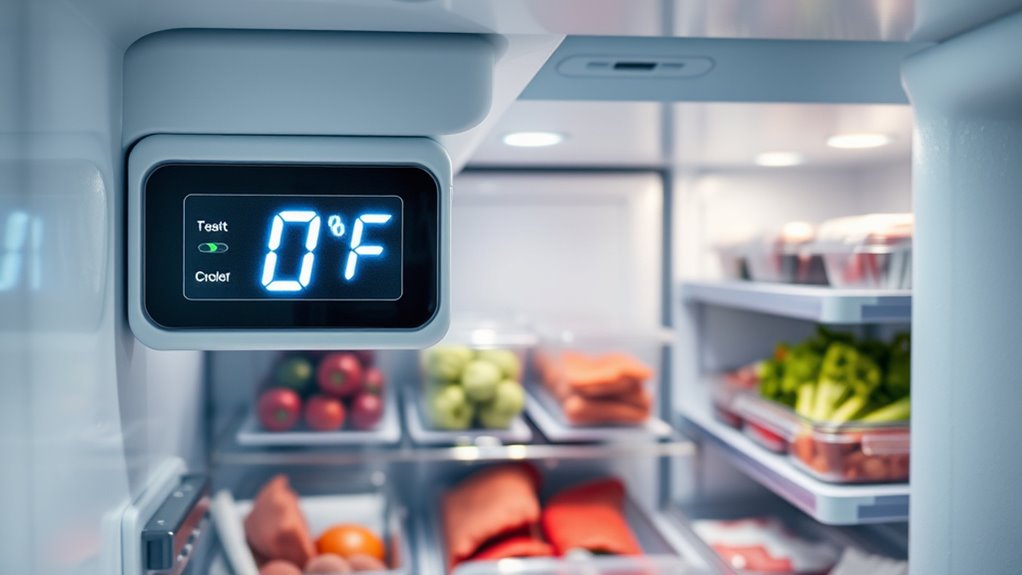
Keeping your freezer at 0°F slows bacterial growth and helps protect your frozen food. It also preserves quality, flavor, and texture. By preventing partial thawing, this temperature keeps your food safely frozen until you’re ready to use it.
Slows Bacterial Growth
At 0°F (-18°C), your freezer slows bacterial growth to a near stop, helping frozen food stay safe for longer. Freezing doesn’t kill most bacteria; it pauses their activity.
When food warms, microbes can become active again, so you must handle thawed items safely.
Follow these Food safety steps: freeze food promptly, keep the door closed, and check your freezer with an appliance thermometer.
Don’t believe Freezing myths that frozen food remains safe indefinitely or that freezing reverses spoilage.
If food smells unusual, feels slimy, or sat too long above 40°F, discard it.
| Temperature | Bacterial activity | Your action |
|---|---|---|
| 0°F | Nearly stopped | Keep food frozen |
| 32°F | Slow | Limit door openings |
| 40°F+ | Increasing | Refrigerate or discard |
Maintain 0°F consistently to protect frozen food.
Preserves Food Quality
Why does 0°F protect more than food safety? At this temperature, you’ll help frozen foods retain their flavor, texture, color, and nutrients during storage. Consistent cold limits quality loss and keeps your meals tasting closer to fresh.
- Flavor: You’ll preserve delicate aromas and reduce stale, freezer-affected tastes.
- Texture: You’ll protect the structure of meats, vegetables, and prepared dishes.
- Color: You’ll help produce maintain its natural appearance instead of fading.
- Nutrients: You’ll support better nutrient retention over extended storage.
Set your freezer to 0°F and check its display with an independent thermometer. Keep the door closed as much as possible, since warm air encourages ice buildup and makes the appliance work harder.
Proper organization also improves airflow and energy efficiency. Label packages with dates, use airtight wrapping, and remove excess air to protect quality from drying and oxidation.
Prevents Partial Thawing
A steady 0°F prevents the temperature swings that cause partial thawing and refreezing. When your freezer stays at this temperature, ice crystals remain stable, so food keeps its texture, flavor, and moisture.
Even brief warming can soften meat, vegetables, or ice cream, then create larger crystals when everything freezes again. Those crystals damage food cells and may accelerate Food spoilage, especially if items spend too long above safe temperatures.
Set your freezer to 0°F, use a reliable thermometer, and avoid leaving the door open. Keep packages organized so you can find them quickly, and don’t overload the compartment, which can block cold-air circulation.
A consistent setting also supports energy efficiency because your freezer won’t work as hard to recover from repeated temperature swings. You’ll protect quality while reducing unnecessary energy use.
What Temperature Keeps Food Frozen Safely?
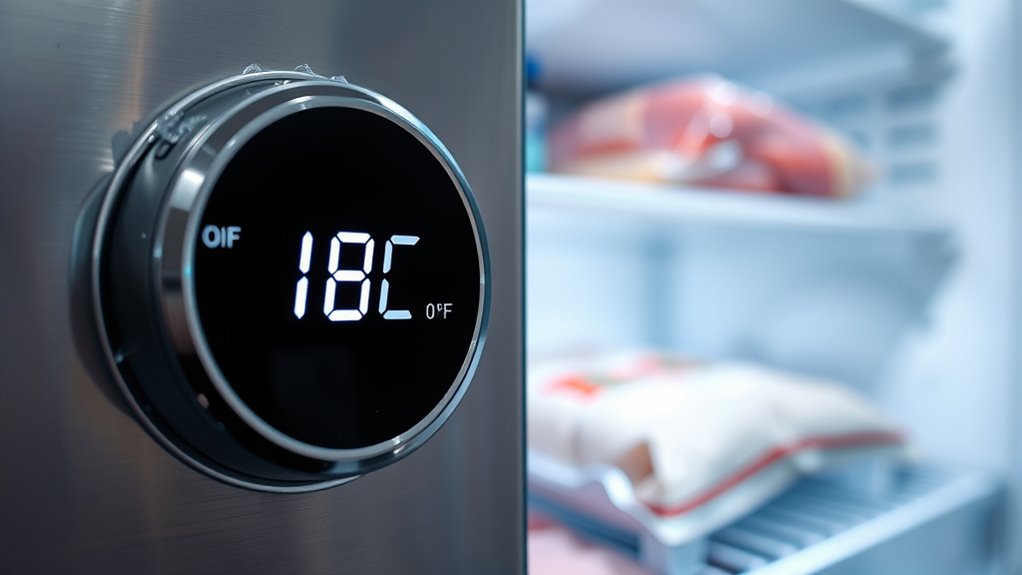
Keep your freezer at 0°F (-18°C) or below to keep food safely frozen. This temperature limits microbial growth and helps maintain a solid frozen state.
Keep your freezer at 0°F (-18°C) or below to preserve food quality and limit microbial growth.
You should check the setting regularly, especially after power interruptions, heavy loading, or frequent door opening.
- Use a reliable appliance thermometer to verify the actual temperature rather than trusting the dial alone.
- Allow air to circulate around packages, and don’t block interior vents with food.
- Keep the door closed as much as possible. Repeated opening can raise the internal temperature.
- If food partially thaws, don’t refreeze it automatically. Check whether it still contains ice crystals and follow food-safety guidance.
Temperature calibration matters because a displayed setting may not match the compartment’s actual conditions. Calibrate or replace an inaccurate thermometer, and arrange professional service if the freezer can’t hold 0°F.
For energy efficiency, maintain a full but organized freezer, inspect the door seal, and keep the appliance away from heat sources. These steps help you maintain safe freezing consistently.
How Freezer Temperature Affects Food Quality
Maintaining 0°F (-18°C) or below protects more than food safety—it also preserves food quality. At this temperature, you’ll slow moisture loss, limit ice-crystal growth, and help foods retain their texture, flavor, color, and nutrients.
Stable cold supports effective food preservation, especially when you store meat, vegetables, fruit, and prepared meals in airtight, moisture-resistant packaging.
Temperature swings can partially thaw food and refreeze it, creating larger ice crystals that damage cell structure. You may notice mushy berries, dry meat, freezer burn, or separated sauces after repeated fluctuations.
Although freezer burn doesn’t make food unsafe, it reduces taste and appearance. Keep your freezer reasonably full to help maintain a steady environment, but leave enough space for air to circulate.
Avoid placing hot containers inside, since they raise the surrounding temperature and make the appliance work harder. Good organization also improves freezer efficiency, helping cold air move freely and reducing unnecessary exposure when you open the door.
You’ll preserve quality longer by sealing packages tightly, labeling dates, and rotating older items forward.
How to Check Your Freezer Temperature
Check your freezer’s temperature with an appliance thermometer, since the built-in setting may not show the actual internal temperature. Use these steps to get a dependable reading:
- Place the thermometer inside and close the door promptly. Don’t hold it in your hand while checking, because body heat can affect the result.
- Wait at least 12 hours, allowing the freezer’s temperature to stabilize after you add the thermometer.
- Read the display without leaving the door open longer than necessary. A reading near 0°F (-18°C) generally keeps frozen food safe and preserves quality.
- Check again after adjusting the control, adding many groceries, or noticing changes in food texture.
Record each result so you can spot patterns. If the temperature stays above 0°F, inspect the door seal, airflow, and frost buildup.
Unusual noise levels may signal a struggling fan or compressor. Correcting problems can protect food and improve energy efficiency.
Don’t rely solely on touch. Frozen food can feel solid even when the freezer runs too warm.
Where to Place a Freezer Thermometer
Place your freezer thermometer on the center shelf for the most accurate overall reading. Avoid putting it in the door, where temperatures fluctuate more. Also, keep it away from vents and food so air can circulate around it.
Central Shelf Placement
For an accurate reading, position the freezer thermometer on the center shelf, away from the walls, door, vents, and frozen food. This location reflects the freezer’s general temperature more reliably than an edge or crowded area.
Follow these steps:
- Set the thermometer upright where you can read it without moving nearby items.
- Leave space around it so cold air can circulate freely.
- Check that the shelf supports the thermometer securely and shows no signs of bending or damage.
- Wait several hours, then record the reading and adjust the setting if necessary.
Good Freezer organization keeps the center shelf accessible and prevents packages from pressing against the thermometer. Consider Shelf durability, especially when storing heavy containers nearby.
Recheck the temperature after restocking, because added food can temporarily change the reading. Keep the thermometer in this central position for consistent comparisons over time.
Avoiding Door Storage
Because the freezer door warms whenever it opens, don’t store the thermometer there. Readings from this spot can reflect brief temperature swings rather than the freezer’s true temperature.
Place your thermometer on a central shelf, preferably among your regularly stored food, where it can measure the surrounding air consistently. Avoid positioning it beside Frozen snacks in the door compartments, since frequent opening exposes those items to warmer air.
Door insulation can slow heat transfer, but it doesn’t prevent temperature changes around the shelves and bins. Choose a thermometer designed for freezer use, and secure it upright or lay it flat according to the manufacturer’s instructions.
Give it several hours to stabilize before checking the display. If you move it, wait again before judging the temperature or adjusting the freezer’s setting.
Checking Airflow Clearance
Once the thermometer is in the freezer, keep it clear of vents, fans, walls, and tightly packed food. Place it near the center, where circulating air best represents the overall temperature.
This supports Airflow optimization and improves Ventilation efficiency while you check whether the freezer holds 0°F (-18°C).
- Leave space around the thermometer so cold air can move freely.
- Keep it several inches from the evaporator outlet, which may give an unusually cold reading.
- Don’t rest it against a wall, shelf, basket, or frozen package.
- Wait at least 12 hours before reading it, especially after loading groceries.
If food blocks the air path, rearrange packages and repeat the measurement. A central, unobstructed position gives you a more reliable result and helps identify uneven cooling before it affects food quality.
How Long Does a Freezer Take to Reach 0°F?
How long does a freezer take to reach 0°F? You’ll usually wait 12 to 24 hours after plugging in an empty freezer, though some models may need up to 48 hours. Check your owner’s manual for the manufacturer’s recommended settling time.
Several factors affect this timeframe. A new freezer may cool faster when you leave space around it and keep the door closed. Strong freezer insulation helps it hold cold air, while a full load takes longer to freeze but can stabilize temperature afterward.
Adding room-temperature food too soon can extend the cooling period, so wait until the appliance reaches 0°F.
Use an appliance thermometer to confirm the temperature instead of relying only on the control setting. If your freezer hasn’t reached 0°F after 24 hours, check that the door seals tightly and the interior isn’t overcrowded.
A power fluctuation can also interrupt cooling, so verify that the unit receives steady electricity.
Why Freezer Temperatures Change
Freezer temperatures change as the compressor cycles on and off to maintain the set point. You’ll notice small shifts throughout the day, even when your appliance works normally.
Several factors influence these changes:
Several factors influence freezer temperature changes, including door openings, food loads, insulation, power fluctuations, room temperature, and frost buildup.
- Door openings: Each time you open the door, warm, moist air enters, raising the interior temperature and making the compressor run longer.
- Food loads: Adding many unfrozen items temporarily increases the freezer’s heat level, while a full freezer usually holds cold more steadily.
- Freezer insulation: Thick, intact insulation slows heat transfer. Damaged seals, crowded vents, or nearby heat sources can let warmth enter more quickly.
- Power fluctuations: Brief voltage changes or outages can interrupt cooling, causing temperatures to rise until normal operation resumes.
Room temperature also matters. Your freezer works harder in a hot garage or beside an oven than in a cool kitchen.
Frost buildup can restrict airflow and create uneven temperatures. These variations don’t necessarily indicate a problem. Brief changes are expected as the appliance responds to its surroundings and workload.
Monitoring patterns helps you understand its normal performance.
How to Fix a Freezer That Is Too Warm
If your freezer stays warmer than 0°F (-18°C), check the door seal, clear blocked vents, and confirm the temperature setting before calling for service. Replace a cracked or loose gasket, and clean crumbs from the sealing surface.
Make sure packages aren’t pressing against the door or blocking interior air vents. If frost covers the back wall, unplug the appliance, move food to a safe location, and let the ice melt. Don’t chip it with a sharp tool.
Check whether the condenser coils have dust buildup. Unplug the freezer, then vacuum the coils carefully to improve airflow, energy efficiency, and cooling performance.
Listen for unusual clicking, buzzing, or grinding. Noise reduction may require leveling the appliance or removing objects touching its cabinet, but persistent sounds can indicate a failing fan, relay, or compressor.
If the freezer still runs warm after these checks, contact a qualified technician. Keep the door closed during troubleshooting to protect frozen food.
How to Keep Your Freezer at 0°F
To keep your freezer at 0°F, set the control to the recommended temperature. Since built-in displays can be inaccurate, check the actual temperature with an appliance thermometer. Also, try to limit how often you open the door so the temperature stays steady.
Set the Correct Temperature
Set your freezer to 0°F (-18°C) to keep food safely frozen and preserve its quality. This setting slows microbial growth, limits ice crystal formation, and helps maintain texture, flavor, and nutrients. It also supports freezer energy efficiency without risking partial thawing.
- Use the appliance’s temperature controls to select 0°F (-18°C), following the manufacturer’s instructions.
- Keep the door closed while the freezer reaches its target setting. Frequent opening lets warm air enter and makes the compressor work harder.
- Arrange packages with small gaps between them so cold air can circulate. Don’t overload shelves or block interior vents.
- Seal foods tightly and label them with dates. Proper wrapping reduces moisture loss, prevents freezer burn, and preserves quality longer.
If you notice temperature changes, adjust the control gradually rather than making dramatic changes. Keep the setting consistent during normal use.
Check With a Thermometer
A freezer thermometer gives you a reliable reading of the actual internal temperature, which may differ from the appliance’s display. Place it near the center of the freezer, away from walls, vents, and the door, then leave it undisturbed for several hours.
Check the reading, and adjust the setting if it’s above or below 0°F. For accurate results, review the manufacturer’s instructions for thermometer calibration, or compare the device with a known accurate thermometer.
An analog model works without batteries, while a digital thermometer often provides easier-to-read results. Replace or test the thermometer periodically to maintain confidence in its readings.
Good Freezer insulation helps stabilize temperatures, but it can’t compensate for an incorrect setting or a faulty sensor. Keep a written record of readings to identify changes early.
Limit Door Openings
Each time you open the freezer, warm air enters and the temperature rises. To keep it near 0°F, decide what you need before opening the door, then retrieve items quickly. Organize food by type and label packages, so you won’t search with the door open.
- Keep frequently used foods near the front for faster access.
- Check door insulation for cracks, gaps, or looseness that lets cold air escape.
- Close the door firmly after every use, and never leave it propped open.
- Plan freezer defrosting when frost becomes excessive, completing it efficiently to limit warming.
Avoid placing hot food inside, since it raises the internal temperature and strains the appliance. If you notice rising temperatures, reduce opening frequency and verify the seal.
These habits help your freezer maintain a steady 0°F, protect food quality, and use less energy.
Frequently Asked Questions
Can Frozen Food Be Safely Refrozen After Thawing?
Yes, you can safely refreeze food if you thawed it in the refrigerator and kept it at 40°F or colder. You may notice changes in texture or moisture, but it remains safe.
Don’t refreeze food thawed on the counter or left above 40°F for over two hours. Use safe thawing techniques, label portions, and practice freezer organization so you can track dates and avoid repeated temperature changes that reduce quality.
How Should Freezer-Burned Food Be Handled?
Freezer burn affects food quality, not usually safety, so you can handle it selectively. Trim away gray, leathery patches, then cook the remaining food if it stayed continuously frozen. Discard items with strong odors, sliminess, or extensive damage.
Good food preservation depends on airtight wrapping and reliable storage techniques: press out excess air, use freezer-safe packaging, label dates, and maintain 0°F (-18°C). Properly frozen food remains safe indefinitely, though quality declines over time.
What Foods Should Never Be Frozen?
You shouldn’t freeze foods with high water content, such as lettuce, cucumbers, raw potatoes, and watermelon, because they’ll turn limp and watery. Avoid freezing mayonnaise, cream-based sauces, custards, and soft cheeses, which can separate.
Whole eggs in shells may crack, while fried foods lose their crispness. Although freezing supports Food preservation and Frozen storage, you’ll get better results by freezing suitable foods in airtight packaging and using them promptly after thawing.
How Do Chest and Upright Freezers Differ?
Chest freezers open like deep, cold trunks, while upright models stand like refrigerators. You’ll usually get greater storage capacity from a chest freezer, making it ideal for bulky items, though you’ll dig to reach the bottom.
An upright freezer offers shelves, drawers, and easier organization. For energy efficiency, chest models generally use less power because cold air stays inside when you open them.
Choose based on space, access, and your shopping habits.
How Often Should a Freezer Be Defrosted?
You should defrost your freezer whenever Frost buildup reaches about ¼ inch, typically once or twice yearly. Manual-defrost models may need attention more often, while frost-free units handle this automatically.
Don’t wait for thick ice to reduce storage space, airflow, or efficiency. For effective Temperature maintenance, empty the freezer, unplug it, let the ice melt, clean and dry the interior, then restore power before replacing your frozen food safely.
Conclusion
Set your freezer to 0°F—the sweet spot for keeping food safely frozen while preserving its quality. Check the temperature with an appliance thermometer, give the freezer time to stabilize, and avoid overloading it or leaving the door open.
If it stays too warm, inspect the seal, airflow, and settings. A properly maintained freezer protects your food, reduces waste, and gives you peace of mind: the right freezer temperature today means safer meals tomorrow.