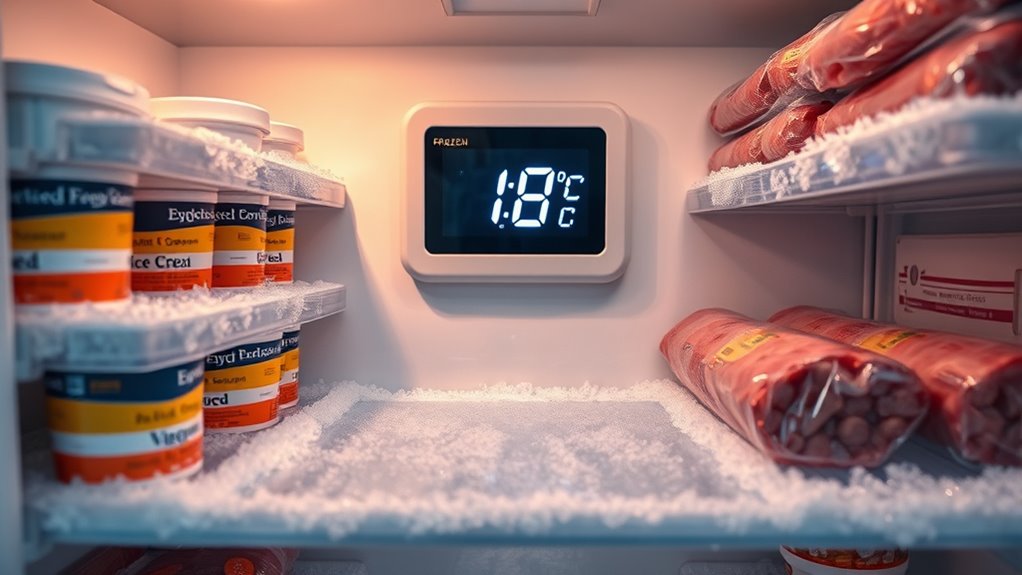
What Temp Should a Freezer Be?
Many people struggle to find the right freezer temperature, especially when food develops freezer burn or doesn’t stay fully frozen. You’re not alone—choosing the right setting and finding a reliable thermometer can make freezer safety much easier.
Set your freezer to 0°F (-18°C) to keep food safely frozen, preserve quality, and use energy efficiently. You’ll get the most accurate reading by placing a freezer thermometer between packages on the center shelf, away from the door, walls, and vents.
Make small temperature adjustments, keep the door closed, and wait several hours before checking again. If your freezer can’t maintain 0°F, inspect the seals, airflow, frost, and coils as you continue exploring freezer safety and maintenance.
Key Takeaways
- Set your freezer to 0°F (-18°C) to keep food safely frozen and preserve its quality.
- Verify the actual temperature with a freezer thermometer placed on the center shelf.
- Allow several hours after adjustments before checking the temperature again.
- Temperatures above 0°F may cause soft food, melting ice, and refreezing damage.
- Keep the door sealed, avoid frequent openings, and maintain clear airflow for stable cooling.
What Temperature Should a Freezer Be?
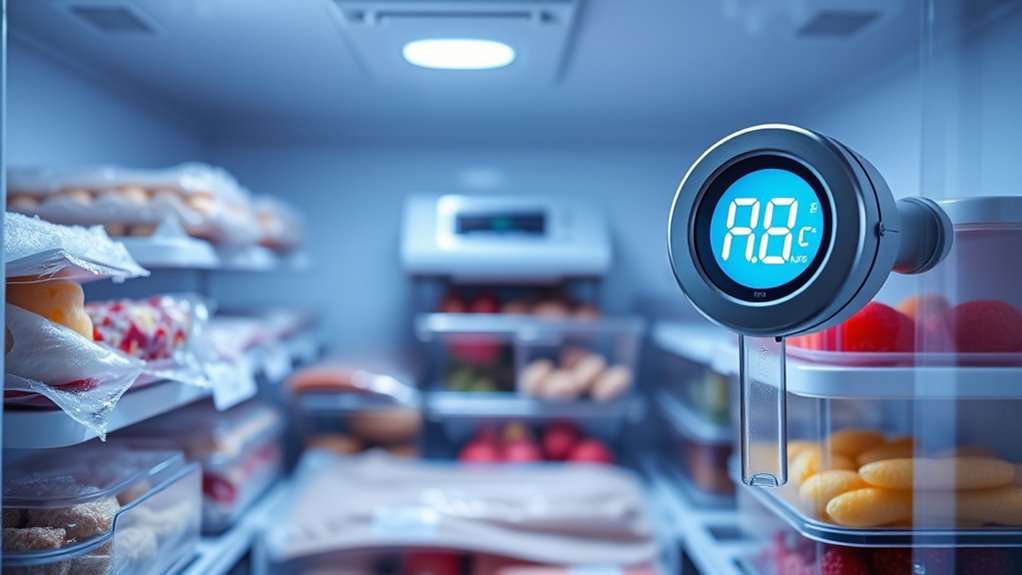
What temperature should a freezer be? Set your freezer to a consistently cold level that keeps food solid without forcing the appliance to work harder than necessary. Use the built-in control or a separate appliance thermometer to check the actual temperature, since numbered dials don’t always match specific degrees.
Place the thermometer between frozen packages, where it can measure the surrounding air accurately. Check it after several hours, then adjust the control gradually if needed.
Avoid opening the door repeatedly while you’re testing, because warm air can distort the reading and make the compressor run longer.
Keep your freezer reasonably full, but leave enough space for air to circulate. Organize packages so you can find items quickly, limiting door openings and supporting energy efficiency.
Inspect the door seal regularly. A loose gasket lets cold air escape and encourages frost buildup.
Remove heavy ice accumulation according to your manufacturer’s instructions, and keep vents clear so cold air moves evenly throughout the compartment.
Why 0°F Is the Best Freezer Setting
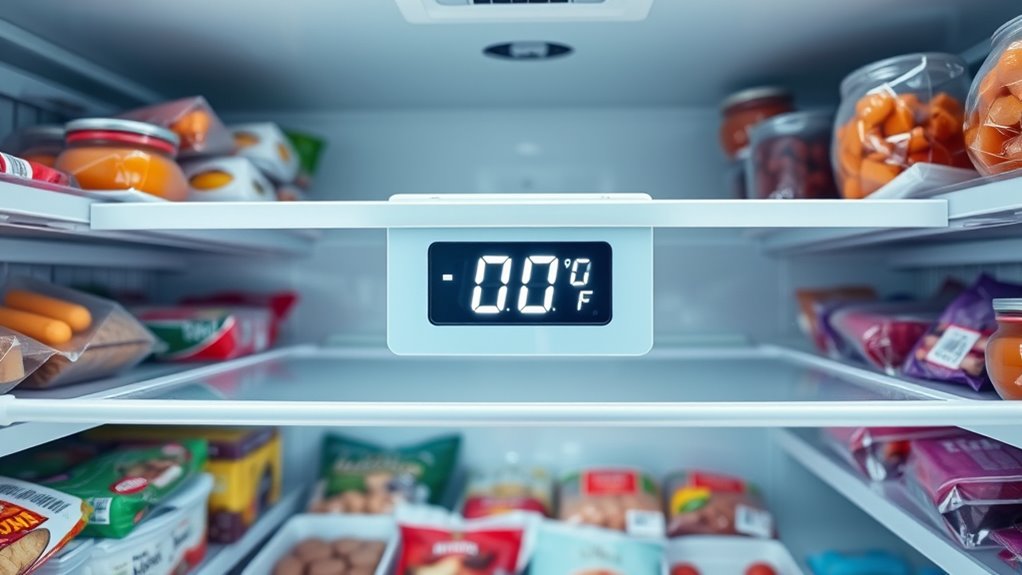
A 0°F freezer setting keeps food safely frozen while slowing bacterial growth and preserving quality. At this temperature, you’ll protect texture, flavor, and nutritional value better than you would with a warmer setting. Consistent cold also helps prevent partial thawing and refreezing, which can create icy crystals and damage food.
| Benefit | What it protects | Why it matters |
|---|---|---|
| Food safety | Frozen storage | Limits microbial activity |
| Quality | Texture and flavor | Reduces freezer damage |
| Energy efficiency | Appliance performance | Avoids excessive cooling |
You’ll also find that 0°F balances safety with energy efficiency. Setting your freezer much colder usually increases energy use without markedly improving storage.
Keeping the door closed and maintaining clear air vents helps the appliance hold its target temperature. Avoid overloading it, since packed shelves can restrict airflow, while a nearly empty freezer may warm faster during door openings.
Regularly removing excess frost buildup supports efficient operation and preserves usable space. This standard setting works well for most frozen foods, giving you a practical, reliable storage environment year-round.
How to Check Your Freezer Temperature
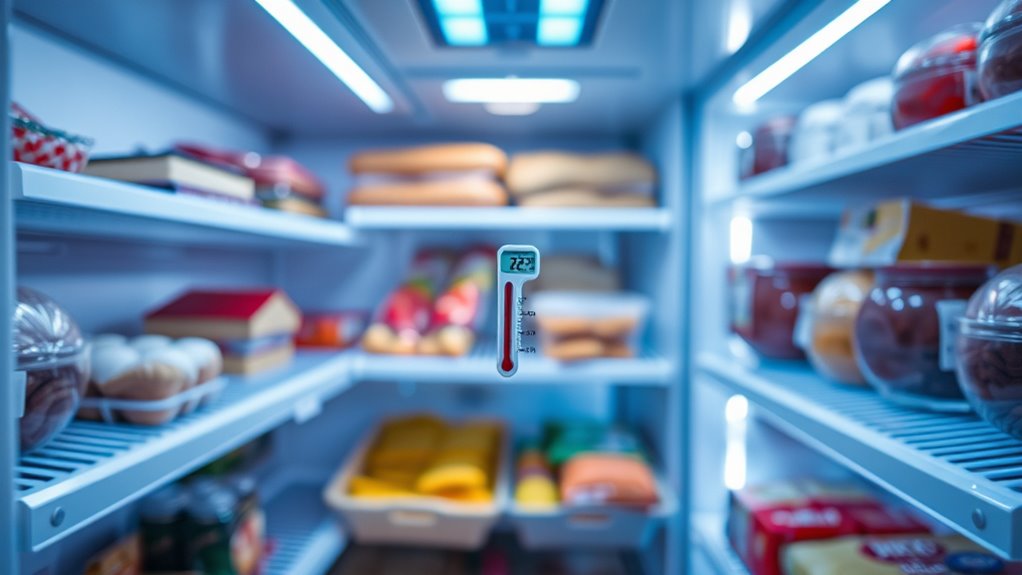
To check your freezer’s temperature, place a freezer thermometer inside and let it sit for several hours. Then, read the thermometer and compare the result with your freezer’s temperature setting. If the readings don’t match, adjust the setting and check the temperature again.
Use a Freezer Thermometer
For an accurate reading, place a freezer thermometer in the warmest area of the freezer, usually near the door, and leave it there for several hours. Choose a model designed for freezing temperatures, with clear markings you can read easily.
Don’t rely on the appliance’s display alone, because it may show a set point rather than the actual air temperature around your food. Check the thermometer after the freezer has remained closed, then record the result.
Repeat the test on different days to identify temperature fluctuations caused by frequent opening, heavy loading, or defrost cycles. An accurate reading helps you protect food quality, reduce waste, and support energy efficiency.
Keep the thermometer visible, but don’t let it block vents, drawers, or the door seal during routine use and cleaning.
Check Temperature Settings
Start by checking your freezer’s temperature control, usually located inside the compartment or on the exterior panel. Set it to 0°F (-18°C), the recommended balance between food safety and energy efficiency.
If your model uses numbered settings, consult its manual because higher numbers may mean colder temperatures.
Wait at least 24 hours after changing the setting, then verify the result with a freezer thermometer. Don’t judge the temperature by how frozen food feels alone.
Watch for frost buildup, which can indicate excess moisture, a poor door seal, or overly cold operation.
| Setting clue | What it may mean | Your next step |
|---|---|---|
| Food softens | Freezer is too warm | Lower the setting |
| Heavy frost | Moisture or excess cooling | Check the seal |
| Stable readings | Temperature is consistent | Keep the setting |
Where Should You Place a Freezer Thermometer?
Place your freezer thermometer on the center shelf for the most accurate overall reading. Keep it away from vents, walls, and the door, where temperatures can fluctuate.
It’s also a good idea to check different areas of the freezer to find any particularly cold or warm spots.
Center Shelf Placement
Where should you place a freezer thermometer for the most accurate reading? Set it on the center shelf, where it reflects the temperature surrounding most of your frozen food. Keep the thermometer upright and easy to read, rather than touching packages or the shelf surface.
This position helps you judge whether your freezer maintains the recommended 0°F (-18°C) consistently.
- Check the display after several hours, not immediately after placement.
- Compare readings at different times to spot temperature changes.
- Adjust the control gradually if the temperature runs high or low.
A center-shelf reading supports food safety, energy efficiency, and reliable appliance performance. Keep the compartment reasonably organized so cold air can circulate around the thermometer.
If frost buildup blocks the display or presses against the instrument, clear it carefully before checking again. Record the reading periodically to notice trends early and protect your frozen food.
Away From Vents
After positioning the thermometer on the center shelf, keep it away from vents and direct streams of cold air. A nearby outlet can expose the device to unusually cold air, making the reading lower than the freezer’s typical temperature.
Choose a spot with steady airflow instead, such as the shelf’s central area, while avoiding contact with walls, packages, or cooling components. Proper vent placement helps your thermometer reflect the conditions surrounding stored food, not a concentrated blast from the cooling system.
You’ll get a more dependable reading and can adjust the thermostat with greater confidence. Accurate placement also supports energy efficiency because you won’t overcool the freezer to compensate for a misleading measurement.
Secure the thermometer so it stays upright, visible, and undisturbed whenever you check it.
Check Different Zones
Check different zones to see whether your freezer maintains a consistent temperature throughout the compartment. Place a freezer thermometer in the center first, then test the front, back, top, and bottom on separate readings. Keep the door closed for several hours before checking, so warm air doesn’t distort the results.
- The back often stays colder, especially near cooling vents.
- The door usually runs warmer because you open it frequently.
- The top or bottom may reveal uneven cooling or frost buildup.
If one area differs markedly, rearrange food, clear blocked vents, and check the door seal. Don’t ignore unusual noise levels; a struggling fan or compressor can create hot spots and waste energy.
Improving Energy efficiency starts with balanced loading and proper airflow. Record each reading and adjust the thermometer’s position until you identify the most reliable storage zone.
How to Adjust Your Freezer Temperature
To adjust your freezer temperature, locate the control dial or digital panel, then select a colder or warmer setting as needed. Make small changes instead of turning the control sharply, and allow the freezer several hours to respond before making another adjustment.
Adjust the control gradually, then wait several hours for the freezer temperature to stabilize before making another change.
If you have a digital model, use the up or down buttons and confirm the displayed setting. Keep the door closed while the temperature stabilizes to avoid unnecessary heat exchange.
For better Energy efficiency, avoid choosing a colder setting than your food requires. Arrange items with space between packages so chilled air can circulate freely, and don’t block vents with containers.
These Storage tips help your freezer maintain an even temperature while reducing strain on its compressor. Check your owner’s manual for the recommended control range, since dial numbers vary by model.
Once you’ve selected a setting, monitor the appliance periodically and adjust it gradually whenever your household’s storage needs change. Clean the seal regularly, too, so the door closes firmly and the setting works effectively.
When Is a Freezer Temperature Too Warm?
Your freezer may be too warm if food feels soft, ice is melting, or frost becomes wet. These signs can point to unsafe temperature changes that increase food safety risks. Check the temperature and act quickly to protect your food.
Signs Of Excessive Warmth
A freezer temperature above 0°F (-18°C) can compromise food quality and safety, especially if it remains warm for several hours. You may notice these warning signs before checking the thermometer:
- Softened frozen desserts, such as ice cream, may lose their smooth texture and become difficult to scoop evenly.
- Increased ice crystal formation on packages or food surfaces can signal temperature fluctuations and partial thawing.
- Frost buildup, pooling moisture, or packages that feel less solid than usual may indicate excessive warmth.
Check your freezer’s display with an independent appliance thermometer, since built-in readings can be inaccurate. Notice whether the compressor runs unusually often or stays silent for long periods.
Inspect the door seal, and make sure crowded shelves aren’t blocking air vents. Adjust the setting gradually, then recheck the temperature after several hours to confirm stable cooling.
Food Safety Risks
Food safety risks increase when frozen food rises above 0°F (-18°C) for extended periods, because bacteria may multiply once it begins to thaw. You shouldn’t refreeze food that has fully thawed, especially meat, poultry, seafood, or prepared dishes.
Discard items that feel warm, leak juices, smell unusual, or show extensive ice crystals after a prolonged temperature increase. If your freezer reaches 40°F (4°C) or higher, treat perishable food as unsafe unless it still contains ice crystals or has stayed above freezing for less than two hours.
Use a freezer thermometer to verify its temperature rather than relying on the control setting. Keep the door closed during outages, and move food to another freezer if necessary.
Proper maintenance supports food safety while improving energy efficiency and reducing power consumption.
Why Your Freezer Temperature Keeps Changing
Freezer temperature keeps changing when warm air enters, the door seal leaks, or the appliance cycles on and off to maintain its set point. You’ll notice larger swings after frequent door openings, loading warm food, or leaving the door ajar.
Freezer temperatures fluctuate when warm air enters, seals leak, or the appliance cycles to maintain its set point.
A crowded freezer can block vents, while an almost empty one loses cold air faster.
Check these common causes:
- Inspect the gasket for cracks, gaps, or crumbs, then clean it and confirm a firm seal.
- Improve Freezer organization by keeping vents clear and spacing items so cold air circulates.
- Support Energy efficiency by vacuuming dusty condenser coils, checking the thermostat, and avoiding heat sources.
Your freezer may also fluctuate during automatic defrost cycles. Brief increases are normal.
Place a reliable appliance thermometer inside, away from the door, and monitor it for several hours. If temperatures remain inconsistent after you correct airflow and sealing problems, the thermostat, fan, or defrost system might need professional service.
Set the control near 0°F (-18°C) and adjust gradually rather than repeatedly turning it colder.
How Long Does Frozen Food Stay Safe?
Once your freezer holds a steady 0°F (-18°C), frozen food stays safe indefinitely, although its flavor, texture, and quality decline over time. For the best taste, follow these approximate storage guidelines:
| Food | Best quality |
|---|---|
| Ground meat | 3–4 months |
| Cooked leftovers | 2–6 months |
Whole cuts of beef, pork, and lamb generally keep their quality for 4–12 months, while poultry lasts about 6–12 months. Frozen vegetables typically remain tasty for 8–12 months.
Label each package with its freezing date, and use older items first. Airtight wrapping helps prevent freezer burn, which looks dry or gray but isn’t usually unsafe.
Discard food that has thawed completely and stayed above 40°F (4°C) for over two hours, or that smells unusual after thawing.
Good Storage organization helps you spot forgotten packages and limits unnecessary door opening. That habit supports Energy efficiency while protecting food quality.
Don’t refreeze food that has warmed above safe temperatures; cook it promptly instead. Once thawed safely in your refrigerator, you may refreeze it, though texture can suffer.
How to Keep Your Freezer at 0°F
How can you keep a freezer at 0°F (-18°C)? Use an appliance thermometer to check the temperature regularly, since the built-in control may not show the actual reading. Set the dial gradually, then wait 24 hours before checking again.
Keep the door closed as much as possible, and return food promptly after serving.
- Leave space between packages so cold air can circulate.
- Keep the freezer at least three-quarters full, but don’t pack it tightly.
- Clean the door gasket and confirm it seals firmly.
Organize food in labeled groups so you can find items quickly. Store ice cream toward the back, where temperatures stay steadier, because frequent door opening can soften it.
Check for frost buildup, which can reduce usable space and restrict airflow. Remove light frost according to your freezer’s instructions, and dry spills immediately to prevent ice formation.
Avoid placing hot food inside. Cool it in the refrigerator first, then freeze it in shallow, sealed containers.
Recheck the temperature after loading groceries or during hot weather.
When to Repair or Replace Your Freezer
Repair or replace your freezer if it can’t consistently hold 0°F (-18°C), even after you adjust the setting, improve the door seal, and clear frost buildup. Food may spoil faster, and fluctuating temperatures can cause freezer burn.
Call a technician when you notice unusual noises, excessive heat around the cabinet, water leaks, or a compressor that runs constantly. A professional can test the thermostat, evaporator fan, start relay, and sealed system.
Repair usually makes sense when your freezer is relatively new, the fault is specific, and parts remain available.
Consider replacement when repairs approach half the cost of a new appliance, breakdowns keep recurring, or the unit is more than 10 to 15 years old.
A newer model may deliver better energy efficiency, lower operating costs, and improved temperature control. Replace it sooner if damaged insulation, severe frost buildup, or a failing seal forces the compressor to work nonstop.
Dispose of the old appliance through an approved recycling program.
Frequently Asked Questions
Can Food Be Refrozen After It Has Thawed?
Yes, you can refreeze food after it has thawed, but follow key food safety rules. If you thawed it in the refrigerator and it stayed at 40°F (4°C) or colder, you can safely refreeze it, though the texture may change.
Don’t refreeze food left above that temperature for over two hours, or one hour in hot conditions. Follow reliable thawing guidelines, and discard food with an unusual smell, appearance, or texture.
How Do I Organize My Freezer to Maximize Storage Space?
How can you maximize freezer space without losing track of your food? Group similar items, remove bulky packaging, and store foods in stackable, labeled containers or flat freezer bags.
Keep frequently used items near the front and reserve the door for smaller, less-sensitive foods. Leave air vents clear so cold air circulates.
Check for ice buildup regularly, and improve freezer lighting so you can quickly spot every item. Rotate older foods forward.
What Foods Should Never Be Frozen?
You shouldn’t freeze foods with high water content or delicate textures, including lettuce, cucumbers, celery, raw potatoes, and soft herbs; they’ll become limp. Avoid mayonnaise, cream-based sauces, custards, and cooked eggs, which can separate or turn rubbery.
Don’t freeze carbonated drinks in sealed containers because they may burst. For food safety, freeze only fresh items, label dates, and use airtight packaging. Good freezer maintenance prevents freezer burn and preserves quality.
How Can I Prevent Freezer Burn?
Stop freezer burn before it starts: seal food tightly, press out excess air, and use moisture-proof freezer bags or airtight containers. Divide large portions into smaller packages so they freeze quickly and evenly.
Limit Air circulation inside packages by removing empty space, while avoiding overcrowding that blocks proper cooling. Prevent Temperature fluctuations by keeping the freezer closed, organizing items efficiently, and never storing hot food inside. Label everything with dates.
Should I Defrost a Manual-Defrost Freezer Regularly?
Yes, you should defrost a manual-defrost freezer regularly. Unplug it and remove the food when ice reaches about ¼ inch thick, because heavy buildup reduces storage space and efficiency.
Never chip ice with sharp tools; let it melt naturally or use bowls of hot water. During this freezer maintenance, clean and dry the interior, then restore power.
Check temperature calibration afterward, ensuring food stays at 0°F (-18°C) or below.
Conclusion
Set your freezer to 0°F, and you’ll give your food the cold, steady protection it needs to stay safe and preserve its quality. Check the temperature regularly, place the thermometer in a central spot, and adjust the setting when necessary.
If temperatures swing wildly, inspect the door seal or call a professional. Don’t let a failing freezer turn your groceries into an icy disaster. Set your freezer to the recommended temperature and keep every bite safely frozen.