How to Choose a Microwave Oven Exhaust Hood
Cooking can leave your kitchen filled with smoke, grease, and lingering odors, especially when your microwave hood doesn’t provide enough ventilation. You’re not alone—many people struggle to find the right balance of power, fit, and convenience.
This guide to how to choose a microwave oven exhaust hood will help you compare your options with confidence.
Choose a microwave exhaust hood by measuring the space, cooktop, cabinets, and available vent route first. Select a model that matches your range width and offers enough clearance.
Choose exterior venting for stronger smoke and odor removal, or recirculating filtration when ductwork isn’t possible. Match CFM and fan speeds to your cooking habits, then compare filters, LED lighting, noise, controls, and microwave capacity.
Include installation costs in your budget. The following guidance will help you make a confident choice.
Key Takeaways
- Measure the available space, cooktop width, cabinet clearance, electrical outlets, and obstructions before selecting a microwave exhaust hood.
- Choose between externally vented and recirculating models based on ductwork availability and your need to remove smoke, heat, grease, and odors.
- Match ventilation power to your cooking habits. Typically, choose approximately 200 CFM for light use or 300–400 CFM for heavier cooking.
- Compare duct requirements, fan speeds, filter maintenance, lighting, noise ratings, controls, and microwave capacity for convenient daily operation.
- Confirm secure cabinet support, required clearances, manufacturer specifications, local codes, installation costs, and a finish that complements your kitchen.
Measure for a Microwave Hood
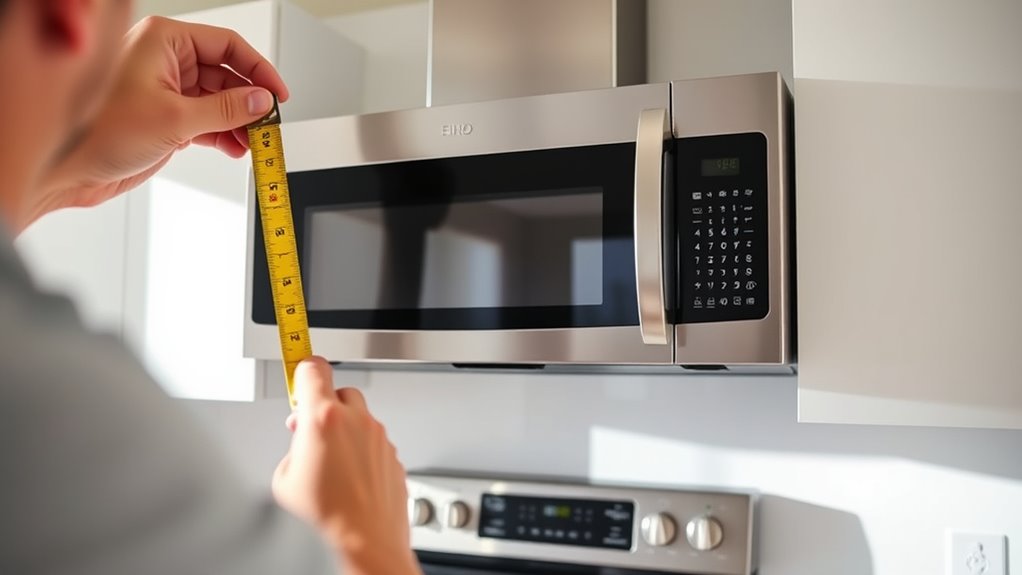
Before choosing a microwave hood, measure the space above your range to make certain the unit will fit properly. Record the opening’s width, height, and depth, then compare each measurement with the appliance’s published dimensions.
Leave enough clearance for the door to open fully and for you to reach controls comfortably. Check whether cabinets, trim, or a backsplash reduce the usable space.
Measure from the cooking surface to the bottom of the cabinet or installation area, and confirm that this distance suits your household’s safety requirements. Also note the location of the electrical outlet and the path for ventilation connections, since these can affect placement.
Consider how your Cooking styles influence clearance needs, especially if you use tall pots or large pans. Finally, evaluate Kitchen aesthetics: accurate measurements help you align the hood with surrounding cabinets and keep the finished installation balanced.
Write down every dimension before shopping, and verify them again before installation begins.
Choose an Over-the-Range Hood Type
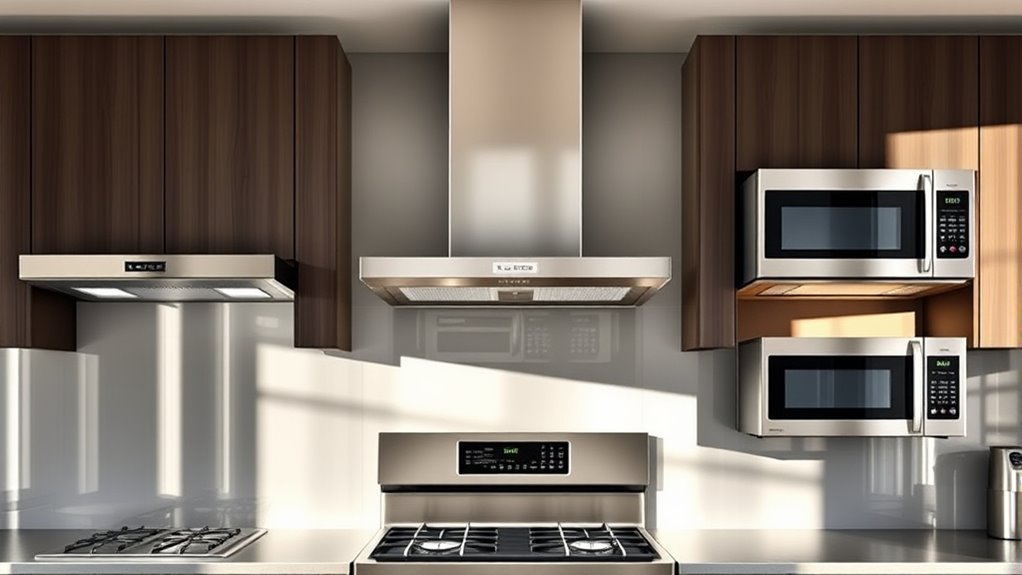
Choose an over-the-range hood type based on how you’ll vent cooking fumes. First, decide whether you need a microwave hood combination or a separate over-the-range hood installed above your microwave.
Choose between a microwave hood combination and a separate hood based on your venting needs, available space, and kitchen layout.
A combination unit saves space and creates a streamlined appearance. A separate hood can provide greater design flexibility and stronger coverage for a wide cooktop.
Next, consider the hood’s shape and mounting style. A low-profile model suits compact kitchens and keeps sightlines open.
A standard-depth hood offers a more substantial presence and may complement larger ranges. Choose stainless steel, black, white, or a custom finish to support your kitchen aesthetics.
Check appliance compatibility before you buy. Confirm the hood’s width matches your cooktop, its depth fits your cabinets, and its controls won’t interfere with the microwave door.
Also verify electrical requirements, mounting hardware, and manufacturer clearances. Prioritize accessible filters, simple controls, and lighting you’ll appreciate during everyday cooking.
A suitable type should fit both your layout and cooking habits.
Compare Vented and Recirculating Models
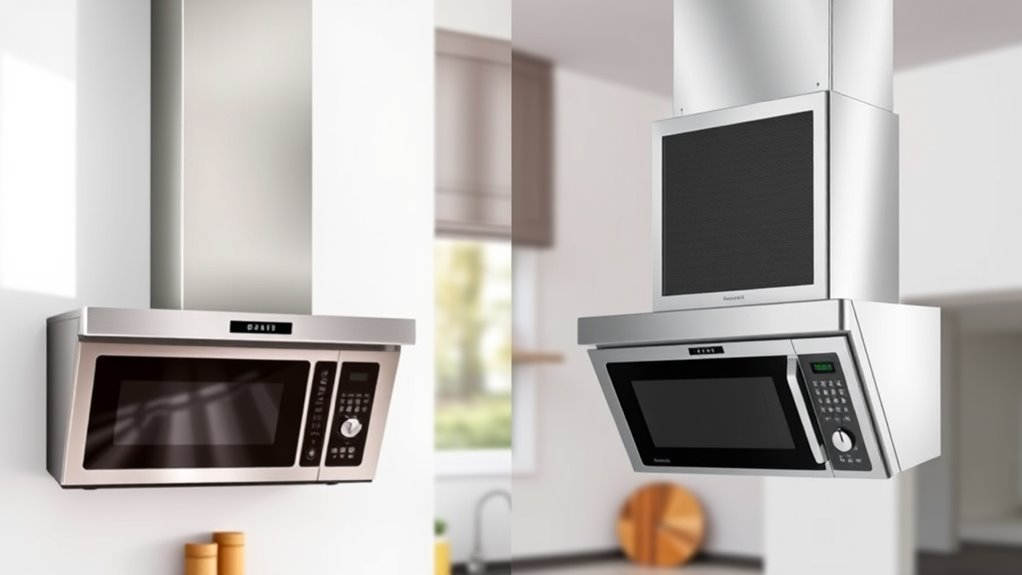
Compare vented and recirculating models based on how effectively you want to remove cooking fumes. A vented microwave hood sends smoke, heat, grease, and odors outdoors, so it generally provides stronger ventilation effectiveness.
Choose this style if you cook frequently, fry foods, or want to reduce lingering moisture and smells in your kitchen.
A recirculating model pulls air through grease and charcoal filters, then returns the cleaned air to the room. It won’t remove heat or humidity, and it may leave some odors behind, but it can work well for light cooking.
You’ll also avoid exterior ductwork, which usually reduces installation complexity and makes this option suitable for apartments or kitchens without an existing outlet.
Consider filter maintenance, too. You’ll need to wash grease filters regularly and replace charcoal filters as recommended.
Although vented models typically perform better, recirculating hoods can offer practical convenience when outdoor exhaust isn’t available. Compare your cooking habits, kitchen limits, and cleanup expectations before choosing.
Plan the Hood’s Vent Route
Plan the hood’s vent route before installation so you’ll know whether it can exhaust through an exterior wall, cabinet, or roof. Start by identifying the shortest, straightest path from the microwave’s exhaust outlet to the outdoors.
Plan the vent route early to ensure efficient airflow and a direct path from the microwave to the outdoors.
Efficient duct routing improves airflow and reduces noise, so avoid unnecessary bends, long runs, and narrow transitions.
Measure the distance between the planned microwave location and the exit point. Check whether nearby cabinets, ceiling joists, plumbing, wiring, or structural members could obstruct the route.
You may need to route the duct vertically through a cabinet or attic, horizontally through a wall, or upward through the roof. Keep the exterior termination location in mind, since it affects the route’s length and direction.
Consider vent placement carefully. Position the outlet away from windows, doors, and outdoor living areas to prevent exhaust from returning indoors.
Choose a practical path that preserves cabinet storage and allows the hood to align with the cooking surface.
Check Installation and Safety Requirements
Before you choose a hood, check its venting requirements and make sure it’s compatible with your kitchen. Review the manufacturer’s instructions for the required duct size, outlet location, and airflow capacity. Also, follow the recommended safety clearances between the hood, cabinets, walls, and cooking surface.
Verify Venting Requirements
Check the manufacturer’s installation instructions to confirm the required duct size, vent route, clearances, and electrical specifications for your microwave exhaust hood.
Then determine whether your kitchen supports external venting through a wall or roof, or requires a recirculating setup with a charcoal filter. Choose the route that matches your home’s structure and local building codes.
Keep the duct run as short and straight as possible, using smooth, properly sealed metal ductwork to improve airflow and reduce grease buildup.
Don’t connect the hood to a flue, dryer vent, or shared duct, because those connections can create serious hazards.
If you’re unsure about the existing opening or electrical circuit, ask a qualified installer to inspect it.
Proper venting protects indoor air quality by removing smoke, moisture, odors, and cooking pollutants effectively.
Follow Safety Clearances
Follow the manufacturer’s specified clearance between the microwave hood, cooktop, cabinets, and nearby surfaces to reduce fire risks and guarantee proper ventilation. Measure carefully before installation, because insufficient space can trap heat, damage cabinets, or limit airflow.
Review the appliance manual for exact clearance guidelines, including the minimum distance above the cooking surface and required side spacing. You should also confirm that nearby walls, shelves, and trim can withstand heat and won’t block vents.
Check local building codes and your kitchen’s electrical requirements before mounting the hood. For additional safety tips, make sure the unit sits level, fasten it securely, and keep combustible materials away from the cooktop.
If your layout can’t meet the specified distances, don’t improvise. Consult a qualified installer or choose another model.
Choose the Right Microwave Hood Size
Choose a hood that fits comfortably in your available cabinet space without crowding nearby fixtures. Its width should match your cooktop, and its ventilation capacity should meet your cooking needs.
Measure Cabinet Space
Before you shop, measure the cabinet space where the microwave hood will go, including its width, height, and depth. Record each measurement at several points because walls and cabinets aren’t always perfectly square. Use the smallest width and height to guarantee the unit fits without forcing it into place.
Check the available depth, including the door and handle clearance, so the microwave won’t project too far into your workspace. Look above and around the opening for trim, shelves, outlets, and obstructions that could limit installation.
Confirm that the cabinet can support the appliance’s weight and that its mounting surface remains stable. Consider kitchen aesthetics when comparing finishes, but prioritize material durability in a busy cooking area.
Review the manufacturer’s installation template and required clearances before you buy. Leave enough room for ventilation and service access.
Match Cooktop Width
Once you’ve confirmed the cabinet opening and clearances, match the microwave hood’s width to your cooktop. Choose a hood at least as wide as the cooking surface so it covers every burner and creates a balanced appearance.
If your cooktop measures 30 inches, select a 30-inch model. For a 36-inch surface, choose a 36-inch hood when your cabinetry allows it.
Don’t rely on visual estimates. Check the manufacturer’s listed width, including side trim or mounting flanges.
A slightly wider hood may suit your layout, but it shouldn’t interfere with adjacent cabinets or doors.
Compare Color options with your range, backsplash, and cabinetry for a cohesive look. Also review material durability, especially if you cook frequently, because sturdy finishes resist scratches, stains, and fading over time.
Measure twice before ordering to avoid costly replacements.
Consider Ventilation Capacity
Ventilation capacity determines how effectively your microwave hood removes smoke, steam, and cooking odors. Choose a model with enough cubic feet per minute (CFM) for your cooktop and cooking habits. Light cooking may need 200 CFM, while frequent frying or gas cooking often benefits from 300–400 CFM.
Check your manufacturer’s requirements and local building codes before deciding.
| Cooking style | Suggested CFM | Best fit |
|---|---|---|
| Light reheating | 200 | Electric cooktop |
| Everyday cooking | 250–300 | Standard meals |
| Heavy frying | 300–400 | Gas or high-heat cooking |
A higher rating won’t always improve performance if the ductwork restricts airflow. Confirm the installation path, filter quality, and noise level.
Balance power with your Kitchen design. An oversized unit can dominate cabinets, while insufficient capacity leaves lingering odors. Select a hood that supports reliable ventilation and maintains your desired Aesthetic appeal.
Match Fan Power to Your Cooking
Choose a microwave hood with enough fan power to handle the way you cook. If you mostly reheat meals or simmer sauces, a moderate setting may meet your needs.
Frequent frying, grilling, or high-heat cooking creates more smoke, grease, and moisture, so you’ll benefit from a stronger fan.
Consider your range size and cooking habits together. The hood should cover the cooktop effectively and move air at a rate suited to your routine.
A powerful motor alone doesn’t guarantee good results. Fan efficiency and airflow design also affect how well the hood captures rising vapors.
Choose adjustable speeds so you can use gentle ventilation for everyday cooking and maximum power when you sear meat or boil large pots.
If you cook often, select a model with dependable performance at higher settings. Also, check whether your installation can support the hood’s rated airflow, since duct length and bends can reduce actual performance.
Matching capacity to your habits helps control kitchen air without overspending on unnecessary power.
Compare Filters, Lights, and Noise
Choose a filter that fits your cooking habits and is easy to maintain. Compare the lighting options, too, so you can clearly see your cooking surface. Finally, check the noise levels—a quieter hood makes cooking more comfortable.
Filter Types and Maintenance
Filter choice affects how well your microwave hood captures grease, smoke, and odors—and how much maintenance it requires. Most over-the-range microwaves use washable aluminum mesh filters to trap grease.
You can remove these filters and clean them with warm water and degreasing dish soap every month, or more often if you cook frequently. Charcoal filters help control odors in recirculating models, but they aren’t washable.
Follow the manufacturer’s schedule for filter replacement, typically every six to twelve months, depending on use. Some hoods combine mesh and charcoal filters, so check which components your model includes.
During filter maintenance, inspect each filter for damage, stubborn buildup, or poor fit. A clogged filter restricts airflow and reduces performance, while a loose one may let grease enter the microwave’s internal ventilation system.
Keep replacement filters available before the old ones fail.
Lighting and Noise Levels
Lighting and noise levels can be just as important as filters when you compare microwave hood models. Choose lighting options that brighten your work area without creating glare.
LED lamps usually provide crisp, energy-efficient illumination and last longer than incandescent bulbs. Check whether you can replace bulbs easily and select multiple brightness settings if you prep food at night.
Make noise considerations part of your decision. A quieter fan lets you talk, hear timers, and enjoy conversation while cooking.
Compare rated sones, remembering that lower numbers indicate quieter operation. Test the hood in a showroom when possible, because sound quality matters as much as volume.
- Bright LEDs illuminate chopping boards.
- Warm lights soften evening kitchens.
- Low fan tones preserve conversation.
- High speeds clear steam quickly.
- Removable filters simplify upkeep.
Balance brightness, ventilation power, and comfort for daily use.
Compare Convenience and Cooking Features
Compare convenience features such as sensor cooking, one-touch presets, and turntable controls when choosing a microwave oven exhaust hood. Sensor cooking adjusts time and power automatically by detecting moisture, so you won’t need to guess cooking settings.
One-touch presets can simplify common tasks such as reheating, defrosting, or popping popcorn. A clear control panel also helps you select options quickly.
Next, evaluate Cooking performance. Look for adequate wattage, even heating, and multiple power levels to handle everything from gentle melting to thorough reheating.
A larger turntable can accommodate wider dishes, but confirm that it fits your cookware and rotates smoothly. If you often prepare taller items, consider a model with an adjustable or removable rack, provided it won’t interfere with ventilation.
Check whether the door opens easily and whether the display remains readable while you cook. These Convenience features matter most when they match your routines, making daily meals faster without complicating operation.
Set Your Microwave Hood Budget
Set a realistic budget before comparing microwave hood models. Include installation, ventilation adjustments, and potential replacement parts in your estimate.
Plan your microwave hood budget carefully, accounting for installation, ventilation changes, replacement parts, and unexpected expenses.
Start by deciding which features matter most, such as sensor cooking, quiet operation, charcoal filtration, or a powerful exhaust fan. A higher price may provide better energy efficiency, stronger airflow, and longer-lasting components, but don’t pay for functions you won’t use.
Picture your total cost through these practical expenses:
- The microwave hood’s purchase price
- Professional installation or electrical work
- Ductwork, exterior vents, or ventilation adjustments
- Replacement filters, bulbs, and small parts
- Removal and disposal of your old appliance
Compare warranties, delivery fees, and return policies before committing. Match the finish and size to your kitchen decor, but avoid sacrificing performance for appearance.
If you’re replacing an existing unit, measure the opening carefully to prevent costly modifications. Set aside a small emergency cushion, too.
That buffer protects you from surprises while keeping your upgrade financially comfortable.
Frequently Asked Questions
What Microwave Hood Brands Offer the Best Warranties and Customer Support?
You’ll find strong warranty coverage and customer service quality from brands such as Panasonic, GE, Whirlpool, LG, and Samsung. Panasonic often provides dependable support, while GE and Whirlpool offer extensive service networks and straightforward parts access.
LG and Samsung typically include one-year limited warranties, with longer coverage for select components. Before buying, compare registration requirements, in-home repair availability, response times, and exclusions.
Confirm local service options, because support quality can vary by region.
How Often Should a Microwave Hood Be Cleaned Beyond Replacing Its Filters?
Clean your microwave hood’s exterior and underside weekly if you cook frequently, or at least monthly with light use. Wipe grease from the fan cover, vents, controls, and cabinet using warm water and mild dish soap.
Deep-clean the interior and fan area every three to six months, following the manufacturer’s instructions. Your cleaning frequency depends on smoke and grease levels.
Include filter maintenance in each cleaning, checking filters regularly and replacing them as recommended.
Can Microwave Hoods Interfere With Nearby Wireless Devices or Smart Home Equipment?
You may notice wireless interference, but microwave hoods rarely cause serious problems. As the saying goes, prevention is better than cure: keep your router, smart speakers, cameras, and hubs several feet from the hood and microwave.
During cooking, the microwave’s shielding and motor can create brief signal disruption, especially on crowded 2.4 GHz networks. You can reduce interruptions by using 5 GHz Wi-Fi, relocating devices, updating firmware, and checking connections after installation or repairs.
Are Microwave Hood Combinations Suitable for Households With Young Children?
Yes, microwave hood combinations can suit households with young children, but you’ll need strong child safety features. Choose a model with a child lock, cool-touch controls, a secure door, and controls mounted beyond easy reach.
Check noise levels, since loud fans or cooking alerts may disturb children. Install the unit at a safe height, supervise use, and teach children never to operate it alone. Keep hot containers and steam risks in mind.
What Should You Do if Your Microwave Hood Stops Working Unexpectedly?
When your microwave hood suddenly goes dark, treat it like a lighthouse losing its beam: stop using it and check the plug, circuit breaker, and outlet first.
Follow these troubleshooting steps: verify the door closes securely, reset power briefly, and inspect filters for heavy grease. Your maintenance tips include cleaning filters regularly and keeping vents clear.
If the fan, light, or microwave still fails, don’t open the unit; contact a qualified technician for safe repairs.
Conclusion
Choosing a microwave hood is like fitting a small bridge between your stove and home: it must span the space, carry away smoke, and support daily cooking. Measure carefully, select the right hood type, and plan a safe vent route before you buy.
Then balance fan power, filtration, lighting, noise, features, and cost. When every piece fits, your kitchen will breathe more easily, and your microwave oven exhaust hood will work quietly as a dependable household companion.