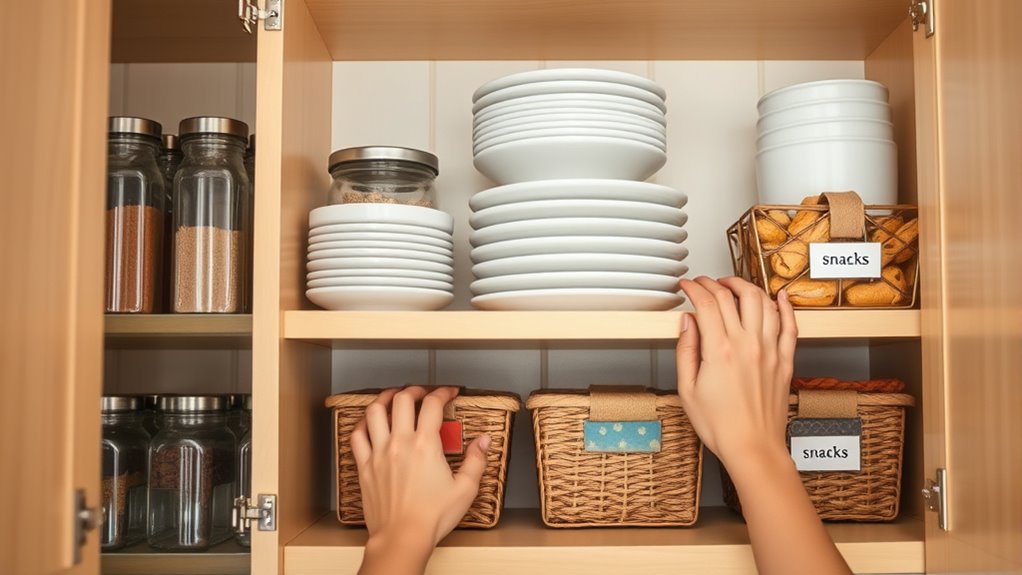
How to Organize Kitchen Cabinets With 3 Simple Tips
If you’ve ever opened your kitchen cabinets only to be met with clutter and chaos, you’re not alone. Many people struggle with keeping their kitchen organized, making meal prep more stressful than it needs to be. The good news is, with a few simple strategies, you can transform your cabinets into a tidy, efficient space that works for you.
Start by decluttering your kitchen cabinets, sorting items by how often you use them. Keep daily essentials within reach and set aside rarely used things.
Next, maximize space with smart organizers like stackable shelves and pull-out baskets to keep everything tidy and accessible.
Finally, arrange cabinets so you group similar items together and place heavy cookware low for safety. These simple steps will streamline your kitchen, making it easier to find and use what you need.
There’s more to learn for a fully efficient setup.
Key Takeaways
- Declutter cabinets by removing all items and sorting them into daily essentials and rarely used items.
- Store frequently used items within easy reach and group similar items together for quick access.
- Use stackable shelves and pull-out baskets to maximize cabinet space efficiently.
- Label storage bins and shelves clearly to maintain organization and reduce search time.
- Keep heavier cookware in lower cabinets and install pull-out shelves for better accessibility.
Declutter and Sort Kitchen Cabinet Items by Use
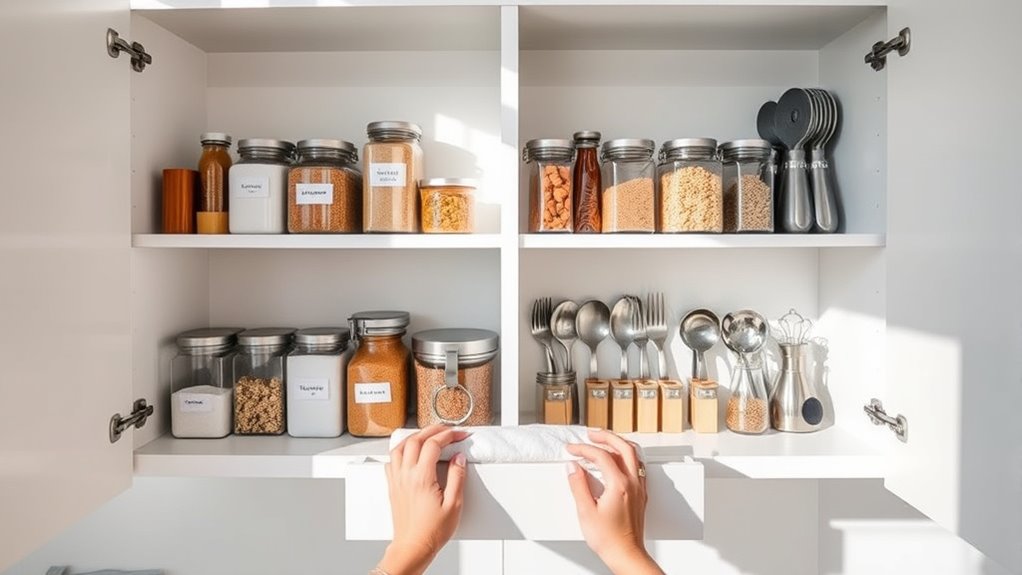
Where do you even begin when your kitchen cabinets are overflowing? Start by pulling everything out and sorting items by how often you use them. Group daily essentials like plates and cups together, and set aside rarely used gadgets. This way, you’ll know exactly what stays and what can go.
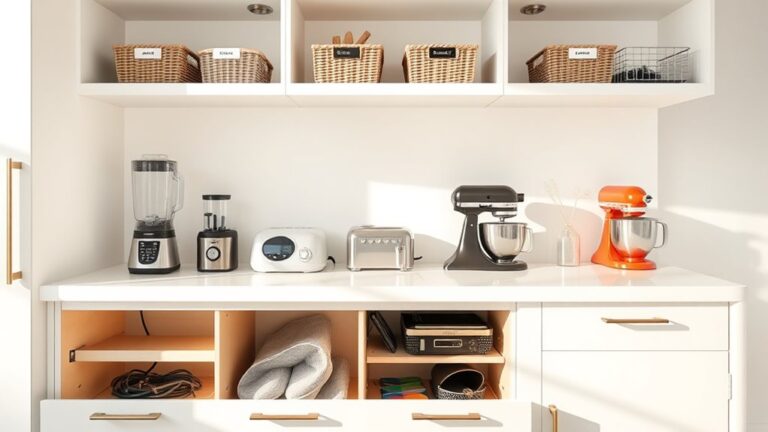
Next, think about countertop storage for items you use frequently, like utensils or spices, to keep them within easy reach and free up cabinet space. Once sorted, implement a labeling system inside your cabinets or on storage bins to maintain order. Labels help you quickly find what you need without digging through clutter.
Maximize Kitchen Cabinet Space With Smart Organizers
Although decluttering creates a solid foundation, maximizing your kitchen cabinet space requires smart organizers that fit your needs. You can blend functionality with style by choosing organizers that complement vintage decor or opting for eco friendly storage solutions.
Using stackable shelves, pull-out baskets, and adjustable dividers can help you optimize every inch of your cabinets without sacrificing aesthetics.
Here’s a quick guide to smart organizers:
| Organizer Type | Best For | Style Options |
|---|---|---|
| Stackable Shelves | Plates, cups | Vintage wood, metal |
| Pull-out Baskets | Cans, snacks | Eco friendly bamboo |
| Adjustable Dividers | Baking trays, lids | Rustic vintage, plastic |
Arrange Kitchen Cabinets for Easy and Everyday Access
When you arrange your kitchen cabinets for easy access, you’ll save time and reduce frustration during meal prep. Start by placing your everyday items like plates, glasses, and frequently used utensils within arm’s reach. This simple step boosts kitchen safety by preventing unnecessary stretching or reaching for heavy objects in high or low cabinets.
Group similar items together and use color coordination to streamline your space visually. For example, stack plates and bowls of matching hues or store spice jars with color-coded labels side by side. This not only looks neat but helps you find what you need quickly.
Keep heavier cookware in lower cabinets to avoid accidents and lighter items up high. Also, consider installing pull-out shelves or lazy Susans to access deep corners easily. By thoughtfully arranging your kitchen cabinets, you create a safer, more efficient workspace that supports your daily cooking routine without extra hassle.
Frequently Asked Questions
How Often Should I Clean My Kitchen Cabinets?
You should clean your kitchen cabinets every 1 to 3 months to maintain freshness and hygiene. Establishing regular cabinet cleaning routines helps prevent buildup of grease and dust.
If you use certain cabinets more frequently, increase how often you clean them. Wipe those down monthly. For less-used cabinets, quarterly cleaning works fine.
Sticking to this schedule keeps your kitchen looking neat and guarantees your cabinet hardware stays in good shape.
What Materials Are Best for Kitchen Cabinet Shelves?
Think of your kitchen cabinet shelves like a stage where every actor (your dishes and storage containers) needs the perfect spotlight. The best materials for shelves are plywood or MDF with a durable laminate finish. They resist moisture and wear.
Adding shelf lining protects the surface and keeps things from slipping. Clear, stackable storage containers also help you maximize space and visibility, making your cabinet act like a well-rehearsed play where everything shines.
Can I Use Contact Paper to Protect Cabinet Surfaces?
Yes, you can use contact paper to protect your cabinet surfaces. Contact paper durability varies, so choose a high-quality, thick type to guarantee it lasts longer and withstands daily wear.
It creates a protective barrier against scratches, spills, and stains, keeping your cabinets looking fresh. Just make sure to clean and dry the surfaces before applying for better adhesion.
How Do I Prevent Moisture Damage in Kitchen Cabinets?
You don’t want your cabinets turning into a soggy swamp! To prevent moisture damage, focus on moisture control by wiping spills immediately and using moisture-absorbing packets or dehumidifiers inside.
Improve ventilation by leaving cabinet doors slightly open after cooking or installing small vents to let air circulate. These simple steps keep your cabinets dry and fresh, avoiding warping or mold that could ruin your kitchen’s vibe and your sanity.
What Are Eco-Friendly Options for Organizing Kitchen Cabinets?
You can choose reusable storage containers made from glass or stainless steel to keep your kitchen cabinets eco-friendly. These options reduce plastic waste and last longer.
Also, consider biodegradable organizers crafted from bamboo or recycled materials. They break down naturally and minimize environmental impact. Using these sustainable products helps you keep your cabinets tidy while making a positive difference for the planet.
Don’t forget to recycle old packaging to complete your eco-friendly kitchen setup.
Conclusion
By decluttering and sorting your kitchen cabinet items by use, you create order and clarity. Maximizing space with smart organizers boosts efficiency and convenience. Arranging cabinets for easy, everyday access saves time and reduces stress.
You’ll find your kitchen feels lighter, functions better, and welcomes you warmly. So, take these simple steps, enjoy the process, and transform your kitchen cabinets into a space that works beautifully for you.