How to Unclog a Kitchen Sink in 5 Simple Steps
Clogged kitchen sinks are a frustrating problem that many people struggle with. If you’ve ever dealt with slow draining or standing water, you’re not alone. Finding a quick and effective solution is a priority because a blocked sink can disrupt your whole routine.
To unclog your kitchen sink in five simple steps, start by gathering your tools like a plunger, wrench, and bucket. Clear any visible debris, then plunge with steady pressure, covering the overflow hole for better suction.
Next, pour baking soda followed by vinegar into the drain, letting it sit before flushing with hot water. Remove and clean the P-trap to catch hidden clogs.
Following these tips will keep your sink flowing smoothly, and there’s more helpful advice to guarantee trouble-free drains.
Key Takeaways
- Remove visible debris and use a plunger with water to create a seal. Then, apply strong pressure to clear the clog.
- Pour half a cup of baking soda followed by one cup of vinegar into the drain. Let it sit for 15-30 minutes, then flush with hot water.
- Place a bucket under the P-trap, loosen slip nuts, and remove the trap. Clean it thoroughly to remove any hidden blockages.
- Check and prepare essential tools like a plunger, plumber’s snake, and wrench. Make sure to wear safety gear before starting.
- Prevent future clogs by avoiding grease and food scraps in the drain. Use a strainer and flush regularly with hot water and the baking soda-vinegar mix.
Get the Right Tools Ready
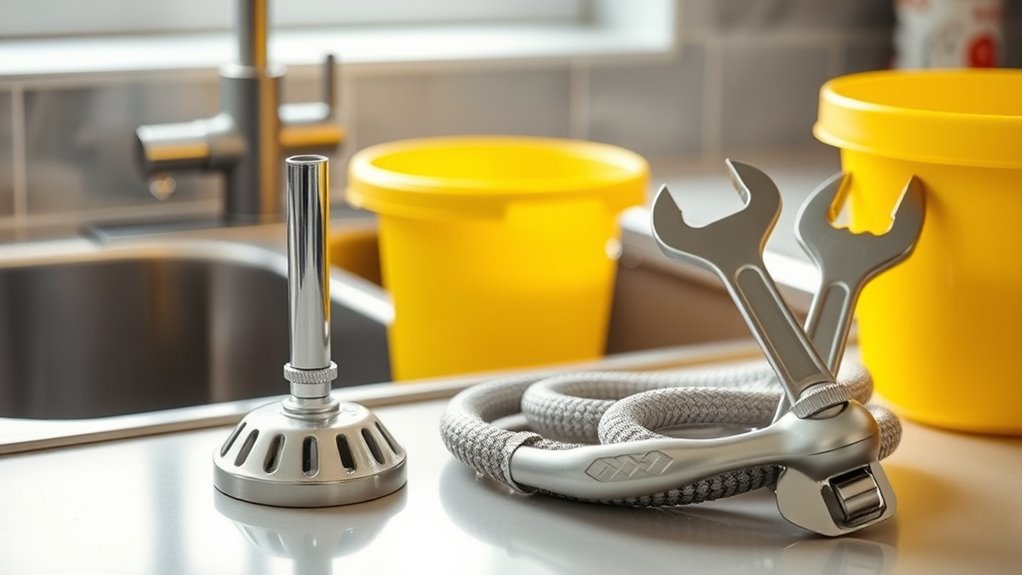
Before you begin unclogging your kitchen sink, make sure you have the right tools on hand. Having the proper equipment not only speeds up the process but also keeps you safe. Essential tools include a plunger, a plumber’s snake, a wrench, and a bucket.
Before using them, check each tool for damage or wear. Tool maintenance is vital to avoid malfunctions or accidents. For example, inspect the plunger’s rubber to guarantee it’s flexible and free of cracks.
Inspect tools carefully before use to ensure safety and prevent accidents during your unclogging tasks.
Always follow safety precautions when handling these tools. Wear gloves to protect your hands from grime and sharp edges, and use goggles if you’re working with chemicals or expect splashing.
Keep your workspace dry to prevent slips, and never force tools if they resist. Preparing your tools properly guarantees a smoother, safer unclogging experience, so take a moment to organize and inspect everything before you start.
Clear Debris and Plunge Your Kitchen Sink
Once you’ve gathered your tools, start by removing any visible debris from the drain to prevent it from pushing further down and worsening the clog. Use gloves to pull out food scraps, grease buildup, or other blockages stuck near the surface. Clearing this debris helps reduce kitchen sink odors caused by trapped waste.
Next, fill the sink partially with water to create a seal and use a plunger to apply strong, consistent pressure. Plunge vigorously to dislodge the clog, improving water flow and addressing common water pressure issues. Make sure to cover the overflow hole if your sink has one to maintain suction.
After several plunges, test the drain by running water. If it drains slowly or water pressure remains low, repeat plunging as needed. Removing debris and plunging effectively tackles most surface clogs, setting you up for the next steps to fully clear your kitchen sink.
Use Baking Soda and Vinegar to Break Down Clogs
If plunging doesn’t fully clear the clog, you can turn to a natural solution by pouring baking soda followed by vinegar down the drain. These two ingredients create a chemical reaction that produces fizzing bubbles, helping to break down grease and loosen debris blocking your sink.
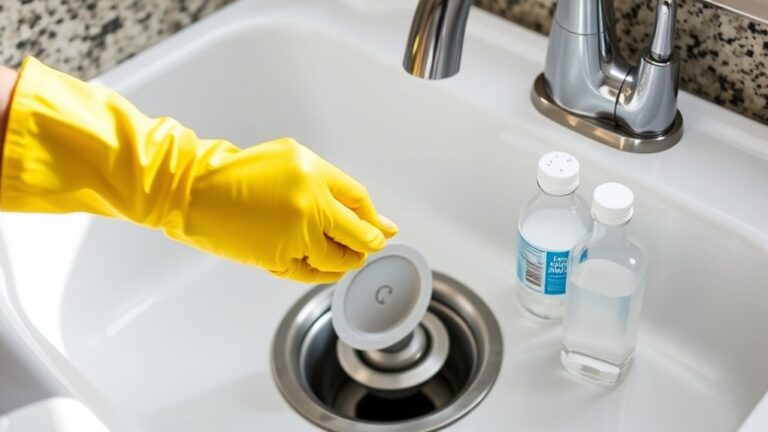
Start by pouring about half a cup of baking soda directly into the drain. Next, add a cup of white vinegar slowly to avoid overflow. Let the mixture sit for 15 to 30 minutes. This gives the reaction time to work effectively.
Afterward, flush the drain with hot water to wash away loosened grime. Remember safety precautions: avoid mixing these with harsh chemical cleaners, and work in a well-ventilated area to prevent irritation from fumes.
This method is eco-friendly, inexpensive, and often clears stubborn clogs without damaging your pipes, making it a smart alternative before calling a plumber.
Clean the P-Trap to Remove Hidden Blockages
When natural solutions like baking soda and vinegar don’t fully clear your sink, the clog could be hiding deeper in the plumbing. The P-trap, the curved pipe beneath your sink, often traps debris and causes blockages.
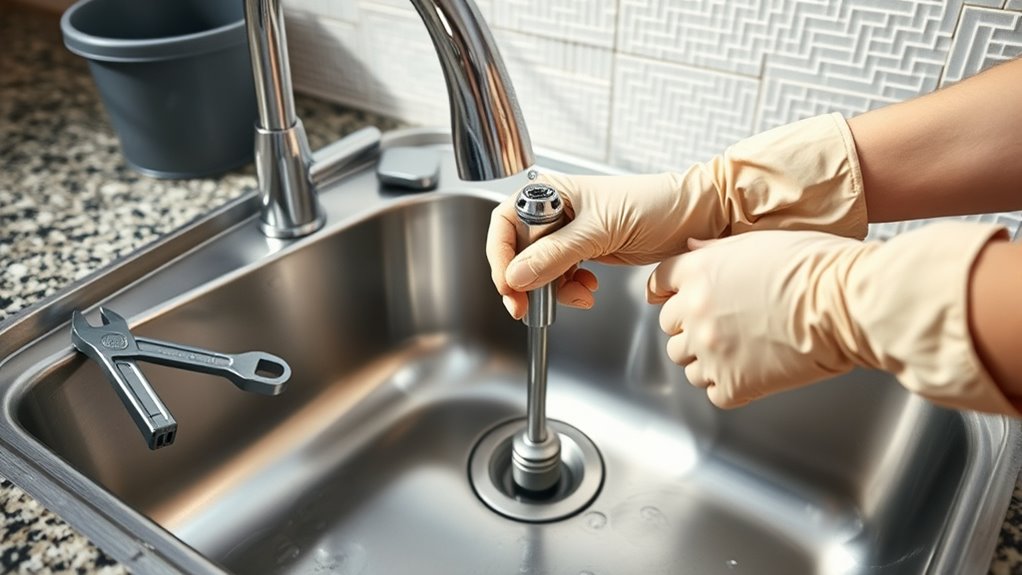
To clean it, first place a bucket underneath to catch any water. Then, carefully loosen the slip nuts on both ends of the P-trap using pliers or by hand if possible. Remove the trap and check for trapped food, grease, or buildup.
Be aware that chemical reactions from harsh cleaners can accelerate pipe corrosion, so avoid using strong chemicals before cleaning. Rinse the P-trap thoroughly with water and a brush to remove stubborn residue. Finally, reattach the trap securely and test your sink.
Cleaning the P-trap removes hidden blockages effectively and protects your plumbing from damage caused by chemical reactions and corrosion.
Prevent Future Kitchen Sink Clogs With Easy Tips
Although occasional clogs are inevitable, you can prevent most kitchen sink blockages by adopting a few simple habits. Start by being mindful of what goes down your drain. Avoid pouring grease, coffee grounds, and food scraps into the sink. These substances accumulate and cause buildup that leads to clogs.
Regular plumbing maintenance, like flushing your drains with hot water and a mixture of baking soda and vinegar, helps keep pipes clear and reduces odor. Using a drain strainer catches hair and debris before they enter your pipes, making drain prevention easier. Don’t forget to clean the strainer frequently.
Moreover, schedule periodic professional inspections to catch potential issues early. By incorporating these habits into your routine, you’ll reduce the chances of facing stubborn blockages and costly repairs. Taking these simple steps ensures your kitchen sink stays clear and functional longer, saving you time and frustration.
Frequently Asked Questions
Can Chemical Drain Cleaners Damage My Pipes?
Yes, chemical drain cleaners can damage your pipes. The intense chemical reactions they cause may lead to pipe corrosion, especially if you use them frequently or leave the cleaner sitting too long.
Over time, this corrosion weakens your plumbing, increasing the risk of leaks or bursts. So, while these cleaners might seem like a quick fix, you should use them sparingly and consider safer alternatives to protect your pipes and avoid costly repairs.
How Do I Know if a Clog Requires a Professional Plumber?
If your sink drains slower than a glacier or backs up repeatedly, it’s time for a plumbing inspection. When you notice foul odors, water pooling, or weird noises, don’t wait. These signs scream for emergency plumbing.
You should call a professional if your DIY efforts fail or if the clog feels deep and stubborn. Trusting an expert prevents pipe damage and saves you from a disaster that could flood your entire kitchen.
Is It Safe to Use a Wire Hanger to Unclog a Sink?
Yes, you can use a wire hanger as an alternative unclogging method, but be cautious. Straighten the hanger and create a small hook to gently fish out debris without scratching your pipes. It’s a handy DIY drain maintenance trick for minor clogs.
However, avoid forcing it too deep or using excessive pressure, as that could damage your plumbing. If the clog persists, consider safer options or call a professional.
What Causes Recurring Kitchen Sink Clogs Despite Cleaning?
You might think cleaning solves everything, but recurring kitchen sink clogs often happen because of hidden buildup, like grease or food particles, that simple cleaning misses. Without consistent plumbing maintenance and drain prevention, debris keeps accumulating, causing blockages.
You’ll want to schedule regular checks and avoid pouring fats or large scraps down the drain. This way, you’ll keep your pipes clear and stop clogs from coming back again and again.
Can Food Waste Disposals Help Prevent Sink Clogs?
Yes, food waste disposals can help prevent sink clogs by breaking down food scraps before they enter your pipes. But you’ve got to keep up with disposal maintenance to avoid buildup inside the unit.
Run cold water while using the disposal, and grind small amounts of food scraps at a time. Regularly cleaning the disposal with vinegar or lemon peels also keeps it fresh and prevents odors, reducing the chance of clogs.
Conclusion
Who knew unclogging your kitchen sink could be this simple? Instead of calling a plumber or stressing out, you’ve got the power to fix it yourself in just five easy steps.
It’s almost ironic that something so annoying can be solved with everyday items like baking soda and vinegar. So next time your sink acts up, remember you’re not just a cook, you’re a clog-busting hero in disguise who knows how to unclog a kitchen sink!