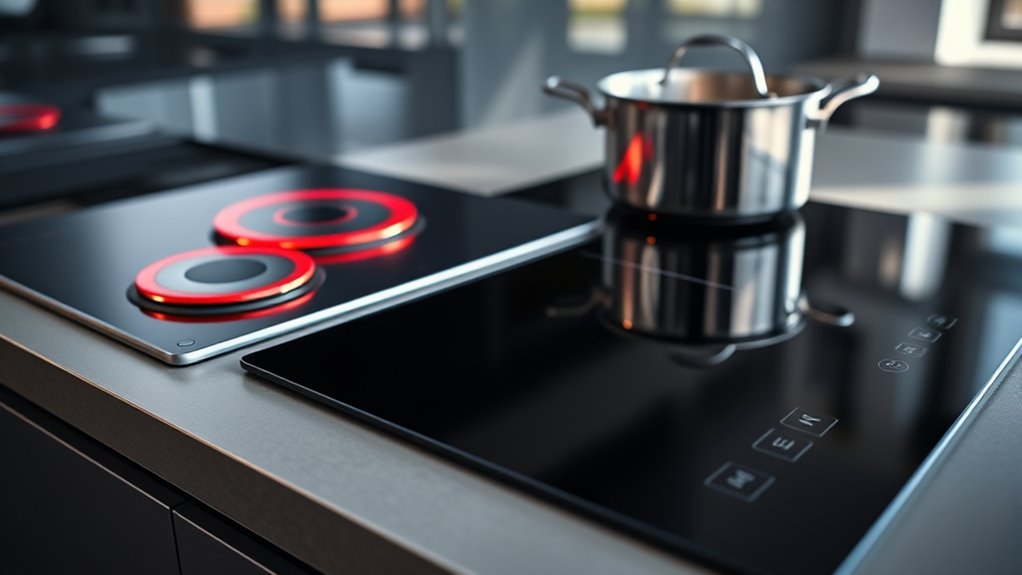
Electric Stove Top Vs Induction: 10 Key Differences
Choosing between an electric stovetop and induction can be frustrating, especially when you want faster cooking, lower energy bills, and an easier cleanup. You’re not alone—many home cooks struggle to decide which option fits their kitchen and cooking style.
Electric stovetops use radiant or coil heat, while induction heats compatible magnetic pans directly. You’ll usually find induction faster, more energy-efficient, responsive, and safer because its surface stays cooler and shuts off when you remove cookware.
Electric models cost less upfront, work with nearly any flat-bottomed pan, and retain heat for slow cooking.
Induction also cleans more easily, but you may need new cookware.
Your budget, cooking style, and kitchen setup should guide your choice. Keep reading to discover the key differences between an electric stovetop and induction.
Key Takeaways
- Heating method: Electric stovetops heat elements or surfaces, while induction uses magnetic fields to heat compatible cookware directly.
- Speed and control: Induction generally boils water faster and adjusts temperature more immediately than electric stovetops.
- Cookware compatibility: Electric works with most flat-bottomed pans, whereas induction requires magnetic cookware such as cast iron or magnetic stainless steel.
- Efficiency and cost: Induction wastes less energy and may reduce operating costs, but electric stovetops typically cost less initially.
- Safety and cleaning: Induction surfaces stay cooler and are easier to wipe clean, while electric surfaces retain heat longer and may bake on spills.
Electric vs Induction: Which Is Better?
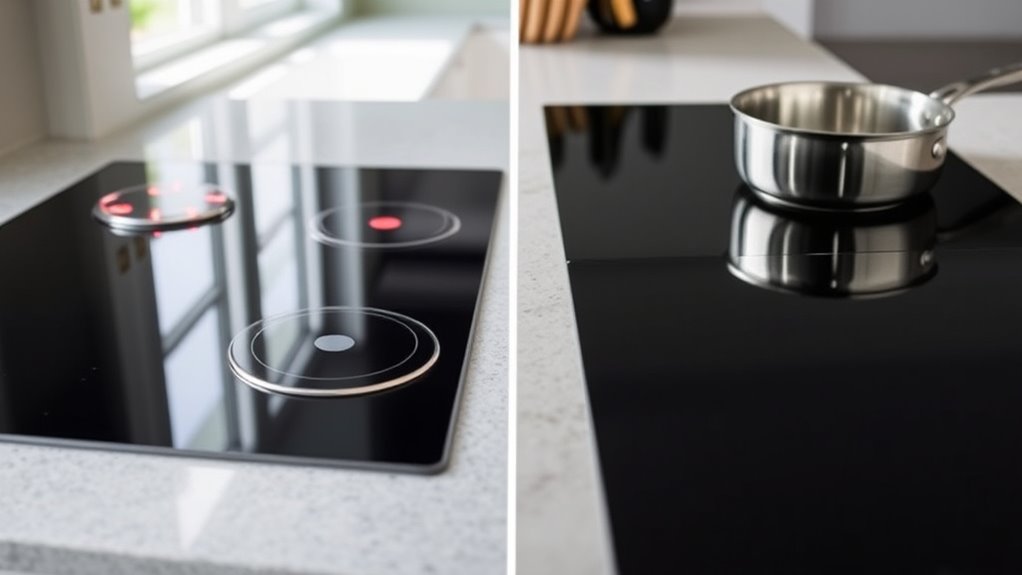
When choosing between an electric and induction cooktop, consider how you cook, your budget, and the cookware you already own. Electric models often cost less upfront, offer broad cookware compatibility, and provide a familiar cooking experience. Choose one if you want straightforward controls and don’t need the fastest temperature adjustments.
Induction usually costs more initially, but it delivers superior energy efficiency and responsive temperature control. You’ll spend less energy during everyday cooking, which may help offset the purchase price over time. However, you’ll need magnetic cookware, so check your pots and pans before buying.
Your priorities should guide the decision. If affordability and compatibility matter most, electric may suit you better. If you value speed, lower operating costs, and precise control, induction offers stronger performance.
Compare installation requirements, surface size, cleanup, and available safety features, such as automatic shutoff and residual-heat indicators. Either option can serve you well when it matches your habits, kitchen setup, and long-term budget.
How Do Electric and Induction Cooktops Work?
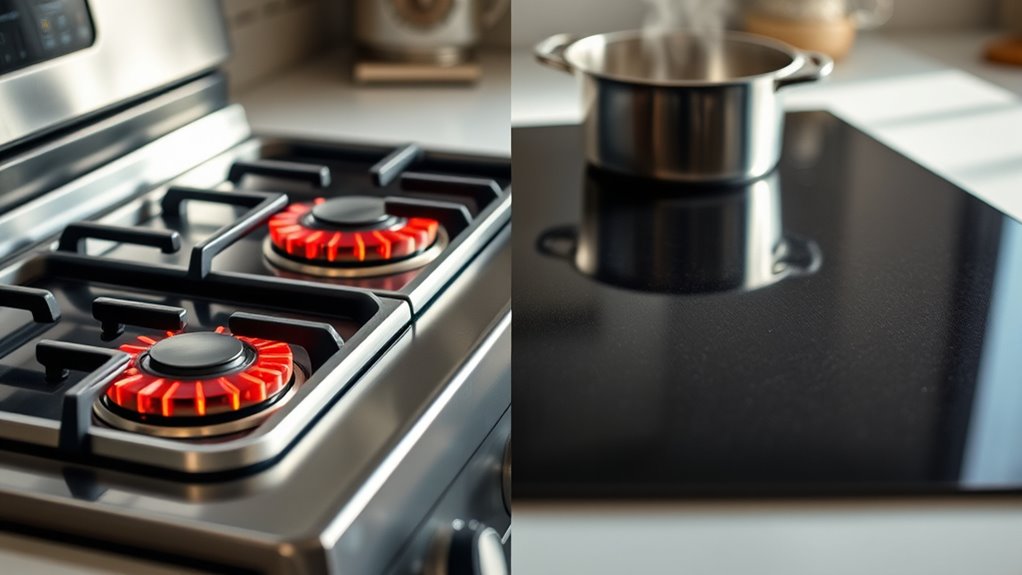
Electric cooktops heat food with glowing elements that transfer heat to your cookware. Induction cooktops work differently: they create a magnetic field that heats compatible pans directly. Because of this, the two types differ in how they transfer heat, how quickly they cook, and how efficiently they use energy.
Electric Heating Elements
Electric cooktops heat food through electrical resistance: current passes through metal coils or radiant elements, which warm the cookware by direct contact. As you turn the control, the element converts electricity into heat, then transfers that heat through the pan’s base.
You’ll typically encounter four designs:
- Coil burners: Exposed metal coils glow and heat pans directly.
- Smooth radiant surfaces: Hidden elements warm a glass-ceramic top, which contacts your cookware.
- Solid plates: Cast-iron disks provide steady, though slower, electric heating.
- Dual elements: Adjustable sizes match small or large pans, reducing wasted energy.
You’ll need flat, stable cookware for even contact, and the surface may stay hot after switching off. Temperature changes also take time because the element and cooktop retain heat.
This delayed response can make simmering less precise than gas.
Induction Magnetic Fields
Induction cooktops use a magnetic field to heat the cookware itself rather than warming a separate element first. Beneath the glass surface, a copper coil carries alternating electric current.
That current creates rapidly changing magnetic fields above the coil. When you place compatible iron or steel cookware on the surface, the field interacts with its magnetic material and induces electrical currents within the pan.
The cooktop’s electronics adjust the current’s frequency and strength as you select different settings. Because the field needs suitable cookware to work, aluminum, glass, and copper pans generally require a magnetic base.
You won’t see the coil glow or hear a flame; the system operates electronically and quietly. Proper shielding and certified cookware also help limit electromagnetic interference with nearby devices and medical implants.
Heat Transfer Differences
When you turn on a traditional electric cooktop, electricity heats a metal coil or radiant element, which then transfers heat through the pan’s base. You wait for the surface to warm, and some energy escapes into the surrounding air.
- Electric heating: Your pan receives heat by direct contact, so thermal conductivity strongly affects cooking speed. Materials like copper spread heat quickly, while thin steel may create hot spots.
- Induction heating: A magnetic field induces electrical currents inside compatible cookware, generating heat directly in the pan rather than on the surface.
- Heat distribution: Electric elements can warm unevenly, but a heavy pan helps stabilize temperatures. Induction typically delivers more consistent heat distribution across the pan’s base.
- Control and efficiency: Induction responds almost instantly when you adjust the setting, wastes less heat, and leaves the surrounding surface cooler.
Induction vs Electric: Which Cooks Faster?
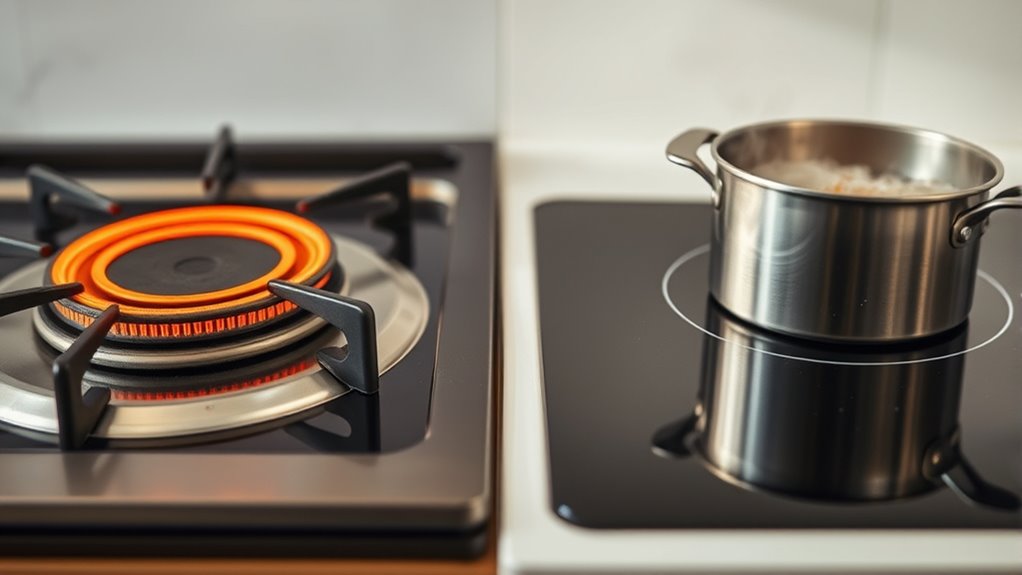
If speed matters most, induction usually wins because it transfers energy directly into the cookware, boiling water and heating meals faster than a traditional electric cooktop.
Induction cooktops heat cookware directly, delivering faster boiling and meal preparation than traditional electric surfaces.
You’ll notice the difference when bringing a large pot to a boil or searing food at high heat. Induction responds almost immediately when you adjust the setting, while an electric coil or radiant element needs time to heat up and cool down.
Your cookware also affects performance: flat, magnetic pans make the best connection with an induction surface.
Electric cooktops can still cook quickly, especially with powerful elements and properly sized pans, but they typically leave more heat between the burner and the pot. That extra delay can make timing delicate recipes harder.
Faster heating also supports Cooking safety because you can reduce heat promptly when food begins to scorch.
Energy efficiency may improve with induction, although speed shouldn’t be your only consideration when choosing between these cooktops for your kitchen.
Induction vs Electric: Which Uses Less Energy?
For lower energy use, induction usually has the advantage because it transfers heat directly to magnetic cookware instead of heating a separate burner surface first. You’ll typically waste less heat around the pan, which improves energy efficiency and can reduce power consumption during everyday cooking.
- Direct transfer: Induction creates a magnetic field that heats the pan itself, while an electric coil or radiant element must heat its surface before the pan warms.
- Less wasted heat: Your kitchen stays cooler because induction sends more energy into the cookware rather than the surrounding air.
- Lower operating costs: You may use fewer kilowatt-hours over time, especially if you cook frequently or prepare multiple dishes daily.
- Cookware matters: You’ll need compatible magnetic pans, such as cast iron or magnetic stainless steel, to receive induction’s benefits.
Electric cooktops can still perform efficiently with flat-bottomed pans and properly sized burners. However, induction generally delivers better energy efficiency, helping you save energy without sacrificing everyday convenience or cooking performance.
Which Cooktop Offers Better Temperature Control?
When you want precise heat adjustments, induction gives you finer control than a traditional electric cooktop. It also responds to temperature changes faster, so you can adjust the heat quickly while cooking. Both cooktops deliver consistent results, but induction maintains your chosen temperature more reliably.
Precise Heat Adjustments
Induction cooktops offer more precise heat adjustments because they change pan temperature almost instantly when you raise or lower the setting. You’ll get finer temperature regulation for delicate sauces, melted chocolate, and simmering grains.
Electric cooktops can handle everyday cooking well, but their settings often provide broader heat ranges, making precision control less consistent.
- Fine settings: You can choose smaller power changes to maintain a steady cooking level.
- Direct energy: Induction transfers energy straight into compatible cookware, helping you manage heat accurately.
- Stable simmering: You’ll find it easier to prevent scorching when a recipe needs gentle, controlled heat.
- Responsive adjustments: You can raise or lower the setting confidently as cooking conditions change.
If you value exact control, induction gives you a more predictable experience. Electric models still work effectively, but you may need to adjust settings more carefully to achieve the same level of accuracy.
Faster Temperature Response
Beyond precise settings, the speed of each cooktop’s temperature response affects how easily you can control a dish. Induction responds almost immediately when you raise or lower the setting because it heats the pan directly.
You can reduce heat before a sauce boils over, then increase it quickly when needed. That rapid feedback gives you greater control during delicate steps and helps prevent overcooking.
An electric stove top usually reacts more slowly. Its heating element stays hot after you lower the setting, so you may need to move the pan or wait for the temperature to change.
This delay can make timing harder, especially with chocolate, custards, or simmering liquids. For responsive adjustments, induction offers better temperature stability and supports more predictable cooking consistency when you actively manage each step.
Consistent Cooking Heat
For consistent cooking heat, induction typically gives you better control because it heats the cookware directly and maintains a steady temperature with minimal fluctuation. That precision supports cooking consistency when you simmer sauces, melt chocolate, or sear delicate foods.
You’ll also notice less wasted heat around the pan and faster adjustments when you change the setting.
- Induction: Sensors and direct energy transfer provide excellent temperature stability, helping prevent scorching and uneven cooking.
- Electric: Radiant burners cycle on and off to hold heat, so you may experience wider temperature swings.
- Low settings: Induction usually maintains gentle simmering more reliably, while electric burners can stay hotter than expected.
- Cookware matters: Use flat, compatible pans on induction and heavy pans on electric for steadier results.
If you prioritize precise control, induction offers the more consistent cooking experience. Electric remains practical, but you’ll need closer attention and occasional adjustments.
Which Cooktop Is Safer?
When safety is your top priority, induction cooktops generally offer an advantage over traditional electric stoves. Induction heats compatible cookware directly, so the surface stays relatively cooler and reduces accidental burns.
It also stops heating when you remove the pan, helping limit unattended cooking and fire hazards. However, you’ll still need to watch hot cookware, use proper settings, and keep flammable items away.
Electric stovetops can remain hot long after you turn them off. Their exposed heating elements may ignite towels, packaging, or grease if you leave them unattended.
Both options should meet recognized Safety standards, but safe habits matter most.
| Safety factor | Electric stovetop | Induction cooktop |
|---|---|---|
| Surface heat | Remains hot | Lower residual heat |
| Pan removal | Element may stay on | Heating typically stops |
| Main risk | Burns and fire hazards | Burns from hot cookware |
Choose induction if you value automatic shutoff and a cooler cooking surface. Choose either option only when you can supervise meals, maintain clear counters, and follow the manufacturer’s instructions.
Also, use cookware that sits securely and avoid damaged cords or controls.
Which Cooktop Is Easier to Clean?
When cleanup matters, you’ll appreciate the smooth, spill-proof surface of either cooktop. You can quickly wipe away splatters without working around raised burners or grates. So, which option makes everyday cleaning easier?
Smooth, Spill-Proof Surface
Which cooktop is easier to clean? Induction usually wins because its smooth cooking area stays relatively cool, so splashes and sauces don’t bake onto the glass as quickly.
Electric glass tops also offer a spill proof surface, but their heating elements can leave residue firmly attached when spills reach hot zones. Consider these differences:
- Induction: The flat glass surface has no grates, coils, or burner caps, giving you fewer obstacles around each pan.
- Electric: A ceramic-glass top looks sleek, yet radiant heat can turn small drips into stubborn spots.
- Induction: Because the pan heats directly, the surrounding surface generally remains cooler during cooking.
- Electric: Exposed or raised elements on some models create edges where crumbs and grease can collect.
Your choice depends on how often you deal with messy cooking and how much surface simplicity matters.
Quick, Easy Wipe-Clean
For the quickest cleanup, induction usually has the edge: you can wipe its smooth, cooler surface soon after cooking, while electric cooktops may leave baked-on splatters around hot elements. Because induction heats your pan directly, spills are less likely to burn onto the glass.
You’ll still need a soft cloth and nonabrasive cleaner, especially for grease or mineral marks. Electric cooktops also wipe clean when they feature a flat glass surface, but you must wait longer before cleaning.
Never scrub either model with steel wool, harsh powders, or rough pads, which can create scratches. Consider stain resistance when comparing finishes, since some surfaces show water spots or discoloration more readily.
Surface durability matters, too: careful cleaning helps your cooktop stay sleek, functional, and easier to maintain over time.
Do You Need Special Induction Cookware?
Induction cooktops require cookware with a magnetic base, such as cast iron or most stainless steel, because they heat the pan directly through electromagnetic energy. You’ll need to check each piece for cookware compatibility before using it.
- Test the base: Hold a refrigerator magnet against the bottom. If it sticks firmly, the pan should work.
- Choose suitable materials: Magnetic cookware usually includes cast iron, enameled cast iron, and magnetic stainless steel.
- Check the shape: Select pans with a flat, smooth base that sits fully on the cooking zone. Warped bottoms may heat unevenly.
- Read the label: Look for an induction symbol or confirmation from the manufacturer. Some stainless-steel cookware contains too little iron to activate the cooktop.
You don’t have to replace everything. Many kitchens already have compatible pots and pans, and induction-ready cookware comes in varied sizes and styles.
Glass, copper, aluminum, and nonmagnetic stainless steel won’t work unless they include a magnetic layer. A magnetic adapter plate can make some pans usable, but it may respond more slowly.
Which Cooktop Costs Less?
Upfront, electric stoves usually cost less than induction cooktops, but the price gap depends on the model and installation. For a fair cost comparison, check purchase prices, delivery fees, required cookware, and expected energy use.
Electric radiant cooktops typically offer a lower initial price, making them attractive when you’re replacing an appliance on a tight budget. Induction models often cost more upfront, though they can use energy more efficiently and may reduce operating expenses over time.
Your installation considerations also affect the total. Confirm whether your kitchen has the required electrical circuit, outlet, and countertop opening.
An installer might need to upgrade wiring or modify the counter, increasing your project cost. Electric cooktops can also require installation work, especially when you’re replacing a gas appliance or changing the electrical supply.
Compare warranty coverage and repair costs before choosing. Look at both the purchase price and long-term expenses so you can identify the better value for your kitchen.
Which Cooktop Fits Your Cooking Style?
Your cooking habits should guide your choice between electric and induction cooktops. Consider how you prepare meals, manage time, and use your kitchen before choosing.
- You value speed: Induction heats pans quickly and responds immediately when you adjust the temperature, making it ideal for frequent, fast-paced cooking.
- You prefer flexibility: Electric cooktops offer broad Cooking versatility because they work with nearly any flat-bottomed cookware. Choose induction if you already own, or don’t mind buying, magnetic pans.
- You prioritize precision: Induction provides consistent, controlled heat for delicate sauces, searing, and simmering. Electric models retain heat longer, which can benefit slow cooking but requires more adjustment.
- You care about design: Both options can complement a modern kitchen, but induction usually offers stronger Aesthetic appeal with its sleek, easy-to-clean glass surface.
If you cook elaborate meals often, induction’s responsiveness may suit you best. If you want affordable simplicity and cookware freedom, electric may fit your routine better.
Your preferred pace, recipes, and kitchen priorities should make the final decision clear.
Frequently Asked Questions
How Long Do Electric and Induction Cooktops Typically Last?
You can expect an electric cooktop to last about 10–13 years, while an induction cooktop typically lasts 8–10 years. Your results depend on usage, maintenance, installation quality, and component reliability.
Although induction models may have shorter average lifespans, they often deliver faster cooking speed and better energy efficiency. You’ll extend either cooktop’s life by cleaning spills promptly, avoiding heavy impacts, using suitable cookware, and following the manufacturer’s care instructions.
What Installation Requirements Differ Between Electric and Induction Cooktops?
You’ll find installation complexity less dramatic than a kitchen wrestling match, though induction can make your breaker box sweat. Both cooktops typically need a dedicated 240-volt circuit, proper grounding, and countertop ventilation clearance.
Induction may require heavier electrical wiring or a higher-amperage circuit, depending on its power rating. Electric models often use existing wiring more easily, but you’ll still need a qualified electrician to verify capacity, connections, and local-code requirements before installation begins.
Can Induction Cooktops Work During Power Outages?
No, you can’t use an induction cooktop during a power outage because it needs electricity to create its magnetic cooking field. You’ll need backup solutions if you want to keep cooking, such as a gas camping stove, propane burner, or outdoor grill.
A battery power station may run a small induction unit, but check its wattage, capacity, ventilation, and safety limits first. Never use generators or fuel-burning appliances indoors, where carbon monoxide can accumulate quickly.
How Noisy Are Induction Cooktops Compared With Electric Models?
Induction cooktops usually make slightly more noise than electric models, though you’ll often hear only a soft hum, buzz, or clicking. Noise levels depend on your cookware, heat setting, and the cooktop’s cooling fan.
Cooking sound differences become more noticeable at high power, when induction units may vibrate pans or run fans loudly. Electric surfaces generally stay quieter, but they can still click as heating elements cycle on and off.
What Maintenance Do Electric and Induction Cooktops Require?
Treat your cooktop like a quiet, polished shield: wipe spills after every use, then deep-clean weekly. Increase cleaning after sugary or greasy messes, which can harden into stubborn stains.
Your surface material matters: use nonabrasive cleaners and soft cloths on glass or ceramic surfaces. Avoid steel wool and harsh powders.
For induction models, keep the glass dry and clear. Electric coil models need occasional coil and drip-pan cleaning.
Conclusion
Ultimately, choosing between an electric stove top and induction comes down to your cooking style, space, and spending plans. Induction delivers speedy heating, precise performance, and impressive energy efficiency, while electric cooktops offer familiar functionality, broader cookware compatibility, and often lower upfront costs.
Consider your culinary habits, cleaning preferences, and kitchen budget before deciding. When you weigh these key differences carefully, you’ll find the cooktop that best balances convenience, control, and confidence for your everyday cooking.