How to Organize a Small Kitchen: 7 Essential Tips
How to Organize a Small Kitchen: 7 Essential Tips: Struggling to keep your small kitchen organized and functional? You’re not alone. Many people find that limited space makes cooking and storage a real challenge. But with the right strategies, you can transform even the tiniest kitchen into an efficient and enjoyable space.
To organize your small kitchen, start by clearing out clutter and grouping items by use. Set up distinct zones for cooking, prep, and storage, placing tools where you need them most. Maximize cabinets and vertical space with shelves, hooks, and organizers to keep everything accessible.
Choose multi-functional appliances to save counter space, and develop quick daily cleaning habits to maintain order. Keep following these tips, and you’ll uncover even smarter ways to optimize your kitchen’s efficiency and ease.
How to Organize a Small Kitchen Key Takeaways
- Declutter cabinets by sorting items into keep, donate, or toss. Group similar kitchenware together for easy access.
- Create functional zones for cooking, prepping, and storage. Place tools and appliances near their primary use areas.
- Maximize vertical space with wall-mounted racks, hooks, magnetic strips, and shelves. This helps free up countertop and cabinet space.
- Choose multi-functional, stackable, or collapsible kitchen tools and appliances to save space and boost efficiency.
- Develop daily cleaning habits like wiping counters, washing dishes promptly, and sweeping floors. These small routines help keep your kitchen organized.
Clear Out Clutter in Your Small Kitchen
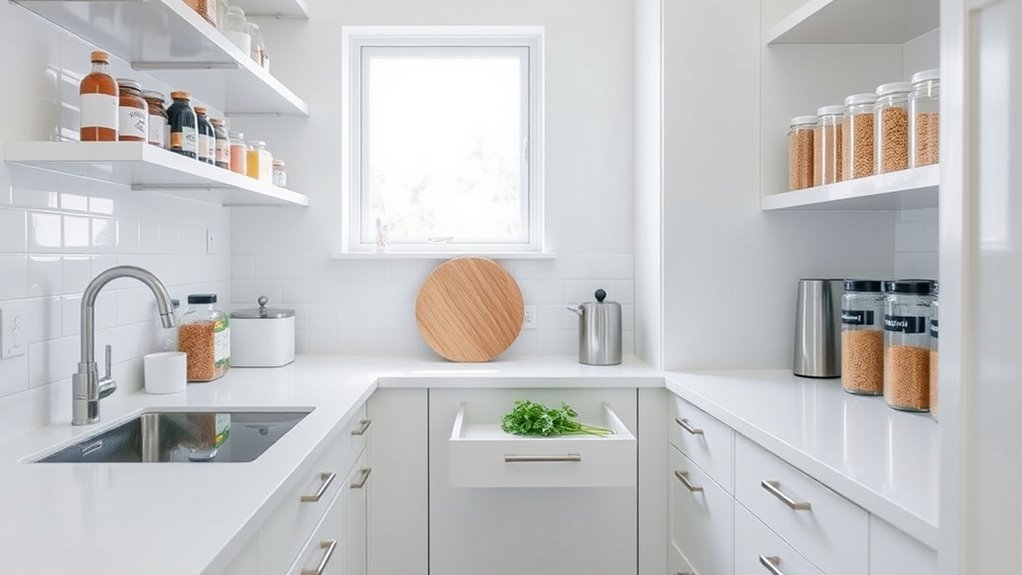
How do you begin to clear out clutter in your small kitchen? Start by applying simple decluttering techniques: take everything out of your cabinets and drawers, then sort items into categories: keep, donate, or toss. Be honest about what you use regularly and what’s just taking up space.
Next, focus on efficient storage solutions. Use stackable containers to maximize vertical space and consider clear bins for easy visibility. Drawer organizers can help keep utensils and tools tidy, while hooks or magnetic strips free up counter space by holding frequently used items.
Set Up Zones for Cooking, Prep, and Storage
Start by defining clear zones for cooking, prep, and storage. This way, your kitchen stays organized and works more efficiently.
Try to arrange tools and ingredients where you’ll use them the most—it really helps to streamline your workflow.
And don’t forget about vertical storage! It’s a great way to maximize space and keep everything within easy reach.
Define Functional Kitchen Areas
Where should you focus your efforts when organizing a small kitchen? Start by defining clear functional areas: cooking, prep, and storage. Good kitchen lighting plays an essential role here. Bright, task-specific lights help you work efficiently in each zone.
Place appliances strategically to support their function. Keep the stove near prep space, and position the fridge where it’s easily accessible but doesn’t block traffic. Store frequently used items close to their relevant zones. For example, pots near the stove and knives near the prep area.
Optimize Workflow Efficiency
Although organizing a small kitchen can feel challenging, setting up clear zones for cooking, prep, and storage will streamline your workflow and save time. Start by arranging your stove, utensils, and pots within easy reach to create an efficient cooking zone.
Designate a separate prep area near your sink with chopping boards and knives, ensuring ergonomic design to reduce strain. Keep storage close but distinct, so ingredients and tools remain accessible without cluttering workspaces.
Think of this setup as workflow automation. Each zone supports a specific task, minimizing unnecessary movement. By planning your kitchen this way, you’ll move smoothly from one task to another, making cooking faster and more enjoyable.
This approach maximizes your small kitchen’s potential without overwhelming the space.
Use Vertical Storage
Creating distinct zones for cooking, prep, and storage sets a strong foundation. But making the most of your vertical space takes organization to the next level. Use wall-mounted racks and hanging storage to free up countertops and drawers, keeping essentials within reach.
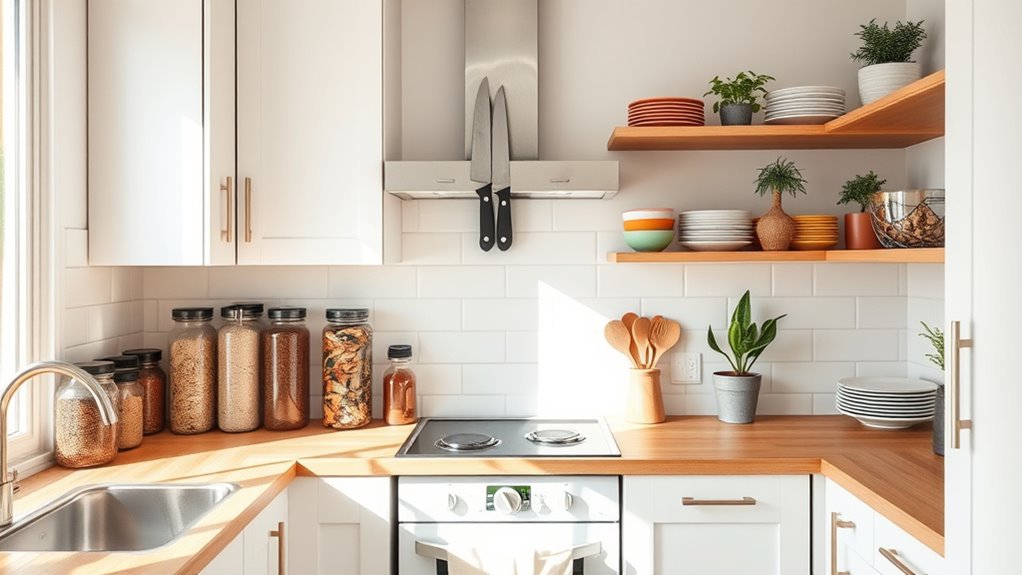
Install hooks for utensils, magnetic strips for knives, and shelves for spices or cookware. This approach maximizes your kitchen’s height and keeps your zones clearly defined.
| Zone | Vertical Storage Ideas |
|---|---|
| Cooking | Magnetic knife strips, pot racks |
| Prep | Hanging utensil hooks, spice shelves |
| Storage | Wall mounted shelves, hanging baskets |
| All Zones | Pegboards, under-cabinet racks |
These smart solutions help maintain order while saving space. They make your small kitchen efficient and enjoyable.
Organize Cabinets and Drawers for Easy Access
When you organize cabinets and drawers thoughtfully, you make cooking and cleanup much easier. Start by categorizing items based on how often you use them. Use cabinet organization techniques like grouping similar dishes, pots, and pans together so you don’t waste time searching.
Place frequently used items at eye level or within easy reach, while storing rarely used ones higher up or in the back.
For drawer sorting, separate utensils, gadgets, and kitchen tools into designated compartments or small trays. This keeps everything visible and prevents clutter.
Consider arranging drawers by function. Keep prep tools in one, cooking utensils in another, and miscellaneous items in a third. Labeling drawers can also help maintain order over time.
Make the Most of Vertical Space in Your Kitchen
Maximizing vertical space lets you free up countertops and cabinets while keeping your kitchen organized. Start by installing wall mounted shelving to store items you use often. These shelves keep essentials visible and within reach without crowding your counters. Use different shelf heights to accommodate various items, from spices to cookbooks.
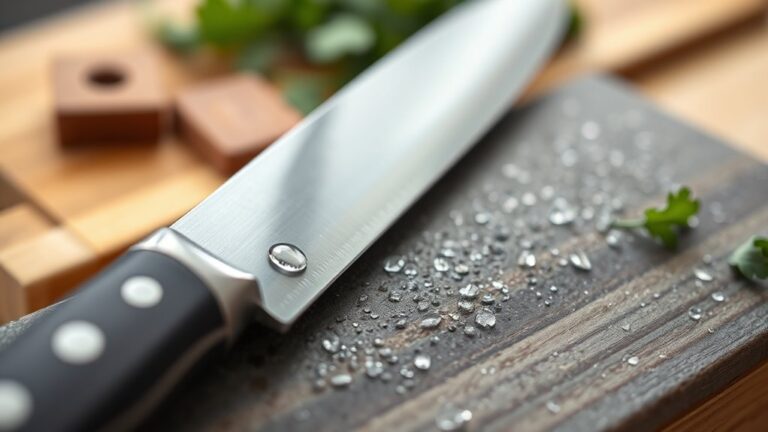
Hanging storage is another smart way to utilize vertical space. Hooks or rails mounted on walls or under cabinets let you hang pots, pans, and utensils, which clears out drawer space. You can also hang a magnetic knife strip. It saves drawer room and keeps knives accessible.
Don’t forget about the inside of cabinet doors. Install small racks or hooks there for lids, measuring spoons, or cleaning supplies. By thinking vertically, you can keep your kitchen tidy and efficient, even if space is tight. This approach lets you maximize every inch without cluttering your main work areas.
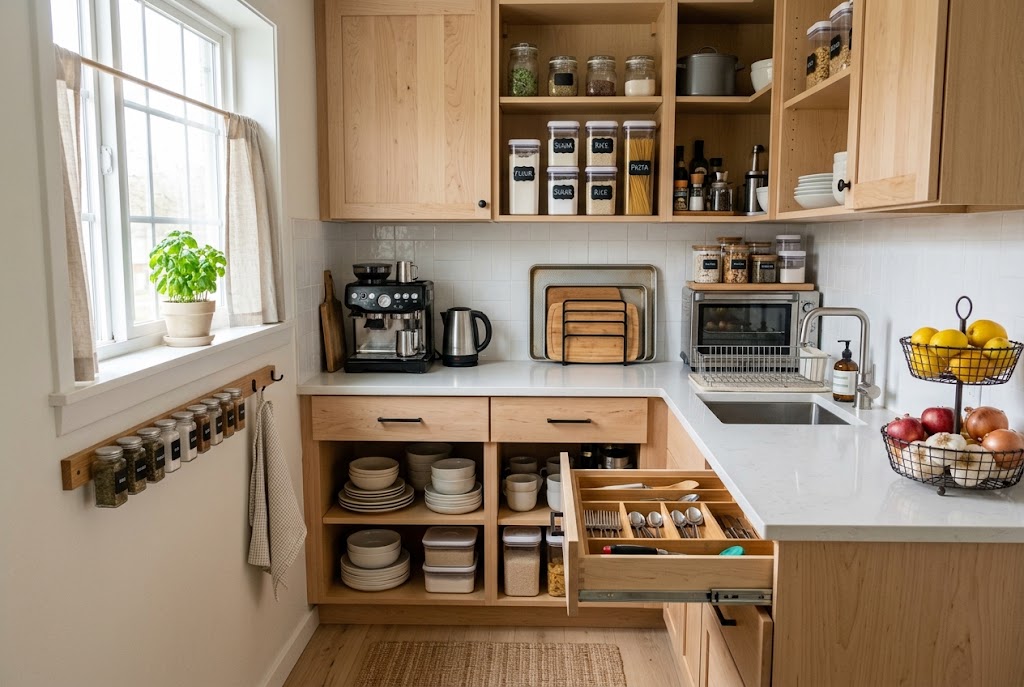
Maximize Counter Space With Smart Solutions
Although small kitchens can feel cramped, you can reclaim valuable counter space with a few smart solutions. Prioritize smart storage options to keep your counters clear and organized. Compact appliances not only save space but also maintain functionality without overwhelming your kitchen.
Think beyond just moving things around. Integrate tools and storage that maximize every inch.
Here are some effective ways to maximize your counter space:
- Use wall-mounted racks or magnetic strips for knives and utensils.
- Opt for stackable containers to free up room in cabinets and on counters.
- Choose compact appliances that fit your needs without bulk.
- Install under-cabinet lighting and shelves to create extra storage above counters.
- Utilize fold-down cutting boards or pull-out work surfaces for flexible prep space.
Choose Multi-Functional Tools for Small Kitchens
You’ll save valuable space by choosing tools that serve multiple purposes in your small kitchen. Think about picking versatile appliances that can handle different tasks—it really helps simplify meal prep. Plus, this way you keep your counters clutter-free and make your cooking more efficient.
Maximize Space Efficiency
Since small kitchens offer limited counter and storage space, choosing multi-functional tools becomes essential. You can maximize space efficiency by embracing creative storage solutions and tools with ergonomic design, ensuring every inch counts.
Look for items that serve multiple purposes, reducing clutter and freeing up valuable surfaces.
Consider these ideas to boost your kitchen’s functionality:
- Stackable measuring cups and bowls
- Cutting boards with built-in colanders
- Nesting pots and pans sets
- Collapsible strainers and funnels
- Multi-use utensils with interchangeable heads
Prioritize Versatile Appliances
Choosing multi-functional tools lays the groundwork for a small kitchen that works smarter, not harder. By prioritizing multi purpose appliances, you save counter space and reduce clutter. Compact kitchen gadgets offer versatility without sacrificing room, making them ideal for small kitchens.
Here’s a quick look at some top choices:
| Appliance | Functions |
|---|---|
| Air Fryer | Frying, baking, roasting |
| Instant Pot | Pressure cooking, slow cook, rice cooker |
| Hand Blender | Blending, whisking, chopping |
Investing in these versatile tools helps you maintain an organized, efficient kitchen. You’ll enjoy easy access to appliances that handle multiple tasks, freeing up storage and counter space for other essentials.
Simplify Meal Preparation
When you simplify meal preparation, multi-functional tools become your best allies in a small kitchen. They save space, reduce clutter, and speed up meal prep by combining several functions into one device. Choosing these tools helps you manage ingredient storage efficiently and keeps your countertop clear.
Consider these versatile items:
- A food processor that chops, slices, and kneads dough
- A blender that doubles as a food mill
- Nesting mixing bowls with lids for prep and storage
- A multi-tiered steamer for cooking various ingredients simultaneously
- A cutting board with built-in compartments for sorting ingredients
Using these tools not only minimizes your kitchen’s footprint but also streamlines your cooking process. It makes meal prep less stressful and more enjoyable.
Develop Daily Cleaning Habits to Keep Your Kitchen Tidy
Although organizing your kitchen takes effort, developing daily cleaning habits will help you maintain a tidy space with minimal stress. By incorporating simple daily routines into your cleaning schedules, you prevent clutter buildup and keep surfaces spotless. Consistency is key; spending just a few minutes each day can make a huge difference.
Here’s a quick guide to help you stay on track:
| Task | Suggested Time |
|---|---|
| Wipe countertops | After meal prep or cooking |
| Wash dishes | Immediately after use |
| Sweep the floor | End of the day |
| Organize pantry | Weekly or as needed |
Stick to these daily habits and adjust your cleaning schedules based on your kitchen’s needs. This approach saves time and keeps your small kitchen both functional and inviting. You’ll find that a little regular effort prevents overwhelming messes later.
Frequently Asked Questions
How Do I Improve Lighting in a Small Kitchen?
To improve lighting in a small kitchen, start by maximizing natural light. Keep windows clear and use sheer curtains.
Add layered lighting fixtures like under-cabinet lights and pendant lamps to brighten work areas and create ambiance.
Choose bright, energy-efficient bulbs to improve visibility without overwhelming the space. Reflective surfaces, like glossy backsplashes and light-colored walls, help spread light evenly.
You’ll make your kitchen feel bigger and more inviting with these simple changes.
What Colors Make a Small Kitchen Appear Larger?
Did you know that 60% of people feel that color schemes impact how spacious a room feels? To make your small kitchen appear larger, you should choose light, neutral colors like whites, soft grays, or pastels. These hues create visual illusions of openness by reflecting more light.
Avoid dark colors that can make the space feel cramped. Using consistent color schemes on walls, cabinets, and countertops will improve the airy, expansive feel you want.
How Can I Soundproof a Noisy Kitchen?
To soundproof a noisy kitchen, you’ll want to use effective soundproofing techniques like installing noise reduction materials. Start by adding acoustic panels or foam to walls and ceilings to absorb sound.
Use weatherstripping on doors and windows to block noise leakage. Placing rugs or mats on hard floors also helps reduce echoes. These simple steps will minimize kitchen noise and create a quieter, more comfortable space for you to enjoy.
What Plants Thrive in Small Kitchen Environments?
You’ll find indoor herbs like basil, mint, and thyme thrive in small kitchen environments, especially if you get some natural light.
If your kitchen has limited sunlight, choose low light plants like snake plants, pothos, or ZZ plants. They’re tough and don’t need much sun.
These plants not only freshen up your space but also add a touch of green without taking up much room, making them perfect for compact kitchens.
How Do I Safely Store Cleaning Supplies in a Small Kitchen?
You should store cleaning supplies in a childproofing storage cabinet or on a high shelf out of kids’ reach to guarantee safety. Use sturdy containers with clear labels to prevent accidental misuse. Always keep chemicals separate from food items.
Proper chemical safety means sealing lids tightly and avoiding overcrowding your storage space. This way, you reduce risks and keep your small kitchen both safe and organized.
Conclusion
By clearing clutter and setting up clear zones, you’ll turn your small kitchen into a well-oiled machine. Organize cabinets, use vertical space, and pick multi-functional tools to stretch every inch like a rubber band.
Maximize your counters and develop daily cleaning habits to keep things flowing smoothly. With these tips, your kitchen will feel bigger, brighter, and ready for anything, making cooking a joy, not a chore.
Following these simple steps will help you organize a small kitchen that works efficiently and looks great.