Induction Range Vs Electric Range: 7 Key Differences
Choosing between an induction range and an electric range can feel confusing, especially if you want faster cooking without overspending. You’re not alone—many people struggle to balance performance, safety, cookware compatibility, and upfront cost.
An induction range heats compatible magnetic cookware directly, so you’ll boil water faster, adjust temperatures more precisely, and use roughly 75–80% of electricity efficiently.
An electric range heats elements and pans more gradually, typically operating near 70% efficiency, but it costs less upfront and works with nearly any flat-bottomed cookware.
Induction surfaces stay cooler, shut off quickly, and clean easily, while electric models offer familiar operation.
Your choice depends on budget, cookware, installation, safety, and cooking habits; the key differences below can help you decide.
Key Takeaways
- Heating method: Induction uses magnetic fields to heat compatible cookware directly, while electric ranges heat coils or radiant elements first.
- Speed and control: Induction boils water faster and adjusts temperatures more precisely. Electric ranges respond more slowly.
- Efficiency: Induction typically operates at 75–80% efficiency, compared with approximately 70% for electric ranges.
- Cookware and safety: Induction requires magnetic cookware and offers cooler surfaces, automatic pan detection, and rapid shutoff.
- Cost and practicality: Electric ranges generally cost less and accept most pans. Induction costs more but can reduce energy use and simplify cleaning.
Heating Methods: Induction vs. Electric
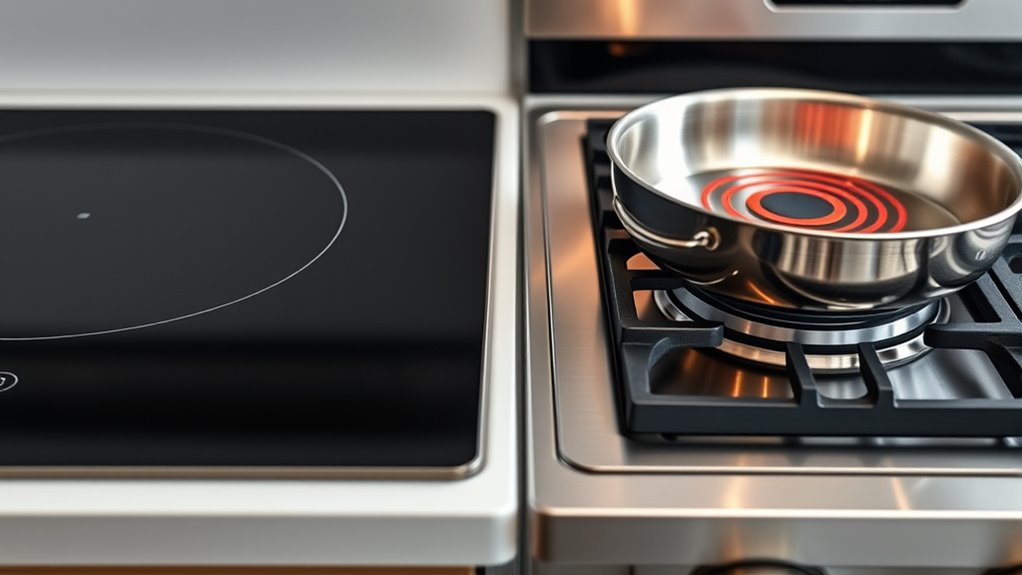
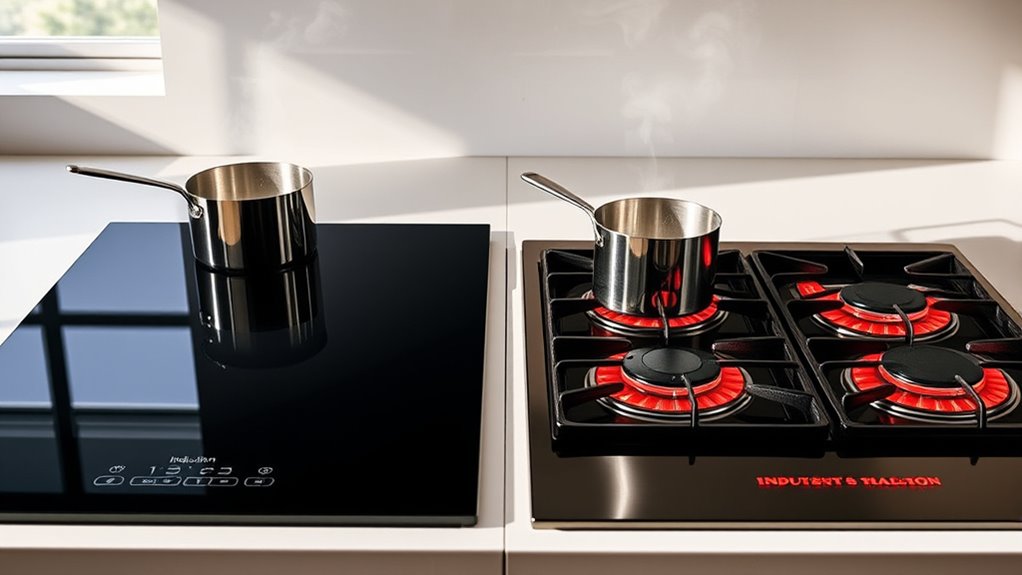
Induction ranges use electromagnetic energy to heat compatible cookware directly, while electric ranges send current through a heating element that transfers heat to the pan. With induction, you place a magnetic pot or skillet on the glass surface, and the cookware itself generates heat. The cooktop usually stays cooler, making spills easier to wipe away and reducing residual heat around the vessel.
Electric ranges rely on radiant coils or smooth-top elements. These components heat first, then transfer energy through the cookware, so the surface remains hot after you remove the pan. You can use nearly any cookware, but you’ll need to account for the element’s slower temperature response and uneven contact on some pans.
As you compare models, consider Design aesthetics and brand reputation alongside the underlying technology. Induction offers a sleek, minimalist appearance, while electric models provide familiar controls and broader cookware compatibility. Your kitchen’s style, available cookware, and cleaning preferences can guide your choice.
Which Range Boils Water Faster?
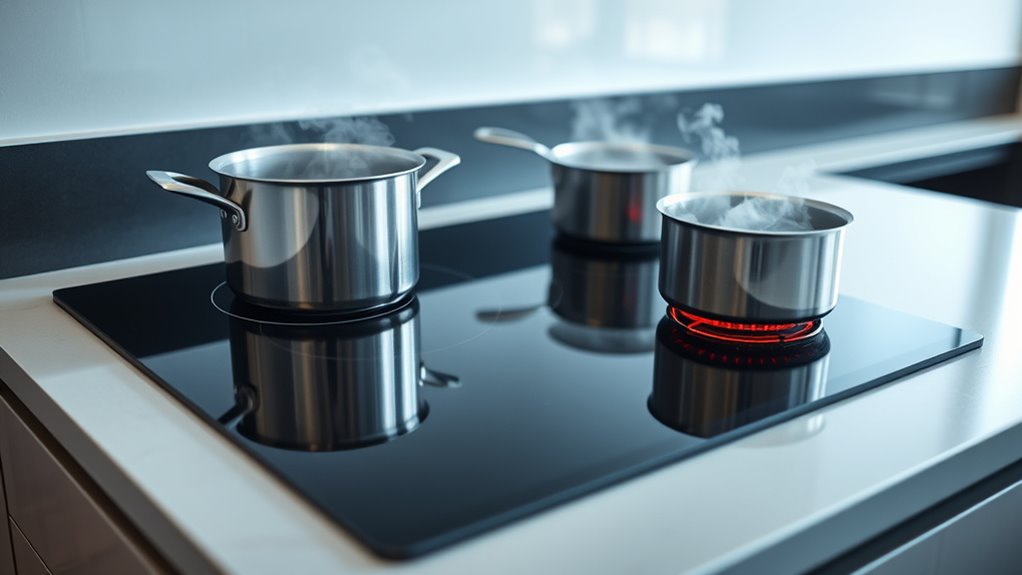
You’ll usually boil water faster with an induction range because it transfers heat directly to the cookware. By comparison, an electric range takes longer because its heating element must warm the pan before the water heats up. Still, boiling time depends on factors such as the cookware, water volume, and energy setting.
Heating Speed
When speed matters, induction ranges typically boil water faster than conventional electric ranges because they transfer energy directly to the cookware instead of heating a burner first.
You’ll notice the difference when you start with a cold pot: induction creates an electromagnetic field that heats compatible cookware immediately, while an electric coil or glass surface must warm up before transferring heat.
This direct process also reduces wasted energy around the pan, so your kitchen feels less hot during cooking. You’ll get responsive power adjustments, too; increase the setting, and the cookware reacts quickly.
That control supports temperature stability, helping you maintain steady heat without prolonged burner recovery. For everyday cooking, this faster response adds user convenience, especially when you’re preparing pasta, tea, or vegetables on a tight schedule.
Boiling Time
For boiling water, induction ranges are usually faster than conventional electric ranges because they transfer energy directly into a compatible pot. You’ll often notice a shorter wait when preparing pasta, tea, or vegetables, especially with a covered saucepan and the same volume of water.
Induction’s precise temperature control helps you maintain a steady boil without prolonged adjustments. Conventional electric ranges can take longer because their coils or radiant surfaces heat gradually, and the cookware may warm unevenly.
Your pot’s material, size, lid, and starting-water temperature also affect the result. For the best boiling efficiency, choose a flat, induction-ready pot that matches the cooking zone.
Even heat distribution helps prevent hot spots and supports consistent bubbling, so you won’t need to stir as frequently during cooking.
Energy Transfer
Induction ranges usually boil water faster because magnetic energy heats the compatible pot directly, while conventional electric ranges first heat a coil or radiant surface before transferring that heat to the cookware. You’ll notice less wasted heat with induction because the cooktop stays relatively cool and energy moves efficiently into the pan.
An electric range loses more energy through surface heating, delayed response, and heat escaping around the cookware. Your results still depend on wattage, pot size, lid use, and the power source supplying your kitchen.
Induction can shorten boiling times and may reduce electricity consumption, lowering your environmental impact when you cook frequently. However, you’ll need induction-compatible cookware, such as cast iron or magnetic stainless steel.
If speed and efficiency matter most, induction generally offers the stronger performance.
Temperature Control and Cooking Precision
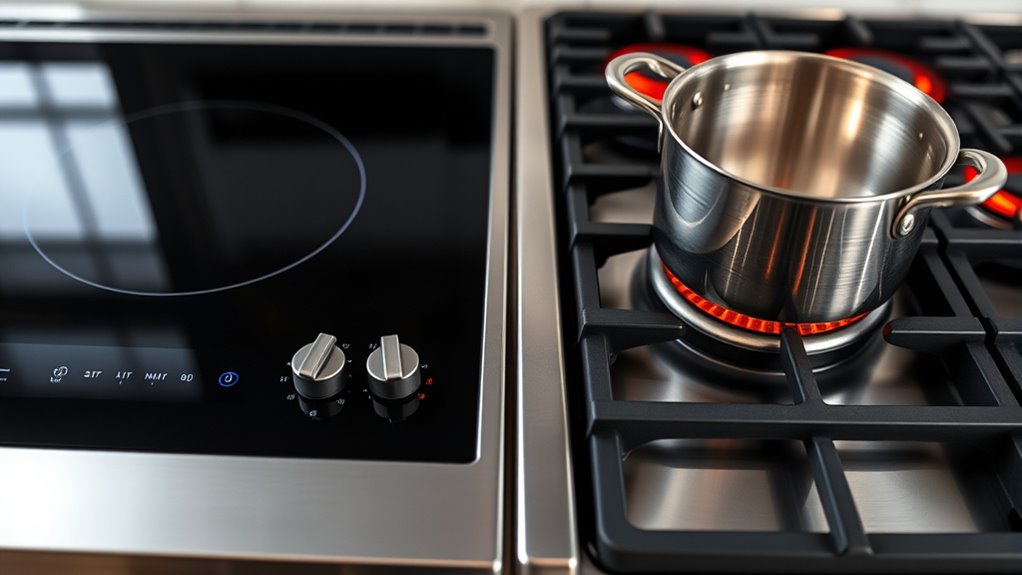
Precise temperature control can make induction ranges especially appealing for tasks like melting chocolate, simmering sauces, and searing meat. You can adjust heat quickly, and the cookware responds almost immediately, helping you prevent scorching or boilovers.
Electric ranges offer dependable cooking, but their radiant elements usually react more slowly. Residual heat can also continue cooking food after you lower or switch off the setting.
| Feature | Induction vs. electric |
|---|---|
| Adjustments | Induction changes heat rapidly; electric responds gradually |
| Simmering | Induction maintains steadier low temperatures |
| Searing | Induction delivers consistent, focused heat |
| Usability | Electric remains familiar and straightforward |
You’ll appreciate induction’s precision when recipes demand narrow temperature ranges. Many models add Smart features, such as guided settings, timers, and temperature sensors, to support repeatable results.
Electric models may include digital controls, though their performance depends more on timing and manual adjustments. Consider your cooking habits, cookware compatibility, and preferred aesthetic design before choosing the range that gives you greater control.
Which Range Uses Less Energy?
When you compare energy use, you’ll find that induction transfers heat more directly to your cookware than a traditional electric range. As a result, it often cooks food faster and may use less energy for each meal. Over time, that efficiency could help lower your utility bills and increase your long-term savings.
Energy Transfer Efficiency
Because induction transfers energy directly into the cookware, it typically uses less electricity than a conventional electric range, whose heating element must first warm the glass surface and then the pan.
You’ll lose less energy to surrounding surfaces because the induction field activates compatible cookware itself. That efficiency can reduce power consumption during everyday meals, especially when you cook frequently.
An electric range still converts electricity into heat effectively, but some energy escapes before reaching your food.
Your cookware also matters: induction requires magnetic pots and pans, while electric models accept nearly any flat-bottomed option.
Although kitchen aesthetics and the user interface may influence your preference, they don’t determine energy performance.
Check your utility rates and cooking habits to estimate savings. You’ll get the clearest comparison by tracking electricity use over several weeks.
Cooking Speed Comparison
Induction ranges usually cook faster than conventional electric ranges because they transfer heat directly into magnetic cookware. You’ll notice water boiling sooner, pans heating more evenly, and temperature changes happening almost immediately.
Conventional electric ranges must first heat their coils or radiant elements, then transfer that heat through the cookware. This can slow cooking and create lingering heat after you lower the setting.
For everyday Cooking styles, induction helps you sear, sauté, and boil with less waiting. It also uses less energy during each cooking task because more of the supplied power reaches the pan instead of warming the surrounding surface.
Your cookware must be induction-compatible, though, so check for a magnetic base before switching. Beyond performance, sleek induction surfaces can complement modern Kitchen aesthetics while making spills easier to wipe away.
Long-Term Energy Savings
That faster cooking can also lower your household’s long-term energy use. Induction ranges typically transfer about 85% of their electricity into heat, while conventional electric ranges manage roughly 75% to 80%.
Because induction heats your cookware directly, you’ll often spend less time cooking and waste less heat in your kitchen. Your actual savings depend on electricity rates, cooking habits, and how frequently you use the range.
Although induction models usually cost more upfront, reduced energy consumption can gradually offset that premium. You should also compare warranty coverage, since repairs can affect ownership costs over time.
An electric range may offer greater aesthetic appeal or a lower purchase price, but it generally uses more energy for the same meal. Choose induction if efficiency matters most; choose electric if budget and compatibility take priority.
Cookware, Safety, and Easy Cleanup
Cookware, safety, and cleanup differ noticeably between induction and electric ranges. With induction, cookware compatibility matters because the magnetic field heats only ferrous pans. Test yours with a magnet; cast iron and many stainless-steel pieces work, while aluminum, copper, and glass generally don’t unless they include a magnetic base. Electric ranges accept nearly any flat-bottomed pan, giving you more flexibility.
Induction safety features include a cool-to-touch cooking surface, automatic pan detection, and rapid shutoff when you remove cookware. You’ll still need caution with hot pans and residual heat.
Electric coils and glass tops remain hot longer, so you’ll need to watch children and avoid touching the surface after cooking.
Cleanup usually takes less effort with induction because spills don’t bake onto a cooler surface as quickly. Wipe the smooth top with a damp cloth after it cools.
Electric glass tops also wipe clean, but coils, drip pans, and stubborn splatters can require more scrubbing.
Upfront Cost and Installation Requirements
When you compare upfront costs, electric ranges usually offer the lower purchase price, while induction models often cost more because of their advanced heating technology.
Before you buy, compare prices across retailers and account for delivery, haul-away, and required accessories. You’ll also want to review warranty options, since longer coverage may justify a higher initial price and protect you from costly repairs.
Compare retailer prices, delivery fees, accessories, and warranty coverage to understand the true cost before purchasing.
Brand reputation can help you estimate reliability, service quality, and parts availability, but don’t treat a familiar name as a guarantee.
Installation costs can differ, too. Electric ranges typically plug into an existing 240-volt outlet, though you may need an electrician if your kitchen lacks the correct circuit.
Induction models use the same basic electrical connection, but some higher-powered units may require updated wiring or breaker capacity. Check the manufacturer’s specifications before scheduling installation.
You should also confirm countertop clearances, ventilation needs, and whether your current outlet matches the range’s plug. These checks help you avoid surprise expenses and delays.
Which Range Fits Your Cooking Habits?
Once you’ve compared purchase and installation costs, consider how each range matches the way you cook. If you often prepare delicate sauces, melt chocolate, or need precise temperature control, an induction range responds quickly and adjusts accurately.
Its smooth surface also simplifies cleanup, making it practical for busy cooks.
Choose an electric range if you prefer straightforward operation, bake frequently, or regularly use oversized or oddly shaped cookware. Traditional radiant elements accommodate nearly any pan, although they heat and cool more slowly.
Electric models can also suit renters or households seeking a familiar cooking experience without changing established habits.
Consider kitchen aesthetics, too. Induction’s sleek, seamless top creates a modern appearance, while electric ranges offer more conventional designs and finishes.
Think about user safety if children or distracted cooks share your kitchen. Induction surfaces remain relatively cool around the pan and shut off when cookware leaves the zone.
With your cooking routines, cookware, and priorities in mind, you’ll choose the range that supports daily meals best.
Frequently Asked Questions
How Long Do Induction and Electric Ranges Typically Last?
You can generally expect an induction range to last about 10–15 years, while an electric range typically lasts 13–15 years. Your results depend on usage, maintenance, and build quality.
Induction models may need specialized electronic repairs, whereas electric ranges often have simpler, more familiar components. You’ll also notice differences in energy efficiency and cooking speed, but those features don’t necessarily determine lifespan.
Keep your range clean and follow the manufacturer’s care instructions.
Can Induction Ranges Affect Pacemakers or Other Implanted Medical Devices?
Induction ranges can affect pacemakers or other implanted medical devices, but the risk is generally low when you follow safety guidance.
Keep your device and its programming magnet several inches from the cooktop, and don’t lean directly over active burners.
Medical device interference depends on the implant and range design. Check your device’s instructions, ask your cardiologist, and review the manufacturer’s electromagnetic compatibility recommendations before cooking.
Stop using it if you notice symptoms.
Do Induction Ranges Make Noticeable Noise During Operation?
Yes, you may hear noticeable noise during induction cooking, though it’s usually quieter than a conventional hood or burner. Typical operational sounds include a soft hum, buzz, click, or faint fan noise as the cooktop adjusts power and manages heat.
Noise levels often increase with high settings or certain cookware, especially lightweight or uneven pans. You’ll generally find the sound unobtrusive, and it stops when you remove the cookware or switch the zone off.
Are Replacement Parts Readily Available for Both Range Types?
Verily, you’ll usually find replacement parts for both range types through manufacturers, appliance dealers, and authorized service networks. Electric ranges often offer more widely stocked, affordable components, including heating elements and switches.
Induction models also have available parts, but specialized boards, sensors, and power modules may cost more or require ordering. Check model numbers carefully, because compatibility issues can delay repairs.
Your maintenance requirements remain manageable when you use qualified technicians and genuine parts for safe, reliable operation.
Can Either Range Operate During a Power Outage?
During a power outage, neither induction nor electric ranges will operate because both require electricity. You can’t use their burners or ovens unless you connect them to a properly sized generator, which may require professional installation and safe outdoor placement.
For emergency cooking, keep a portable propane stove, butane burner, or camping cooker available. Never use fuel-burning appliances indoors, where carbon monoxide can accumulate. Always follow manufacturer instructions and maintain ventilation during backup cooking.
Conclusion
Choosing between an induction range and an electric range comes down to how you cook. If you want faster boiling, precise temperature control, lower energy use, and easier cleanup, induction may suit you best.
If you prefer a lower upfront cost, simpler installation, and broad cookware compatibility, electric can meet your needs. Consider your budget, cooking habits, and kitchen setup.
Choose an induction range for speed and efficiency, or choose an electric range for affordability and familiarity.