Induction Cooktop vs. Electric: 10 Key Differences
Choosing between an induction cooktop and an electric cooktop can be surprisingly difficult. Many people struggle to balance faster cooking, easier cleanup, cookware compatibility, and price—but you’re not alone. Understanding the key differences can help you find the best fit for your kitchen.
Induction cooktops heat magnetic pans directly, so you’ll get faster boiling, greater energy efficiency, cooler surfaces, and more precise temperature control. They also stop heating when you remove the pan and clean up more easily.
Electric cooktops cost less, accept nearly any heat-safe cookware, and provide steady simmering. But they heat more slowly and retain heat longer. Your choice depends on your budget, cookware, cooking habits, and electrical setup.
The key differences below can help you decide.
Key Takeaways
- Heating method: Induction heats magnetic cookware directly, while electric cooktops heat an element and transfer warmth to the pan.
- Speed and control: Induction boils water faster and adjusts temperatures immediately. Electric cooktops respond more slowly but provide steady simmering.
- Energy efficiency: Induction wastes less heat and generally uses less electricity. Electric models lose heat through the burner and surface.
- Cookware compatibility: Induction requires magnetic cookware. Electric cooktops accommodate aluminum, copper, glass, and nonmagnetic stainless steel.
- Safety and cost: Induction surfaces stay cooler and offer automatic safety features but cost more. Electric models are cheaper yet retain heat longer.
Induction vs. Electric Cooktops: Quick Verdict
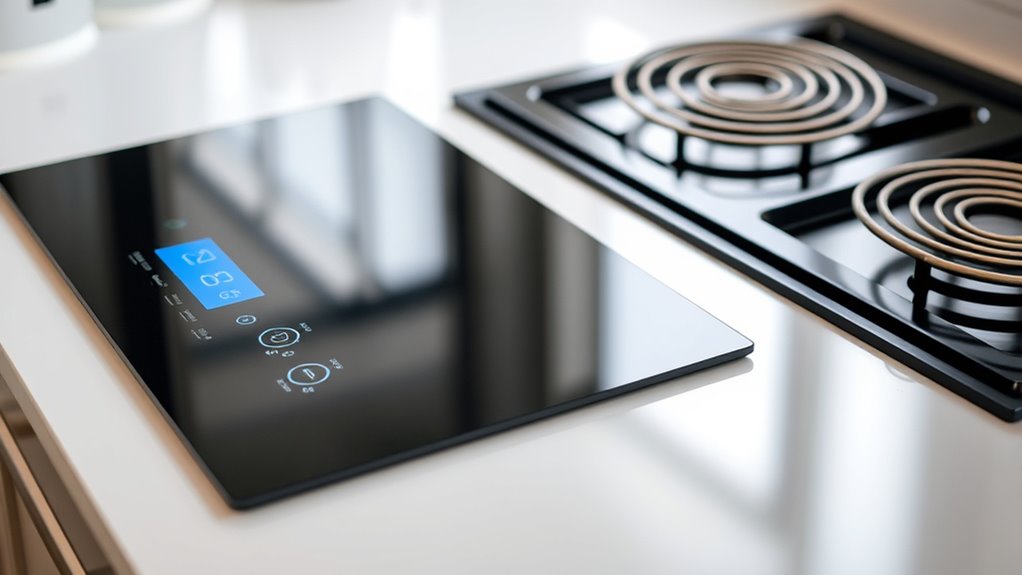
Induction cooktops heat magnetic cookware directly, making them faster, more energy-efficient, and safer to touch than traditional electric cooktops. If you value speed, precise control, and lower household energy use, you’ll likely prefer induction. Its energy efficiency can reduce wasted heat, while responsive settings help you move from simmering to searing with less delay.
Induction delivers faster cooking, precise control, improved energy efficiency, and a safer, cooler cooking surface.
Electric cooktops remain a practical choice when you want a lower upfront price, broad cookware compatibility, and simple installation. You won’t need magnetic pots and pans, and replacement parts may prove easier to find. However, electric models typically respond more slowly and leave residual heat on the cooking surface.
For everyday cooking, induction offers the stronger overall performance. Safety features, including cooler surrounding surfaces and automatic pan detection on many models, can give you extra peace of mind.
Choose electric if budget or cookware limitations matter most. Choose induction if you want efficiency, speed, and greater control.
How Do Induction and Electric Cooktops Heat?
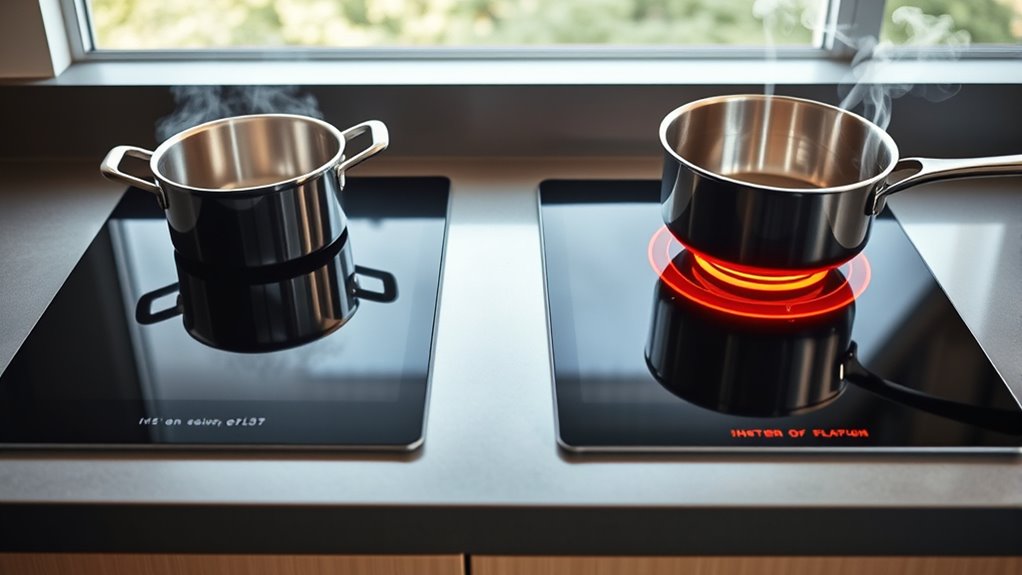
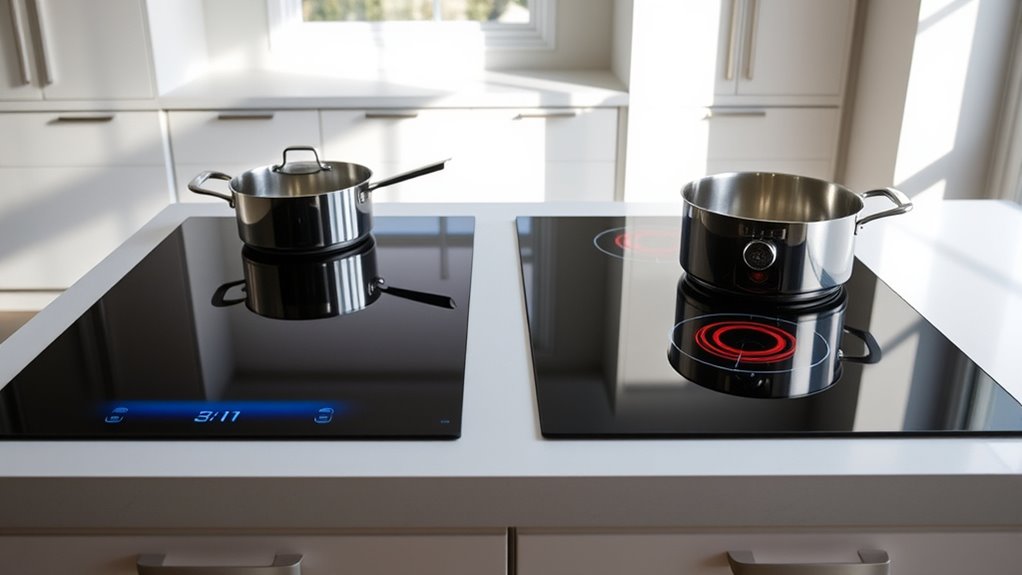
The key difference is where heat begins: induction cooktops create an electromagnetic field that heats compatible cookware directly, while electric cooktops send current through a heating element that warms the surface and then the pan.
With induction, the pan becomes the heat source, so the glass surface usually stays cooler except where cookware transfers warmth. You’ll need magnetic cookware, such as cast iron or many stainless-steel pans, for the field to work.
Electric cooktops rely on radiant coils or concealed elements. Electricity heats those components, and they transfer heat through the cookware’s base.
The surface remains hot after you remove a pan, so you’ll need to watch where you place your hands or utensils.
This difference affects energy efficiency: induction sends more energy into the pan, while electric models lose more heat around it.
It also influences cooking safety. Induction stops heating when you remove compatible cookware, whereas electric elements remain hot until they cool.
Which Cooktop Boils Water Faster?
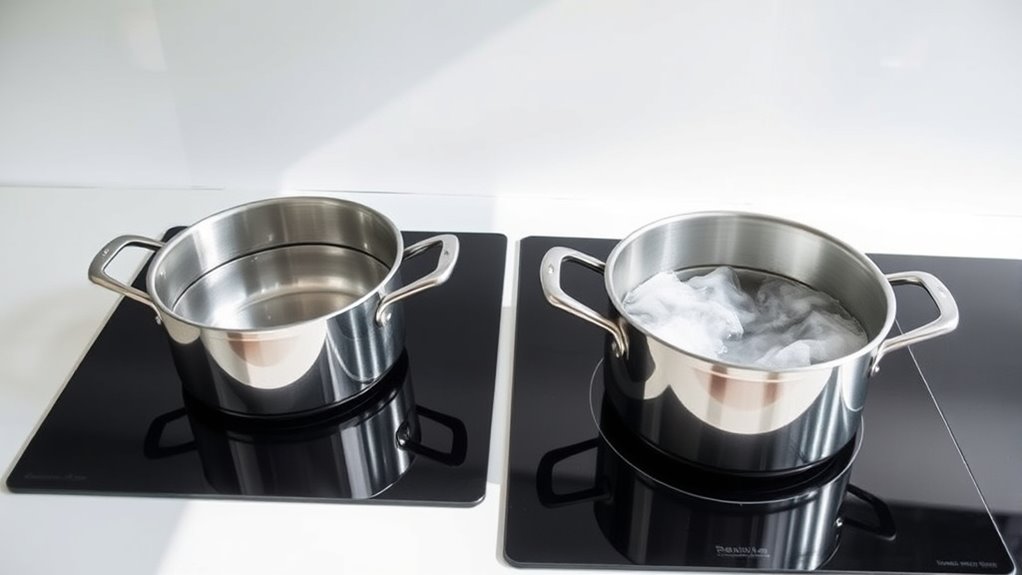
How quickly can you boil water? If speed matters, induction usually wins. It transfers heat directly into compatible cookware, so you’ll often see bubbles sooner than with a traditional electric cooktop. Electric models heat a burner first, then the pan, which creates a slower start and more residual warmth.
Your results depend on pan size, water volume, cookware quality, and the cooktop’s power rating. For the fairest comparison, use the same covered pot and amount of water.
For a fair test, use the same covered pot, water volume, and comparable cookware on both cooktops.
- Induction typically reaches boiling fastest.
- Electric burners may take longer to respond.
- A flat, induction-ready pan improves results.
- A lid helps either cooktop boil water sooner.
- Wipe spills after cooking to simplify maintenance requirements.
Although energy efficiency influences heat transfer, focus here on speed: induction’s immediate response gives you better control when you need rapid boiling. You’ll also notice less waiting between temperature changes.
Electric cooktops can still meet everyday needs, especially when you choose a high-power element and match the burner to your pan.
Which Cooktop Uses Less Energy?
When energy use matters, induction generally wastes less heat than a traditional electric cooktop. It transfers energy directly into your pan, so less heat escapes into the surrounding air or cooktop surface. You’ll typically get the same cooking results with lower power consumption, especially during tasks that require steady heating.
Traditional electric models heat a burner first, then pass that heat to your cookware. That extra step creates more energy loss and can leave residual heat after you lower or switch off the control.
Induction also responds quickly, helping you avoid wasting electricity during preheating and adjustments.
Your actual savings will depend on cooking habits, meal size, settings, and local electricity rates. Even so, induction usually offers better energy efficiency over time.
To reduce consumption further, match the heat level to the task, use lids when appropriate, and turn the cooktop off as soon as cooking ends. Its efficient operation can lower household energy demand without sacrificing everyday performance.
What Cookware Works With Each Cooktop?
Your induction cooktop needs magnetic cookware, such as cast iron or magnetic stainless steel.
An electric cooktop works with nearly any heat-safe pan, including aluminum, copper, and glass. Whichever cooktop you use, choose pans with flat, smooth bottoms for more even heating.
Induction-Compatible Materials
Induction cooktops require magnetic cookware, such as cast iron or magnetic stainless steel, while conventional electric cooktops work with nearly any flat-bottomed pan. For induction, check magnetic compatibility before you buy or use a pan.
Ferromagnetic materials attract a magnet and let the cooktop transfer energy efficiently. Hold a refrigerator magnet against the base; if it sticks firmly, the pan should work.
- Cast iron heats effectively but can scratch glass, so lift it carefully.
- Enameled cast iron works when its base contains magnetic metal.
- Magnetic stainless steel performs well, though not every stainless pan qualifies.
- Copper, aluminum, and glass usually won’t activate induction without a magnetic layer.
- A warped or rounded base may heat unevenly, even when magnetic.
Your electric cooktop offers broader material compatibility, but you’ll still get better results from cookware with a smooth, level base that sits securely on the heating surface.
Electric Cookware Options
Cookware choice depends on the heating method: induction requires pans with a magnetic base, while conventional electric cooktops work with most flat-bottomed materials, including aluminum, copper, glass, and stainless steel.
On a conventional electric surface, you can use your existing pots and pans, provided they’re stable and rated for stovetop cooking. Choose pieces that match the burner size to improve contact and reduce wasted energy.
For induction, check the manufacturer’s symbol or test the base with a magnet before buying. You can also consider Eco friendly cookware made from recycled metals, responsibly sourced materials, or durable cast iron, helping you replace items less often.
Although Alternative fuel sources may reduce reliance on electricity elsewhere, they don’t change cookware compatibility. Always follow each piece’s care instructions and temperature limits.
Best Pan Bottoms
Choosing the right pan bottom starts with the cooktop: induction needs a flat, magnetic base, while conventional electric burners work with most flat-bottomed pans. Your pan material matters: cast iron and magnetic stainless steel heat on induction, but aluminum, copper, and glass need a magnetic layer.
On electric burners, you can use nearly any heat-safe pan, though heavy materials may warm slowly. Check the Bottom design before buying. A smooth, level base improves contact, stability, and even heating on either surface.
- Induction: Choose cookware labeled induction-compatible.
- Electric: Use flat-bottomed pans sized to the burner.
- Warping: Replace pans that rock or wobble.
- Glass tops: Avoid rough surfaces that can scratch.
- Performance: Match pan diameter to the heating zone.
You’ll get better results when the pan sits completely flat and matches your cooktop’s requirements.
Which Cooktop Is Safer to Use?
When comparing safety, start by considering how much surface heat each cooktop creates. Induction cooktops keep the area around your pan cooler, while electric surfaces can remain hot even after you finish cooking.
It’s also a good idea to compare built-in safety features, such as automatic shutoff, child locks, and pan detection.
Surface Heat Risk
Induction cooktops are generally safer because the surface itself doesn’t heat as intensely: electromagnetic energy heats compatible cookware directly, while the glass around it stays relatively cooler. You’ll still find some Surface heat because hot pans transfer warmth to the glass.
Electric cooktops heat their elements first, so the surrounding surface can remain dangerously hot longer and create a greater Residual burn risk.
- You can touch an induction area sooner, but wait until it cools.
- You’ll face greater burn exposure near traditional electric coils or radiant zones.
- You should keep towels, packaging, and utensils away from either cooktop’s hot surface.
- You’ll reduce accidental contact by using rear cooking zones when children are nearby.
- You must treat both surfaces as hot after cooking, especially beneath recently used pans.
Induction lowers surface-related risk, but your habits still determine everyday safety. Always use caution when moving cookware or cleaning either model.
Built-In Safety Features
Beyond surface temperature, built-in safety features also affect which cooktop is safer to use. Induction models typically offer stronger safeguards because they detect compatible cookware and won’t activate without a pan.
When you remove the pan, many units stop heating automatically, reducing accidental burns and wasted energy. You’ll also find control locks that support Child safety by preventing curious hands from changing settings.
Some induction cooktops include automatic shutoff timers, overheating protection, and an Emergency shutoff that stops operation when the system detects a problem.
Electric cooktops can provide timers, indicator lights, and control locks, but their heating elements remain hot after you switch them off. You’ll need to watch residual heat carefully.
If safety is your priority, induction generally gives you more automatic protection and faster response.
Which Cooktop Is Easier to Clean?
Which cooktop is easier to clean? You’ll usually find induction models simpler to maintain because their glass surfaces stay relatively cooler during cooking. Spills are less likely to bake onto the surface, so you can wipe them away after the cooktop cools.
Induction cooktops are generally easier to clean because their cooler surfaces help prevent spills from baking on.
Electric smoothtop models also clean easily, but their heating elements can leave stubborn, cooked-on marks.
For efficient cleaning maintenance, use a soft cloth, mild dish soap, and a manufacturer-approved glass cleaner. Avoid abrasive pads and harsh chemicals, which can scratch either surface.
Remove surface residue promptly, especially sugary spills, to prevent permanent damage.
- Wipe the surface after every use.
- Let the cooktop cool before cleaning.
- Use a scraper only when the manufacturer permits it.
- Keep cookware bottoms clean to prevent marks.
- Dry the surface to avoid streaks.
Induction generally gives you the easiest cleanup, while electric models remain manageable with consistent care.
Your daily routine matters more than the cooktop’s appearance. Quick attention prevents buildup and keeps the cooking area looking polished.
Both options reward gentle, regular cleaning.
Which Offers Better Temperature Control?
When you want precise heat control, induction cooktops respond faster than traditional electric models. Because they transfer heat directly to your cookware, they also maintain more consistent cooking temperatures. Electric cooktops can still perform well, but their heating elements usually take longer to adjust when you change the temperature.
Precise Heat Adjustments
Induction cooktops offer more precise heat adjustments because they change the cookware’s temperature almost instantly, while electric cooktops must heat or cool their elements before the pan responds.
When you lower induction power, your sauce stops boiling quickly, helping you avoid scorching. Electric burners can keep radiating heat after you reduce the setting, so you’ll need to move the pan or wait.
Induction also gives you finer control during delicate tasks, such as melting chocolate or simmering reductions. Consider these practical advantages:
- You adjust power with greater accuracy.
- You react quickly to sudden changes.
- You protect sensitive ingredients from overheating.
- You spend less time compensating manually.
- You gain confidence with demanding recipes.
Temperature stability depends on your cookware and technique, while heat distribution depends largely on the pan itself.
Still, induction gives you faster, more responsive adjustments whenever you need them.
Consistent Cooking Temperatures
Beyond quick adjustments, consistent cooking temperatures help you maintain steady results throughout a recipe.
Induction delivers strong temperature stability because it heats your pan directly, responds quickly, and minimizes lingering heat after you lower the setting.
You’ll notice fewer fluctuations when simmering sauces or melting chocolate.
Electric cooktops can still cook evenly, but their coils or radiant surfaces cycle on and off, which may create temperature swings.
Pan quality and heat distribution also matter, so use flat, compatible cookware for reliable results.
| Cooking task | Induction | Electric |
|---|---|---|
| Simmering | Very steady | Can fluctuate |
| Melting | Precise | Requires monitoring |
| Heat recovery | Fast | Slower |
If you value dependable control, induction gives you the clearer advantage.
Electric works well when you prioritize lower upfront costs and accept occasional adjustments.
You’ll get consistent results with either option by matching cookware size to the cooking zone and watching delicate foods closely.
What Do Installation and Costs Look Like?
Installation is usually straightforward for both induction and electric cooktops, but the total cost depends on your kitchen’s existing wiring, countertop opening, and the model you choose. Before purchasing, confirm the cooktop’s dimensions and electrical requirements.
A professional can check whether your circuit supports the appliance or whether you’ll need an upgrade.
Your installation costs may include the cooktop, labor, wiring, breakers, countertop modifications, and disposal of your old unit. Induction models often cost more upfront, while electric options generally offer a lower purchase price.
However, your long-term expenses can also reflect energy use and maintenance.
- Measure the opening carefully before ordering.
- Verify voltage, amperage, and circuit capacity.
- Ask for a complete installation quote.
- Budget for countertop or cabinet adjustments.
- Check the warranty and included components.
Electric cooktops often involve simpler setup complexity, especially when replacing a similar unit. Induction installation can remain equally simple when your existing electrical system meets requirements, but upgrades can increase the final bill.
Always follow local codes and manufacturer instructions.
Which Cooktop Fits Your Cooking Style?
Your cooking habits should guide the choice: induction suits you if you value rapid heating, precise temperature control, and easy cleanup, while electric may be better if you prefer a lower upfront cost, broader cookware compatibility, and familiar radiant-heat cooking.
If you often prepare meals on busy weeknights, induction’s Cooking speed can help you boil water and adjust temperatures faster. Its responsive controls also benefit delicate sauces, searing, and multitasking.
Choose electric if you cook with varied materials, including aluminum or glass, because radiant elements accept nearly any flat-bottomed pan. Electric cooktops also provide steady heat for simmering, though they respond more slowly when you change settings.
Consider Energy efficiency, too: induction transfers more heat directly to your cookware, potentially reducing wasted energy and kitchen heat. However, you’ll need compatible magnetic cookware.
Ultimately, select induction for performance and precision, or electric for affordability, flexibility, and familiar operation. Think about your typical recipes, cookware collection, budget, and counter space before deciding.
Frequently Asked Questions
How Long Do Induction and Electric Cooktops Typically Last?
You can typically expect an induction cooktop to last 10–15 years, while an electric radiant cooktop often lasts 10–13 years. Your actual lifespan depends on usage, cleaning, component quality, and maintenance.
In this Durability comparison, induction models may need fewer repairs because their surfaces stay cooler, though electronic controls can cost more to fix.
Consider Replacement costs when choosing, since replacing induction components or the entire unit may cost more than repairing electric elements.
Can Induction or Electric Cooktops Affect Kitchen Ventilation Requirements?
You’ll usually need less ventilation for induction or electric cooking than for gas, but neither eliminates it. Think of a kitchen as a small sailboat: when cooking releases steam, smoke, and odors, effective ventilation efficiency keeps the “wind” moving out.
Induction’s cooler surface may reduce scorching and excess heat, while electric coils can create more ambient warmth. You’ll still want a properly sized range hood, adequate kitchen airflow, and makeup air where codes require it.
Do Induction Cooktops Make Noticeable Noise During Operation?
Yes, you’ll usually hear some operational sounds when you use an induction cooktop, but they’re generally quiet. You may notice a soft hum, buzz, or faint clicking, especially at higher power settings or when cookware has an uneven base.
Cooling fans can also run during and after cooking. Noise levels vary with the pan and power level, so you might find certain pots noticeably louder than others, though most sounds remain unobtrusive.
Are Induction and Electric Cooktops Compatible With Solar Power Systems?
Yes, you can power both induction and electric cooktops with solar power systems, provided your inverter, battery, and wiring support their high wattage.
For reliable solar compatibility, check each appliance’s power rating and your system’s peak output. Induction models generally offer greater energy efficiency because they heat cookware directly, while electric cooktops draw power through heated elements.
You’ll need adequate battery storage or grid backup for cloudy periods and heavy cooking loads.
What Maintenance or Repairs Do These Cooktops Commonly Require?
When your cooktop suddenly fails, the cause may be simpler than you expect. You’ll commonly need to clean spills, inspect burners or induction coils, and replace worn knobs, heating elements, or touch controls.
Follow a regular Cleaning schedule to prevent buildup and overheating. You should also use Power surge protection because electrical spikes can damage control boards.
Induction models may require sensor or glass repairs, while electric units often need element or terminal replacement.
Conclusion
Ultimately, choosing between an induction cooktop and an electric cooktop comes down to how you cook—and how much you enjoy negotiating with dinner.
Induction boils faster, saves energy, cleans easily, and responds almost instantly, provided your cookware cooperates. Electric models cost less upfront and welcome nearly any pan, though they heat and cool with the enthusiasm of a sleepy tortoise.
Choose induction if precision matters; choose electric if simplicity wins. Either way, your kitchen won’t judge, but your overcooked pasta might.