5 Essential Kitchen Safety Tips You Need
If you’ve ever felt overwhelmed or worried about accidents in the kitchen, you’re not alone. Many people struggle with keeping their cooking space safe while trying to whip up delicious meals. That’s why knowing the 5 essential kitchen safety tips you need can make all the difference in protecting yourself and your loved ones.
To stay safe in the kitchen, keep your knives sharp and handle them carefully, always cutting away from your body.
Prevent fires by storing flammable items well away from heat sources and keeping a fire extinguisher handy.
Use appliances properly, avoid tangled cords, inspect regularly, and unplug when not in use.
Clean surfaces often to stop germs and cross-contamination.
Finally, store food correctly to avoid spoilage and illness.
Follow these basics, and you’ll uncover even more ways to protect yourself while cooking.
Key Takeaways
- Always handle sharp knives carefully by keeping them sharp and using proper cutting techniques. This helps you avoid injuries in the kitchen.
- Store flammable items away from heat sources and keep a fire extinguisher accessible. These steps can prevent kitchen fires before they start.
- Use kitchen appliances safely by managing cords, inspecting for damage, and unplugging them when not in use. It’s a simple way to stay safe.
- Maintain clean surfaces by regularly wiping down countertops, cutting boards, and utensils. Be especially sure to do this after handling raw meat.
- Store food properly by refrigerating perishables promptly and using airtight containers. Also, separate raw meats from ready-to-eat foods to keep everything safe.
Handle Sharp Knives Safely to Protect Yourself in the Kitchen
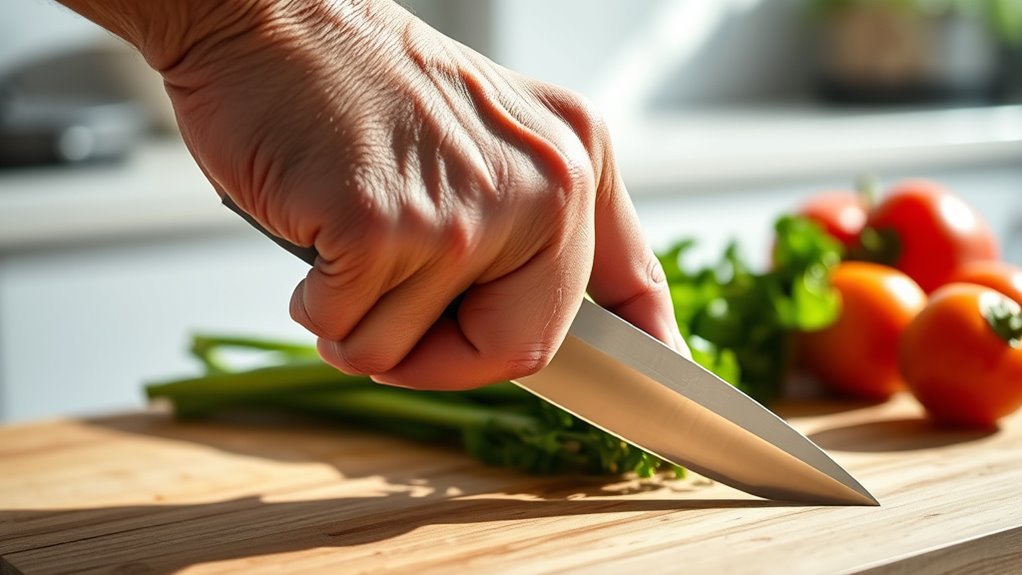
When you handle sharp knives in the kitchen, you need to stay focused and use proper techniques to avoid injuries. Always keep your knife sharp; dull blades require more force and increase the chance of slipping.
Hold the knife firmly with your dominant hand and curl your fingers of the other hand inward to protect your fingertips while guiding the food. Use a stable cutting board to prevent slips during knife handling, and never try to catch a falling knife.
Grip the knife securely, protect fingertips by curling fingers, use a steady board, and never catch falling knives.
Cut away from your body and avoid distractions while working. Clean knives carefully by hand, never leaving them submerged in soapy water where you can’t see the blade.
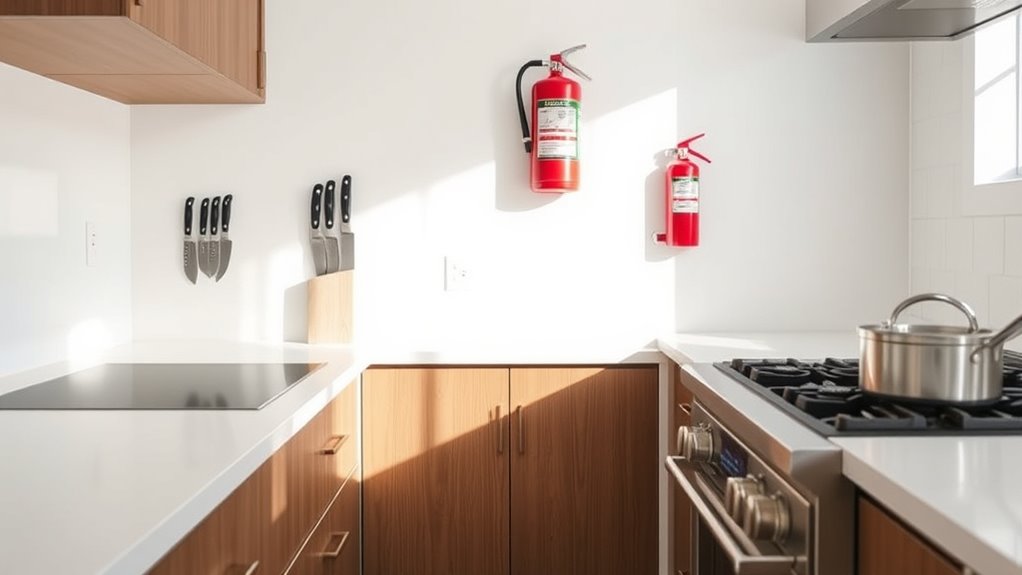
Store knives securely, either in a knife block or on a magnetic strip, to prevent accidental cuts. By following these safety techniques consistently, you’ll reduce the risk of accidents and keep your kitchen a safe place for everyone.
Prevent Kitchen Fires by Keeping Flammable Items Away
Sharp knives demand your full attention in the kitchen, but so does preventing fires. Keeping flammable items away from heat sources is essential to avoid dangerous kitchen fires. You should always store items like paper towels, dishcloths, and wooden utensils well away from your stove or oven.
Using fire resistant materials in your kitchen, such as silicone mats or flame-retardant curtains, adds an important layer of protection.
To stay safe, follow these tips:
- Keep flammable items at least three feet away from burners and open flames
- Use containers made of fire resistant materials for storage near cooking areas
- Place emergency fire extinguishers in easily accessible spots for quick response
Use Kitchen Appliances Safely to Avoid Electrical Hazards
Although kitchen appliances make cooking easier, they can pose serious electrical hazards if not used properly. You need to handle them with care to avoid shocks or fires.
First, practice good electrical cord management: keep cords untangled, away from water, and never run them under rugs or across high-traffic areas. Always inspect cords for frays or damage before plugging in appliances. If you spot any wear, replace or repair the cord immediately.
Regular appliance maintenance is essential. Clean appliances according to the manufacturer’s instructions and check for any loose parts or faulty wiring. Unplug appliances when not in use to prevent overheating or electrical faults.
Avoid overloading outlets by plugging in too many devices at once. By staying vigilant with electrical cord management and appliance maintenance, you’ll keep your kitchen safer and reduce the risk of electrical hazards.
Keep Surfaces Clean to Stop Germs and Cross-Contamination
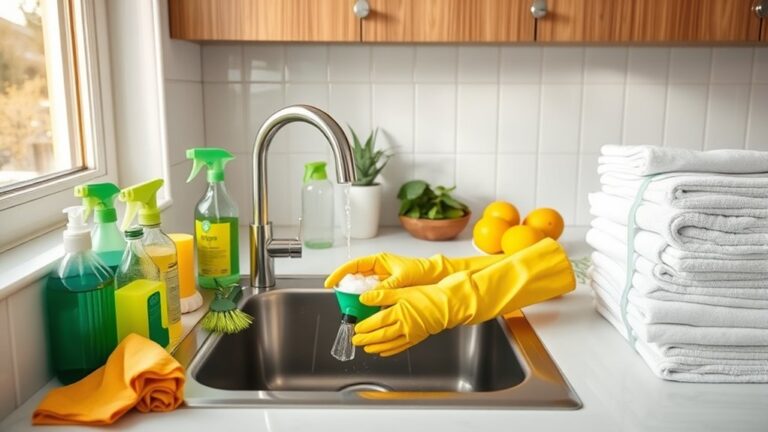
Because germs can spread quickly in the kitchen, you need to keep surfaces clean to stop cross-contamination. Following strict sanitization protocols ensures harmful bacteria don’t transfer from raw foods to ready-to-eat items.
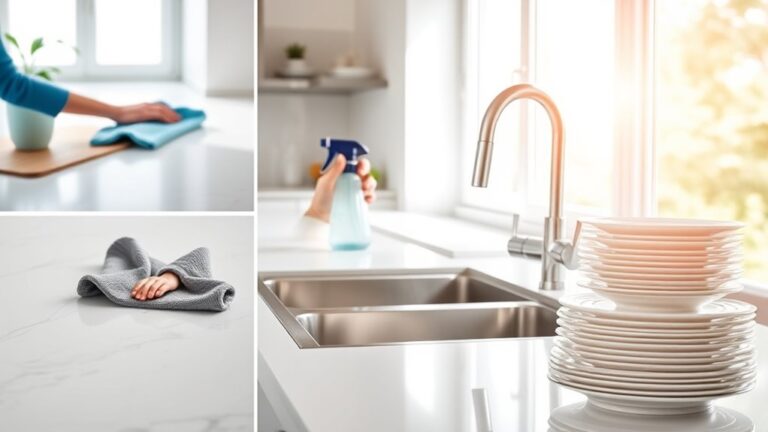
You should wipe down countertops, cutting boards, and utensils regularly, especially after handling raw meat, poultry, or seafood. Proper disinfectant use is essential. Choose products labeled safe for food preparation areas and follow instructions carefully to avoid residue.
To maintain a hygienic kitchen, focus on cleaning surfaces immediately after food prep with hot, soapy water. Use separate cutting boards for raw and cooked foods. Also, apply disinfectants correctly and allow adequate contact time.
Store Food Properly to Prevent Spoilage and Illness
When you store food properly, you slow down spoilage and reduce the risk of illness. Proper food storage is essential for spoilage prevention and keeping your kitchen safe. Start by refrigerating perishable items promptly and keeping your fridge at or below 40°F (4°C).
Use airtight containers to protect food from bacteria and moisture. Label leftovers with dates so you know when to use or discard them. Avoid overcrowding the fridge to allow proper air circulation, which helps maintain consistent temperatures.
For dry goods, store them in cool, dry places away from direct sunlight to prevent mold and pests. Separate raw meats from ready-to-eat foods to avoid cross-contamination.
Follow expiration dates and trust your senses. If something looks, smells, or feels off, discard it. By practicing smart food storage, you not only extend the shelf life of your groceries but also keep your family safe from foodborne illnesses.
Frequently Asked Questions
How Can I Childproof My Kitchen Effectively?
You can childproof your kitchen effectively by installing childproof locks on cabinets and drawers to keep sharp objects and cleaning supplies out of reach.
Place safety gates at kitchen entrances to prevent your child from wandering in unsupervised. Also, secure heavy appliances and keep hot items away from edges.
These steps help create a safer environment, giving you peace of mind while your little one investigates safely.
What Is the Best Way to Handle Hot Oil Spills?
When hot oil spills, don’t let chaos reign like a wildfire. For oil spill cleanup, never use water because it makes things worse. Instead, carefully sprinkle baking soda or salt to absorb the oil, then sweep it up.
Wipe the area with paper towels and a degreaser to prevent slips. Always prioritize hot oil safety by turning off the heat and keeping kids away until the mess is fully cleaned and cool.
How Often Should I Replace Kitchen Sponges and Cloths?
You should replace kitchen sponges and cloths at least once a week to maintain proper kitchen hygiene. If you use them heavily or notice unpleasant odors, replace them even sooner.
Incorporate this into your cleaning schedules to avoid bacteria buildup and cross-contamination. Regularly sanitizing sponges and washing cloths in hot water helps, but don’t rely on that alone. Fresh replacements keep your kitchen safer and cleaner.
Are There Safety Tips for Using Kitchen Knives With Arthritis?
Yes, you can safely use kitchen knives with arthritis by choosing knives with ergonomic handles that reduce strain on your hands. These handles help you maintain a better grip and minimize discomfort.
You should also wear safety gloves to protect your hands from accidental cuts and provide extra support. Taking breaks and using a cutting board with a non-slip surface will make your chopping safer and more comfortable.
What Should I Do if I Accidentally Ingest Cleaning Chemicals?
If you accidentally ingest cleaning chemicals, act fast. Don’t induce vomiting or drink anything unless a poison control expert tells you to.
Call emergency services or your local poison control center immediately for emergency response instructions. Keep the chemical container handy to provide details.
Follow their guidance carefully to minimize harm. Quick, calm action is vital in chemical ingestion cases to protect your health and get the right treatment promptly.
Conclusion
You might think the kitchen is just a place to cook, but it’s also a space where safety matters most. While sharp knives can harm, handling them carefully protects you.
Though fires can start quickly, keeping flammables away prevents disaster. Appliances can be risky, yet using them right keeps you safe. Clean surfaces stop germs, and proper food storage prevents illness.
Balancing caution with cooking lets you enjoy meals without worry. Remember, following these essential kitchen safety tips is key to a safe and happy cooking experience.