What Is a Kitchen Mandoline and How Do You Use It Safely?
Struggling to get perfectly even slices of fruits and vegetables without spending forever in the kitchen? You’re not alone—many people find it tricky to achieve consistent results while keeping their fingers safe. That’s where a kitchen mandoline comes in, making slicing faster, easier, and more precise.
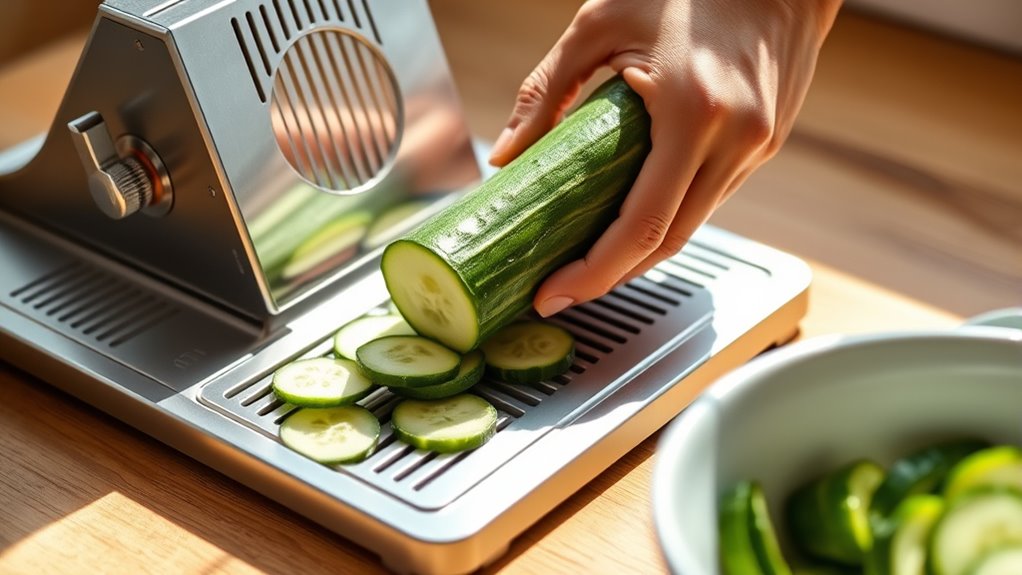
A kitchen mandoline is a tool that helps you slice fruits and vegetables quickly and evenly, giving you professional results. You slide your food along its adjustable blade to control slice thickness, but always use the safety guard to protect your fingers.
Prep your produce by washing, peeling, and drying it first for smooth slicing. Keep your hands steady and away from the blade edges. Stick with these tips, and you’ll slice safely and efficiently.
There’s more to investigate about using and caring for your mandoline.
Key Takeaways
- A kitchen mandoline is a tool designed for quick, even slicing of fruits and vegetables with adjustable blade thickness. It makes prepping food faster and more uniform.
- It features a flat platform and a sharp blade, allowing food to slide for uniform slices, julienne, or decorative cuts. You get consistent results every time.
- Always use the safety guard or food holder to secure produce and protect your fingers from the sharp blade during slicing. This keeps things safe and easy.
- Prepare food by washing, peeling, drying, and trimming to ensure safe, stable slicing and reduce slipping risks. A little prep goes a long way in preventing accidents.
- Clean mandoline parts carefully after use, avoid direct blade contact, and maintain blades for safe, effective performance. Taking care of it means it’ll work well for a long time.
What Is a Kitchen Mandoline and Why Use It
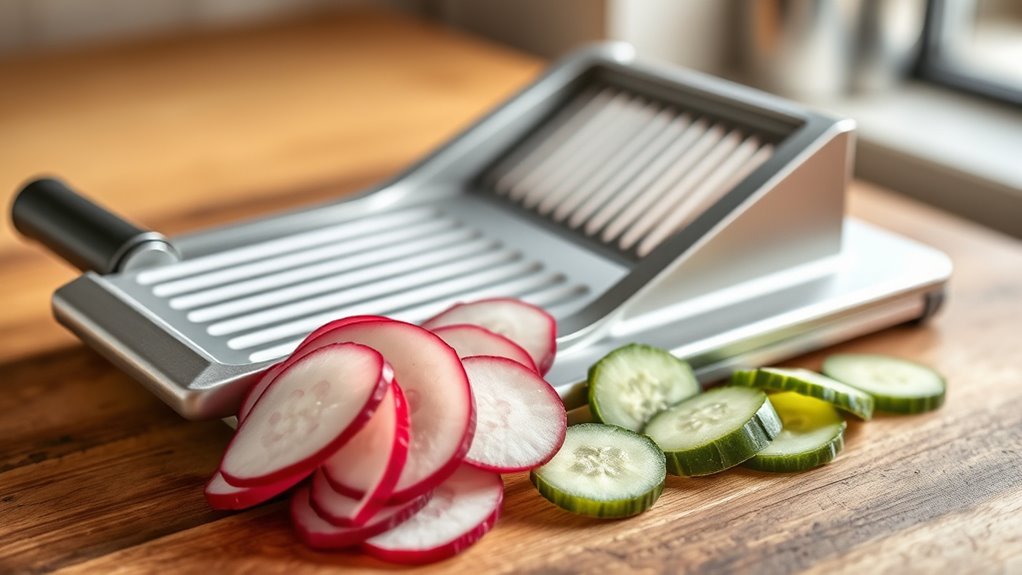
Although it might look intimidating at first, a kitchen mandoline is a simple tool that helps you slice fruits and vegetables quickly and evenly. You’ll find it a valuable addition to your kitchen design, especially if you enjoy preparing meals that require precise cuts. This tool has roots in culinary history dating back centuries, evolving to meet cooks’ needs for uniform slices without the hassle of a knife.
Using a mandoline lets you save time and achieve professional-looking results, whether you’re making salads, gratins, or garnishes. Its sleek, compact design fits well in modern kitchens, combining functionality with style. By incorporating a mandoline into your routine, you’ll improve both efficiency and presentation in your cooking.
Embracing this tool connects you to a long tradition of culinary craftsmanship, making your kitchen tasks easier and more enjoyable.
How Does a Kitchen Mandoline Work
Once you’ve decided to add a kitchen mandoline to your cooking tools, understanding how it works will help you get the best results. Rooted in a rich historical context, the mandoline represents a key culinary innovation that lets you slice vegetables and fruits uniformly with speed and precision.
Adding a kitchen mandoline brings precision and speed to slicing fruits and vegetables with consistent results.
You’ll use a flat surface with an adjustable blade that controls thickness, allowing you to create everything from paper-thin slices to thicker cuts.
Here’s how it functions:
- You slide food along the platform against the sharp blade.
- The adjustable blade height determines slice thickness.
- A hand guard or holder secures your food, protecting fingers.
- The sharp blade quickly slices with consistent results.
This simple mechanism, perfected over centuries, is why chefs rely on mandolines for uniformity and efficiency in food preparation. Understanding this helps you use it confidently and creatively in your kitchen.
Features to Look for in a Kitchen Mandoline
When choosing a kitchen mandoline, you’ll want to focus on features that improve safety, versatility, and ease of use. Look for a sturdy, non-slip base to keep the mandoline stable during slicing. A reliable hand guard or food holder is essential to protect your fingers while you master various cooking techniques.
Adjustable blades let you switch between thicknesses and slice styles, giving you more control and flexibility in your kitchen tools. Also, consider mandolines with easy-to-clean components to save time after prepping.
Some models offer multiple blade types, such as julienne or waffle cuts, allowing you to experiment with different textures and presentations. Compact storage and durable materials will ensure your mandoline lasts through countless meals. Prioritize these features to *optimize* your slicing precision and keep safety front and center while you expand your culinary skills.
Comparing Popular Kitchen Mandoline Types
You’ll find two popular types of kitchen mandolines: straight blade and V-blade. Each one offers different slicing styles and safety features. So, let’s take a look at how they work and figure out which might suit your needs best.
Straight Blade Mandolines
Although straight blade mandolines might seem simple, they offer impressive versatility for your kitchen tasks. With a straight blade, you can easily create consistent cuts that improve both presentation and cooking. Whether you’re aiming for thin slices or more intricate cuts, this tool handles it well.
Use it for:
- Vegetable julienne, perfect for salads or stir-fries
- Fruit carving to add decorative touches to desserts
- Slicing firm vegetables like potatoes and cucumbers evenly
- Preparing uniform cuts that cook evenly and look professional
You’ll appreciate how straightforward the straight blade mandoline is, especially when precision matters. Just remember to always use the hand guard to keep fingers safe while you slice. This type gives you great control, making it a reliable choice for everyday kitchen prep.
V-Blade Mandolines
Since V-blade mandolines cut with angled blades, they excel at creating crinkle or waffle cuts that add texture and visual interest to your dishes. These kitchen accessories are perfect when you want to elevate simple vegetables like potatoes or cucumbers with playful shapes.
Unlike straight blade mandolines, V-blade models use a unique slicing motion that enhances your cooking techniques, making it easier to achieve consistent, decorative cuts. When using a V-blade mandoline, always secure the food with the hand guard to avoid accidents.
This tool not only saves time but also helps you present dishes professionally. Incorporating a V-blade mandoline into your kitchen arsenal allows you to experiment creatively while maintaining safety and precision in your preparations.
How to Prepare Food for Mandoline Slicing
Before you start slicing, pick firm produce that holds up well on the mandoline. It’s important to wash and peel your fruits or vegetables thoroughly to get the best results. Doing this will help you achieve even, consistent slices every time.
Selecting Suitable Produce
How do you choose the best produce for your mandoline? Picking the right ingredients is key to mastering cooking techniques and maximizing your kitchen accessories’ potential. You want firm, fresh items that hold shape and slice evenly.
Consider these tips:
Choose vegetables and fruits that are firm and uniform in size. Avoid overly soft or irregularly shaped produce, which can slip or crush. Opt for items with flat surfaces for stable slicing. Select produce that matches your recipe’s texture needs.
Cleaning and Peeling Steps
Why does proper cleaning and peeling matter when preparing food for your mandoline? Clean, peeled produce ensures smooth, safe slicing and prevents contamination.
Start by washing fruits or vegetables under cold running water to remove dirt and pesticides. Use a vegetable brush for firmer items. Next, peel the skin using a quality peeler, an essential kitchen accessory for precise preparation.
Removing tough or waxy skins helps the mandoline blade glide effortlessly, improving your cooking techniques and preventing slips. Avoid peeling too much to retain nutrients.
After peeling, pat the produce dry with a clean cloth or paper towel to reduce slipping. Following these cleaning and peeling steps sets the foundation for efficient, safe mandoline use, letting you focus on crafting perfect slices with confidence.
Ensuring Even Slices
Once your produce is clean and peeled, the next step is to prepare it so your mandoline can create even slices every time. Proper preparation honors both kitchen design principles and culinary history, ensuring efficiency and consistent results.
To get the best slices, remember to trim uneven ends to create a flat surface for stability. Cut large vegetables into manageable sections. Remove pits or seeds that could disrupt slicing. And always use the mandoline’s safety guard to hold food firmly.
How to Use a Kitchen Mandoline Safely
Although a kitchen mandoline can quickly create uniform slices, you need to handle it with care to avoid injuries. Always start by placing the mandoline on a stable, flat surface to prevent slipping. Hold your food firmly and slice slowly, maintaining control.
Even if you have strong knife skills, keep in mind that the mandoline’s blade is extremely sharp and unforgiving. Before you begin, adjust the thickness setting to match your recipe variations, ensuring consistent results every time.
Keep your fingers clear of the blade’s path and never rush the process. If your recipe calls for different slice thicknesses, change the settings carefully, making sure the mandoline is secure.
Using the Mandoline Safety Guard Properly
Since the mandoline’s blade is razor-sharp, you should always use the safety guard to protect your fingers while slicing. This essential kitchen accessory is designed to hold your food securely, letting you focus on precise, safe cuts without risking injury. Proper use of the safety guard improves your cooking techniques by ensuring consistent slices and reducing distraction from potential hazards.
To use the mandoline safety guard properly, keep these points in mind:
- Always attach the guard firmly before starting to slice.
- Hold the food with the guard’s prongs or clamp for stability.
- Slide the food smoothly along the blade, avoiding sudden movements.
- Replace the guard when slicing smaller pieces to maintain control.
Kitchen Mandoline Safety Tips to Avoid Injuries
To avoid injuries when using your kitchen mandoline, always keep your fingers clear and make sure your hand placement is just right. And seriously, don’t skip the safety guard—it’s there for a reason, to protect you from those sharp blades. If you stick to these tips, you’ll be slicing safely and smoothly every time.
Proper Hand Placement
When you use a kitchen mandoline, keeping your hands in the right position is essential to avoid serious cuts. Proper hand placement is a key part of kitchen safety and improves your cutting techniques. Always keep your fingers curled and away from the blade to minimize risk.
Use the flat part of your hand to steady the food without pressing too hard. Avoid reaching under or near the blade while slicing, as even a slight slip can cause injury. Remember these tips for safe hand placement:
- Hold the food firmly with the fingertips tucked under
- Keep your palm flat on the food to guide it steadily
- Position your hands on the sides, not above the blade
- Never slide your hand directly on the mandoline surface
Following these will help you slice safely and efficiently.
Using Safety Guards
Although mandolines offer precise slicing, they can be dangerous without proper safety guards. To protect your fingers, always use the hand guard or food holder that comes with your mandoline. This guarantees your food stays secure while keeping your hands safely away from the sharp blade.
Incorporating safety guards aligns with good kitchen ergonomics, minimizing strain and reducing the risk of slips or cuts. When practicing cooking techniques involving a mandoline, never bypass these guards, even for quick tasks.
They provide stability and control, helping you slice evenly and efficiently. By consistently using safety guards, you not only prevent injuries but also improve your slicing precision, making your food prep faster and safer every time.
How to Clean and Maintain Your Kitchen Mandoline
Since your kitchen mandoline comes into contact with various foods and juices, you’ll want to clean it thoroughly after each use to prevent buildup and maintain its sharpness. Proper cleaning not only extends the life of this essential kitchen accessory but also guarantees consistent results in your cooking techniques.
To clean and maintain your mandoline effectively, disassemble carefully to avoid cutting yourself on the blades. Rinse immediately under warm water to remove food particles. Use a small brush or sponge to clean hard-to-reach areas without dulling the blades. Dry all parts completely to prevent rusting and preserve blade sharpness.
Regular maintenance includes checking the blade alignment and sharpening if necessary. Taking these steps ensures your mandoline stays safe and efficient, making it a reliable tool among your kitchen accessories for precise, professional-quality slicing every time.
How to Store Your Kitchen Mandoline Safely
Because your kitchen mandoline features sharp blades, storing it properly is essential to prevent accidents and maintain its condition. Always use the protective guard or blade cover when you’re done using it. This helps keep the blades safe and reduces the risk of injury during handling.
Store your mandoline in a designated drawer or container dedicated to sharp tools to promote both cooking safety and kitchen organization. Avoid tossing it loosely in a cluttered drawer where it might get damaged or cause harm.
If your mandoline comes apart, keep all pieces together in a labeled box or pouch to avoid losing parts. Make sure it’s completely dry before storing to prevent rust and maintain its sharpness.
Frequently Asked Questions
Can a Mandoline Be Used for Fruits as Well as Vegetables?
Yes, you can definitely use a mandoline for fruit slicing as well as vegetable preparation. It’s perfect for creating uniform, thin slices of apples, pears, or cucumbers quickly and efficiently.
Just make sure you use the hand guard or a protective glove to keep your fingers safe while slicing. By doing this, you’ll enjoy precise cuts and save time in the kitchen, whether you’re prepping fruit or veggies for salads, snacks, or garnishes.
What Are the Best Recipes to Try With Mandoline Slices?
Think of your mandoline slices as delicate leaves in a culinary garden. The best recipes to try include crispy potato chips, layered vegetable gratins, and fresh cucumber salads.
Using thin slicing techniques guarantees even cooking and improves presentation, while texture preservation tips like slicing just before cooking keep ingredients vibrant and crisp. You’ll transform simple dishes into stunning plates that celebrate both flavor and form with every slice you make.
Are Mandolines Suitable for Commercial Kitchen Use?
Yes, mandolines are suitable for commercial kitchen use, but you’ve got to prioritize safety precautions like always using the hand guard and wearing cut-resistant gloves.
Regular maintenance tips include keeping blades sharp and cleaning thoroughly after each use to prevent buildup and guarantee smooth operation. By following these steps, you’ll keep your mandoline efficient and safe, making quick, uniform slicing easier during busy service times in a commercial kitchen.
Can Mandolines Replace Food Processors in Meal Prep?
You might think a mandoline can fully replace a food processor, but it’s not that simple. While mandoline versatility lets you slice and julienne with precision, it doesn’t handle tasks like pureeing or mixing. If you rely solely on a mandoline, you’ll miss out on those functions.
Plus, never forget safety precautions. Mandolines demand careful handling to avoid cuts. So, use both tools for efficient meal prep, not one instead of the other.
What Materials Are Kitchen Mandolines Commonly Made From?
Kitchen mandolines are commonly made from stainless steel, plastic, or a combination of both. You’ll want to take into account material durability. Stainless steel is sturdy and resists rust, while plastic is lighter but may wear faster.
For cleaning considerations, plastic models are often dishwasher-safe, but stainless steel blades need careful hand washing to maintain sharpness. Choosing the right material helps ensure your mandoline lasts and stays safe to use.
Conclusion
Using a kitchen mandoline is like wielding a precision blade that turns your slicing into art. With its sharp edges and swift action, it’s your trusty partner in the kitchen if you handle it with care.
Keep your fingers safe by using the guard and staying focused, like a dancer moving with grace. Treat your mandoline well, and it’ll reward you with perfect slices, making meal prep a breeze and your dishes shine bright.
When you use a kitchen mandoline safely, it becomes an essential tool that elevates your cooking experience every time.