3 Essential General Electric Dishwasher Parts to Replace
If your GE dishwasher is humming, leaving dishes dirty, or leaking onto the floor, you’re not alone. Many people struggle to identify which replacement part will actually fix the problem, so this guide highlights three essential GE dishwasher parts to replace.
Three essential GE dishwasher parts to replace are the pump, spray arm, and door gasket. Replace the pump when you hear humming without water movement, notice poor drainage, leaks, or dirty dishes.
Install a new spray arm if cleaning and unclogging its jets doesn’t restore free spinning or proper coverage.
Replace a brittle, cracked, or flattened gasket to stop door leaks.
Always match parts to your model number, disconnect power before repairs, and run a short test cycle.
The steps below will help you replace each part safely.
Key Takeaways
- Replace the circulation pump when dishes remain dirty, draining is slow, or the dishwasher makes unusual noises.
- Replace a cracked, warped, or clogged spray arm that fails to spin freely or distribute water evenly.
- Replace the door gasket when it becomes brittle, flattened, cracked, or causes leaks around the door.
- Match every replacement part to your specific GE dishwasher model number for proper fit and operation.
- Disconnect power before repairs, follow service instructions, and run a short cycle to verify performance afterward.
Replace the GE Dishwasher Pump When It Fails
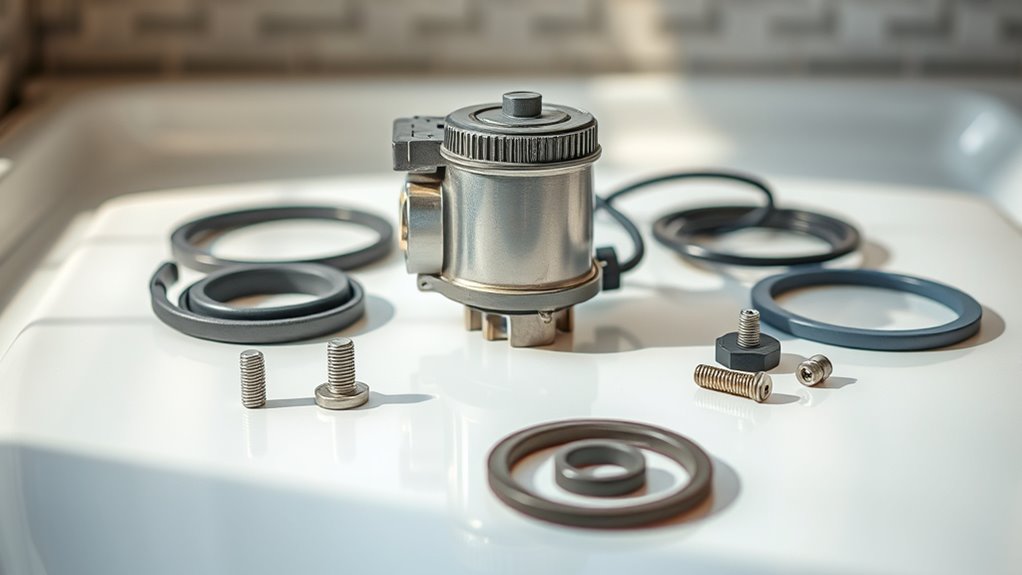
When your GE dishwasher’s pump fails, it may leave dishes dirty, drain slowly, or make unusual noises during a cycle. Because the pump controls water circulation, a damaged unit can prevent proper washing and create standing water after the cycle ends.
Before replacing it, disconnect power, shut off the water supply, and remove the lower access panel. Check the pump and motor assembly for cracks, leaks, clogs, or worn seals.
You can also inspect the drain hose for kinks, since an obstruction may mimic pump failure.
If the pump hums without moving water, leaks around its housing, or fails continuity testing, install a compatible replacement. Use your GE dishwasher’s model number to select the correct part.
Remove the old pump according to the service manual, transfer any required fittings, and secure the new unit firmly. Reconnect the wiring and hoses, then run a short cycle to confirm proper filling, draining, and quiet operation.
Replace the Spray Arm for Better Cleaning
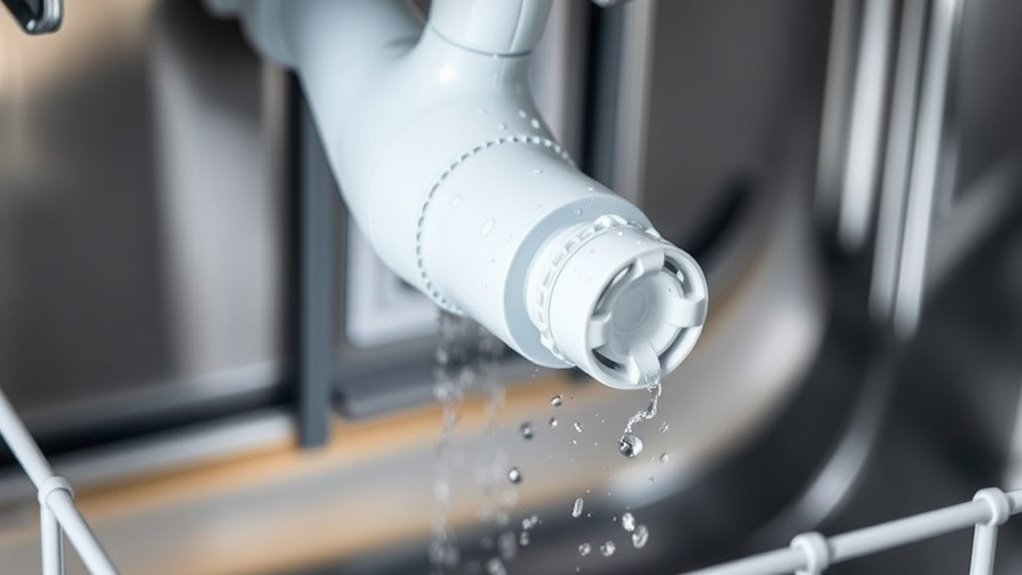
A damaged or clogged GE dishwasher spray arm can leave dishes dirty by preventing water from reaching every rack. Start spray arm troubleshooting by checking whether the arm spins freely. Remove the lower rack, lift or unscrew the arm according to your model, and rinse it under warm water.
A clogged or damaged GE dishwasher spray arm can block water coverage, leaving dishes dirty despite a complete wash cycle.
Clear blocked jets with a soft brush or wooden toothpick; don’t enlarge the openings.
Replace the arm if it’s cracked, warped, or still fails to rotate after cleaning. Before installing the new part, inspect its hub and filter area for food debris that could cause water circulation issues.
Seat the arm securely, then turn it by hand to confirm clearance.
- Match the replacement to your GE model number.
- Clean the mounting area before installation.
- Avoid overloading racks near the spray path.
- Run a short cycle to test coverage.
If dishes remain dirty, check the filter and pump for additional circulation problems. Proper spray-arm maintenance helps detergent and heated water reach stubborn residue consistently.
Replace the Door Gasket to Stop Leaks
Replace the GE dishwasher door gasket if water leaks from the door or the seal feels brittle, cracked, or flattened. A damaged door seal can let water reach your floor, cabinets, and nearby electrical components. Replacing it supports leak prevention and helps your dishwasher run efficiently.
Before you begin, disconnect power and open the dishwasher door fully. Remove the lower rack, then pull the old gasket from its channel.
Clean the groove with warm, soapy water and dry it completely. Press the new gasket into place, starting at the top center and working evenly toward both sides.
Don’t stretch the gasket, or it may shrink and leave gaps. Close the door slowly and check that the seal sits flat without folds.
Restore power, run a short cycle, and inspect the door edges for moisture. If leaking continues, check the door alignment, latch, and hinges for damage.
Replace worn parts promptly to protect your kitchen and prevent costly repairs.
Frequently Asked Questions
How Often Should a GE Dishwasher’s Water Inlet Valve Be Replaced?
You don’t need to replace a GE dishwasher’s inlet valve on a fixed schedule. Replace it when symptoms appear, such as slow filling, no water entering, leaks, or unusual humming.
Check your home’s water pressure and clean the inlet screen first, since debris or low pressure can cause similar problems.
If testing confirms valve failure, install a compatible replacement promptly. With normal use, the inlet valve often lasts several years before requiring service or replacement.
What Symptoms Indicate a Faulty GE Dishwasher Heating Element?
If dishes stay cold, wet, or greasy after a cycle, your GE dishwasher’s heating element may be faulty. Notably, many dishwashers use heat during both washing and drying, so one failed component can affect two stages.
During dishwasher troubleshooting, look for visible cracks, blistering, or burn marks, and check whether the unit completes cycles normally. Don’t touch the element while powered.
Schedule heating element replacement if it remains damaged or fails continuity testing.
How Can I Replace a GE Dishwasher’s Rack Wheels?
To replace your GE dishwasher’s rack wheels, pull out the rack and release its stops or clips. Slide the rack free, then pry off damaged wheels with a flat screwdriver.
Install matching replacement wheels by pressing them onto the axle until they click securely. Reinsert the rack and test its movement.
For effective dishwasher rack maintenance, keep wheel tracks clean. Gather wheel replacement tools, including pliers, a screwdriver, and replacement wheels.
Which Control Board Problems Require Professional GE Dishwasher Repair?
You’ll need professional GE dishwasher repair when the control board shows burn marks, melted wiring, repeated error codes, or fails to power cycles, pumps, valves, or heating elements despite proper connections.
Intermittent operation, a nonresponsive keypad, or corrupted programming also warrants expert testing. A technician can perform control board diagnostics, verify surrounding components, and prevent unnecessary replacement.
Ask for a repair cost estimate before approving the board, especially when labor and parts approach replacement value.
How Do I Choose the Correct Replacement Filter for My GE Dishwasher?
Choose your GE dishwasher’s replacement filter by matching the exact model number, usually printed inside the door or on the tub wall. Check your owner’s manual or GE’s parts website for the correct filter assembly and compatible part number.
Don’t rely only on appearance, because filters vary by model. During filter maintenance, inspect the mesh and seals. Follow the manual’s replacement procedures, ensuring the filter locks securely before running a cycle.
Conclusion
Replacing key GE dishwasher parts can restore performance, prevent damage, and extend your appliance’s life. If dirty dishes, leaks, or unusual noises persist, why wait for a small problem to become an expensive repair?
Swap out a failing pump, worn spray arm, or damaged door gasket as soon as you notice trouble. With the right GE dishwasher parts and careful installation, you’ll improve cleaning results, stop leaks, and keep your appliance working reliably.