Induction Vs Electric Range: 7 Key Differences
Choosing the right range can be frustrating, especially when you’re comparing speed, energy use, safety, and cost. You’re not alone—many home cooks struggle to decide between induction vs electric range options.
Induction ranges heat compatible cookware directly, so you’ll get faster boiling, more precise control, and 80–90% energy efficiency. Electric ranges heat elements first, making them slower but compatible with more cookware and often more affordable.
Induction surfaces stay cooler, shut off when you remove a pan, and clean easily, while electric coils or radiant tops retain heat longer.
Both require a 240-volt circuit, but your budget, cookware, kitchen setup, and cooking style determine the better choice.
Uncover the seven key differences below.
Key Takeaways
- Heating method: Induction heats compatible cookware directly, while electric ranges heat coils or radiant elements beneath the cookware.
- Speed and control: Induction boils water faster and responds more precisely to temperature adjustments than electric ranges.
- Energy efficiency: Induction transfers approximately 80–90% of energy to cookware, compared with roughly 70–80% for electric radiant elements.
- Safety and cleaning: Induction surfaces stay cooler and shut off when cookware is removed, making them safer and easier to clean.
- Cookware and cost: Induction requires magnetic cookware and usually costs more, while electric ranges accept most cookware and suit tighter budgets.
How Do Induction and Electric Ranges Heat?
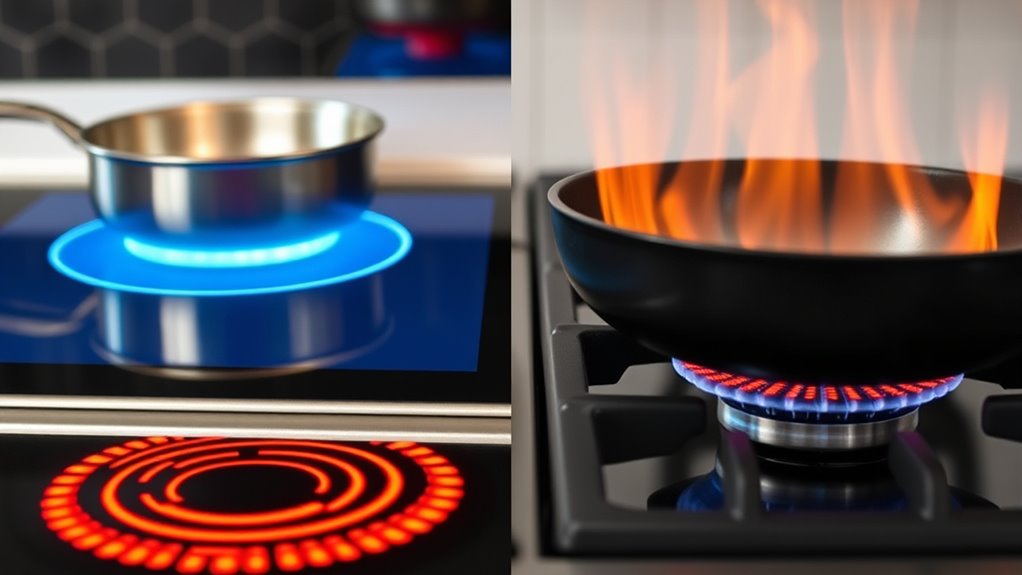
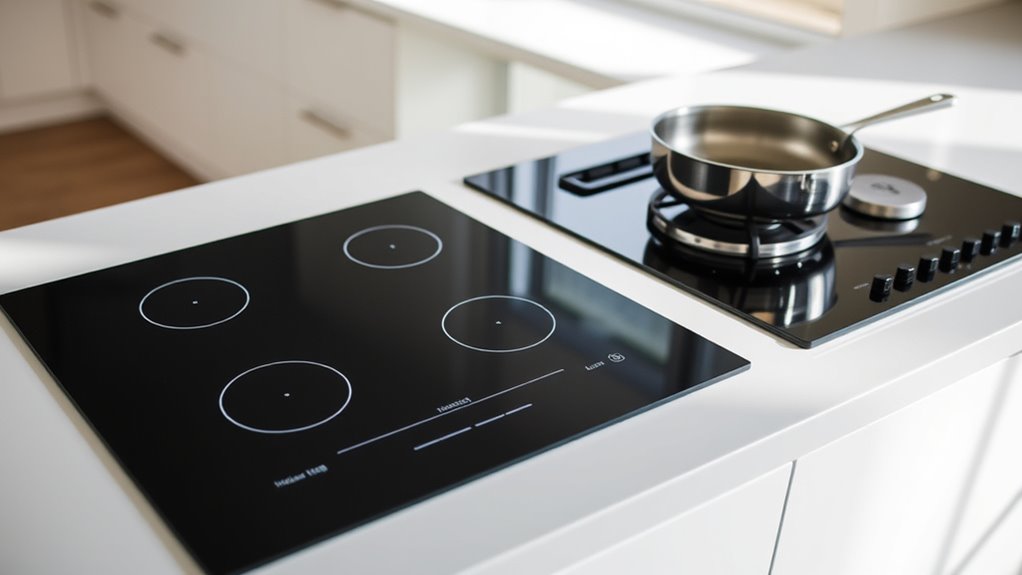
Induction ranges use electromagnetic energy to heat compatible cookware directly, while electric ranges pass electricity through heating elements that transfer heat to your pots and pans.
Induction heats compatible cookware directly, while electric ranges rely on heated elements to transfer warmth through contact.
When you place a magnetic pan on an induction zone, the range creates a magnetic field that makes the pan produce heat. The cooking surface mostly stays cooler because it doesn’t heat the pan through direct contact.
You’ll need to check material compatibility: cast iron and magnetic stainless steel work, but aluminum, copper, and glass require a magnetic base.
Electric ranges use metal coils or radiant elements beneath a smooth ceramic-glass surface. Electricity heats these elements, and they transfer heat to the cookware through contact.
The surface and pan may remain hot after you turn the control down, so handle them carefully.
With induction, temperature control typically feels more responsive because the pan reacts directly to power changes. With electric cooking, you’ll manage heat by adjusting the element and using residual warmth wisely.
Each system also distributes heat according to your cookware’s size, shape, and base quality.
Which Range Cooks Food Faster?
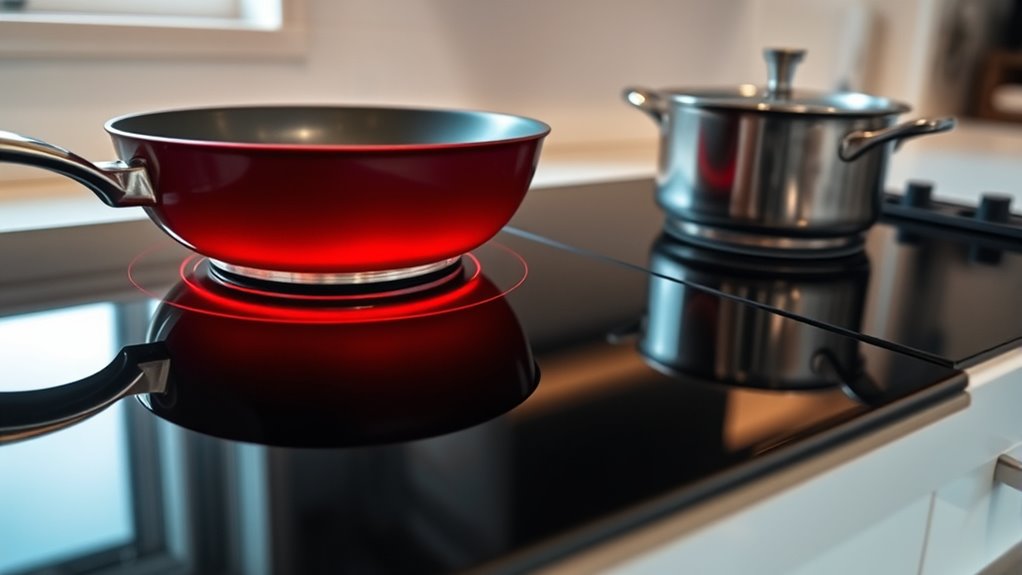
You’ll usually find that induction heats cookware faster than a traditional electric range. It can bring water to a boil sooner, while electric coils and smooth tops may take longer to heat. Let’s compare how quickly each one heats up and boils water.
Heating Speed Comparison
When speed matters, induction ranges usually heat cookware and boil water faster than traditional electric ranges. Induction transfers energy directly into compatible pans, while electric coils or radiant surfaces first heat themselves.
You’ll notice quicker temperature changes and less waiting when you sauté, simmer, or sear. However, pan material and size still affect performance.
Good heat distribution helps induction maintain consistent results across the cooking surface. Electric models may create slower, less responsive heating, so induction can make busy meals more convenient.
| Cooking task | Induction | Electric |
|---|---|---|
| Pan preheating | Very fast | Moderate |
| Temperature changes | Immediate | Gradual |
| Heat transfer | Direct | Indirect |
| Surface response | Highly responsive | Slower |
Choose induction if you value rapid control and efficient cooking. Choose electric if lower upfront cost and broad cookware compatibility matter more to you.
Boiling Time Differences
For boiling water, induction ranges typically cook food faster because they transfer energy directly into the pot, while electric ranges heat the burner before heating the cookware. You’ll usually notice a shorter wait for pasta, rice, or vegetables.
Induction’s Rapid heating delivers concentrated energy with minimal heat loss, helping water reach its Boiling point sooner. Electric ranges can still boil effectively, but their coils or smooth-top elements need time to warm up, and residual heat may slow temperature adjustments.
Your cookware also matters: induction requires a magnetic pot with a flat base, while electric models accept more materials. For the fastest results, cover your pot, use the correct burner size, and start with less water when practical.
If speed and precise control matter most, induction generally wins the boiling-time comparison.
Which Range Uses Less Energy?
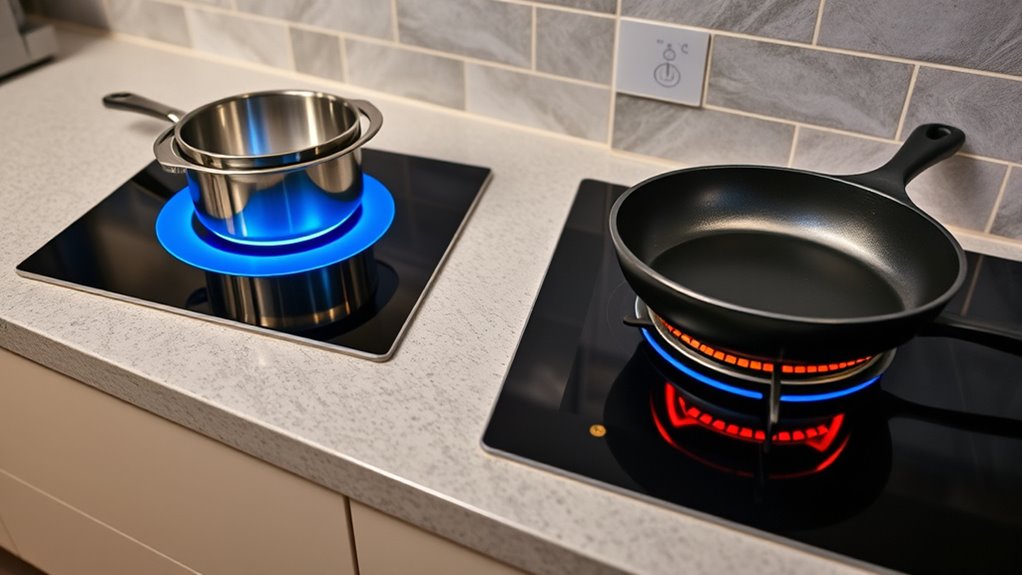
You’ll generally use less energy with an induction range because it transfers heat directly to your cookware. Compare cooking times to see how quickly each range reaches your desired results. You should also consider standby power consumption when the appliances aren’t in use.
Energy Transfer Efficiency
Which range uses less energy in everyday cooking? Induction generally wins because it transfers energy directly into compatible cookware. You’ll send more of the electricity into the pan and less into the surrounding surface or air. A conventional electric range heats an element first, then transfers that heat to your cookware, creating greater losses.
- Induction can reach roughly 80–90% transfer efficiency.
- Radiant electric elements typically deliver about 70–80%.
- Better transfer supports energy conservation and lower power consumption.
Your actual results depend on cookware size, pan material, settings, and cooking habits. Use flat, induction-compatible pans that match the cooking zone to reduce wasted electricity.
Keep lids on when practical, and switch off either range promptly after use, since residual heat continues drawing or releasing energy.
If you’re comparing household costs, check your electricity rate and appliance wattage, but induction usually offers the more efficient overall choice.
Cooking Time Comparison
Induction usually cooks faster because it transfers energy directly to the pan, so you’ll spend less time waiting for water to boil or food to heat. Electric ranges warm a burner first, then the cookware, which can delay cooking and waste more energy during preheating.
You’ll notice induction’s advantage most when boiling water, searing meat, or preparing several dishes in sequence. Precise temperature control also helps you adjust heat quickly, while traditional electric coils may respond more slowly after you lower the setting.
Your cooking techniques can become more efficient because induction delivers consistent heat with fewer interruptions. Shorter cooking times may support flavor preservation, especially for vegetables and delicate sauces that can lose quality when overheated.
Although cookware compatibility matters, induction generally uses less energy for everyday meals.
Standby Power Usage
Beyond faster cooking, standby power affects how much energy your range uses between meals. Induction and electric models both draw minimal electricity when idle, but their controls and connected features influence total power consumption.
Induction ranges often include electronic touch panels, displays, cooling fans, and Wi-Fi, which may continue using small amounts of energy after cooking. Electric ranges with mechanical knobs can approach zero standby draw, although digital models may behave similarly.
- Check the EnergyGuide label for estimated annual usage.
- Disable Wi-Fi, clocks, or display features you don’t need.
- Unplug the range only if the manufacturer permits it.
You’ll usually see the biggest savings while cooking, because induction transfers heat directly to your cookware. Standby efficiency matters most when your range remains unused for long periods.
For the lowest overall energy use, compare each model’s idle wattage, features, and cooking performance rather than choosing solely by range type.
Which Range Offers Better Safety and Control?
When safety and precise control matter most, induction ranges have the edge. You get heat only when compatible cookware sits on the glass surface, so the cooking zone stays relatively cooler than a conventional electric element.
That design can reduce accidental burns, although the pan itself remains hot. Induction also shuts off quickly when you remove the cookware, helping prevent unattended heating.
Induction reduces accidental burns and helps prevent unattended heating by shutting off quickly when you remove the cookware.
Both range types may include useful safety features, such as child locks, automatic shutoff, hot-surface indicators, and spill-resistant controls. However, electric coils or radiant elements stay hot after you turn them off, creating a longer burn risk.
You’ll notice the biggest difference in control precision. Induction responds almost immediately when you raise or lower the setting, giving you finer command over simmering and high-heat cooking.
Electric ranges typically adjust more gradually because their elements retain heat. If you value quick responses, consistent temperatures, and added protection from accidental activation, induction offers the stronger overall combination.
Still, you should follow cookware and electrical safety guidelines carefully.
Which Range Is Easier to Clean?
A smooth induction cooktop is usually easier to clean because spills stay on the flat surface instead of collecting around raised coils or drip pans. After cooking, let the surface cool, then wipe it with a soft cloth and a cooktop-safe cleaner.
Since the heating area doesn’t glow continuously, baked-on messes are less common when you wipe spills promptly.
Your cleaning routine may include:
- Removing crumbs and splatters with a damp microfiber cloth
- Using a nonabrasive cleaner for grease and stubborn spots
- Drying the surface to prevent streaks and residue
Electric ranges with exposed coils typically require more effort. You’ll need to clean around the coils, lift removable parts, and address food that falls beneath them.
Smooth-top electric models offer a similar cleanup experience, although their surface material can still develop baked-on stains.
Your cleaning frequency matters, too. Wiping either range after each use keeps buildup manageable, while delayed cleaning makes any cooktop harder to restore.
Induction generally wins for speed and convenience.
What Cookware and Installation Do You Need?
Your cookware and kitchen setup can determine which range fits best. For induction, you’ll need magnetic cookware, such as cast iron or stainless steel labeled induction-compatible. Test a pan with a magnet; if it sticks firmly to the base, it should work.
Copper, glass, aluminum, and some stainless-steel pans won’t heat unless they include a magnetic layer. Cookware compatibility matters because induction heats the pan directly, not the surface around it.
Electric ranges accept most flat-bottomed cookware, including aluminum, stainless steel, ceramic, and cast iron. However, warped pans may heat unevenly, especially on smooth glass tops, and heavy cast iron can scratch them.
Consider installation requirements before you buy. Both range types typically need a dedicated 240-volt circuit, proper amperage, and a grounded outlet.
Confirm your kitchen’s wiring and breaker capacity with an electrician. You’ll also need correct clearances, a level floor, and secure connections. Follow the manufacturer’s instructions, and don’t modify electrical components yourself.
Which Range Is Best for Your Cooking Style and Budget?
The best choice depends on how you cook and what you’re willing to spend. Choose induction if you value rapid heating, precise temperature control, and easier cleanup.
It usually costs more upfront, but lower energy use and responsive cooking can justify the investment. You’ll also need compatible cookware, so include replacement costs in your budget.
An electric range may suit you better if you want a lower purchase price, simple installation, and broad cookware compatibility. Its radiant burners heat more slowly, yet they handle everyday meals reliably.
- Pick induction for fast searing, delicate simmering, and frequent cooking.
- Choose electric for occasional use, straightforward operation, and tighter budgets.
- Compare Brand comparison ratings, warranties, service availability, and controls before buying.
Consider your kitchen’s look, too. Induction offers sleek glass surfaces, while electric models provide more Aesthetic options, including traditional coil or smooth-top designs.
Measure your available space and check electrical requirements before ordering. Whichever range you select, prioritize safety features, usable controls, and a layout that matches your cooking habits.
Frequently Asked Questions
Can Induction Ranges Operate During Power Outages?
No, your induction range can’t operate during a power outage because it needs electricity to generate its magnetic cooking field. A power outage also means losing the cooktop, oven controls, timers, and sometimes ventilation.
You’ll need emergency backup options, such as a gas camp stove, propane burner, outdoor grill, or battery-powered cooking device. Never use fuel-burning appliances indoors, since they can produce dangerous carbon monoxide.
Keep suitable fuel and ventilation plans ready before emergencies.
Do Induction Ranges Produce Electromagnetic Interference With Medical Devices?
Induction ranges can produce electromagnetic fields, so you should consider medical device safety before cooking. Think of invisible ripples spreading across a quiet pond: nearby implanted or wearable devices might respond, although modern equipment typically meets electromagnetic compatibility standards.
You should keep the manufacturer’s recommended distance between your device and the cooktop, avoid leaning over active burners, and ask your physician or device manufacturer for specific guidance. Follow their advice, especially with pacemakers or insulin pumps.
How Long Do Induction and Electric Ranges Typically Last?
You can expect both induction and electric ranges to last about 10–15 years, though your usage and care matter. For range durability, induction models often offer comparable or slightly better longevity because their smooth surfaces have fewer exposed heating elements, but electronic controls can be costly to repair.
Electric ranges use simpler components. Your maintenance considerations include cleaning spills promptly, avoiding heavy impacts, and servicing faulty controls or burners quickly to prevent further damage and extend service life.
Are Induction Ranges Louder Than Traditional Electric Ranges?
You’ll typically hear more sound from an induction range than a traditional electric range, though both remain fairly quiet. Induction cooktops commonly produce about 40–50 decibels, roughly as loud as a refrigerator, while radiant electric models often operate near 30 decibels.
Noise levels come from cooling fans, magnetic buzzing, or cookware vibration. Cooking efficiency is higher with induction, and that faster heating can briefly increase fan activity, but it won’t usually disrupt conversation.
What Warranties Are Commonly Available for Induction and Electric Ranges?
You’ll commonly get a one-year limited manufacturer warranty covering parts and labor for both induction and electric ranges. Some brands offer longer coverage for specific components, such as induction power modules or glass cooktops.
Warranty coverage usually excludes cosmetic damage, misuse, and normal wear. You can often purchase an extended service plan for additional years, though terms, deductibles, and repair limits vary.
Check the warranty booklet before buying.
Conclusion
Choosing between an induction and electric range comes down to how you cook, clean, and spend. If you value speed, precise control, efficiency, and a cooler surface, induction may be your best match.
If you want a lower upfront cost and broad cookware compatibility, electric still makes sense. Coincidentally, your favorite pan might decide for you: test it with a magnet before buying.
Either way, choose the range that fits your kitchen, habits, and budget. Comparing these 7 key differences between induction and electric ranges can help you make the right choice.