What Freezer Temp Should You Set?
Many people struggle to find the right freezer temperature, especially when food develops freezer burn or doesn’t stay safely frozen. You’re not alone—knowing what setting to use can make a big difference. This guide explains what freezer temperature to set and how to keep it stable.
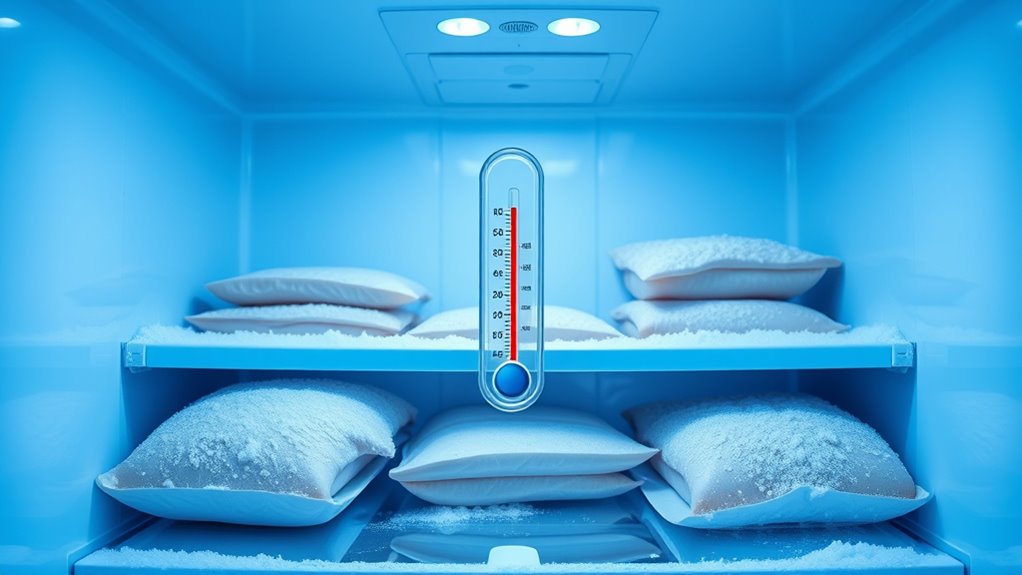
Set your freezer to 0°F (-18°C) or colder to keep food safely frozen and preserve its quality. Check the actual temperature with an appliance thermometer placed near the center, away from the door and vents.
Adjust the setting gradually, then wait up to 24 hours for the freezer to stabilize. Keep the door closed, maintain clear air vents, and minimize openings to prevent temperature swings.
You’ll also find guidance on outages, troubleshooting, and recognizing unsafe food.
Key Takeaways
- Set your freezer to 0°F (-18°C) or below for safe, long-term food storage.
- Verify the temperature with an appliance thermometer placed near the freezer’s center.
- Allow up to 24 hours for temperature adjustments to stabilize before checking again.
- Keep vents clear, minimize door openings, and leave space for proper air circulation.
- During power outages, keep the door closed. A full freezer generally stays cold for about 48 hours.
What Temperature Should a Freezer Be?
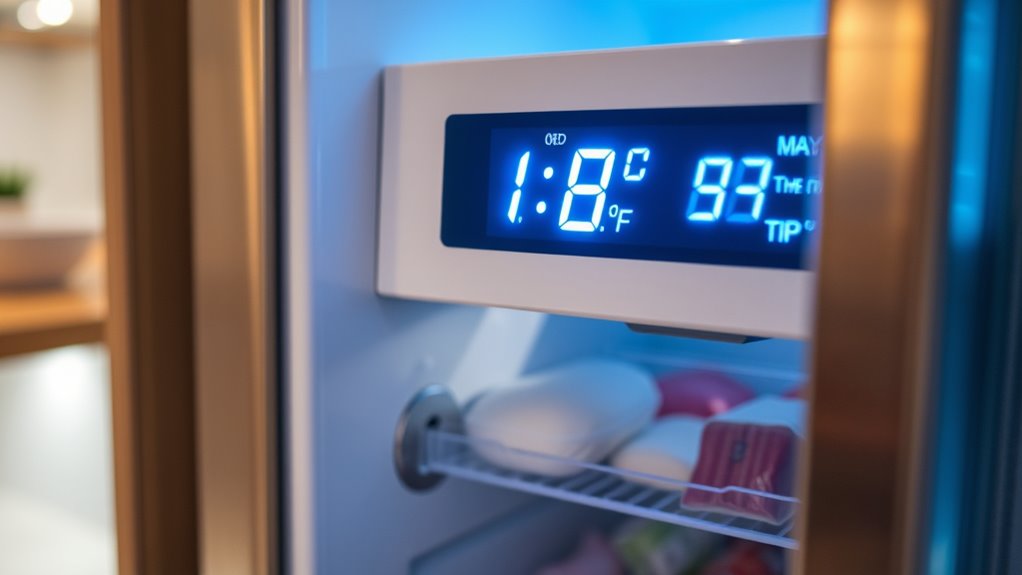
Set your freezer to 0°F (-18°C) or below to keep food safely frozen and preserve its quality. This setting gives you a reliable target for storing meat, vegetables, fruit, prepared meals, and other frozen items.
Use your freezer’s control panel or dial to select the coldest setting that reaches this temperature, then verify it with an appliance thermometer placed inside.
Keep the thermometer away from the door, and avoid judging temperature by how frozen food feels. Ice crystal formation can change with fluctuations, packaging, and moisture, so a stable reading matters more than appearance.
If your freezer runs warmer than 0°F, adjust it gradually and check again after several hours. You can also consult the manufacturer’s manual, since control labels don’t always match actual temperatures.
Leave space around packages for air to circulate, but don’t overcrowd the compartment. A properly calibrated setting supports consistent storage while helping your appliance maintain practical Energy efficiency.
Why Keep Your Freezer at 0°F?
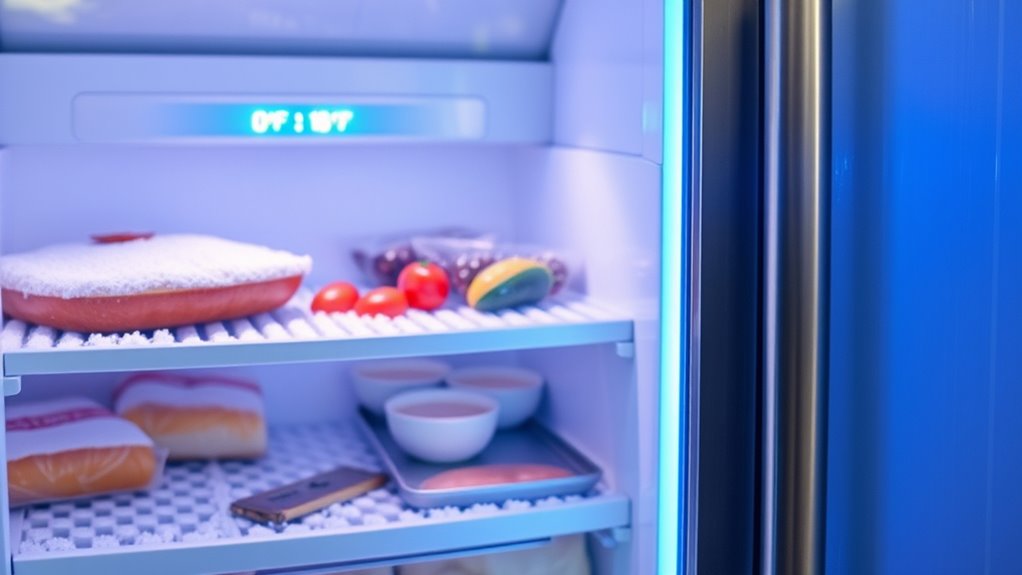
Keeping your freezer at 0°F (-18°C) slows bacterial growth and preserves food quality without unnecessary energy use. This temperature keeps meat, vegetables, prepared meals, and other frozen foods safely solid, so you can store them longer while limiting changes in flavor, texture, and nutritional value.
Set your freezer to 0°F (-18°C) to keep food safely frozen, preserve quality, and avoid unnecessary energy use.
Colder settings usually don’t provide meaningful safety benefits, but they can increase electricity consumption and cause unnecessary freezer burn. Warmer settings may let food soften, encourage ice crystals to melt and refreeze, and shorten storage life.
You’ll also support freezer energy efficiency by avoiding excessive cooling. Check the temperature with an appliance thermometer, since built-in controls may not show the actual internal temperature.
Keep the door closed as much as possible, and leave enough space for cold air to circulate. Although humidity affects frost and packaging, ideal storage humidity helps reduce moisture loss and ice buildup.
If food frequently softens, adjust the control slightly colder and inspect the door seal for gaps.
Compare Chest, Upright, and Refrigerator Freezers
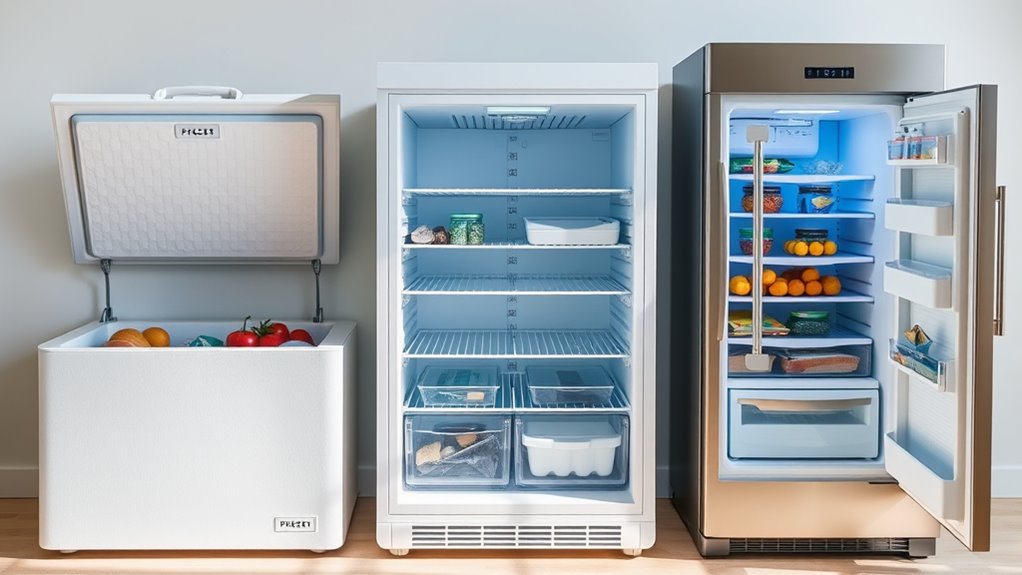
Your freezer’s design affects how well it holds 0°F, how much energy it uses, and how easily you can organize food. A chest freezer usually offers excellent energy efficiency because cold air stays inside when you open the lid.
You’ll get generous storage capacity, but stacking baskets can make smaller items difficult to find. An upright freezer gives you shelves, drawers, and easier access, making it a practical choice for organized households.
However, it may use more energy because cold air escapes through the front door. A refrigerator freezer saves space and keeps frozen and fresh foods together.
It works well for everyday items, though its storage capacity is limited and frequent door openings can affect temperature stability. Choose a chest model for bulk storage and lower operating costs, an upright for convenient organization, or a refrigerator freezer for compact, routine use.
Your available space, shopping habits, and preferred access should guide your decision.
Check Your Freezer Temperature Accurately
To check your freezer’s temperature accurately, use a reliable freezer thermometer. Place it near the center, away from the door and vents, so it can provide a representative reading. Check it regularly to spot temperature changes and catch problems early.
Use a Freezer Thermometer
A freezer thermometer gives you a reliable reading because the built-in dial may not show the actual temperature. Choose a model designed for frozen storage, and check that it displays temperatures well below 32°F. For dependable food storage tips, use it as part of routine freezer maintenance.
- Select an easy-to-read analog or digital thermometer.
- Place it inside your freezer and allow its reading to stabilize.
- Read the display regularly and record noticeable changes.
Your freezer should generally stay at 0°F (-18°C) or colder. If the thermometer shows a warmer temperature, adjust the control gradually and recheck the reading later.
Replace the thermometer if its display becomes cloudy, damaged, or inconsistent. A reliable tool helps you protect frozen foods, identify performance problems early, and confirm that your appliance maintains a safe, steady environment without relying solely on its factory gauge.
Check Temperature Placement
Where you place the thermometer affects how accurately it reflects your freezer’s temperature. Set it near the center of the compartment, where air circulates freely and the reading represents the overall storage area.
Avoid placing it against a wall, door, shelf, or food package, since these surfaces can distort the measurement. Don’t position it beside the vent, either; direct airflow may produce an unrepresentative result.
Your freezer contains different temperature zones, so consider your storage needs when choosing a location. For a practical reading, place the thermometer between frozen items without burying it or leaving it suspended in open air.
These placement strategies help you judge the appliance’s actual conditions more accurately. Keep the thermometer visible and secure, so you can read it without moving nearby food or disturbing its position.
Monitor Temperature Changes
Track your freezer’s reading over several hours to spot temperature changes that a single measurement might miss. Place a reliable appliance thermometer inside, away from the door and vents, then record readings at consistent times. A steady temperature near 0°F (-18°C) helps protect food quality and supports Energy efficiency.
- Check the display before opening the door, after grocery loading, and several hours later.
- Note unusual rises, frost buildup, frequent cycling, or changing noise levels.
- Compare readings after adjusting the control, allowing 24 hours for the freezer to stabilize.
If temperatures fluctuate widely, inspect the door gasket, avoid overpacking, and confirm the freezer has adequate airflow.
Move the thermometer to another shelf to verify the result. Replace weak batteries or test a second thermometer if readings seem inconsistent.
Contact a technician if the freezer remains warm despite proper settings.
Change Your Freezer Temperature Safely
Before adjusting the setting, check your freezer’s current temperature with an appliance thermometer. Aim for 0°F (-18°C), the standard target for safe frozen-food storage.
If the reading differs, change the control gradually rather than making a drastic adjustment. Move the dial one setting at a time, then wait several hours before checking the temperature again.
Your freezer may need up to 24 hours to reach a stable reading, especially after you add food or open the door frequently.
Keep the door closed during this adjustment to help the appliance work efficiently. Clear space around exterior vents, and make sure the door seal closes firmly.
Good Freezer organization also helps cold air circulate, so don’t pack items tightly against interior vents. For Energy efficiency, use the warmest setting that consistently maintains 0°F.
Follow your manufacturer’s instructions if the controls use digital buttons, a slider, or a numbered dial, since settings vary among models.
Prevent Freezer Burn and Temperature Swings
Prevent freezer burn and temperature swings by keeping the temperature at 0°F (-18°C) and limiting how often you open the door. Use a separate appliance thermometer to verify the setting, since built-in displays can be inaccurate.
Arrange food with space around vents so cold air circulates evenly, but keep the freezer reasonably full to help maintain a stable temperature.
- Package food tightly: Remove excess air from freezer bags, press out pockets, and use airtight containers.
- Apply proper insulation: Wrap foods in freezer-grade foil, plastic wrap, or an additional bag before storing them.
- Use effective sealing techniques: Check container lids, zip closures, and vacuum seals for gaps, then label packages with dates.
Don’t place warm food beside frozen items. Cool it in the refrigerator first.
Keep the door gasket clean and inspect it for cracks or looseness. If frost builds up heavily, defrost the freezer according to the manufacturer’s instructions.
Excess ice can restrict airflow and encourage temperature fluctuations.
Protect Food During a Power Outage
When the power goes out, keep the freezer door closed to preserve the cold air. A full freezer usually keeps food frozen for about 48 hours, while a half-full freezer lasts roughly 24 hours. Don’t open the door to check items; place an appliance thermometer inside beforehand so you can monitor conditions without releasing cold air.
As part of your emergency preparedness, keep several bags of ice available, and freeze containers of water to help maintain a safe temperature.
If you expect an extended outage, transfer food to a cooler packed with ice, handling raw meat separately from ready-to-eat items.
Follow these food safety tips: discard perishable food that has stayed above 40°F for more than two hours, or one hour when temperatures exceed 90°F. Never taste food to judge its safety.
Once power returns, refreeze items that still contain ice crystals or feel refrigerator-cold, and discard anything with an unusual odor, texture, or appearance.
Fix a Freezer That Is Too Warm
If your freezer stays too warm during normal operation, check that the temperature is set to 0°F and that the door seals tightly. Make sure vents aren’t blocked by packages, and avoid placing hot food inside. Leave space around items so cold air can circulate.
- Inspect the door: Clean the gasket, then test its seal by closing the door on a sheet of paper. If the paper slides out easily, replace the gasket or adjust the door.
- Check frost buildup: A thick layer can restrict airflow and reduce cooling. Unplug the freezer, move food to an insulated container, and let the ice melt completely.
- Clean and restart: Vacuum dust from the condenser coils, clear the drain, and restore power. Follow your model’s recommended Defrosting methods. Don’t chip ice with sharp tools or pour boiling water inside.
If the freezer remains warm after several hours, listen for unusual noises and check whether the fan runs. Persistent problems may require a qualified appliance technician.
Know When Frozen Food Is Unsafe
Frozen food is generally safe indefinitely at 0°F, but its quality declines over time. For frozen food safety, inspect packages before cooking, especially after a power outage or suspected thawing.
Discard food that has an unusual odor, color, or texture, or that feels sticky after thawing. Don’t taste questionable food to determine whether it’s safe.
Ice crystals don’t automatically mean danger, but extensive crystals can signal moisture loss, repeated thawing, or poor packaging.
If food has partially thawed but still contains ice crystals, you can usually refreeze it safely, though quality may suffer.
Throw it away if it has stayed above 40°F for more than two hours, or above 90°F for more than one hour.
Meat, poultry, seafood, eggs, and prepared dishes deserve extra caution because harmful bacteria may grow during warming.
Label packages with dates, follow package storage recommendations, and use your senses alongside Freezer temperature guidelines when deciding what to keep.
Keep Your Freezer at the Right Temperature
Set your freezer to 0°F (-18°C) or lower to keep food safely frozen and preserve its quality. Use an appliance thermometer to verify the temperature, since the dial may not show the actual conditions.
Check it regularly, especially after a power outage, heavy loading, or frequent door opening.
- Keep the freezer full, but leave enough space for cold air to circulate.
- Place new items behind older ones, and label packages with dates.
- Minimize door openings to prevent temperature swings and frost buildup.
A steady temperature protects frozen snacks, meat, vegetables, and leftovers from quality loss.
For ice cream storage, keep the container toward the back, where temperatures stay more stable, rather than near the door.
If your freezer runs warmer than 0°F, adjust its setting and recheck it after several hours.
Remove food that has thawed completely and feels warm. When ice crystals remain and the food stays cold, you can usually refreeze it safely, though texture may change.
Proper organization and monitoring help your freezer work efficiently, too.
Frequently Asked Questions
How Much Electricity Does a Freezer Use at Different Temperature Settings?
You’ll typically use about 30–100 kilowatt-hours monthly, depending on freezer size, efficiency, room temperature, and door openings. Setting your freezer colder generally increases energy consumption: lowering it from 0°F to -10°F may raise usage roughly 10–25%, while warmer settings can reduce consumption but risk food safety.
For temperature optimization, keep it near 0°F (-18°C), maintain clear airflow, check the door seal, and defrost manually when frost builds up.
Should You Adjust Freezer Temperature Seasonally?
You generally shouldn’t make seasonal temperature adjustments; your freezer works best at 0°F (-18°C) year-round. Think of that steady setting as an anchor in changing weather.
Hot seasons may make the compressor run longer, but raising the temperature risks food safety. In winter, lowering it wastes electricity without preserving food better.
Ignore freezer temperature myths claiming seasonal changes improve freshness. Instead, keep door seals tight, limit openings, and use a thermometer to verify accuracy.
Can Freezer Temperature Affect Ice Maker Performance?
Yes, freezer temperature can affect ice maker performance. Keep your freezer near 0°F (-18°C) to support consistent production and solid cubes. Warmer settings may create soft, cloudy ice or slow the freezing cycle, while colder settings can increase Freezer noise and strain the appliance.
Check that vents stay clear, the door seals tightly, and the ice maker receives water. Monitor Ice quality and adjust settings gradually if problems continue.
How Often Should You Clean Your Freezer for Optimal Efficiency?
Clean your freezer every three to six months for maximum efficiency. You’ll support energy conservation by removing frost, dust, spills, and expired items that restrict airflow or force the appliance to work harder.
For food preservation, transfer contents to a cooler, unplug the freezer, wipe interior surfaces with mild soapy water, and dry everything thoroughly. Don’t use sharp tools to remove ice.
Check door seals and clean condenser coils, too.
What Freezer Temperature Is Best for Storing Homemade Baby Food?
Set your freezer to 0°F (-18°C) or colder for safely storing homemade baby food. Why let tiny portions face warmth when a steady, icy environment protects them?
This temperature supports food safety by slowing bacterial growth and preserving quality. Label each container with the preparation date, then use frozen baby food within one to three months for best flavor and texture.
Keep portions airtight, leave room for expansion, and thaw them in the refrigerator, not on the counter.
Conclusion
Keep your freezer set to 0°F (-18°C) or lower, and check it with an appliance thermometer rather than trusting the dial. That simple step helps food stay safe, preserves quality, and gives you confidence during an outage.
Still, don’t ignore warning signs. Rising temperatures, softening packages, or unusual frost can signal trouble. Act quickly, protect what you can, and when in doubt, throw questionable food away.
Your freezer’s quiet hum may be telling you everything. For the best results, always follow the recommended freezer temperature of 0°F (-18°C) or lower.