What Temp Should Your Freezer Be?
Many people struggle to keep their freezer cold enough without wasting energy or compromising food quality. You’re not alone—finding the right setting can be confusing, especially when the built-in display isn’t perfectly accurate.
So, what temp should your freezer be?
Set your freezer to 0°F (-18°C) or colder to keep food safely frozen and preserve its quality. Verify the actual temperature with an independent appliance thermometer, since the built-in display may show only the selected setting.
Place the thermometer centrally, away from walls, vents, and the ice maker, then check it after several hours with the door closed.
Adjust the setting gradually if needed, and keep exploring for practical tips on maintaining a stable, efficient freezer.
Key Takeaways
- Set your freezer to 0°F (-18°C) or colder for safe, long-term food storage.
- Verify the actual temperature with an independent appliance thermometer, not just the built-in display.
- Place the thermometer centrally, away from walls, vents, shelves, and ice makers for reliable readings.
- Wait several hours after adjustments before rechecking, making only small temperature changes.
- Keep vents clear, avoid overloading, limit door openings, and maintain intact door seals for stable temperatures.
What Temperature Should Your Freezer Be?
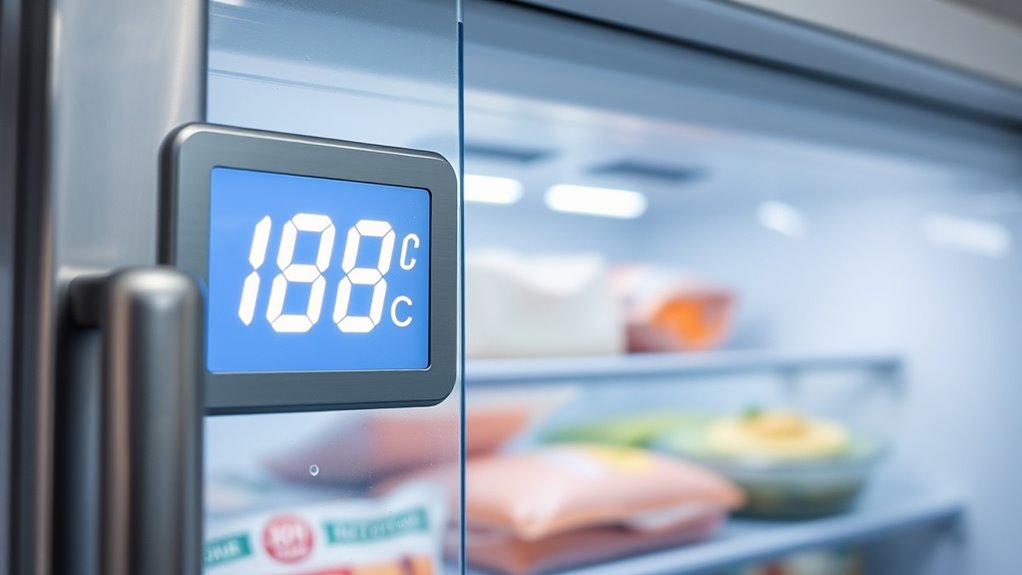
Your freezer should be set to 0°F (-18°C) or colder to keep food safely frozen and preserve its quality. Use the appliance’s control panel or dial to choose this setting, then place an independent thermometer inside to confirm the actual temperature.
Set your freezer to 0°F (-18°C) or colder, then verify its actual temperature with an independent thermometer.
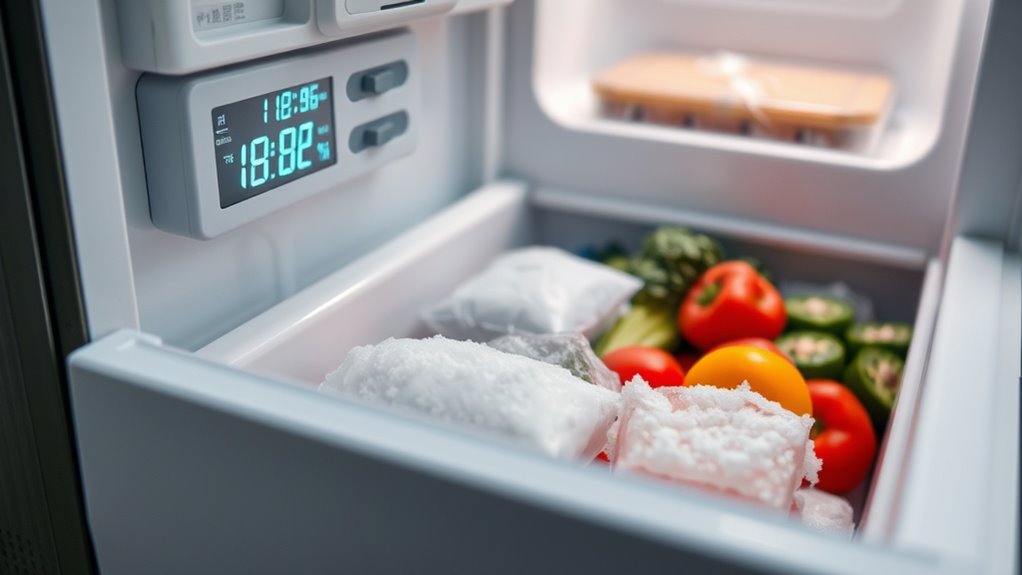
Built-in displays can show the selected setting rather than the air temperature, so checking helps you spot problems early.
Keep the door closed as much as possible, and avoid packing it so tightly that air can’t circulate. Leave space around vents, and let hot food cool before freezing it.
These habits help your freezer maintain a steady temperature without unnecessary strain.
At 0°F, you’ll support consistent ice crystal formation, which helps protect texture during storage. You’ll also improve energy efficiency by keeping the thermostat stable and cleaning dusty condenser coils.
If the temperature rises above 0°F, lower the setting slightly and monitor it for 24 hours.
Why 0°F Keeps Frozen Food Safe
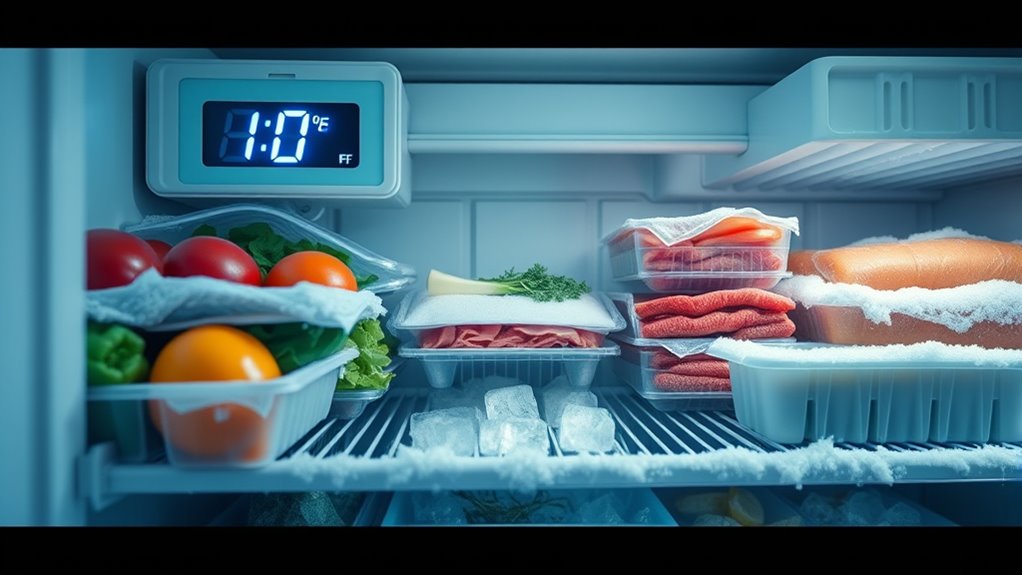
Keeping your freezer at 0°F slows bacterial growth and helps protect food from spoilage. It also preserves flavor, texture, and nutritional quality. By maintaining this temperature consistently, you can safely store frozen foods for longer.
Slows Bacterial Growth
At 0°F, freezing slows bacterial growth by removing the liquid water microbes need to multiply. You’ll keep food safer because most bacteria become inactive, not because freezing kills them.
When food warms, surviving microbes can become active again, so maintain a consistently cold freezer and thaw food safely in the refrigerator.
| Temperature | Microbial activity | Your action |
|---|---|---|
| 0°F | Greatly slowed | Keep the setting steady |
| Above 0°F | May increase | Check the seal and vents |
| Thawing | Can resume | Cook or refrigerate promptly |
Use a freezer thermometer to verify the actual temperature, since the control dial may not be exact.
Freezer maintenance, including clearing blocked vents and inspecting the gasket, helps preserve stable cold air. Don’t overload shelves, but avoid leaving large empty spaces that waste energy.
Energy efficiency improves when you limit door openings and replace damaged seals.
Remember, freezing supports food safety; it doesn’t replace proper handling, clean storage, or timely cooking.
Never refreeze food that has stayed warm for long periods.
Preserves Food Quality
A steady 0°F freezer preserves food quality by slowing moisture loss, chemical changes, and ice-crystal growth. When you keep your freezer at this temperature, foods retain their texture, color, flavor, and nutrients longer.
Smaller ice crystals form more slowly, so frozen produce stays less mushy after thawing, while meat and baked goods resist freezer burn.
You’ll also protect packaging by leaving space around items for consistent airflow and avoiding frequent temperature swings. Check your thermometer regularly, because an overloaded freezer or blocked vent can create warmer pockets.
Good Freezer maintenance, including cleaning seals and removing frost, helps maintain a stable temperature. Energy efficiency improves, too, when you limit door openings and organize items neatly.
Set your freezer to 0°F, and your food will taste fresher when you’re ready to use it.
Maintains Safe Storage
Beyond preserving flavor and texture, a freezer set to 0°F keeps food safely frozen by stopping most bacteria from multiplying. Freezing doesn’t kill every microorganism, but it slows their activity until temperatures rise.
You’ll protect your household by keeping the door closed, checking the temperature with an appliance thermometer, and returning food quickly after shopping.
Proper Freezer organization also helps: label packages with dates, store older items up front, and leave space for cold air to circulate. Don’t overload shelves or pack food against vents, since uneven temperatures can create unsafe spots.
If a power outage occurs, keep the door shut. A full freezer usually stays cold longer, but you should discard food that develops an unusual odor, color, or texture.
Efficient habits can also reduce Power consumption.
How to Check Your Freezer Temperature
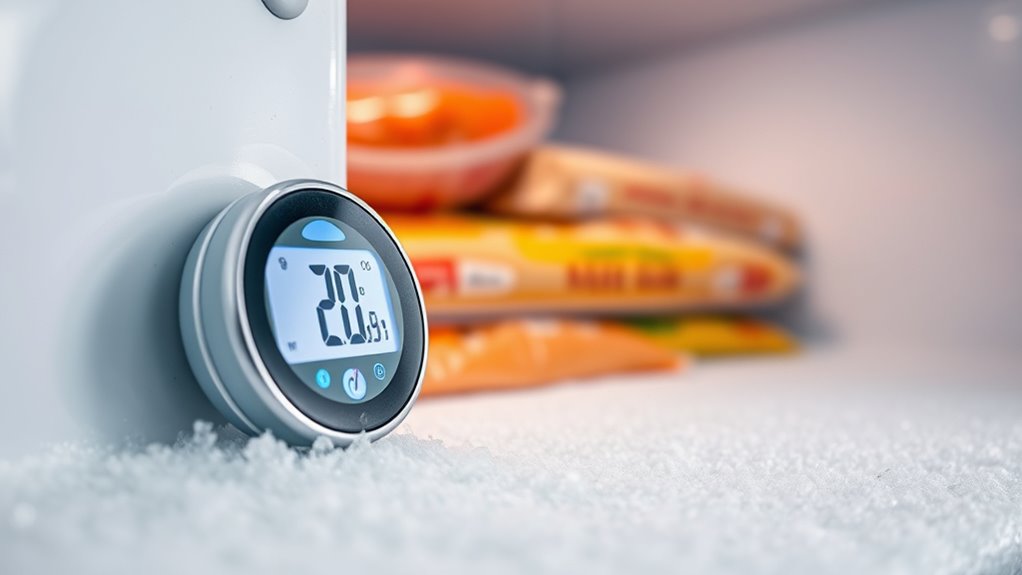
How can you tell whether your freezer is holding the right temperature? Use a freezer thermometer to verify that it stays at 0°F (-18°C), the recommended setting for safe, quality storage. Don’t rely solely on the control dial, because settings can vary between models.
Place the thermometer inside, close the door, and wait several hours for a stable reading. Check it again at different times, especially after adding groceries or during seasonal temperature changes.
| Reading | Meaning | Action |
|---|---|---|
| 0°F (-18°C) | Ideal | Keep setting |
| Above 0°F | Too warm | Lower setting |
| Below 0°F | Colder than needed | Adjust slightly |
Record readings to spot changes early. If the temperature fluctuates, inspect the door seal, confirm the freezer isn’t overloaded, and remove heavy frost.
These Maintenance tips support Energy efficiency while protecting food quality. Recheck after every adjustment, allowing several hours for the freezer to stabilize before judging the result.
Consistent checks help you catch problems before food softens, leaks, or spoils.
Where to Place a Freezer Thermometer
Place the freezer thermometer in the center of the middle shelf, where it reflects the temperature of the stored food rather than air near the walls or door. Keep it away from the evaporator, vents, ice maker, and freezer walls, since these areas can produce unusually cold or warm readings.
Don’t place it inside the door, where frequent opening exposes it to warmer air. If your freezer has several compartments, position the thermometer in the area you use most, leaving space around it for air circulation.
For chest freezers, set it near the top of the food, but not directly against the lid or side. A visible, easy-to-reach location makes routine checks simpler without disturbing frozen packages.
Good freezer organization helps you keep the thermometer accessible and prevents crowded shelves from affecting circulation. Accurate placement supports food safety, reduces unnecessary adjustments, and can improve energy efficiency by helping you identify temperature changes promptly.
Check the reading after the freezer remains closed for several hours.
How to Adjust Your Freezer Setting
Adjust the freezer setting in small increments based on the thermometer reading, then wait several hours before checking it again. Aim for 0°F (-18°C), but avoid constant adjustments because the temperature needs time to stabilize.
If the reading is too warm, lower the setting slightly. If it’s colder than necessary, raise it one step.
Watch your food and thermometer for clues while you adjust:
- Ice crystal formation on packages may indicate temperature swings or excess moisture.
- Frost buildup can restrict airflow and make cooling less consistent.
- Energy consumption usually increases when you choose a colder setting or open the door frequently.
Keep the door closed during each waiting period, and don’t load warm food while you’re testing the setting.
Check that vents aren’t blocked, since poor airflow can create uneven temperatures. If the freezer remains outside the recommended range after several adjustments, inspect the door seal and consider professional service.
Record each change and thermometer reading so you’ll know which setting works best.
What Temperature Should a Fridge Freezer Be?
A fridge freezer should keep the refrigerator compartment at 37°F (3°C) and the freezer at 0°F (-18°C). You’ll protect chilled and frozen foods by using these targets consistently.
| Area | Recommended setting |
|---|---|
| Refrigerator | 37°F (3°C) |
| Freezer | 0°F (-18°C) |
| Door shelves | Avoid storing perishables |
| Thermometer | Check regularly |
Place a separate appliance thermometer inside each compartment, since the built-in dial may show an estimate rather than the actual temperature.
Keep refrigerator vents clear, close doors promptly, and avoid packing shelves so tightly that air can’t circulate.
Your freezer should remain at 0°F (-18°C), whether it’s a top-freezer, bottom-freezer, or side-by-side model.
Set the control slightly colder if frequent door opening raises the reading, then recheck after 24 hours.
Ice cream and frozen vegetables belong in the freezer, while refrigerated items need the colder central shelves rather than warmer door bins.
If temperatures fluctuate persistently, inspect the door seal or arrange appliance service. These settings give you a reliable everyday baseline.
How Freezer Temperature Affects Food Quality
Keeping your freezer at 0°F (-18°C) preserves food quality by slowing moisture loss, enzyme activity, and bacterial growth. At this temperature, meats, vegetables, fruit, and prepared meals retain their flavor, texture, and nutritional value longer.
Consistent cold also helps prevent large ice crystals, which can damage food cells and create a dry, tough texture after thawing.
Pack foods in airtight, freezer-safe containers or bags, removing excess air before sealing. Label each package with its contents and date so you can use older items first.
Don’t overload the freezer, because blocked airflow can create uneven temperatures and reduce Storage capacity. Instead, leave space around vents and arrange packages neatly.
- Freeze food promptly while it’s fresh.
- Divide large portions into smaller, shallow packages.
- Keep the door closed to maintain stable conditions.
A well-organized freezer supports Energy efficiency because it recovers its temperature faster and runs more effectively. Regularly check seals, avoid frequent door opening, and maintain a reliable 0°F setting to protect quality while reducing waste.
Signs Your Freezer Is Too Warm
You may notice that frozen foods have softened, which could mean your freezer isn’t staying cold enough. Excessive frost buildup may also point to an airflow or temperature-control problem. Also, watch for unusual odors, as they can signal spoiled food or inadequate freezing conditions.
Softened Frozen Foods
If frozen foods feel soft, bend easily, or show signs of thawing, your freezer may be warmer than it should be. Check packages for these clues:
- Frozen desserts, such as ice cream, may scoop too easily, lose their shape, or develop a grainy texture.
- Meat, poultry, and fish may feel pliable instead of solid, indicating partial thawing.
- Vegetables and prepared meals may stick together, leak, or show unusual ice crystal formation.
A softened item doesn’t always mean it’s unsafe, but repeated thawing and refreezing can reduce quality and allow bacteria to multiply.
Use a freezer thermometer to verify that the temperature stays at 0°F (-18°C) or below. Move questionable foods to a colder freezer, and discard items that have reached room temperature for over two hours.
Keep the door closed while you investigate, then adjust the setting if needed.
Excessive Frost Buildup
Excessive frost buildup can signal that your freezer isn’t maintaining a consistently cold temperature. Although a thin layer may develop normally, thick ice on walls, shelves, or packages often indicates warm air entering through a loose seal, frequent door openings, or a blocked vent.
Frost formation can also restrict airflow, forcing your freezer to work harder and creating uneven temperatures. Check whether the door gasket closes tightly, and avoid placing hot food inside.
Keep packages away from interior vents so cold air can circulate freely. If ice continues accumulating, unplug the appliance and follow its Defrosting process instructions; never chip away frost with a sharp tool.
Afterward, monitor the temperature with an appliance thermometer. Set your freezer to 0°F (-18°C), and arrange professional service if excessive frost returns quickly.
Unusual Freezer Odors
Unusual odors can also indicate that your freezer is running too warm, allowing food to spoil or liquids to leak and stagnate. A properly cold freezer should preserve food without producing strong, sour, or rotten smells.
Check these warning signs:
- Frozen desserts smell stale, taste sour, or develop an unusual texture.
- Ice crystal formation increases on packages, suggesting temperature fluctuations or partial thawing.
- Meat, seafood, or spilled liquids release persistent odors, even after you clean the interior.
Inspect your freezer’s temperature with an appliance thermometer. It should stay at 0°F (-18°C).
Discard questionable food rather than tasting it, especially if you notice thawing, leaking, or swollen packaging.
Clean spills promptly with warm, soapy water, and check the door seal for gaps.
If odors return or the temperature rises, move food to another freezer and arrange appliance service.
Why Your Freezer Temperature Fluctuates
Your freezer temperature fluctuates because its cooling cycle, door openings, food load, and surrounding room conditions constantly change. The compressor pauses after reaching its control setting, then restarts as warmth enters.
Frequent opening releases cold air, while warm groceries temporarily raise the cabinet temperature. An underfilled freezer changes quickly; an overpacked one can restrict airflow and create uneven zones.
| Cause | What you’ll notice | Why it matters |
|---|---|---|
| Door openings | Brief warming | Moisture encourages ice crystal formation |
| Warm food | Longer cooling cycles | The compressor works harder |
| Hot room | Wider swings | Freezer energy efficiency declines |
Automatic defrost systems also raise temperatures for short periods while melting frost from the evaporator. Sensors may detect air temperature rather than food temperature, so readings can shift even when frozen items remain solid.
Frost buildup, blocked vents, or a failing door seal can intensify these variations. Place a standalone thermometer inside to observe patterns over several hours, rather than judging performance from one reading.
This helps you identify whether normal cycling or a mechanical problem causes the fluctuation.
How to Keep Your Freezer at 0°F
To keep your freezer at 0°F, set the temperature correctly and check it with an appliance thermometer. Try not to open the door too often, since that can cause the temperature to fluctuate. Check these habits regularly to help protect your food’s quality and safety.
Set the Correct Temperature
Set your freezer to 0°F (-18°C) to keep food safely frozen and preserve its quality. This setting slows bacterial growth and helps prevent unwanted changes in texture, flavor, and appearance. Correct temperature control also limits large ice crystal formation, which can dry food and cause freezer burn.
To maintain a steady freeze:
- Keep the door closed as much as possible so warm air doesn’t enter.
- Avoid packing food tightly; leave space for cold air to circulate.
- Let hot leftovers cool in the refrigerator before transferring them to the freezer.
Organize packages so you can find items quickly, reducing door-open time. Keep your freezer reasonably full because frozen foods help retain cold air, but don’t overcrowd it.
Proper loading supports freezer energy efficiency and helps the appliance maintain 0°F without unnecessary effort or energy use.
Check With a Thermometer
A freezer’s built-in display may not show its actual internal temperature, so check it with an appliance thermometer. Place the thermometer in the center, away from walls, shelves, and vents.
Wait several hours, then read it without relocating the device. Your target is 0°F (-18°C); adjust the control gradually if the reading differs, and recheck later.
| Reading | What you should do |
|---|---|
| Above 0°F | Lower the setting slightly |
| Around 0°F | Keep the current setting |
Check the temperature periodically, especially after loading groceries or servicing the appliance. Proper freezer organization helps air circulate around stored food and supports an accurate, stable reading.
Don’t set the freezer unnecessarily colder. Lower temperatures can increase power consumption without improving food safety. Replace the thermometer if it becomes difficult to read or appears damaged.
Limit Door Openings
Frequent door openings let cold air escape and make the freezer work harder to stay at 0°F (-18°C). Plan what you need before opening it, then close the door promptly.
Organize food by category so you can find items quickly, and keep frequently used packages near the front. Check the gasket regularly; damaged door insulation allows cold air to leak out and warm air to enter.
Replace torn seals and avoid overfilling, which can prevent the door from closing tightly.
- Group similar foods together for faster access.
- Use freezer labels with names and dates to avoid searching.
- Keep an inventory on the door or nearby.
Don’t leave the door open while loading groceries. If you notice frost buildup, investigate the seal, since poor closure can raise the temperature and increase energy use.
Small habits help your freezer remain consistently cold.
Frequently Asked Questions
How Often Should You Defrost Your Freezer?
You should defrost your freezer whenever ice buildup reaches about one-quarter inch, typically once or twice yearly. Frost accumulation reduces storage space, strains the appliance, and raises energy use.
During freezer maintenance, unplug the unit, move food into an insulated cooler, and let the ice melt naturally. Don’t chip it with sharp tools.
Clean and dry the interior before restarting. Include temperature monitoring afterward to confirm your freezer returns to a safe setting.
Can Power Outages Make Frozen Food Unsafe?
Yes, a power outage can turn your freezer into a ticking time bomb for food safety. Keep the door closed; a full freezer usually stays cold for about 48 hours, while a half-full one lasts roughly 24 hours.
Follow these Emergency preparedness and Food safety tips: use a thermometer, discard food above 40°F for over two hours, and never taste-test questionable items. When in doubt, throw it out. Better safe than sorry.
How Long Can Food Remain Frozen During a Power Outage?
Food can remain safely frozen for about 48 hours in a full freezer during a power outage, or roughly 24 hours in a half-full freezer, if you keep the door closed. Temperature fluctuations can shorten that window, so don’t open it unnecessarily.
As part of your emergency preparedness, use a freezer thermometer and transfer food to a cooler with ice if needed. Discard items that reach 40°F or higher for over two hours.
What Foods Should Never Be Stored in the Freezer?
You shouldn’t freeze foods with high water content, such as lettuce, cucumbers, raw potatoes, and watermelon, because they’ll become limp and watery. Avoid freezing eggs in their shells, mayonnaise, cream-based sauces, and soft cheeses, which may separate or change texture.
Canned foods shouldn’t go in the freezer unless you’ve removed them from the can. For effective food preservation and freezer safety, use airtight packaging and label everything with dates.
How Should Frozen Food Be Packaged to Prevent Freezer Burn?
Use airtight packaging techniques to protect frozen food from moisture loss and prevent freezer burn. Wrap items tightly in plastic wrap or aluminum foil, then place them inside a heavy-duty freezer bag or airtight container. Press out excess air before sealing, and leave minimal empty space.
Divide large portions into smaller packages for faster freezing. Label each package with its contents and date, and avoid repeatedly thawing and refreezing food whenever possible.
Conclusion
Keep your freezer at 0°F to protect food and preserve its quality. Check the temperature with an appliance thermometer, place it in the center, and adjust the setting when needed.
For example, if ice cream turns soft while meat develops excess frost, your freezer may be fluctuating above the safe target. Organize food without blocking vents, limit door openings, and inspect the thermometer regularly.
These simple habits help your freezer run reliably, keep meals safer longer, and maintain the right temperature for your freezer.