What Temperature Should Your Freezer Be?
Many people struggle to keep their freezer at the right temperature, especially when food starts developing freezer burn or thawing unexpectedly. You’re not alone—knowing what temperature your freezer should be can make a big difference in food safety and quality.
Set your freezer to 0°F (-18°C) or colder to keep food safely frozen and preserve its quality. Use an appliance thermometer to confirm the actual temperature, placing it in a stable central area or the warmest spot near the door.
Keep the door closed, avoid overloading, maintain airflow, and check the temperature after power outages or adding food.
Discard food that has thawed above 40°F for over two hours.
You’ll find more tips for stable, safe freezing below.
Key Takeaways
- Set your freezer to 0°F (-18°C) or colder to keep food safely frozen and limit bacterial growth.
- Verify the actual temperature with an appliance thermometer rather than relying solely on the freezer’s display.
- Place the thermometer centrally, away from doors, walls, vents, and cooling elements, and allow readings to stabilize overnight.
- Keep doors closed, avoid hot food, maintain airflow, and keep the freezer away from heat sources.
- Recheck temperatures after power outages, heavy loading, adjustments, or defrost cycles to ensure safe, consistent freezing.
What Temperature Should Your Freezer Be?
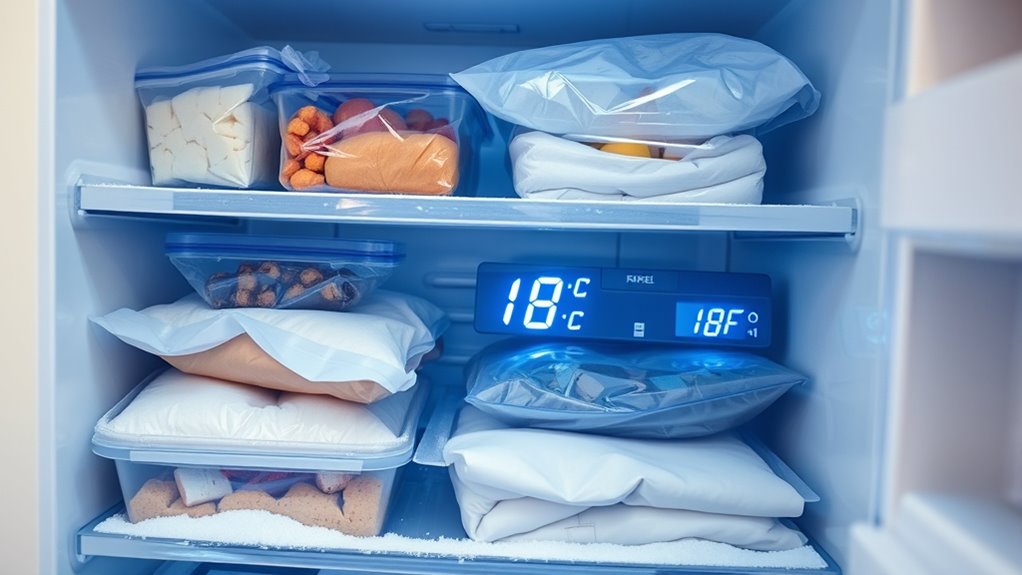
Your freezer should be set to 0°F (-18°C) or colder to keep food safely frozen and preserve its quality. Check the setting with an appliance thermometer, because the dial’s numbers may not match the actual temperature. Place the thermometer in the warmest area, usually near the door, and wait several hours before reading it.
Keep your freezer at 0°F (-18°C) or colder, and verify the actual temperature with an appliance thermometer.
Keep the door closed as much as possible, and don’t overload the freezer so cold air can circulate. However, a reasonably full freezer holds its temperature better than an empty one.
Leave space around vents, and arrange items so you can find them quickly. Good Freezer organization reduces door-opening time and supports Energy efficiency.
After adding a large amount of unfrozen food, verify the temperature again once the freezer has stabilized. If it consistently reads above 0°F, adjust the control gradually and inspect the door seal.
Replace damaged seals, and move the appliance away from heat sources or direct sunlight.
Why 0°F Keeps Food Safely Frozen
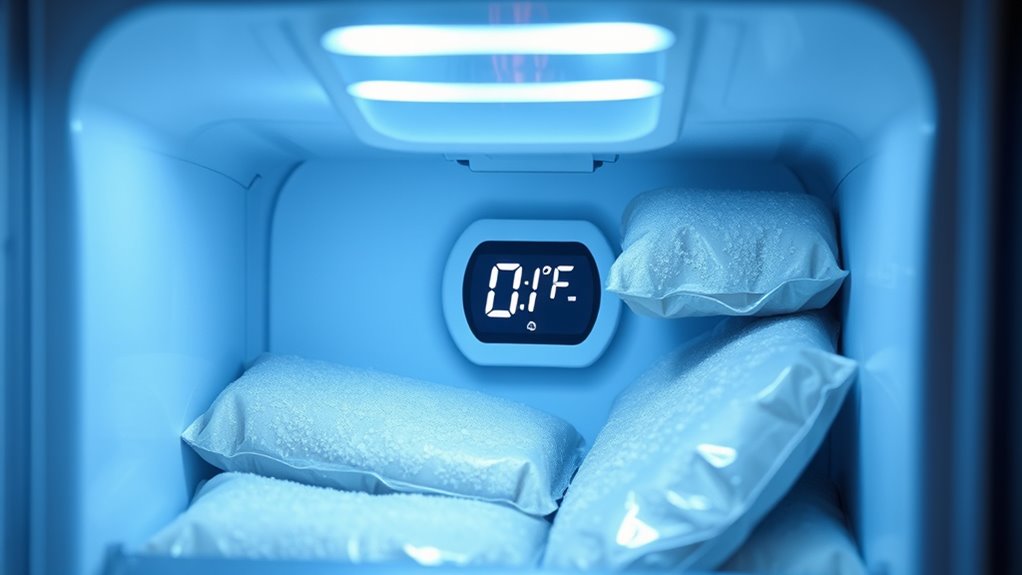
At 0°F (-18°C), water in food remains frozen, slowing the chemical reactions and microbial activity that cause spoilage. This temperature gives you a reliable safety margin, helping food stay solid even during brief door openings or minor temperature fluctuations.
Keeping your freezer at this level also helps you:
- Preserve texture: Stable freezing limits large ice crystals, so meats, vegetables, and prepared meals retain better quality after thawing.
- Protect flavor: Lower temperatures slow oxidation, which can cause rancid tastes and stale aromas over time.
- Extend storage life: Properly frozen food maintains its quality longer when you package it tightly and label it clearly.
Your appliance works best when Freezer insulation remains intact and the door seals tightly. Frost buildup can reduce available space and make the freezer work harder, potentially creating uneven temperatures.
Remove excessive frost according to your manufacturer’s guidance, and avoid packing food against vents. A consistently cold environment doesn’t make food last forever, but it significantly slows deterioration and helps preserve safety and quality.
How to Check Your Freezer Temperature
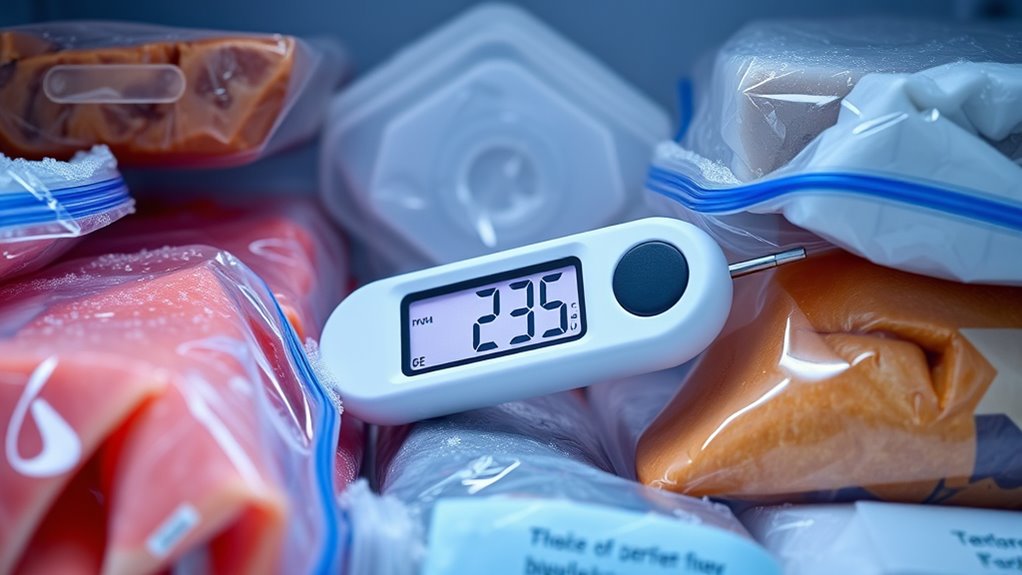
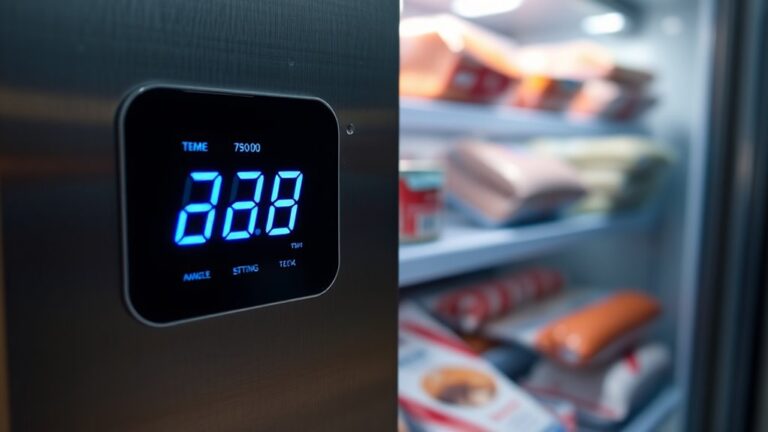
Use a freezer thermometer to verify the actual temperature, since the appliance’s display may not reflect conditions throughout the compartment. Check it after the freezer has run for several hours, preferably overnight, when the temperature has stabilized. Read the thermometer without leaving the door open longer than necessary.
Use a freezer thermometer after temperatures stabilize to confirm the compartment stays at 0°F (-18°C) or colder.
Your freezer should hold 0°F (-18°C) or colder for safe, long-term storage. If the reading is higher, confirm that the door seals tightly, the vents aren’t blocked, and the freezer isn’t overloaded.
Give warm groceries time to freeze, then recheck the temperature. A rising temperature can signal a failing seal, dirty condenser coils, or mechanical trouble.
Excessive frost buildup may also restrict airflow and reduce cooling performance. Remove frost according to your model’s instructions, and monitor the temperature afterward.
Keeping the compartment properly organized supports consistent cooling and energy efficiency. If readings remain unsafe, move food to another freezer and arrange professional service promptly.
Consistent checks help protect quality and prevent unnecessary waste.
Where Should You Put a Freezer Thermometer?
Place the freezer thermometer in the center of the compartment, away from the walls, door, vents, and cooling elements. This position gives you a more representative reading of the air surrounding your frozen food.
Follow these placement guidelines:
- Set the thermometer on a shelf or suspend it from a rack, keeping it upright and easy to read. Don’t bury it beneath packages, where surrounding food can affect the reading.
- Leave space around the thermometer so air can circulate freely. Avoid placing it against containers, baskets, or the freezer liner.
- Check the display without moving the thermometer. If you use a liquid model, keep it level and read it at eye height. A digital model should sit securely and remain visible.
For better thermometer accuracy, choose a model designed for freezer temperatures and let it sit in place before recording the reading.
Positioning it consistently lets you compare measurements reliably and adjust your freezer setting with confidence. Replace damaged or difficult-to-read thermometers promptly.
What Causes Freezer Temperature Changes?
Once your thermometer is positioned correctly, its readings can reveal why your freezer temperature changes. Several normal and unexpected factors can affect that temperature.
Your freezer briefly warms whenever you open the door, especially if you leave it open while searching for food. Warm, humid air enters, and the appliance must remove that heat.
A frequent or lengthy opening causes larger swings. The automatic defrost cycle also raises the temperature temporarily.
During this process, the freezer pauses cooling and melts frost from its evaporator coils. Readings may climb, then return to normal after the cycle ends.
Heavy frost buildup can restrict airflow and make temperatures uneven. An overloaded freezer may block vents, while a nearly empty one can change temperature more quickly.
Room temperature matters, too. A freezer works harder in a hot location.
Finally, power fluctuations, an aging compressor, a dirty condenser, or a failing door seal can create unusual changes.
Note when swings occur so you can distinguish normal cycling from a developing problem.
How to Fix a Freezer That’s Too Warm
If your freezer is too warm, start by checking its temperature setting and confirming that the door seals tightly. Set the thermostat to 0°F (-18°C), then allow 24 hours for the temperature to stabilize.
Next, work through these fixes:
Work through these practical fixes to restore proper airflow, remove frost, and improve your freezer’s cooling performance.
- Clear the vents: Move packages away from interior air vents so cold air can circulate. Avoid overloading shelves, but don’t leave the compartment nearly empty either.
- Remove frost buildup: A thick ice layer can block airflow. Unplug the freezer, transfer food to a cooler, and let the ice melt naturally. Never chip it with a knife. Dry the interior completely before restarting.
- Inspect the surroundings: Keep the appliance away from heat sources and leave space around it for ventilation. Clean dusty condenser coils if your model allows access. Better airflow improves energy efficiency and cooling performance.
If the freezer remains warm, check whether the fan runs and listen for unusual noises. A failed fan, thermostat, or compressor requires professional service. Keep the door closed while you troubleshoot to retain cold air.
How Temperature Affects Frozen Food Quality
Freezer temperature directly affects frozen food’s safety, texture, flavor, and shelf life. When you keep food consistently cold, you slow microbial activity and protect its quality. Stable freezing also limits ice-crystal growth, so meats, vegetables, and prepared meals retain better texture after thawing.
Temperature swings cause partial thawing and refreezing. Each cycle creates larger ice crystals that rupture cells, leaving produce limp and meats dry. You may also notice freezer burn, faded color, stale flavors, or excessive moisture loss. Although freezer-burned food usually remains safe, its quality suffers.
For effective food preservation, package items tightly, remove excess air, and avoid overloading the compartment. Leave enough space for cold air to circulate, and check that the door seals properly.
Consistent operation supports energy efficiency, too, because your appliance won’t work as hard to recover from repeated warming. Label and date packages, then use older items first. By maintaining steady cold conditions, you’ll protect flavor, texture, and nutrition while reducing waste.
What Temperature Should a Refrigerator Freezer Be?
Set your refrigerator freezer to 0°F (-18°C) to keep food safely frozen and preserve its quality. Use the temperature control to maintain this setting, and check it regularly with an appliance thermometer.
Ideal Freezer Temperature
The ideal freezer temperature is 0°F (-18°C), which keeps food safely frozen while preserving its quality. At this setting, you’ll limit bacterial growth and slow texture changes, helping frozen meals, meat, and produce last longer.
- A steady 0°F keeps food solid without unnecessarily increasing energy use.
- Proper freezer insulation helps maintain that cold environment and reduces temperature swings.
- Reliable compressor maintenance supports consistent cooling and extends your appliance’s working life.
Your refrigerator freezer should generally reach the same 0°F target, though its smaller space may fluctuate more often than a standalone unit. Keeping food tightly wrapped also protects quality by reducing freezer burn.
Use an appliance thermometer to confirm the actual temperature, since the numbered dial may not display degrees accurately. This standard applies whether you store occasional leftovers or keep the freezer fully stocked.
Temperature Control Tips
Once you’ve confirmed a 0°F (-18°C) target, use a few simple controls to keep your refrigerator freezer there. Check the temperature with an appliance thermometer, especially after a power outage or adjustment.
Keep the door closed as much as possible, and don’t place hot food inside. Cool leftovers in the refrigerator first.
Leave space between packages so cold air can circulate, but avoid overloading shelves or blocking vents. Storage organization helps you find items quickly, reducing door-open time.
Set your refrigerator’s controls according to the manufacturer’s instructions, then wait 24 hours before checking results.
Clean dusty condenser coils if your model permits it, and inspect the door gasket for gaps. These steps support Energy efficiency while maintaining safe, consistent freezing.
Replace damaged seals promptly, and keep the freezer away from heat sources.
How to Keep Your Freezer at 0°F
Keep your freezer at 0°F by adjusting its temperature control and checking the reading with an appliance thermometer, since built-in displays may be inaccurate. Place the thermometer between frozen packages, close the door, and wait several hours before checking it.
Then:
- Limit warm air: Open the door only when necessary, close it firmly, and inspect the gasket for gaps, cracks, or food debris. Replace a damaged seal to prevent cold-air loss.
- Improve airflow: Leave space around interior vents, avoid tightly packing shelves, and keep packages arranged for easy access. Good Freezer organization helps cold air circulate and reduces door-opening time.
- Support steady cooling: Keep your freezer away from ovens, direct sunlight, and other heat sources. Defrost it when ice buildup restricts airflow, and clean the condenser coils as your manual recommends.
These habits promote Energy efficiency and help the freezer maintain 0°F consistently. Recheck the temperature after loading groceries, a power interruption, or any adjustment to the control.
Avoid changing the setting repeatedly; allow the appliance time to stabilize.
When Is Food From a Warm Freezer Unsafe?
If your freezer rises above 0°F, assess how long the food stayed warm and whether it still contains ice crystals. Food that remains partially frozen or feels refrigerator-cold (40°F or below) may be refrozen, though its texture and quality could suffer.
Discard perishable food, including meat, poultry, seafood, eggs, and leftovers, if it stayed above 40°F for more than two hours, or one hour above 90°F. When you can’t confirm the temperature or timing, throw it out.
Don’t taste food to test safety. Harmful bacteria may not change its smell, appearance, or flavor. Look for signs of Food spoilage, such as leaking packages, unusual odors, sliminess, mold, or swelling.
Freezer burn creates dry, gray-brown patches and affects quality, but it doesn’t make food unsafe by itself. However, if thawed food has warmed substantially, discard it rather than relying on Freezer burn as a safety indicator.
Clean spills and return your freezer to 0°F promptly.
Frequently Asked Questions
Can Freezer Temperature Affect Electricity Usage?
Yes, your freezer temperature can affect electricity usage. If you set it colder than necessary, the compressor runs longer and consumes more power.
You’ll improve energy efficiency by maintaining a consistently cold setting without overcooling, keeping the door closed, and leaving space for air circulation.
Frost buildup also makes your freezer work harder, increasing consumption. Defrosting when needed, checking the door seal, and avoiding warm food can help reduce energy use and monthly costs.
How Often Should You Defrost a Manual-Defrost Freezer?
Defrost a manual-defrost freezer whenever ice reaches about one-quarter inch thick, typically once or twice yearly. You may need manual defrosting more often if you open the door frequently, live in a humid climate, or notice reduced storage space and cooling performance.
Unplug the freezer, move food to an insulated cooler, let ice melt naturally, then dry the interior completely before restarting it. Regular freezer maintenance keeps operation efficient and protects stored food.
Can Power Outages Damage Frozen Food?
Yes, power outages can damage frozen food if it warms above 40°F for over two hours. Keep the freezer closed to preserve cold air, and use a thermometer for Freezer temperature calibration.
During an outage, move food to a full backup freezer or cooler with dry ice when possible. Follow Power outage precautions by discarding thawed food that smells unusual, leaks, or contains ice crystals only after warming considerably.
Never refreeze questionable items.
What Is the Ideal Temperature for an Ice Maker?
Set your ice maker’s freezer compartment to 0°F (-18°C) for reliable ice production and safe storage. You’ll support ice maker efficiency by keeping the door closed, clearing blocked vents, and replacing damaged seals.
Consistent freezer temperature stability helps prevent slow freezing, clumped cubes, and premature melting. If your machine struggles, check its water supply, filter, and temperature setting.
Avoid setting it excessively colder, since that wastes energy without improving ice quality.
Do Different Freezer Types Require Different Temperature Settings?
No, different freezer types generally don’t require different target temperatures: set your freezer to 0°F (-18°C). Picture your icebox guarding dinner like a medieval castle, but today’s upright, chest, drawer, and refrigerator-freezer models all preserve food safely at that setting.
You should prioritize Freezer efficiency by keeping the door closed and avoiding overpacking. Check Temperature calibration with an appliance thermometer, since built-in displays can drift and vary slightly from the actual interior temperature.
Conclusion
Keeping your freezer at 0°F helps protect food quality and safety. Check its temperature with a freezer thermometer, place it near the center, and limit door openings to prevent fluctuations.
If food partially thaws, use its temperature and condition to decide whether it’s safe. When in doubt, discard it.
Remember, a full freezer maintains its temperature longer during an outage, staying cold for about 48 hours if you keep the door closed. Keeping your freezer at 0°F is essential for food safety.