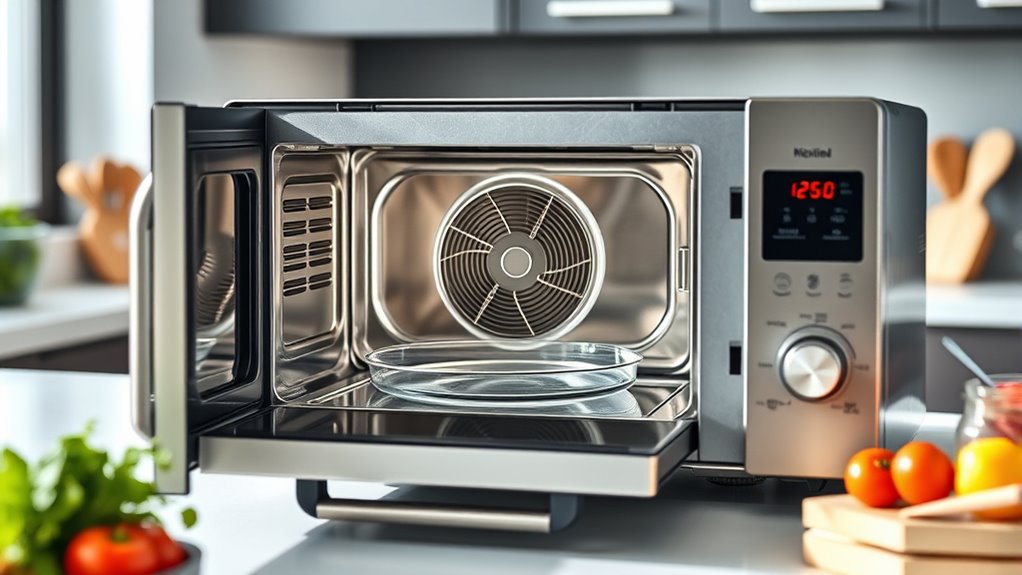
What Is a Convection Microwave and How Does It Work?
Busy kitchens often leave you choosing between microwave speed and oven-quality results. You’re not alone—many people struggle to find one appliance that can heat food quickly while also baking, roasting, and crisping it.
A convection microwave combines microwave energy with a heating element and fan, giving you fast cooking with oven-like browning. Microwave energy excites water molecules to heat food quickly, while the element and fan circulate hot air for baking, roasting, and crisping.
You can use each mode separately or combine them for faster, evenly cooked meals with golden surfaces. It’s especially useful in small kitchens, and you’ll soon see which foods, cookware, and settings work best.
Key Takeaways
- A convection microwave combines microwave energy, a heating element, and a fan for faster, more versatile cooking.
- Microwave energy excites water molecules, rapidly heating food from the inside for reheating, steaming, and quick cooking.
- The heating element and fan circulate hot air, baking, roasting, browning, and crisping food like a conventional oven.
- Combination mode uses microwave and convection heating together, cooking interiors quickly while creating evenly browned surfaces.
- It suits small kitchens because it cooks smaller portions faster and uses less space than separate appliances.
What Is a Convection Microwave?
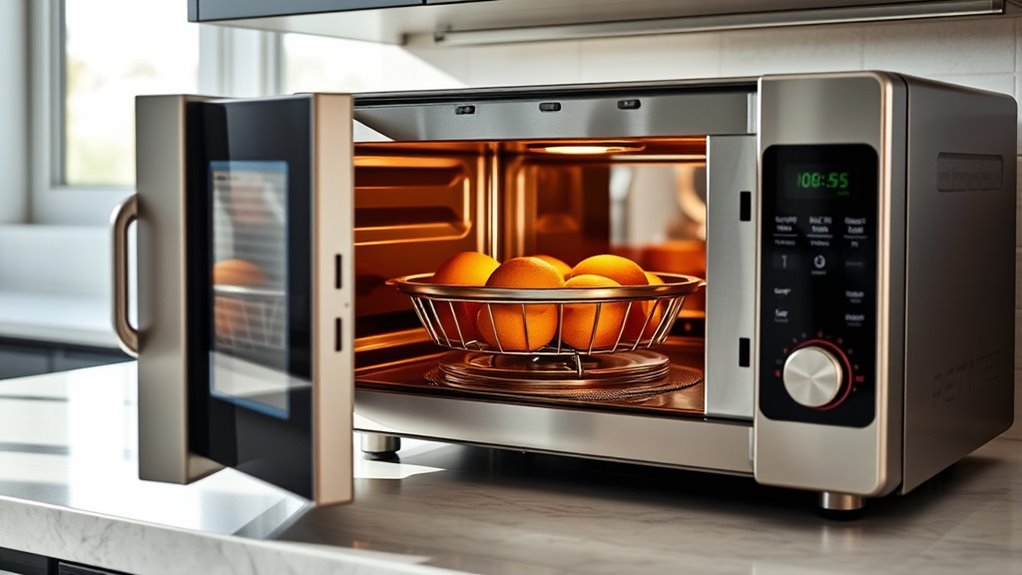
A convection microwave combines microwave energy with a heating element and a fan, so it can quickly heat food while also browning and crisping it. You can use this versatile appliance to reheat leftovers, bake small dishes, roast vegetables, or crisp frozen foods without switching between multiple countertop devices.
Unlike a standard microwave, it gives you more cooking options in a compact design. You’ll usually find preset programs, adjustable power levels, temperature controls, and a turntable or rack. Its capacity suits apartments, offices, dorm rooms, and kitchens where space matters.
You can also support Energy efficiency by choosing the right cooking mode, matching the appliance’s size to your portion, and avoiding unnecessary preheating. Regular appliance maintenance helps it perform reliably.
Wipe spills promptly, clean the interior and vents, inspect the door seal, and follow the manufacturer’s care instructions. Always use microwave-safe cookware and leave enough clearance around the unit for safe operation.
How Does a Convection Microwave Work?
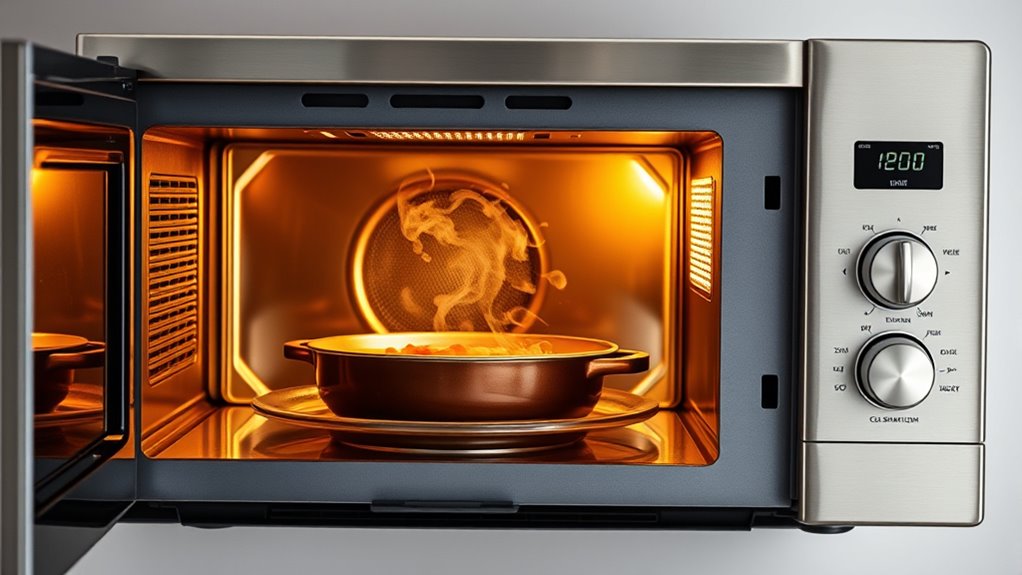
A convection microwave uses microwave energy to heat food quickly from the inside. At the same time, it circulates hot air around the food, helping it bake, roast, and brown evenly. In this guide, you’ll learn how these two cooking methods work together in one appliance.
Microwave Heating Process
How does a convection microwave heat your food? It generates microwaves that penetrate food and make water molecules vibrate, producing heat throughout each portion. You’ll notice faster results because energy reaches the food directly instead of primarily heating the surrounding air.
The turntable helps distribute exposure, while pauses allow heat to spread internally. Follow package directions and arrange food evenly for consistent results.
Energy efficiency improves when you use the correct power level and cooking time. User safety depends on microwave-safe containers, ventilation, and avoiding metal unless the manual specifically permits it.
| Component | Function |
|---|---|
| Magnetron | Produces microwaves |
| Waveguide | Directs energy |
| Cavity | Contains exposure |
| Turntable | Rotates food |
Stop cooking if you see sparks, and let food stand before eating to equalize temperature.
Convection Cooking Technology
Unlike standard microwave-only cooking, convection technology circulates heated air with a fan while microwave energy heats the food’s interior. As you cook, the fan distributes heat evenly around the dish, creating the browning and crisping you’d expect from a conventional oven.
Microwave energy speeds cooking by exciting water molecules inside your food, while convection heat finishes the surface. You can combine both modes for faster roasting, baking, and reheating, or select convection alone for recipes needing steady oven heat.
A temperature sensor and adjustable settings help you control results, though you’ll still need appropriate cookware and enough space for airflow. This design improves Energy efficiency because you’re heating a smaller chamber than a full oven.
It also saves Kitchen space by combining microwave and oven functions in one appliance.
Microwave vs. Convection Mode: What’s the Difference?
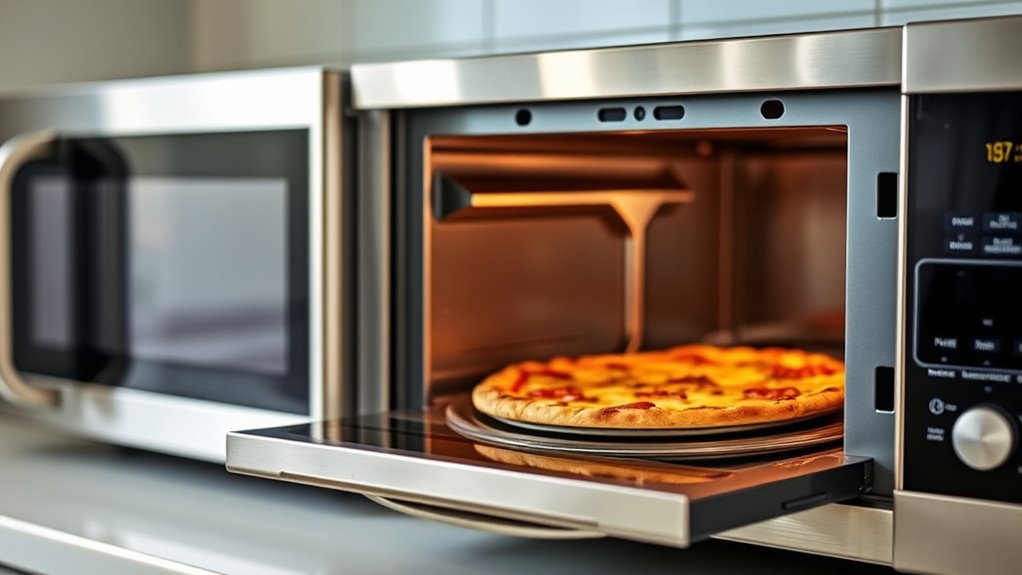
Microwave mode uses electromagnetic waves to heat food quickly, while convection mode circulates hot air to cook and brown it. In other words, microwaves are faster, but convection gives food a more oven-like texture.
Use microwave mode for reheating and quick cooking. Choose convection mode when you’re baking, roasting, or browning food.
Heating Method Differences
A microwave mode heats food from the inside out by exciting water molecules, while convection mode uses a heating element and fan to circulate hot air around it. In microwave mode, you place food in a microwave-safe dish and select a power level.
The electromagnetic energy acts primarily on moisture, so foods can retain a soft or moist texture. In convection mode, you use oven-safe cookware while dry, circulating heat surrounds the food.
This process promotes browning and creates a firmer exterior, much like a traditional oven. You’ll choose microwave mode for reheating or steaming, and convection mode when you want oven-style results.
Combination settings use both methods. Your choice affects energy efficiency and user convenience, depending on the dish, cookware, and texture you prefer.
Each method serves a distinct purpose.
Speed And Cooking Results
When you need food ready quickly, microwave mode usually delivers the fastest results because it heats moisture directly throughout the food. You’ll often finish reheating or cooking in minutes, though results can vary with portion size, density, and moisture content.
Convection mode generally takes longer because it must heat the surrounding air and cookware before transferring that heat into your food. However, it can produce more even browning, crispier surfaces, and a firmer texture than microwave heating alone.
Your choice also affects energy efficiency. Microwave mode typically uses less energy for short tasks, while convection may require more time but deliver oven-like results.
Even the appliance’s interior design matters, since turntables, fan placement, and cavity shape influence airflow and heating consistency. Understanding these differences helps you predict timing and texture.
Best Uses For Each Mode
Choosing the right mode depends on the result you want. Use microwave mode when you need speed: reheat soup, soften butter, steam vegetables, or cook oatmeal.
Convection mode circulates hot air, so it’s better for browning and crisping foods such as cookies, roasted vegetables, and casseroles.
Combination mode can cook the center quickly while adding a golden finish.
| Mode | Best uses |
|---|---|
| Microwave | Reheating, steaming, quick cooking |
| Convection | Baking, roasting, browning |
| Combination | Fast, crisp casseroles and meats |
| Microwave + cover | Moist foods without splatter |
Match your choice to your kitchen design, too. A convection microwave can replace a separate oven in compact spaces.
For energy efficiency, microwave small portions and use convection for larger dishes that need even browning.
Always use microwave-safe cookware in microwave mode, and oven-safe metal only when convection mode allows it.
What Are the Benefits of a Convection Microwave?
Convection microwaves combine fast microwave cooking with circulating hot air, so you can heat, roast, bake, and crisp food in one appliance. This combination gives you greater flexibility than a standard microwave while taking less space than separate countertop appliances. You can choose the right method for speed, browning, or even heating without switching equipment.
Convection microwaves combine speed and versatility, letting you heat, bake, roast, and crisp food in one compact appliance.
Key benefits include:
- Time savings: Microwave power speeds up everyday heating, while convection heat finishes foods efficiently.
- Energy efficiency: You’ll often use less energy than a full-size oven, especially for smaller portions.
- Kitchen convenience: One compact appliance reduces counter clutter and simplifies meal preparation.
You’ll also appreciate more consistent results when circulating air surrounds the food. The convection fan helps brown surfaces and create a finished texture that microwave-only cooking can’t provide.
Preset programs and adjustable settings make operation straightforward. A combination mode lets you balance speed with oven-like performance.
For smaller kitchens, busy schedules, or limited cooking space, this versatility can make daily meal preparation easier.
What Can You Cook in a Convection Microwave?
You can cook far more than reheated leftovers in a convection microwave, including roasted vegetables, baked potatoes, casseroles, cookies, pizzas, and small cuts of meat. Its circulating heat helps food brown while microwave energy speeds cooking, so you can prepare complete meals efficiently.
Try these options:
| Food | Helpful approach | Result |
|---|---|---|
| Vegetables | Toss with oil and seasonings | Crisp, browned edges |
| Chicken | Use a shallow dish | Juicy interior, golden surface |
| Cookies | Arrange dough with space | Evenly baked treats |
Explore different Baking techniques, such as lowering the temperature slightly, using metal pans only when your manual allows them, and checking doneness early.
You can also create convenient Snack recipes, including nachos, toasted sandwiches, stuffed mushrooms, and mini pizzas. Choose cookware that fits the turntable and leave room for air circulation.
Because cooking times vary with portion size and appliance power, monitor your food and use a thermometer for meat. You’ll gain flexibility for breakfast, lunch, dinner, and desserts without relying on a conventional oven.
When Should You Use Each Cooking Mode?
Each cooking mode serves a different purpose: use microwave mode to heat or cook food quickly, convection mode to bake and brown, and combination mode when you want both speed and a crisp, golden finish.
Choose the setting that matches your meal and your priorities:
- Microwave mode: Reheat leftovers, soften butter, steam vegetables, or cook foods that don’t need browning. Short bursts help prevent overcooking and preserve moisture.
- Convection mode: Bake cookies, roast vegetables, cook casseroles, or brown foods with circulating hot air. Use an oven-safe pan and preheat when the recipe requires it.
- Combination mode: Cook items such as chicken, baked pasta, or frozen snacks when you need an evenly cooked center and a browned surface.
Consider your kitchen design, too. A convection microwave can support flexible meal preparation when counter space is limited.
For energy efficiency, use microwave mode for small portions and combination mode for meals that would otherwise require separate cooking steps.
Always follow your model’s instructions for cookware, temperatures, and timing.
Convection Microwave vs. Oven: Key Differences
When you compare a convection microwave with a traditional oven, the main differences come down to how they heat food and how quickly they cook. A convection microwave uses microwave energy along with circulating hot air, while a traditional oven relies mainly on hot air.
Because of this combination, a convection microwave can cook smaller meals faster. On the other hand, a traditional oven may be a better choice for larger dishes or meals that need more cooking space.
Cooking Speed Comparison
How much faster is a convection microwave than a conventional oven? You’ll often finish meals 25–50% sooner, depending on portion size, recipe, and appliance power. A conventional oven may need 10–20 minutes to preheat, while a convection microwave typically reaches cooking temperature almost immediately.
Smaller portions benefit most because the compact cavity reduces cooking distance and batch size. You’ll notice the biggest time savings with reheating, roasting vegetables, baking small casseroles, and cooking frozen foods.
- Fastest: Reheating leftovers and single servings.
- Moderate: Roasting vegetables or baking small dishes.
- Slowest: Large roasts, multiple trays, or crowded meals.
Beyond speed, you’ll gain Energy efficiency and preserve Kitchen space with one versatile appliance. However, a full-size oven remains more practical when you’re feeding a crowd or preparing several dishes simultaneously. Check doneness early to prevent overcooking.
Heating Method Differences
A convection microwave combines microwave energy with a heating element and fan, while a conventional oven relies mainly on radiant heat from its elements and circulating hot air.
When you use microwave mode, electromagnetic waves excite water molecules, heating food quickly from within. Convection mode surrounds your dish with moving hot air, promoting browning and crisp edges.
You can combine both methods to cook faster while still achieving oven-like texture. A conventional oven generally provides steadier, larger-scale heat, making it better for multiple trays or oversized dishes.
For everyday portions, a convection microwave often offers greater Energy efficiency because it heats a smaller cavity and needs less preheating.
Follow the manufacturer’s maintenance tips: clean splatters, inspect the seal, and keep vents clear to preserve performance and safety.
Which Cookware Can You Use?
Which cookware works in a convection microwave depends on the cooking mode: use microwave-safe glass, ceramic, or labeled plastic for microwave cooking, and oven-safe metal pans for convection or combination cooking. Check your manufacturer’s manual, because approved materials and rack placement can vary.
For reliable cookware compatibility, match the dish to the selected setting:
- Microwave mode: Choose microwave-safe glass, ceramic, or approved plastic containers without metallic decoration.
- Convection mode: Use heat-resistant glass, ceramic bakeware, or metal pans rated for conventional ovens.
- Combination mode: Select cookware explicitly approved for both microwave energy and oven heat.
Use shallow, stable dishes when possible so air circulates around your food and heat reaches it evenly. Keep handles, lids, and coatings within their stated temperature limits.
Don’t place cookware directly on the oven floor unless your manual permits it. For cleaning and maintenance, wash dishes promptly, remove grease buildup, and inspect them for cracks, warping, or damaged coatings.
Replace compromised cookware to maintain safe, consistent performance.
Which Foods and Containers Should You Avoid?
Avoid foods and containers that can spark, rupture, melt, or release harmful chemicals. Don’t microwave whole eggs, sealed sausages, grapes, or dense foods with intact skins unless you pierce them first.
Steam can build pressure and cause painful splatters or explosions. Follow these reminders for safer Food preservation and Container safety:
| Avoid | Why | Safer choice |
|---|---|---|
| Metal trim or foil | Sparks and fire | Microwave-safe glass |
| Sealed jars | Pressure can rupture them | Ventilated containers |
| Plastic not labeled microwave-safe | It may melt or leach chemicals | Certified microwave-safe plastic |
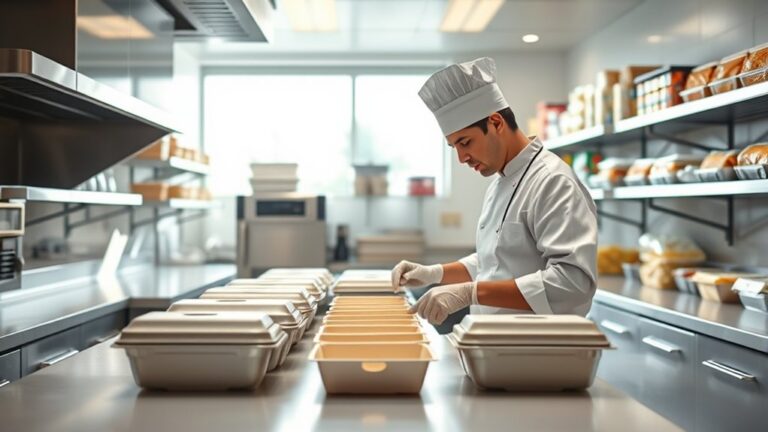
| Foam takeout boxes | They can melt | Ceramic or glass |
Remove twist ties, metallic labels, and plastic wrap that touches food. Vent lids, loosen covers, and use a towel to catch steam.
Don’t heat chili peppers or extremely oily foods without care. They can smoke, splatter, or irritate your eyes.
Check containers for cracks before heating, and discard warped or damaged pieces. When convection heat is on, avoid paper, cardboard, and any container lacking clear oven-safe instructions.
Is a Convection Microwave Right for You?
Wondering whether a convection microwave fits your kitchen? It may suit you if you want one appliance for reheating, baking, roasting, and browning. Its circulating hot air cooks food more evenly than a standard microwave, while microwave energy speeds up many tasks.
You’ll save counter space and avoid heating your full-size oven for small meals.
Consider these factors before buying:
- Cooking habits: Choose this appliance if you regularly prepare casseroles, vegetables, baked goods, or small roasts.
- Kitchen space: Its Modern design can replace separate appliances, but measure carefully because models vary in size.
- Operating costs: Energy efficiency depends on your cooking times, settings, and model. Look for strong energy ratings and useful automatic programs.
You might prefer a conventional microwave if you mainly reheat drinks, leftovers, or frozen meals. However, a convection model offers greater flexibility and can simplify meal preparation.
If you’ll use its oven features often, the higher purchase price may deliver worthwhile value for your kitchen and routine. Consider your budget, available ventilation, and cleaning preferences before deciding.
Frequently Asked Questions
Can Convection Microwaves Be Installed Over a Range?
Yes, you can install a convection microwave over a range if the model is designed for over-the-range use. Check the manufacturer’s installation guidelines for required clearance, ventilation, electrical capacity, and mounting support.
Review your kitchen space considerations, including cabinet depth, cooktop width, and available wall strength. You’ll also need proper venting and sufficient distance from burners.
Hire a qualified installer if you’re unsure about electrical connections or structural requirements.
How Much Electricity Does a Convection Microwave Use?
You’ll find that a convection microwave typically uses 1,000–1,800 watts while microwaving and 1,200–1,800 watts during convection cooking. That’s enough power to light up the whole neighborhood!
Actual energy consumption depends on cooking time, temperature, and your model’s settings. A 1,500-watt unit running for 30 minutes uses about 0.75 kilowatt-hours.
For better power efficiency, use shorter cycles, avoid unnecessary preheating, and choose sensor cooking when available to prevent overcooking and wasted electricity.
How Do You Clean a Convection Microwave Safely?
You can clean a convection microwave safely by unplugging it, removing the turntable and racks, and wiping interior surfaces with warm, soapy water. Use a soft cloth for cleaning techniques, and loosen baked-on food with a bowl of water heated briefly.
Never use harsh chemicals or abrasive pads. Follow these safety precautions: don’t spray liquid into vents, keep heating elements dry, and let every part dry completely before reconnecting and using the appliance.
How Long Do Convection Microwaves Typically Last?
You can typically expect a convection microwave to last 7–10 years with regular use and proper care. Heavy daily cooking may shorten its lifespan, while gentle cleaning and timely repairs can extend it.
Cooking versatility makes these appliances valuable, but energy efficiency, ventilation, and workload affect durability. Replace yours if heating becomes uneven, controls fail, the door stops sealing, or unusual sounds and sparks appear during operation.
Are Convection Microwaves Safe for Households With Children?
Yes, convection microwaves are generally safe for households with children when you supervise use and follow the manual.
Think of safety as your first line of defense: teach kids never to operate the appliance alone, touch hot cookware, or place metal inside.
Use the door’s lock and keep the microwave on a stable surface. Good Microwave shielding contains energy, while Child safety depends on supervision, proper containers, and careful handling.
Conclusion
A convection microwave gives you the best of both worlds: microwave speed and oven-style browning. You can reheat leftovers in a flash, roast vegetables, bake cookies, or crisp a chicken without waiting for a full-size oven to warm.
With microwave-safe, heat-resistant cookware and the right settings, you’ll cook confidently and efficiently. Think of it as a compact kitchen multitasker, part speedy sprinter and part steady baker, ready to help you turn everyday ingredients into golden, satisfying meals. A convection microwave makes everyday cooking faster and more versatile.