Induction Cooker Vs Electric Stove: 10 Key Differences
Choosing between an induction cooker and an electric stove can feel confusing, especially when you want faster cooking, easier cleanup, and lower energy use. You’re not alone—many people struggle to decide which option offers the best balance of convenience, cost, and performance.
An induction cooker heats magnetic cookware directly, so you’ll get faster boiling, steadier temperatures, and better energy efficiency than with an electric stove. It also keeps the surface cooler, shuts off when you remove the pan, and cleans easily.
However, you’ll need compatible cookware and may pay more for purchase and installation.
An electric stove costs less upfront, works with most pots, and offers broad versatility, though it responds more slowly and wastes more heat.
The key differences below can help you choose confidently.
Key Takeaways
- Heating speed: Induction heats cookware directly, boiling water and changing temperatures faster than electric stoves.
- Temperature control: Induction responds precisely, while electric elements heat and cool gradually, causing broader temperature fluctuations.
- Energy efficiency: Induction transfers more energy into cookware, generally using less electricity than conventional electric stoves.
- Safety and cleaning: Induction surfaces stay relatively cooler and wipe clean easily; electric surfaces remain hot and may bake on spills.
- Cost and compatibility: Electric stoves cost less initially and accept most cookware, while induction costs more and requires magnetic pots and pans.
How Do Induction and Electric Stoves Work?
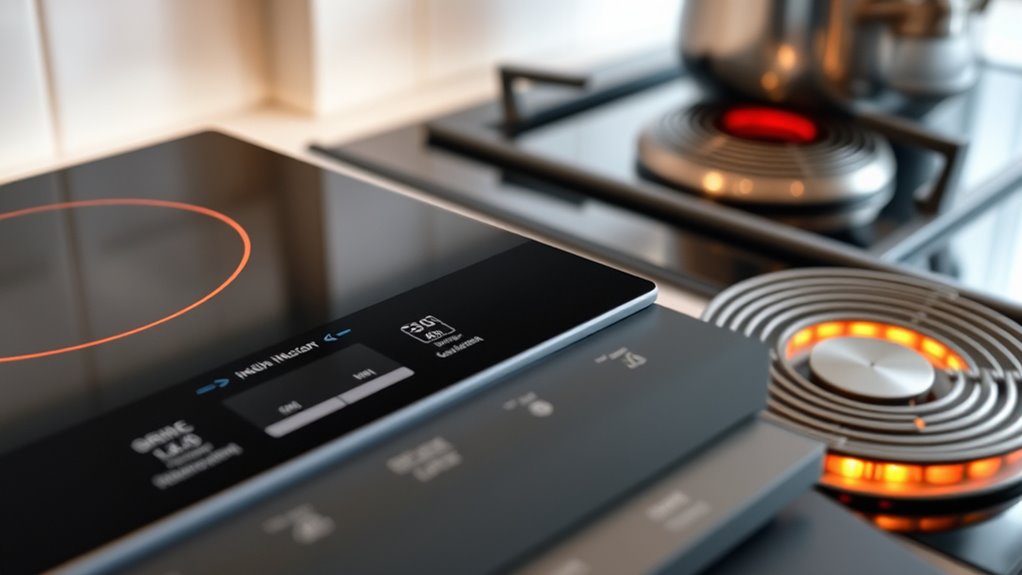
How do induction and electric stoves heat your food? Each cooktop uses electricity differently to transfer energy to your cookware.
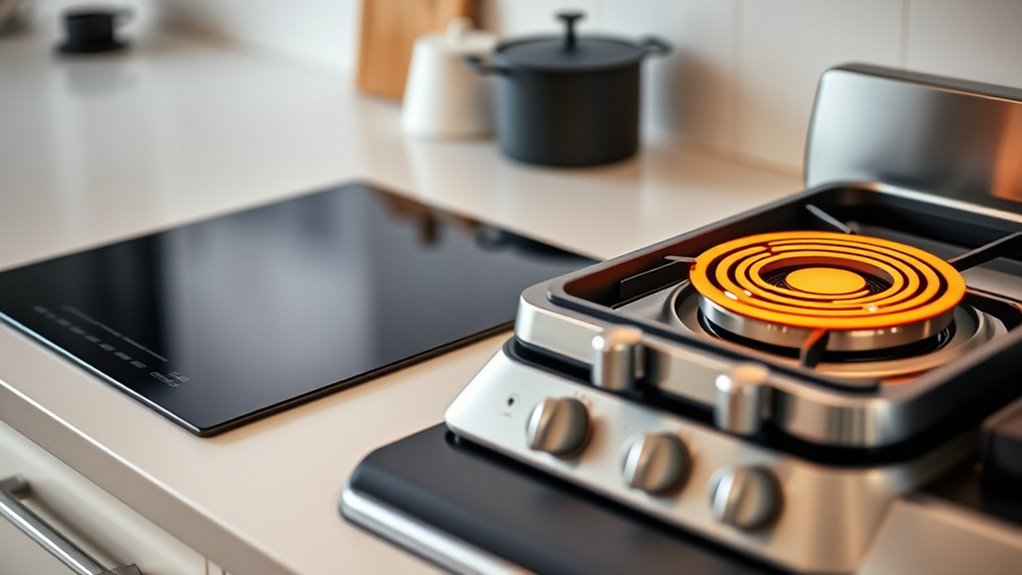
An induction cooker creates a magnetic field beneath its glass surface. When you place compatible ferromagnetic cookware on the zone, the field generates electrical currents inside the pan.
Induction cooking uses a magnetic field to generate heat directly inside compatible cookware.
Those currents produce heat directly in the cookware, while the surface stays relatively cooler. You’ll need to consider material compatibility because aluminum, copper, and nonmagnetic stainless steel won’t work unless they include a magnetic base.
An electric stove sends current through a metal heating element. The element becomes hot, then transfers heat to the pan through direct contact.
On a smooth-top model, radiant elements sit beneath glass-ceramic panels. On a coil model, exposed coils provide the heat.
The surrounding surface can remain hot after cooking. Both designs offer different aesthetic appeal, from sleek flat panels to familiar raised coils, so your kitchen style may influence your choice.
Which Cooktop Heats Food Faster?
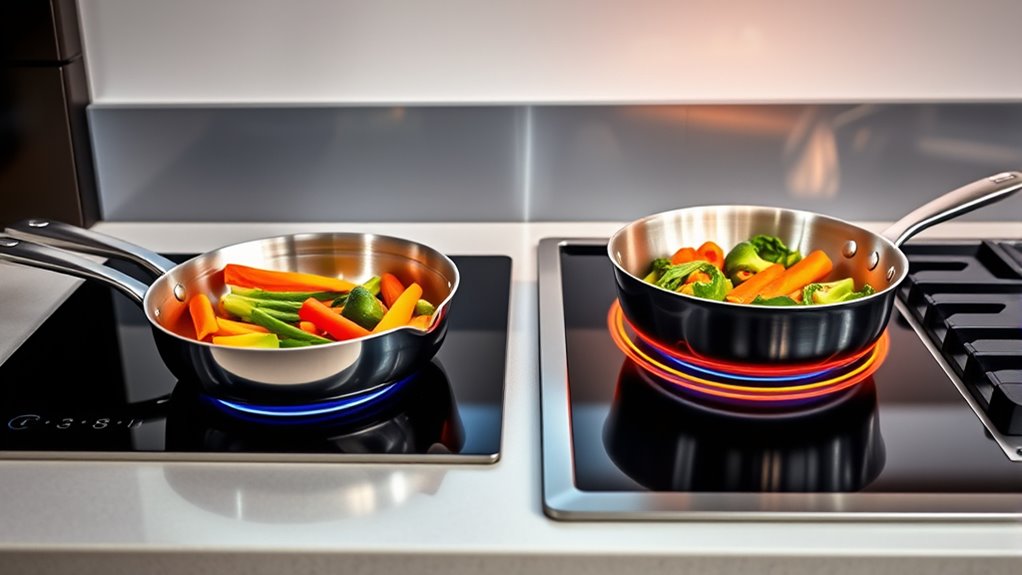
Induction cookers generally heat food faster than electric stoves because they transfer energy directly into compatible cookware instead of heating an element first. You’ll notice quicker boiling, faster sautéing, and more responsive temperature changes.
An electric stove must warm its coil or smooth glass surface before the pan receives consistent heat, so startup takes longer. Your cookware also matters: flat, magnetic pans work best on induction, while electric stoves accept a broader range.
| Cooking task | Induction | Electric |
|---|---|---|
| Boil water | Fastest | Slower |
| Sauté vegetables | Quick response | Gradual response |
For everyday Cooking techniques, induction helps you sear, simmer, and boil with less waiting. You’ll also gain precise control when you reduce sauces or prevent delicate foods from scorching.
Electric stoves can still perform well, particularly after their elements reach full temperature, but they retain heat and react more slowly when you adjust the dial.
Consider Kitchen aesthetics, too. Induction offers a sleek, uncluttered surface, while traditional coils or radiant zones create a familiar look. Choose induction when speed and responsiveness matter most.
Which Uses Less Energy: Induction or Electric?
When it comes to energy use, induction cookers are typically more efficient than electric stoves because they transfer more power directly to the cookware. With induction, you’ll usually waste less energy heating the surrounding air or the cooktop surface.
The cookware receives electromagnetic energy directly, so more of the electricity you pay for supports cooking.
Electric stoves use radiant or coil heating, which can lose energy as the element warms the surface, pan, and nearby area. Although modern electric models have improved, their power consumption generally produces more heat loss than induction.
Your actual savings will depend on cooking habits, appliance size, electricity rates, and pan compatibility.
For better energy efficiency, choose induction cookware that matches the cooking zone, keep lids on pots, and avoid preheating longer than necessary.
If you cook frequently, induction’s reduced energy waste can lower household electricity use over time, even if its purchase price is higher.
Which Cooktop Offers Better Temperature Control?
You’ll generally get better temperature control with an induction cooker. It adjusts the heat precisely and responds quickly when you change the setting. By comparison, an electric stove changes temperature more slowly because its heating element retains heat. As a result, induction makes it easier to maintain a consistent cooking temperature.
Precise Heat Adjustments
For precise heat adjustments, induction cooktops usually outperform electric stoves because they change cookware temperature almost immediately after you adjust the controls. You can raise or lower the setting with fine control, helping you sear, sauté, or melt ingredients without waiting for a burner to warm or cool.
Induction relies on electronic Power modulation, which delivers energy directly to compatible cookware. As a result, your chosen setting produces a faster, more responsive change.
Electric stoves give you workable control, but their heating elements retain heat after you turn the dial down. That delay can make delicate tasks, such as melting chocolate, more challenging.
Heat distribution also depends on your pan: induction heats the pan’s magnetic base, while an electric element transfers heat through the surface, often with less immediate response.
Consistent Cooking Temperatures
Beyond quick adjustments, consistent cooking temperatures determine how evenly your food cooks over time. Induction cookers generally excel because they heat the pan directly, maintain steadier temperatures, and respond quickly when you change settings.
You’ll notice fewer hot spots while simmering sauces, melting chocolate, or searing protein. Electric stoves can cook consistently, but their coils or smooth tops cycle on and off, causing broader temperature swings.
Your cookware and technique still matter, yet induction usually delivers stronger Flavor enhancement through controlled cooking and improved Energy efficiency by transferring heat directly to the pan.
| Cooktop | Temperature consistency |
|---|---|
| Induction | Highly stable and responsive |
| Electric | Moderate; cycles periodically |
| Induction | Fewer hot spots |
| Electric | More residual heat |
Choose induction when precise, repeatable results matter most; choose electric for affordability and familiar operation.
Which Option Is Safer to Use?
Which option is safer to use—an induction cooker or an electric stove? For most households, induction offers stronger built-in safety features. It heats the cookware directly, so the cooking surface stays cooler than a traditional electric stove.
You’ll reduce the chance of burns from touching a recently used area, although the surface can still retain heat from the pan. Induction models typically shut off when you remove cookware, detect overheating, or reach a set time limit.
Electric stoves expose you to hot coils or glass surfaces that remain hot after you switch them off. You’ll need to watch children closely and keep handles turned inward.
For better Child safety, use control locks, rear burners, and clear supervision with either option. Both appliances can create electrical hazards if cords, outlets, or controls become damaged, so inspect them regularly and follow installation instructions.
Ultimately, induction is generally safer, but careful habits matter more than your choice.
What Cookware Works With Each Cooktop?
Induction cooktops require cookware with a magnetic base, such as cast iron or magnetic stainless steel, while electric stoves work with most flat-bottomed pots and pans.
Check your cookware compatibility before switching appliances. Induction heating won’t work with aluminum, copper, glass, or nonmagnetic stainless steel unless the pan includes a magnetic layer.
For induction cooking, hold a magnet against the pan’s underside. If it sticks firmly, the cookware should heat properly.
Choose pans with a smooth, sturdy base that sits evenly on the glass surface. Cast iron works, but lift it carefully to avoid scratching the cooktop.
Enamel-coated magnetic cookware also suits induction use.
Electric stoves offer broader compatibility. You can use aluminum, copper, stainless steel, cast iron, glass, and ceramic cookware, provided each piece has a flat bottom for steady contact with the heating element.
Review the manufacturer’s material requirements, especially for specialty pans. Replace warped cookware because it can heat unevenly and wobble during use.
Which Cooktop Is Easier to Clean?
Induction cooktops are generally easier to clean because their smooth, flat surfaces don’t get as hot as electric coils or radiant elements, so spills are less likely to bake on. You can usually wipe the glass surface with a damp cloth after it cools, giving you excellent Cleaning convenience.
Electric stoves demand more attention. Food can fall beneath raised coils, around burner pans, or into seams surrounding radiant elements.
You’ll need to remove those parts and scrub them separately, while stubborn residue may require a cooktop-safe cleaner.
For easier surface maintenance, follow this simple routine:
- Let the cooktop cool completely before wiping it.
- Remove crumbs and loose debris with a soft cloth.
- Clean dried spills using a manufacturer-approved scraper or cleaner.
Avoid abrasive pads and harsh chemicals on either style, since they can scratch finishes or leave dull marks.
If you wipe spills promptly, both cooktops can stay attractive, but induction typically gives you the fastest, simplest cleanup after everyday cooking. Its uninterrupted surface also leaves fewer hiding places for grease and crumbs.
What Are the Total Ownership Costs?
When comparing total ownership costs, you’ll need to take into account more than the purchase price. An electric stove usually costs less upfront, making it attractive if you’re working with a tight budget. An induction cooker often costs more initially, but its efficient energy use can reduce monthly electricity expenses. Your cookware matters, too: induction requires magnetic pots and pans, so you may need to replace some items.
You should also compare installation requirements. Electric stoves typically use standard connections, while induction models may require a suitable high-amperage circuit, adding electrician fees. Check Warranty coverage carefully, since parts, labor, and exclusions vary between brands.
After coverage ends, maintenance costs can differ. Electric stoves may need replacement coils, control switches, or heating elements, while induction units can involve pricier electronic components. Include delivery, installation, cookware, energy, and potential repair expenses in your estimate.
These figures will show which option better fits your household budget over time, without relying solely on the sticker price.
Which Cooktop Lasts Longer?
Induction cooktops and electric stoves can both last for many years with proper care. Induction models are often highly durable, while electric stoves have fewer electronic components that may need repairs. In either case, cleaning habits, cooking frequency, and regular maintenance can affect how long the cooktop lasts.
Induction Cooktop Lifespan
Although both appliances can last for years, an induction cooktop typically has a longer practical lifespan than a traditional electric stove. With fewer exposed heating components, induction technology reduces wear from direct heat and spills.
You’ll often get roughly 10 to 15 years of dependable performance, though your results depend on several lifespan factors:
- Build quality: A reputable brand usually offers stronger electronics, glass, and cooling systems.
- Daily use: Moderate cooking and avoiding constant maximum power can reduce thermal stress.
- Care habits: You’ll extend service life by cleaning gently, preventing scratches, and keeping ventilation openings clear.
Treat the glass surface carefully, since cracks can make the cooktop unsafe. You should also use compatible cookware and avoid dragging heavy pans across it.
Although repairs may cost more, durable components can make induction a better long-term investment. Expect performance to decline mainly when electronic controls or sensors eventually fail.
Electric Stove Durability
Electric stoves typically last about 10 to 15 years, depending on their construction, usage, and maintenance. When you choose one, consider its overall build quality, including the cooktop surface, heating elements, controls, and supporting frame.
A sturdy model can withstand daily cooking and remain reliable longer than a budget unit with fragile components. Material compatibility also matters: cookware that matches the surface helps prevent scratches, cracks, and uneven contact.
You’ll usually find electric stoves easier to repair than induction cookers because replacement elements and switches are widely available. However, repairs can become costly when multiple parts age together.
Check warranty coverage and Customer reviews to identify models with dependable construction and accessible service. With proper care, a quality electric stove can provide many years of consistent performance.
Factors Affecting Longevity
When comparing longevity, focus on build quality, usage habits, maintenance, and repairability rather than assuming one cooktop always lasts longer. Your cooking frequency, cookware choices, and cleaning routine can markedly affect its lifespan.
Induction models have fewer exposed heating parts, but their electronics may require specialized repairs. Electric stoves use durable radiant elements, although spills and repeated thermal shock can damage glass surfaces.
- Material quality: Choose sturdy controls, reinforced glass, and corrosion-resistant components. Better materials usually withstand daily heat and impact more effectively.
- Maintenance: Keep vents clear, wipe spills promptly, and avoid dragging heavy pans across the surface. Follow the manufacturer’s cleaning instructions.
- Warranty coverage: A longer, clearer warranty can reduce ownership costs and reveal the manufacturer’s confidence in durability.
You’ll also extend either cooktop’s life by using correctly sized cookware, preventing overheating, and scheduling repairs before minor faults become major failures.
Which Cooktop Suits Your Cooking Style?
Your cooking style should guide your choice between an induction cooker and an electric stove. If you value speed, precise temperature control, and easy cleanup, induction suits you.
Its surface heats cookware directly, so you’ll boil water faster and adjust heat almost instantly. Choose induction if you regularly prepare delicate sauces, sear meats, or cook multiple dishes under time pressure. Make sure your pans are magnetic-compatible.
An electric stove may fit you better if you prefer versatility and a lower upfront cost. Its radiant burners work with most cookware, making it practical when you’re replacing appliances gradually.
You’ll also appreciate its familiar operation for simmering, baking, and everyday meals, although the burners respond more slowly and retain heat longer.
Consider your kitchen layout, too. Induction offers a sleek, modern appearance that supports minimalist cooking aesthetics, while electric models provide familiar designs and broad availability.
Match your cooktop to your cookware, habits, budget, and desired control.
Frequently Asked Questions
Can Induction Cooktops Be Installed Over an Oven?
Yes, you can install an induction cooktop over an oven, provided both appliances meet the manufacturer’s requirements. Check cabinet dimensions, ventilation, electrical capacity, and required clearances before you begin.
Your oven mustn’t overheat the cooktop or wiring, and the installation should comply with local codes. Important installation considerations include compatible appliance models and countertop support.
Follow safety precautions, use a qualified electrician, and never modify either appliance without approval from the manufacturer.
Do Induction and Electric Stoves Work During Power Outages?
Neither induction nor standard electric stoves work during a power outage because both require electricity. For power outage compatibility, you’ll need an alternative heat source, such as a gas camp stove, outdoor grill, or fireplace designed for cooking.
Don’t use fuel-burning appliances indoors, where carbon monoxide can build up. Your emergency cooking options should include safe outdoor equipment, stored fuel, matches, and shelf-stable foods. Always follow manufacturer instructions and local safety guidance.
How Much Ventilation Does Each Cooktop Require?
Like opening a window onto a clearer kitchen, you’ll find both cooktops need similar ventilation requirements: use a range hood or overhead exhaust whenever you cook, especially while frying or boiling.
Induction generally produces less smoke because it heats pans efficiently without a glowing surface, but it still releases steam, grease, and cooking odors. Electric stoves can create more residual heat and occasional smoke, so run your hood during and after cooking.
Are Induction Cooktops Noisy While Operating?
Induction cooktops aren’t completely silent, but you’ll usually find their noise levels low and unobtrusive. You may hear a soft hum, buzz, click, or fan during operation, especially at higher power settings or when cookware contains multiple magnetic layers.
These operational sounds typically stop shortly after you turn the cooktop off. Properly centered, flat-bottomed pans can reduce vibration, while lightweight or uneven cookware may sound louder during cooking.
Can Either Cooktop Affect Nearby Pacemakers or Medical Devices?
Yes, either cooktop can potentially affect nearby pacemakers or other medical devices, but induction models deserve greater caution because they generate electromagnetic fields. Medical device interference usually matters only at close range, yet you shouldn’t lean over an active induction zone or place a device directly beside it.
Electromagnetic radiation from electric resistance cooktops is generally minimal. Check your device’s guidance and ask your clinician if you’re uncertain.
Conclusion
Ultimately, choosing between an induction cooker and an electric stove comes down to how you cook, clean, and budget. Induction offers fast heating, precise control, easy cleanup, and improved energy efficiency, while electric stoves provide familiar operation and often a lower upfront price.
Think about your daily kitchen routine: Do you want responsive heat that stops quickly when cooking ends, or steady radiant heat that takes longer to adjust? Choose the cooktop that best fits your lifestyle and cooking needs.